Encyclopedia/1. The Cosmos & The Natural World/1. Mathematics & Formal Systems/02. Algebra & Symbolic Systems • Curated by Admin Timeline.sg
Linear algebra traces its roots from ancient Babylonian and Chinese methods for solving linear equations to modern matrix theory and computational algorithms. Key milestones include the elimination method in ancient China, the development of determinants in Japan and Europe, and the formalization of matrix algebra by Cayley and Sylvester.
Chronological Storyline (45 Milestones)
2000 BCE
Babylonian Linear Equations
Babylonian mathematicians solve problems leading to linear equations, as recorded on clay tablets like YBC 6967. They use geometric methods to find unknowns. #mathematics #history
Babylonian Linear Equations By Urcia, A., Yale Peabody Museum of Natural History, https://peabody.yale.edu, http://hdl.handle.net/10079/8931zqj derivative work, user:Theodor Langhorne Franklin - File:YBC-7289-OBV.jpg, CC0, https://commons.wikimedia.org/w/index.php?curid=76347956
300 BCE
Chinese Nine Chapters on Linear Systems
The Chinese text 'The Nine Chapters on the Mathematical Art' presents methods for solving systems of linear equations using positive and negative numbers, effectively describing Gaussian elimination. #mathematics #china
Chinese Nine Chapters on Linear Systems By 中國書店海王邨公司 - https://pmgs.kongfz.com/detail/1_158470/, Public domain, https://commons.wikimedia.org/w/index.php?curid=22913440
250 CE
Diophantus and Arithmetica
Diophantus writes 'Arithmetica', which includes methods for solving systems of equations, though not yet matrix theory. He uses symbolic notation for unknowns. #mathematics #greece
628 CE
Brahmagupta on Linear Equations
Indian mathematician Brahmagupta in his 'Brāhmasphuṭasiddhānta' provides a systematic method for solving linear equations, including the rule of signs. #mathematics #india
820 CE
Al-Khwarizmi and Linear Equations
Al-Khwarizmi's 'The Compendious Book on Calculation by Completion and Balancing' discusses linear equations and introduces algebraic methods that later influence European mathematics. #mathematics #islam
Al-Khwarizmi and Linear Equations By Zarateman - Own work, CC0, https://commons.wikimedia.org/w/index.php?curid=162213187
1303 CE
Zhu Shijie's Jade Mirror
Chinese mathematician Zhu Shijie publishes 'Jade Mirror of the Four Unknowns', advancing polynomial equations and systems of linear equations, using an early form of matrix-like notation. #mathematics #china
Zhu Shijie's Jade Mirror By Zhu Shijie - mybook 唐戈藏书, Public domain, https://commons.wikimedia.org/w/index.php?curid=19268418
1683 CE
Seki Kowa and Determinants
Japanese mathematician Seki Kowa independently develops the concept of determinants (pre-dating Leibniz) in his work on elimination theory. #mathematics #japan
Seki Kowa and Determinants By upload by AMorozov - Gakken, Public domain, https://commons.wikimedia.org/w/index.php?curid=710154
1693 CE
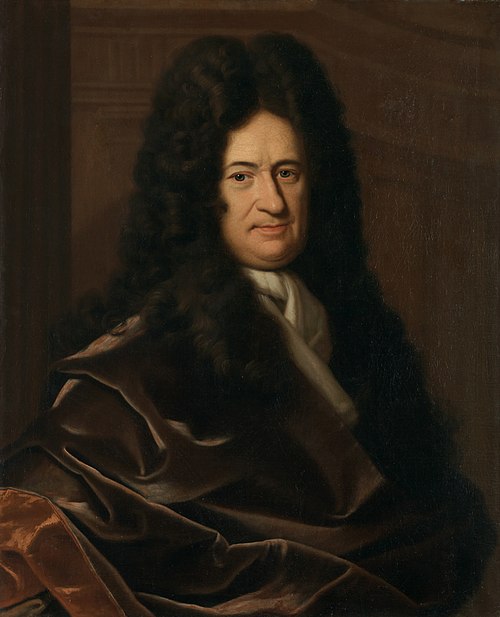
Leibniz and Matrix Determinants
Gottfried Wilhelm Leibniz introduces the idea of determinants in a letter to L'Hôpital, providing a method for solving systems of linear equations using indices. #mathematics #europe
Leibniz and Matrix Determinants By Christoph Bernhard Francke - Herzog Anton Ulrich-Museum, online, Public domain, https://commons.wikimedia.org/w/index.php?curid=53159699
1748 CE
Cramer's Rule Published
Gabriel Cramer publishes 'Introduction à l'analyse des lignes courbes algébriques' containing Cramer's rule for solving linear systems using determinants. #mathematics #switzerland
1750 CE
Euler's Work on Linear Systems
Leonhard Euler contributes to the theory of linear equations and introduces systematic elimination methods, influencing future matrix theory. #mathematics #switzerland
Euler's Work on Linear Systems By Jakob Emanuel Handmann - This file was derived from: Leonhard Euler.jpg Edited by: Bammesk Original source: Kunstmuseum Basel, Public domain, https://commons.wikimedia.org/w/index.php?curid=113056351
1772 CE
Laplace's Expansion Theorem
Pierre-Simon Laplace generalizes determinant expansion, now known as Laplace expansion, which is fundamental for matrix computations. #mathematics #france
1801 CE
Gauss's Disquisitiones Arithmeticae
Carl Friedrich Gauss publishes 'Disquisitiones Arithmeticae', which includes Gaussian elimination (though not named then) for solving linear systems. #mathematics #germany
Gauss's Disquisitiones Arithmeticae By Unknown author, Public domain, https://commons.wikimedia.org/w/index.php?curid=641724
1826 CE
Cauchy's Determinant Theorems
Augustin-Louis Cauchy publishes a treatise on determinants, proving many properties including the determinant of a product of matrices. #mathematics #france
Cauchy's Determinant Theorems By Public domain - Library of Congress Prints and Photographs Division. From an illustration in: Das neunzehnte Jahrhundert in Bildnissen / Karl Werckmeister, ed. Berlin : Kunstverlag der photographische gesellschaft, 1840, vol. V, no. 581., Public domain, https://commons.wikimedia.org/w/index.php?curid=7059486
1832 CE
Jacobi's Eigenvalue Work
Carl Gustav Jacob Jacobi begins studying eigenvalues and eigenvectors for symmetric matrices, introducing the concept of the Jacobi method. #mathematics #germany
Jacobi's Eigenvalue Work By Unknown author - http://www.sil.si.edu/digitalcollections/hst/scientific-identity/explore.htm (reworked), Public domain, https://commons.wikimedia.org/w/index.php?curid=140344
1841 CE
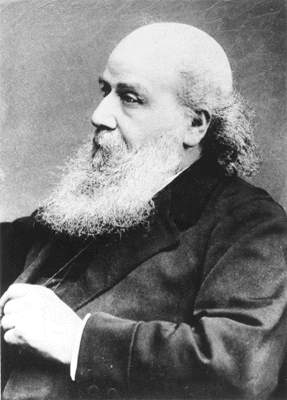
Cayley Introduces Matrix Notation
Arthur Cayley introduces the concept of a matrix and matrix multiplication in a paper on linear transformations, founding matrix algebra. #mathematics #uk
Cayley Introduces Matrix Notation By Herbert Beraud (1845–1896) - http://www-groups.dcs.st-and.ac.uk/~history/PictDisplay/Cayley.html, Public domain, https://commons.wikimedia.org/w/index.php?curid=904674
1849 CE
Sylvester Coins 'Matrix'
James Joseph Sylvester first uses the term 'matrix' in mathematics, building on Cayley's work to develop the theory of linear algebra. #mathematics #uk
Sylvester Coins 'Matrix' By Unknown author - from:http://en.wikipedia.org/wiki/Image:Untitled04.jpg, Public domain, https://commons.wikimedia.org/w/index.php?curid=268041
1858 CE
Cayley-Hamilton Theorem
Cayley publishes the Cayley-Hamilton theorem, stating that every square matrix satisfies its own characteristic equation. #mathematics #uk
1867 CE
Grassmann's Linear Algebra
Hermann Grassmann publishes 'Die lineale Ausdehnungslehre', a comprehensive work on linear spaces and vectors, laying foundations for abstract linear algebra. #mathematics #germany
Grassmann's Linear Algebra By Unknown author - From the beginning of vol. 1 of Grassmann's collected works (1894), Public domain, https://commons.wikimedia.org/w/index.php?curid=174414110
1878 CE
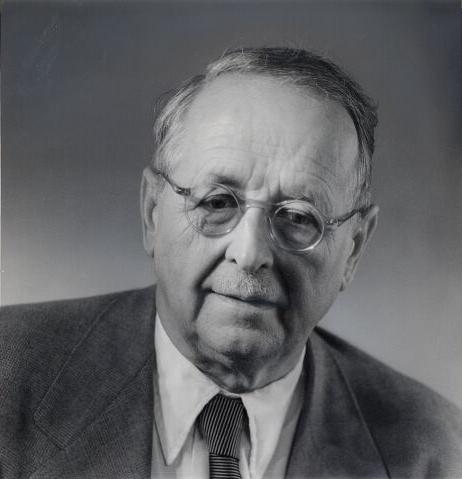
Frobenius on Matrix Theory
Ferdinand Georg Frobenius makes extensive contributions to matrix theory, including the concept of the rank of a matrix and the Frobenius norm. #mathematics #germany
Frobenius on Matrix Theory By Furfur - (de): Oberwolfach Photo Collection, aus einem Fotoalbum der Mathematischen Gesellschaft (Hamburg)(en): Oberwolfach Photo Collection, from a photo album of the Mathematische Gesellschaft (Hamburg), CC BY-SA 3.0, https://commons.wikimedia.org/w/index.php?curid=59417515
1882 CE
Gram-Schmidt Orthogonalization
Jørgen Pedersen Gram and Erhard Schmidt develop the Gram-Schmidt process for orthonormalizing vectors, key for numerical linear algebra. #mathematics #denmark #germany
Gram-Schmidt Orthogonalization By No machine-readable author provided. Gustavb assumed (based on copyright claims). - No machine-readable source provided. Own work assumed (based on copyright claims)., Public domain, https://commons.wikimedia.org/w/index.php?curid=617554
1888 CE
Peano Axiomatizes Linear Spaces
Giuseppe Peano gives the first axiomatic definition of a vector space, formalizing linear algebra concepts. #mathematics #italy
Peano Axiomatizes Linear Spaces By Unknown author - School of Mathematics and Statistics, University of St Andrews, Scotland [1], Public domain, https://commons.wikimedia.org/w/index.php?curid=2633677
1904 CE
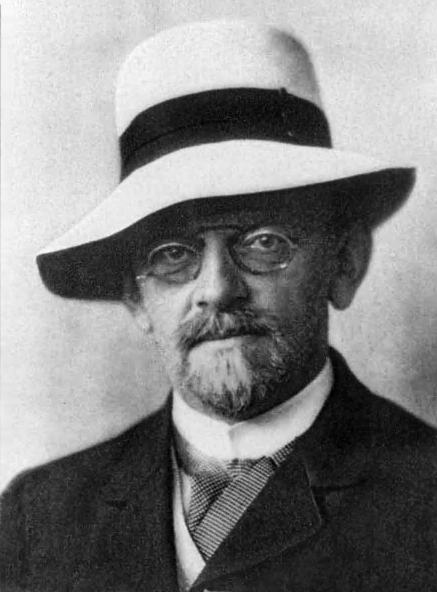
Hilbert's Spectral Theory
David Hilbert develops spectral theory for operators, applying eigenvalue concepts to infinite-dimensional spaces, extending linear algebra to functional analysis. #mathematics #germany
Hilbert's Spectral Theory By Unknown author - Possibly Reid, Constance (1970) Hilbert, Berlin, Heidelberg: Springer Berlin Heidelberg Imprint Springer, p. 230 ISBN: 978-3-662-27132-2., Public domain, https://commons.wikimedia.org/w/index.php?curid=36302
1912 CE
Hadamard's Inequality
Jacques Hadamard publishes Hadamard's inequality for determinants, a fundamental bound in matrix analysis. #mathematics #france
1915 CE
Weyl's Work on Matrix Groups
Hermann Weyl publishes 'Das Kontinuum' and later studies representation theory of matrix groups, linking linear algebra to physics. #mathematics #germany
Weyl's Work on Matrix Groups By ETH Zürich - ETH-Bibliothek Zürich, Bildarchiv, CC BY-SA 3.0, https://commons.wikimedia.org/w/index.php?curid=8098412
1930 CE
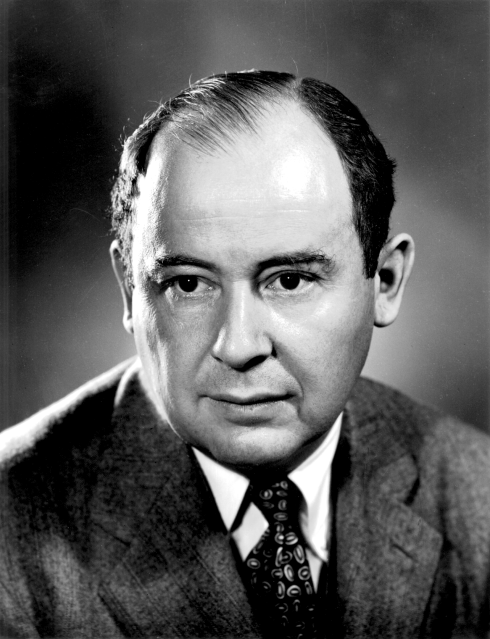
von Neumann and Operator Theory
John von Neumann begins work on operator theory, which heavily uses linear algebra in infinite-dimensional spaces, influencing quantum mechanics. #mathematics #hungary #usa
von Neumann and Operator Theory By LANL - http://www.lanl.gov/history/atomicbomb/images/NeumannL.GIF (archive copy at the Wayback Machine), Attribution, https://commons.wikimedia.org/w/index.php?curid=3429594
1935 CE
Gershgorin Circle Theorem
Semyon Gershgorin publishes the Gershgorin circle theorem for bounding eigenvalues, a key tool in numerical linear algebra. #mathematics #russia
1947 CE
von Neumann and Goldstine on Matrix Inversion
John von Neumann and Herman Goldstine analyze round-off errors in matrix inversion, pioneering numerical linear algebra error analysis. #mathematics #computing
1950 CE
George Forsythe and Numerical Linear Algebra
George Forsythe coins the term 'numerical linear algebra' and contributes to its growth as a field. #mathematics #computing
George Forsythe and Numerical Linear Algebra By Editors of Halcyon - Halcyon, 1937[1], Public domain, https://commons.wikimedia.org/w/index.php?curid=116488674
1955 CE
Householder Transformations
Alston Scott Householder introduces Householder transformations, a key tool for QR decomposition and eigenvalue algorithms. #mathematics #usa
1961 CE
Francis's QR Algorithm
John G.F. Francis develops the QR algorithm for eigenvalue computation, revolutionizing numerical linear algebra. #mathematics #uk
1965 CE
Golub and Kahan's Singular Value Decomposition
Gene Golub and William Kahan publish a stable algorithm for the singular value decomposition (SVD), crucial for data analysis and linear algebra. #mathematics #computing
Golub and Kahan's Singular Value Decomposition By Georg-Johann - Own work, CC BY-SA 3.0, https://commons.wikimedia.org/w/index.php?curid=11342212
1969 CE
Strassen's Faster Matrix Multiplication
Volker Strassen publishes an algorithm for matrix multiplication that is faster than the conventional O(n^3), achieving O(n^2.807). This opens the field of fast matrix multiplication. #mathematics #germany #computing
1971 CE
LINPACK and EISPACK Projects
The LINPACK and EISPACK libraries begin development, providing standardized Fortran routines for linear algebra, widely used in scientific computing. #mathematics #computing
1978 CE
Karmarkar's Interior Point Method
Narendra Karmarkar introduces a polynomial-time interior point method for linear programming, using projective transformations and linear algebra. #mathematics #india #usa
1985 CE
Cooley-Tukey FFT and Matrix Factorizations
Fast Fourier Transform (FFT) algorithms, popularized by Cooley and Tukey in 1965, rely on matrix factorization, and by 1985 they are integrated into linear algebra packages. #mathematics #computing
Cooley-Tukey FFT and Matrix Factorizations By Yangwenbo99 - Own work, CC BY-SA 4.0, https://commons.wikimedia.org/w/index.php?curid=111271197
1989 CE
LAPACK Library Released
LAPACK (Linear Algebra PACKage) is released, replacing LINPACK and EISPACK with more efficient algorithms for high-performance computers. #mathematics #computing
LAPACK Library Released By Karsten Adam, optimised by Vulphere - Own work, Public domain, https://commons.wikimedia.org/w/index.php?curid=32245556
1991 CE
Coppersmith-Winograd Matrix Multiplication
Don Coppersmith and Shmuel Winograd improve matrix multiplication complexity to O(n^2.376), later improved to O(n^2.373). #mathematics #computing
1994 CE
Gauss-Markov Theorem Refinements
The Gauss-Markov theorem, central to least squares estimation, is refined and widely used in statistics, relying on linear algebra. #mathematics #statistics
2000 CE
Xiaoyang Yao's Contributions to Sparse Matrices
Research on sparse matrix computations becomes critical for large-scale simulations, leading to efficient iterative solvers like preconditioned conjugate gradient. #mathematics #computing
Xiaoyang Yao's Contributions to Sparse Matrices By Oleg Alexandrov - Own work (Original text: self-made, with en:Matlab), Public domain, https://commons.wikimedia.org/w/index.php?curid=2245335
2004 CE
Hadamard Matrices and Quantum Computing
Hadamard matrices become fundamental in quantum algorithms, such as the quantum Fourier transform and Shor's algorithm. #mathematics #quantum
Hadamard Matrices and Quantum Computing By Gilbert Strang, MIT - YouTube: https://www.youtube.com/watch?v=0MtwqhIwdrI – View/save archived versions on archive.org, CC BY-SA 3.0, https://commons.wikimedia.org/w/index.php?curid=139248523
2007 CE
Random Matrix Theory and Machine Learning
Random matrix theory finds applications in machine learning, deep learning, and data science, helping analyze high-dimensional data. #mathematics #machinelearning
2012 CE
GPU Acceleration of Linear Algebra
Graphics processing units (GPUs) are increasingly used to accelerate matrix operations, powering deep learning and scientific computing. #mathematics #computing
GPU Acceleration of Linear Algebra By ScotXW - Own work, CC0, https://commons.wikimedia.org/w/index.php?curid=61055349
2014 CE
Breakthrough in Matrix Multiplication Complexity
New algorithms by researchers like Virginia Vassilevska Williams improve the exponent of matrix multiplication, lowering it to 2.3729. #mathematics #computing
2017 CE
Tensor Decompositions in AI
Tensor (multidimensional array) decompositions, generalizations of matrix factorizations, become vital in data analysis and artificial intelligence. #mathematics #ai
2020 CE
Quantum Linear Algebra Advances
Quantum algorithms for linear systems, like HHL (Harrow-Hassidim-Lloyd), promise exponential speedup for matrix inversion, advancing quantum computing. #mathematics #quantum