Encyclopedia/3. History, Societies & Civilizations/01. East Asian Civilizations/01. Chinese Dynasties • Curated by Admin Timeline.sg
Li Bai (701–762), known as the 'Poet Immortal,' was a master of Tang Dynasty poetry whose romantic, Daoist-inspired works and legendary life—from wandering youth to court poet to exile—left an indelible mark on Chinese literature.
Chronological Storyline (41 Milestones)
701 CE
Li Bai is born in Suiye (Central Asia)
Li Bai is born in Suiye (modern-day Tokmok, Kyrgyzstan) to a Chinese merchant family. His birthplace in the western frontier influences his later wanderlust and romanticism. #LiBai #TangDynasty #ChinesePoetry
Li Bai is born in Suiye (Central Asia) By Liang Kai - Cropped from original file located at: E0008311 李白吟行図 - 東京国立博物館 画像検索. Tokyo National Museum., Public domain, https://commons.wikimedia.org/w/index.php?curid=35134
705 CE
Family moves to Jiangyou, Sichuan
Li Bai's family relocates to Jiangyou (in modern Sichuan province). He grows up in the scenic landscapes of Shu, which inspire his early poetic imagination. #LiBai #Sichuan #ChinesePoetry
718 CE
Begins studying swordsmanship and Daoism
Li Bai studies swordsmanship and Daoist texts, developing a lifelong fascination with martial arts and Daoist philosophy. These themes permeate his poetry. #LiBai #Daoism #Swordsmanship
720 CE
Writes early poems in Shu
Li Bai composes some of his earliest known poems, including 'The River Merchant's Wife: A Letter,' showcasing his talent for vivid imagery and emotional depth. #LiBai #Poetry #ChineseLiterature
724 CE
Leaves Sichuan to wander the Yangtze River region
At age 23, Li Bai leaves his home in Sichuan and begins a decade-long journey along the Yangtze River, visiting famous mountains and cities, which enriches his poetic themes. #LiBai #Wandering #YangtzeRiver
726 CE
Visits Mount Emei and writes 'The Moon at the Heavenly Gate'
Li Bai visits Mount Emei, a sacred Buddhist and Daoist mountain, and writes poems celebrating its natural beauty, including 'The Moon at the Heavenly Gate.' #LiBai #MountEmei #NaturePoetry
Visits Mount Emei and writes 'The Moon at the Heavenly Gate' By George N - https://www.flickr.com/photos/takoyaki_king/36210707424/, CC BY 2.0, https://commons.wikimedia.org/w/index.php?curid=116441020
727 CE
Marries into the Xu family in Anlu
Li Bai marries a woman from the Xu family in Anlu (modern Hubei). The marriage provides him with social connections but he soon resumes his wandering lifestyle. #LiBai #Marriage #Anlu
730 CE
Meets Meng Haoran, a fellow poet
Li Bai meets the renowned poet Meng Haoran, forming a deep friendship. They exchange poems and influence each other's work. #LiBai #MengHaoran #PoetFriendship
Meets Meng Haoran, a fellow poet By Unknown author, Public domain, https://commons.wikimedia.org/w/index.php?curid=1177755
734 CE
Writes 'Drinking Alone Under the Moon'
Li Bai composes one of his most famous poems, 'Drinking Alone Under the Moon,' celebrating solitude, wine, and the moon—a masterpiece of romantic Daoist verse. #LiBai #Poetry #Moon #Wine
735 CE
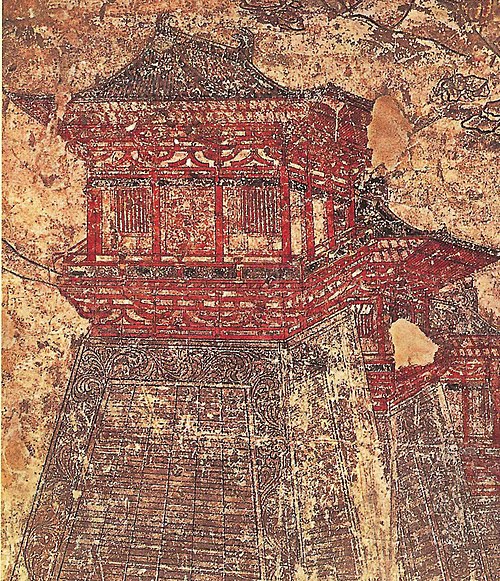
Visits the capital Chang'an for the first time
Li Bai travels to Chang'an (modern Xi'an), the Tang capital, seeking patronage. He meets with officials and poets but fails to secure a position initially. #LiBai #ChangAn #TangCapital
Visits the capital Chang'an for the first time By Unknown Tang-era tomb artist - Paludan, Ann. (1998). Chronicle of the Chinese Emperors: the Reign-by-Reign Record of the Rulers of Imperial China. London: Thames & Hudson Ltd. ISBN 0500050902. Page 106., Public domain, https://commons.wikimedia.org/w/index.php?curid=6860728
736 CE
Meets He Zhizhang, who calls him 'Immortal Banished from Heaven'
Li Bai meets the poet He Zhizhang, who is impressed by his talent and dubs him the 'Immortal Banished from Heaven' (Zhe Xian), a title that sticks. #LiBai #HeZhizhang #ZheXian
Meets He Zhizhang, who calls him 'Immortal Banished from Heaven' By Original uploader was Iwanafish at en.wikipedia - Transferred from en.wikipedia, Public domain, https://commons.wikimedia.org/w/index.php?curid=7448414
742 CE
Summoned to the Hanlin Academy by Emperor Xuanzong
Emperor Xuanzong of Tang summons Li Bai to the Hanlin Academy, a prestigious imperial institution. Li Bai serves as a court poet, composing poems for the emperor. #LiBai #HanlinAcademy #EmperorXuanzong
Summoned to the Hanlin Academy by Emperor Xuanzong By Jin Kun, Sun Hu, Lu Zhan, Wu Yu, and Zhang Qi - Hanlin Academy | Musée Cernuschi | Paris.fr, Public domain, https://commons.wikimedia.org/w/index.php?curid=46583659
743 CE
Writes 'Bring in the Wine' for the emperor
Li Bai composes the exuberant poem 'Bring in the Wine' (Jiang Jin Jiu), celebrating wine and life, which becomes one of his most famous works. #LiBai #JiangJinJiu #WinePoetry
744 CE
Leaves Chang'an and resumes wandering
Li Bai leaves the Hanlin Academy due to court intrigues and his own unorthodox behavior. He resumes his wandering life, traveling with Du Fu and Gao Shi. #LiBai #Wandering #TangDynasty
744 CE
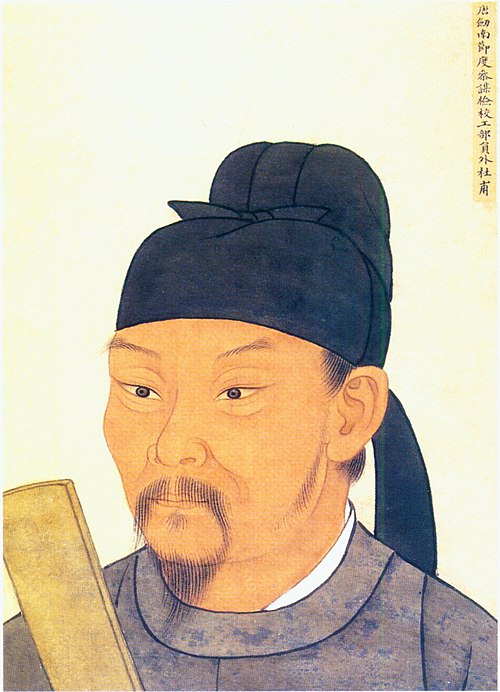
Meets Du Fu in Luoyang
Li Bai meets the younger poet Du Fu in Luoyang, beginning a legendary friendship. They exchange poems and travel together, influencing each other's work. #LiBai #DuFu #PoetFriendship
Meets Du Fu in Luoyang By Unknown author - http://202.121.7.7/person/dzzgx/030124dufu2.jpg, Public domain, https://commons.wikimedia.org/w/index.php?curid=111730
745 CE
Travels with Du Fu and Gao Shi in Shandong
Li Bai, Du Fu, and Gao Shi travel together in Shandong, visiting sacred mountains and composing poems. This period is a highlight of Tang literary camaraderie. #LiBai #DuFu #GaoShi #Shandong
746 CE
Writes 'The Road to Shu is Hard'
Li Bai composes 'The Road to Shu is Hard,' a dramatic poem describing the perilous journey to Sichuan, blending geography with Daoist symbolism. #LiBai #Shu #Poetry
747 CE
Visits Mount Tai and writes poems
Li Bai climbs Mount Tai, a sacred Daoist mountain, and writes several poems praising its grandeur and spiritual significance. #LiBai #MountTai #Daoism
Visits Mount Tai and writes poems By xiquinhosilva - 50304-Taishan, CC BY 2.0, https://commons.wikimedia.org/w/index.php?curid=138503943
748 CE
Receives Daoist ordination at Mount Qizhou
Li Bai formally becomes a Daoist priest at Mount Qizhou (in modern Shandong), deepening his commitment to Daoist philosophy and alchemy. #LiBai #Daoism #Ordination
750 CE
Writes 'Farewell to a Friend'
Li Bai composes the poignant poem 'Farewell to a Friend,' a classic of Chinese parting poetry, using natural imagery to express sorrow and hope. #LiBai #Farewell #Poetry
751 CE
Travels to the northern frontier
Li Bai journeys to the northern frontier (modern Shanxi and Inner Mongolia), witnessing military life and composing poems about border fortresses. #LiBai #Frontier #Military
752 CE
Writes 'Hard is the Road to Shu' (variant)
Li Bai writes another version of 'Hard is the Road to Shu,' further developing the theme of arduous journeys as metaphors for life's challenges. #LiBai #Shu #Poetry
753 CE
Meets Cen Shen in the northwest
Li Bai meets the frontier poet Cen Shen in the northwest, exchanging poems about the harsh beauty of the borderlands. #LiBai #CenShen #FrontierPoetry
Meets Cen Shen in the northwest By Kanō Tsunenobu (1636-1713) - http://www.360doc.com/content/15/0302/21/2369606_452072774.shtml, Public domain, https://commons.wikimedia.org/w/index.php?curid=68500424
754 CE
Writes 'The Sun Rises and Sets'
Li Bai composes 'The Sun Rises and Sets,' a philosophical poem reflecting on the passage of time and the eternal cycles of nature. #LiBai #Philosophy #Nature
755 CE
An Lushan Rebellion begins
The An Lushan Rebellion erupts, plunging the Tang Dynasty into chaos. Li Bai flees southward to avoid the conflict. #LiBai #AnLushan #Rebellion
An Lushan Rebellion begins By SY - Own work, CC BY-SA 4.0, https://commons.wikimedia.org/w/index.php?curid=60785139
756 CE
Joins Prince Yong's rebel forces
Li Bai joins the rebel forces of Prince Yong (Li Lin), hoping to restore order. This decision later leads to his arrest and exile. #LiBai #PrinceYong #Rebellion
757 CE
Arrested and imprisoned in Xunyang
After Prince Yong's rebellion fails, Li Bai is arrested and imprisoned in Xunyang (modern Jiujiang). He faces the death penalty but is spared by influential friends. #LiBai #Imprisonment #Xunyang
758 CE
Sentenced to exile in Yelang
Li Bai is sentenced to exile in Yelang (modern Guizhou). He begins the long journey to the remote southwestern region. #LiBai #Exile #Yelang
759 CE
Pardoned on the way to exile
Li Bai receives a pardon due to a general amnesty. He turns back from exile, writing the joyful poem 'Leaving the White Emperor Town at Dawn.' #LiBai #Pardon #Poetry
760 CE
Visits Dangtu and writes 'The River Merchant's Wife'
Li Bai visits Dangtu (modern Anhui) and composes 'The River Merchant's Wife: A Letter,' a poignant poem about longing and separation. #LiBai #RiverMerchant #Poetry
761 CE
Writes 'Quiet Night Thought'
Li Bai writes 'Quiet Night Thought,' a short, evocative poem about homesickness under the moonlight, which becomes one of the most beloved Chinese poems. #LiBai #QuietNight #Homesickness
Writes 'Quiet Night Thought' By Unknown author - Unknown source, Public domain, https://commons.wikimedia.org/w/index.php?curid=151794067
762 CE
Du Fu writes elegy for Li Bai
Du Fu composes several poems mourning Li Bai's death, including 'Dreaming of Li Bai,' celebrating their friendship and Li Bai's poetic legacy. #LiBai #DuFu #Elegy
762 CE
Dies in Dangtu
Li Bai dies in Dangtu at age 61. Legend says he drowned while trying to embrace the moon's reflection in the Yangtze River, but historical records indicate illness. #LiBai #Death #Legend
762 CE
Posthumous recognition as 'Poet Immortal'
Li Bai is posthumously honored as the 'Poet Immortal' (Shi Xian) for his unparalleled poetic genius and romantic, transcendent style. #LiBai #PoetImmortal #Legacy
800 CE
Li Bai's poems compiled in 'Complete Tang Poems'
Li Bai's surviving poems are collected in the 'Complete Tang Poems' anthology, preserving over 1,000 of his works for future generations. #LiBai #TangPoetry #Anthology
Li Bai's poems compiled in 'Complete Tang Poems' By Kangxi Emperor - Royal Academy of Arts, part of the The Three Emperors, 1662 - 1795 exhibition which ran from 12 November 2005 - 17 April 2006 in London. Website might be taken down at some point in future., Public domain, https://commons.wikimedia.org/w/index.php?curid=775360
1084 CE
Song Dynasty poet Su Shi praises Li Bai
Su Shi (Su Dongpo) writes a famous essay praising Li Bai's poetry, cementing his status as a literary icon in later dynasties. #LiBai #SuShi #LiteraryCriticism
Song Dynasty poet Su Shi praises Li Bai By Zhao Mengfu - Not stated by uploader, Public domain, https://commons.wikimedia.org/w/index.php?curid=708061
1900 CE
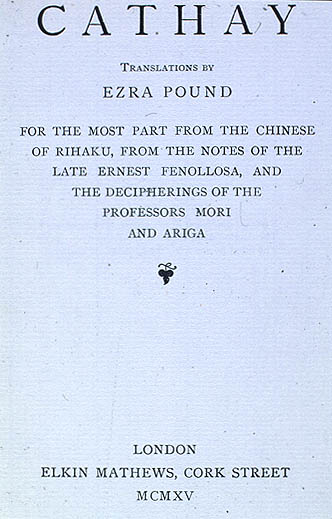
Li Bai's poetry translated into English by Ezra Pound
Ezra Pound's translations of Li Bai's poems (as 'Cathay') introduce his work to the Western world, influencing modernist poetry. #LiBai #EzraPound #Translation
Li Bai's poetry translated into English by Ezra Pound By Unknown author, Public domain, https://commons.wikimedia.org/w/index.php?curid=10650266
1950 CE
Li Bai featured in UNESCO's World Poetry Day
Li Bai is celebrated as a world poet, with his works included in UNESCO's anthologies of world literature. #LiBai #UNESCO #WorldPoetry
2001 CE
Li Bai's tomb in Dangtu becomes cultural heritage site
The tomb of Li Bai in Dangtu, Anhui, is designated a major cultural heritage site under state protection. #LiBai #Tomb #CulturalHeritage
2010 CE
Li Bai's poetry set to music in contemporary compositions
Modern Chinese composers set Li Bai's poems to music, blending traditional and contemporary styles, keeping his work alive in popular culture. #LiBai #Music #Contemporary
2020 CE
Li Bai's 'Drinking Alone Under the Moon' inspires global poetry readings
During the COVID-19 pandemic, online poetry readings feature Li Bai's 'Drinking Alone Under the Moon' as a symbol of solitude and resilience. #LiBai #COVID19 #PoetryReading