Encyclopedia/4. Arts & Literature/1. Literature, Mythology & Folklore/01. Classical & Ancient Literature • Curated by Admin Timeline.sg
This timeline traces the evolution of Japanese literature from ancient oral traditions to modern works, highlighting key poets, writers, and movements including haiku, novels, and manga.
Chronological Storyline (30 Milestones)
712 CE
Kojiki Compiled
The Kojiki, Japan's oldest extant chronicle, is compiled, recording myths, legends, and early history. It contains ancient songs and poems, laying the foundation for Japanese literature. #japanese #literature #history
759 CE
Manyoshu Anthology Completed
The Manyoshu ('Collection of Ten Thousand Leaves') is compiled, Japan's first and greatest poetry anthology. It includes over 4,500 poems by various authors, spanning from legendary times to the 8th century. #japanese #poetry #anthology
Manyoshu Anthology Completed By .mw-parser-output .ubx-floatdefault[dir="ltr"],.mw-parser-output .ubx-floatopposite[dir="rtl"],.mw-parser-output .ubx-floatleft{float:left}.mw-parser-output .ubx-floatdefault[dir="rtl"],.mw-parser-output .ubx-floatopposite[dir="ltr"],.mw-parser-output .ubx-floatright{float:right}.mw-parser-output .ubx-floatnone{float:none} WikiFlag - Own work, CC0, https://commons.wikimedia.org/w/index.php?curid=168793511
905 CE
Kokin Wakashu Compiled
The Kokin Wakashu ('Collection of Ancient and Modern Poems') is an imperial anthology of waka poetry, edited by Ki no Tsurayuki. It establishes the aesthetic ideals of Japanese court poetry and includes a famous preface on poetics. #japanese #poetry #waka
Kokin Wakashu Compiled By Unknown author - Tokyo National Museum, Public domain, https://commons.wikimedia.org/w/index.php?curid=11548732
1002 CE
The Pillow Book Written
Sei Shonagon completes 'The Pillow Book', a collection of essays, lists, and observations of court life. It is a masterpiece of Japanese literature and a key example of the zuihitsu (essay) genre. #japanese #literature #essays
The Pillow Book Written By 土佐光起 (Tosa Mitsuoki) - [1], Public domain, https://commons.wikimedia.org/w/index.php?curid=3616093
1008 CE
Tale of Genji Completed
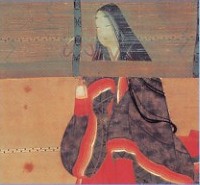
Murasaki Shikibu finishes 'The Tale of Genji', widely considered the world's first novel. This epic work depicts the life of Prince Genji and offers a deep insight into Heian court culture. #japanese #novel #classic
Tale of Genji Completed By Imperial Palace Kyoto - 1. Gotoh Museum [1], 2. Geidai.ac.jp [2], Public domain, https://commons.wikimedia.org/w/index.php?curid=3596328
1212 CE
Hojoki Composed
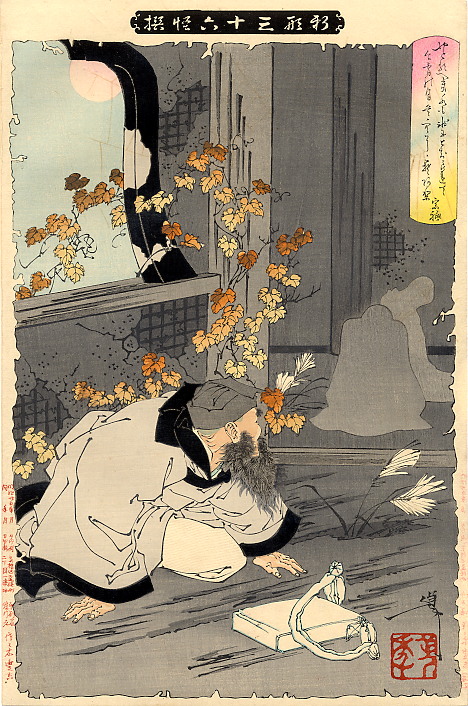
Kamo no Chomei writes 'Hojoki' ('An Account of My Hut'), a short essay reflecting on impermanence and the simple life. It is a classic of Japanese literature and a seminal work of the recluse literary tradition. #japanese #essay #buddhism
Hojoki Composed By Mstavros111 - Own work, CC0, https://commons.wikimedia.org/w/index.php?curid=149825473
1240 CE
Heike Monogatari Takes Shape
The 'Tale of the Heike', an epic account of the Genpei War, is performed by biwa hōshi (blind lute priests). It becomes a foundational text of Japanese literature, blending history, tragedy, and Buddhist themes. #japanese #epic #war
Heike Monogatari Takes Shape By Unknown artist of the Kano school - Clark Center for Japanese Art and Culture, ArtDaily.com, Public domain, https://commons.wikimedia.org/w/index.php?curid=26527740
1331 CE
Tsurezuregusa Published
Yoshida Kenko completes 'Tsurezuregusa' ('Essays in Idleness'), a collection of essays on aesthetics, nature, and life. It becomes a classic of Japanese literature and a key text for the concept of wabi-sabi. #japanese #essays #aesthetics
Tsurezuregusa Published By Unknown author, Public domain, https://commons.wikimedia.org/w/index.php?curid=632686
1375 CE
Zeami Writes on Noh Drama
Zeami Motokiyo writes 'Fushikaden' ('Teachings on Style and the Flower'), a treatise on Noh theater. He codifies the art form and influences Japanese drama and literature profoundly. #japanese #theatre #noh
1488 CE
Sōgi Leads Linked Verse
The poet Sōgi compiles the 'Minase Sangin' ('Three Poets at Minase'), a renga (linked verse) sequence. This exemplifies the collaborative poetic form popular in the Muromachi period. #japanese #poetry #renga
Sōgi Leads Linked Verse By Unknown author, Public domain, https://commons.wikimedia.org/w/index.php?curid=624435
1644 CE
Matsuo Basho Born
Matsuo Basho, the most famous haiku poet, is born. He will elevate haikai no renga (comic linked verse) into a serious art form and write 'Narrow Road to the Deep North'. #japanese #poet #haiku
Matsuo Basho Born By Morikawa Kyoriku (1656-1715) - http://www.sonic.net/~tabine/SAABasho_etc_Spring_2005/basho_folder/SAASpring2005_Basho_01.html, Public domain, https://commons.wikimedia.org/w/index.php?curid=14586824
1680 CE
Basho's Haiku Style Matures
Matsuo Basho writes his first mature haiku, focusing on simplicity and nature. His style becomes the model for haiku poetry worldwide. #haiku #poetry #nature
1702 CE
Narrow Road to the Deep North Published
Basho's travel journal 'Oku no Hosomichi' is published posthumously. It combines haiku with prose, describing a journey to northern Japan. It is a masterpiece of Japanese literature. #japanese #travelogue #haiku
Narrow Road to the Deep North Published By Hokusai - http://visipix.dynalias.com/search/search.php?q=hokusai&u=&l=en, Public domain, https://commons.wikimedia.org/w/index.php?curid=13896592
1716 CE
Yosa Buson Born
Yosa Buson, a poet and painter of the Edo period, is born. He revives Basho's style and contributes to the haiku and haiga (haiku painting) traditions. #japanese #poet #artist
Yosa Buson Born By Ґосюн (1752-1811) - File:Yosa Buson.jpg, Public domain, https://commons.wikimedia.org/w/index.php?curid=42115341
1763 CE
Kobayashi Issa Born
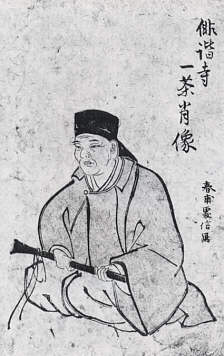
Kobayashi Issa, one of the four great haiku masters, is born. His haiku often reflect his personal hardships and a deep empathy for small creatures. #haiku #poetry #compassion
Kobayashi Issa Born By Yoshi Canopus - Self-photographed, CC BY-SA 3.0, https://commons.wikimedia.org/w/index.php?curid=7681094
1790 CE
Kitao Shigemasa Prints Haiku
The artist Kitao Shigemasa creates illustrated haiku books, blending poetry with ukiyo-e art, popularizing the genre among commoners. #haiku #ukiyoe #art
Kitao Shigemasa Prints Haiku By Attributed to Kitao Shigemasa (Japan, 1739-1820) - Image: http://collections.lacma.org/sites/default/files/remote_images/piction/ma-33988713-O3.jpg Gallery: https://collections.lacma.org/node/172384 archive copy at the Wayback Machine, Public domain, https://commons.wikimedia.org/w/index.php?curid=27236385
1867 CE
Masaoka Shiki Born
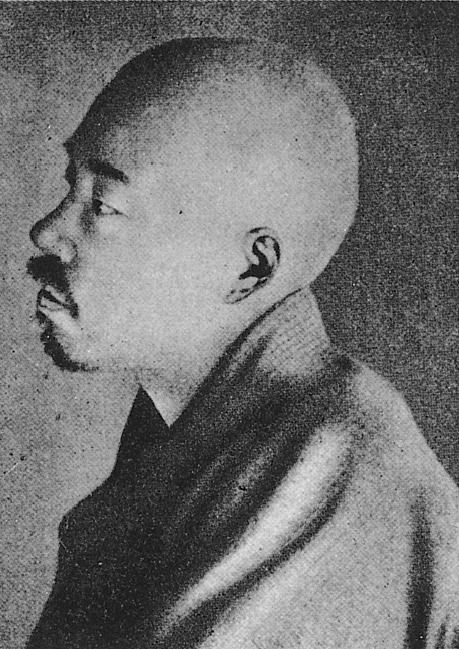
Masaoka Shiki, the poet who modernizes haiku and tanka, is born. He introduces the term 'haiku' and advocates for realism and innovation in Japanese poetry. #haiku #modern #poet
Masaoka Shiki Born By Unknown author - This image is available from the website of the National Diet Library, Public domain, https://commons.wikimedia.org/w/index.php?curid=1868155
1897 CE
Shiki's Haiku Reform Movement
Masaoka Shiki publishes 'Haiku Taikai' (Exposition of Haiku), criticizing traditional haiku and promoting a new, more objective approach. This sparks a nationwide debate and revitalizes the genre. #haiku #reform #literature
1905 CE
Natsume Soseki's I Am a Cat
Natsume Soseki publishes his debut novel 'Wagahai wa Neko de Aru' (I Am a Cat), a satirical work narrated by a cat. It becomes a classic of Japanese literature. #japanese #novel #satire
Natsume Soseki's I Am a Cat By 橋口五葉 - https://brbl-dl.library.yale.edu/vufind/Record/3578239, Public domain, https://commons.wikimedia.org/w/index.php?curid=66731765
1914 CE
Soseki's Kokoro Published
Natsume Soseki's 'Kokoro' is published, a psychological novel exploring loneliness and the changing Meiji society. It is considered one of his masterpieces. #japanese #novel #psychology )
1915 CE
Rashomon and Other Stories
Ryūnosuke Akutagawa publishes 'Rashōmon', a short story set in 12th-century Kyoto. His psychological depth and narrative style influence later Japanese literature. #japanese #shortstory #classic )
1925 CE
Yukio Mishima Born
Yukio Mishima, one of Japan's most influential modern writers, is born. He is known for his novels, plays, and his controversial political views. #japanese #writer #modern
Yukio Mishima Born By Ken Domon - https://unregardoblique.com/2018/02/04/ken-domon-yukio-mishima-1955/, Public domain, https://commons.wikimedia.org/w/index.php?curid=163969377
1937 CE
Mishima's First Published Work
Yukio Mishima publishes his first novel, 'Kamen no Kokuhaku' (Confessions of a Mask), a semi-autobiographical exploration of sexuality and identity. It garners critical acclaim. #japanese #novel #identity
1947 CE
Osamu Tezuka Debuts with New Treasure Island
Osamu Tezuka publishes 'Shin Takarajima' (New Treasure Island), revolutionizing manga with cinematic storytelling. He becomes the 'God of Manga' and elevates the medium to a literary art form. #manga #japanese #comics
Osamu Tezuka Debuts with New Treasure Island By Unknown author - "Showa Day by Day" volume 9, Kodansha Co., 1989.『昭和 二万日の全記録 第9巻』講談社、1989年、p.239, Public domain, https://commons.wikimedia.org/w/index.php?curid=30646828
1957 CE
Mishima's The Temple of the Golden Pavilion
Yukio Mishima publishes 'Kinkaku-ji' (The Temple of the Golden Pavilion), a novel based on the destruction of a famous temple. It explores beauty, obsession, and destruction. #japanese #novel #philosophy
1968 CE
Yasunari Kawabata Wins Nobel Prize
Yasunari Kawabata becomes the first Japanese author to win the Nobel Prize in Literature, for his 'narrative mastery, which with great sensibility expresses the essence of the Japanese mind'. #nobel #japanese #literature
Yasunari Kawabata Wins Nobel Prize By Unknown author - http://mhsteger.tumblr.com/post/697607461/yasunari-kawabata-born-14-june-1899-died-16, Public domain, https://commons.wikimedia.org/w/index.php?curid=18724828
1987 CE
Haruki Murakami's Norwegian Wood
Haruki Murakami publishes 'Noruwei no Mori' (Norwegian Wood), a nostalgic love story that becomes a bestseller worldwide. It establishes Murakami as a leading contemporary author. #japanese #novel #contemporary )
1994 CE
Kenzaburō Ōe Wins Nobel Prize
Kenzaburō Ōe receives the Nobel Prize in Literature for his poetic force that creates an imagined world where life and myth condense to form a disconcerting picture of the human predicament. #nobel #japanese #literature
Kenzaburō Ōe Wins Nobel Prize By Thesupermat - Own work, CC BY-SA 3.0, https://commons.wikimedia.org/w/index.php?curid=19577900
2000 CE
Murakami's The Wind-Up Bird Chronicle
Haruki Murakami's 'The Wind-Up Bird Chronicle' is published in English, gaining international acclaim for its surreal narrative and exploration of Japan's wartime past. #japanese #novel #surreal
2017 CE
Manga Sales Boom Globally
Manga, Japanese comics, see record global sales with series like 'One Piece' and 'Attack on Titan'. Manga becomes a significant part of world literature and culture. #manga #global #popular
Manga Sales Boom Globally By Kasuga - https://pixiv.net/en/artworks/14285549, CC BY-SA 3.0, https://commons.wikimedia.org/w/index.php?curid=34696840