James Watt: Separate Condenser Steam Engine & Industrial Revolution Engine
Encyclopedia/2. Technology & The Built World/2. Engineering & Applied Sciences/03. Engineering Biographies • Curated by Admin Timeline.sg
Biographical timeline of Scottish engineer James Watt, whose separate condenser steam engine was a pivotal innovation of the Industrial Revolution, catalyzing mechanized production and transportation. Spanning 1736 to 1819, this chronology traces Watt's innovations, partnerships, and legacy.
Chronological Storyline (34 Milestones)
Jan 30, 1736 CE
James Watt Born in Greenock, Scotland
James Watt is born on January 30, 1736 (OS January 19) in Greenock, Renfrewshire, Scotland. His father was a shipwright and merchant. #history #biography
James Watt Born in Greenock, Scotland By Carl Frederik von Breda - one or more third parties have made copyright claims against Wikimedia Commons in relation to the work from which this is sourced or a purely mechanical reproduction thereof. This may be due to recognition of the "sweat of the brow" doctrine, allowing works to be eligible for protection through skill and labour, and not purely by originality as is the case in the United States (where this website is hosted). These claims may or may not be valid in all jurisdictions. As such, use of this image in the jurisdiction of the claimant or other countries may be regarded as copyright infringement. Please see Commons:When to use the PD-Art tag for more information., Public domain, https://commons.wikimedia.org/w/index.php?curid=3942134
1754 CE
Watt Apprenticed in London
At age 18, Watt travels to London to learn instrument making. He studies under John Morgan and gains expertise in mathematical instruments. #engineering #biography
1756 CE
Returns to Glasgow, Opens Workshop
Watt returns to Glasgow and opens a shop for making and repairing mathematical instruments. He faces competition from established craftsmen. #history #scotland
1757 CE
Appointed Instrument Maker to University of Glasgow
Watt becomes the mathematical instrument maker to the University of Glasgow. This position gives him access to a steam engine model that will inspire his separate condenser. #education #engineering
1764 CE
Repairing Newcomen Engine Model
Watt is asked to repair a model Newcomen steam engine belonging to the University. He notes its inefficiency due to condensing steam inside the cylinder. #steamengine #innovation
May 1, 1765 CE
Separate Condenser Concept Experimented
While walking in Glasgow Green, Watt conceives the idea of a separate condenser to avoid cooling the cylinder. He builds a model that proves successful later that year. #invention #steam
1768 CE
Partnership with John Roebuck
Watt enters a partnership with John Roebuck, founder of the Carron Ironworks, to develop his steam engine. Roebuck provides financial backing. #business #steamengine
Jan 5, 1769 CE
Patent for Separate Condenser Granted
Patent No. 913 is granted to Watt for 'A New Invented Method of Lessening the Consumption of Steam and Fuel in Fire Engines'. This is a landmark in steam engine development. #patent #industrialrevolution
1772 CE
Roebuck Bankrupt; Boulton Acquires Share
Roebuck's financial difficulties lead to bankruptcy. Matthew Boulton, a Birmingham industrialist, acquires Roebuck's share in Watt's patent, setting the stage for their partnership. #business #history
Roebuck Bankrupt; Boulton Acquires Share By Carl Frederik von Breda - originally uploaded to en.wikipedia by JimmyGuano (talk · contribs) on 17 January 2009, 21:52 under the file name Matthew Boulton - Carl Frederik von Breda.jpg.(+/−), Public domain, https://commons.wikimedia.org/w/index.php?curid=6409131
1774 CE
Watt Moves to Birmingham
Watt relocates from Scotland to Birmingham to work closely with Matthew Boulton at the Soho Manufactory. This move is crucial for engine development. #biography #engineering
1775 CE
Boulton & Watt Partnership Formalized
Boulton and Watt formalize their partnership to manufacture steam engines. Boulton provides business acumen and capital, while Watt focuses on engineering. #partnership #business
Boulton & Watt Partnership Formalized By Murgatroyd49 - Own work, CC BY-SA 4.0, https://commons.wikimedia.org/w/index.php?curid=90950568
1776 CE
First Commercial Engine Installed
The first commercial Boulton & Watt engine is installed at Bloomfield Colliery in Tipton, Staffordshire. It pumps water from a coal mine. #steamengine #industrialrevolution
1777 CE
Second Engine at Bow, London
A steam engine is installed at the Bow copper rolling mill in London. This marks the expansion of Watt engines to other industries. #engineering #history
Oct 25, 1781 CE
Patent for Sun and Planet Gear
Watt patents the sun and planet gear, which converts reciprocating motion of the beam engine into rotary motion for driving machinery. This opens new industrial applications. #invention #mechanical
Patent for Sun and Planet Gear By Newtown grafitti from Sydney, Australia - flywheel of the Boulton-Watt steam engine, CC BY 2.0, https://commons.wikimedia.org/w/index.php?curid=38852277
1782 CE
Double-Acting Steam Engine Patented
Watt patents a double-acting engine where steam acts alternately on both sides of the piston, doubling power. This is a major improvement. #steam #engineering
Double-Acting Steam Engine Patented By Petar Milošević - Own work, CC BY-SA 4.0, https://commons.wikimedia.org/w/index.php?curid=66451413
1783 CE
Watt's Work on Composition of Water
Watt corresponds with Joseph Priestley and others about the composition of water, although credit is controversial. He contributes to the discovery that water is a compound. #science #chemistry
Apr 28, 1784 CE
Parallel Motion Patent
Watt patents the parallel motion mechanism to keep the piston rod moving in a straight line, essential for double-acting engines. #invention #mechanics
Parallel Motion Patent By Arglin Kampling - Own work, CC BY-SA 4.0, https://commons.wikimedia.org/w/index.php?curid=116801277
1785 CE
Watt's Steam Engine Used in Textile Mills
Boulton & Watt engines begin powering textile mills, notably at the cotton mill of John Kay in Northwich. This marks the steam engine's role in the textile revolution. #industrialrevolution #textile
1788 CE
Centrifugal Governor Developed
Watt incorporates the centrifugal governor to control engine speed automatically. This feedback mechanism is a foundational concept in control engineering. #automation #engineering
Centrifugal Governor Developed By R. Routledge - Image from "Discoveries & Inventions of the Nineteenth Century" by R. Routledge, 13th edition, published 1900., Public domain, https://commons.wikimedia.org/w/index.php?curid=231047
1790 CE
Pressure Gauge Introduced
Watt adds a pressure gauge to steam engines to monitor steam pressure, improving safety and efficiency. #invention #safety
1794 CE
Patent Expiry and Expansion of Engine Use
Watt's original patent expires, but Boulton & Watt continue to enforce improvements. Many engines are now in operation across Britain. #economics #industrialrevolution
1796 CE
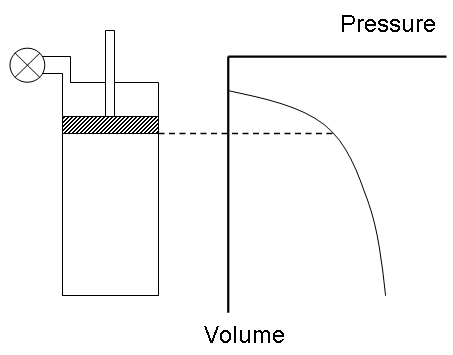
Steam Indicator Invented
Watt invents the steam indicator, a device that records steam pressure in the cylinder, allowing engineers to analyze engine performance. #invention #measurement
Steam Indicator Invented By Antony Cutler (Cutler at English Wikipedia) - Own work, CC BY-SA 3.0, https://commons.wikimedia.org/w/index.php?curid=244547
1800 CE
Watt Retires from Boulton & Watt
Watt retires, leaving the business to his sons James Watt Jr. and Matthew Robinson Boulton. His patents expire, leading to widespread adoption of his engine. #retirement #legacy
1804 CE
Honorary Membership in American Academy of Arts and Sciences
Watt is elected a Foreign Honorary Member of the American Academy of Arts and Sciences. #recognition #science
1806 CE
Watt Honored by Royal Society of Edinburgh
The Royal Society of Edinburgh honors Watt for his contributions. He is later a founding member. #award #science
1808 CE
Luddite Opposition to Machinery
During the Luddite uprisings, Watt's engines are sometimes targeted. Despite this, industrialization accelerates. #socialhistory #luddites
Luddite Opposition to Machinery By Unknown. 195 years since publication, copyright extinguished - Working Class Movement Library catalogue, Public domain, https://commons.wikimedia.org/w/index.php?curid=2603296
Aug 17, 1809 CE
Death of Matthew Boulton
Matthew Boulton dies. Watt mourns his partner and friend. Their collaboration had been instrumental in the success of the steam engine. #obituary #partnership
1814 CE
Watt Aids in Inventing a Sculpture Copying Machine
Watt develops a device for copying sculptures in marble, known as the 'James Watt copying machine' or 'sculpture machine'. This shows his versatility. #invention #art
Aug 25, 1819 CE
Death of James Watt at Heathfield Hall
James Watt dies at his home in Handsworth, Birmingham. He is buried in St. Mary's Church. His legacy as a pioneer of the steam engine endures. #obituary #legacy
1824 CE
Watt's Statue by Chantrey Erected in Westminster Abbey
A statue of James Watt by Sir Francis Chantrey is placed in Westminster Abbey, commemorating his contributions to the nation. #monument #honor
1832 CE
Watt's Patent Expiration Allows Competition
The last of Watt's patents expire, enabling other engineers like Richard Trevithick to develop high-pressure steam engines. #technology #competition
Aug 1, 1882 CE
Watt's Name Given to Unit of Power
The 'watt' (W) is adopted as a unit of power at the International Electrical Congress. This honors James Watt's work on steam engines. #measurement #physics
Watt's Name Given to Unit of Power By Gzen92 - Own work, CC BY-SA 4.0, https://commons.wikimedia.org/w/index.php?curid=50877095
1911 CE
James Watt International Gold Medal Established
The Institution of Mechanical Engineers establishes the James Watt International Gold Medal, awarded for outstanding achievements in mechanical engineering. #award #engineering
1964 CE
Watt's Birthplace Designated a Museum
Watt's birthplace in Greenock is opened as the James Watt Museum, preserving his legacy. #museum #heritage