Encyclopedia/1. The Cosmos & The Natural World/2. Physics & Chemistry/03. Chemistry & Periodic Table of Elements • Curated by Admin Timeline.sg
Inorganic coordination complexes involve metal ions bonded to ligands, forming structures with diverse applications from pigments to catalysis. This timeline traces their development from ancient blue pigments to modern metal-organic frameworks, highlighting key discoveries and theories.
Chronological Storyline (45 Milestones)
3100 BCE
Egyptian Blue Synthesized
Ancient Egyptians create Egyptian blue (calcium copper silicate), one of the first synthetic inorganic coordination compounds. Used in tombs and artifacts, it demonstrates early understanding of metal-ligand interactions. #history #chemistry
Egyptian Blue Synthesized By FK1954 - Own work, Public domain, https://commons.wikimedia.org/w/index.php?curid=9814827
120 CE
Han Purple and Blue in China
Chinese artisans produce Han purple and Han blue (barium copper silicates), complex inorganic pigments. These compounds exhibit coordination chemistry with copper centers, predating modern understanding by millennia. #chemistry #history
Han Purple and Blue in China By Unknown author - Scanned from "Wen Wu" 1992 no.12, Public domain, https://commons.wikimedia.org/w/index.php?curid=11091613
1704 CE
Discovery of Prussian Blue
Heinrich Diesbach accidentally synthesizes Prussian blue (Fe4[Fe(CN)6]3), the first modern coordination compound. Its intense color and stability lead to widespread use as a pigment. #chemistry #discovery
Discovery of Prussian Blue By Saalebaer - Own work, CC0, https://commons.wikimedia.org/w/index.php?curid=27936684
1828 CE
Tassaert Observes Cobalt Complexes
French chemist Théophile-Jules Tassaert notes color changes in cobalt chloride solutions with ammonia, hinting at coordination. This observation later influences Werner's coordination theory. #chemistry #history
Tassaert Observes Cobalt Complexes By Benjah-bmm27 - Own work, Public domain, https://commons.wikimedia.org/w/index.php?curid=1990049
1833 CE
Gmelin Discovers Potassium Ferricyanide
Leopold Gmelin characterizes potassium ferricyanide (K3[Fe(CN)6]), an early coordination compound. Its synthesis and reactions contribute to the study of complex ions. #chemistry #discovery
Gmelin Discovers Potassium Ferricyanide By Keresluna - Own work, CC BY-SA 4.0, https://commons.wikimedia.org/w/index.php?curid=145708572
1843 CE
Cobaltammine Complexes Investigated
French chemist Antoine-Jérôme Balard studies cobalt-ammonia complexes, later classified as coordination compounds. His work paves the way for systematic analysis of metal-ammine complexes. #chemistry #history )_hexammine_complex
1851 CE
Bunsen and Roscoe Study Metal Ammines
Robert Bunsen and Henry Roscoe investigate metal-ammine compounds, noting their stoichiometry. Their work provides early experimental data on coordination spheres. #chemistry #science
Bunsen and Roscoe Study Metal Ammines By Ben Mills and Jynto - Derived from File:Tetraamminecopper(II)-3D-balls.png and File:Hexaaquacopper(II)-3D-balls.png., Public domain, https://commons.wikimedia.org/w/index.php?curid=10026949
1869 CE
Blomstrand Proposes Chain Theory
Christian Wilhelm Blomstrand proposes a chain theory for metal-ammonia complexes, incorrectly suggesting linked ammonia molecules. Later refined, it spurs debate leading to Werner's correct model. #chemistry #theory
1889 CE
Jørgensen's Work on Cobalt Complexes
Sophus Mads Jørgensen extensively studies cobalt-ammine complexes, synthesizing many isomers. His experimental evidence challenges chain theories and sets stage for coordination chemistry. #chemistry #history
Jørgensen's Work on Cobalt Complexes By Unknown author - http://virgil.ruc.dk/kurser/Uorgkemi/Noter/smj.htm, Public domain, https://commons.wikimedia.org/w/index.php?curid=3049035
1892 CE
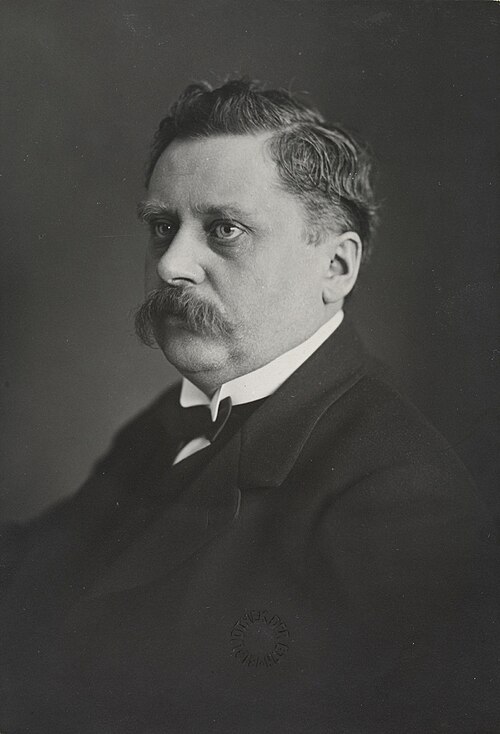
Werner Proposes Coordination Theory
Alfred Werner publishes his landmark paper proposing that metal ions have primary and secondary valences, introducing the concept of coordination number. This revolutionizes inorganic chemistry. #chemistry #breakthrough
Werner Proposes Coordination Theory By ETH Zürich - ETH-Bibliothek Zürich, Bildarchiv, CC BY-SA 3.0, https://commons.wikimedia.org/w/index.php?curid=8098260
1893 CE
Werner Explains Isomerism in Complexes
Alfred Werner correctly explains optical and geometric isomerism in coordination compounds, predicting the existence of chiral complexes. His theory is later confirmed experimentally. #chemistry #science
1897 CE
Synthesis of First Coordination Polymer
Hofmann and Küspert prepare Ni(NH3)2(CN)2·C6H6, an early clathrate compound. This is now considered a precursor to coordination polymers and metal-organic frameworks. #chemistry #discovery
Synthesis of First Coordination Polymer By Chem538w10grp8 - Own work, Public domain, https://commons.wikimedia.org/w/index.php?curid=9988250
1907 CE
Werner Resolves Chiral Cobalt Complex
Alfred Werner successfully resolves a chiral cobalt complex, proving his theory of octahedral geometry. This experiment wins him the Nobel Prize in Chemistry (1913). #chemistry #nobel
1913 CE
Nobel Prize to Alfred Werner
Alfred Werner receives the Nobel Prize for his work on the linkage of atoms in molecules, especially for his coordination theory. This solidifies coordination chemistry as a major field. #chemistry #nobel
1923 CE
Sidgwick Introduces Effective Atomic Number
Nevil Sidgwick proposes the effective atomic number (EAN) rule, relating stability of complexes to noble gas configuration. This concept explains many metal-ligand interactions. #chemistry #theory
1929 CE
Bethe Develops Crystal Field Theory
Hans Bethe applies electrostatic principles to explain d-orbital splitting in transition metal complexes, laying foundation for crystal field theory. This is a major theoretical advance. #chemistry #physics
1932 CE
Pauling Introduces Valence Bond Theory
Linus Pauling applies quantum mechanics to bonding in coordination compounds, explaining magnetic properties and geometry. This connects coordination chemistry to broader chemical theory. #chemistry #quantum
1935 CE
Chelating Agents First Used
The chelate effect is recognized with early use of ethylenediamine in metal complexes. Chelating ligands form more stable complexes, important in analytical and medicinal chemistry. #chemistry #discovery
1945 CE
EDTA Invented
Ethylenediaminetetraacetic acid (EDTA) is synthesized by Ferdinand Münz. It becomes a versatile chelating agent used in water softening, medicine, and industry. #chemistry #invention
EDTA Invented By NEUROtiker (talk) - Own work, Public domain, https://commons.wikimedia.org/w/index.php?curid=4366229
1951 CE
Discovery of Ferrocene
Ferrocene, an organometallic sandwich compound, is independently discovered by two groups. Its structure (Fe between two cyclopentadienyl rings) heralds the field of organometallic chemistry. #chemistry #breakthrough
1952 CE
Ligand Field Theory Formulated
Orgel, Griffith, and others combine crystal field and molecular orbital theories to create ligand field theory. This provides a comprehensive model for transition metal complex properties. #chemistry #theory
1953 CE
Ziegler-Natta Catalysts Discovered
Karl Ziegler and Giulio Natta discover titanium-based catalysts for olefin polymerization, involving coordination complexes. This revolutionizes plastics production and earns them the Nobel Prize. #chemistry #catalysis
1960 CE
Hoffmann and Woodward Rule for Organometallics
Roald Hoffmann and Robert Burns Woodward develop Woodward-Hoffmann rules, explaining pericyclic reactions including organometallic rearrangements. This concepts influences coordination chemistry. #chemistry #theory
Hoffmann and Woodward Rule for Organometallics By Ivogt - Own work, CC BY-SA 3.0, https://commons.wikimedia.org/w/index.php?curid=23034878
1964 CE
Discovery of Crown Ethers
Charles J. Pedersen synthesizes crown ethers, macrocyclic ligands that selectively bind alkali metals. This opens the field of host-guest chemistry and supramolecular chemistry. #chemistry #discovery
Discovery of Crown Ethers By Ben Mills - Own work, Public domain, https://commons.wikimedia.org/w/index.php?curid=3975265
1967 CE
Cryptands Introduced by Lehn
Jean-Marie Lehn introduces cryptands, bicyclic ligands that encapsulate cations with high selectivity. This work earns him a share of the Nobel Prize and advances supramolecular coordination chemistry. #chemistry #nobel
Cryptands Introduced by Lehn By en:User:M stone. - en:Image:Cryptand JACS 2001 3135.jpg., CC BY-SA 3.0, https://commons.wikimedia.org/w/index.php?curid=1974581
1973 CE
Synthesis of First Metallacrown
Vincent Pecoraro and colleagues synthesize the first metallacrown, an inorganic analog of crown ethers. These complexes have applications in magnetic materials and molecular recognition. #chemistry #innovation
Synthesis of First Metallacrown By Chem507f092 - Own work, Public domain, https://commons.wikimedia.org/w/index.php?curid=8670411
1976 CE
Discover of Hexacyanoferrate Prussian Blue Analogues
Systematic studies of Prussian blue analogues reveal tuneable magnetic and optical properties. These coordination polymers show potential for molecular magnets. #chemistry #materials
1985 CE
Fullerene Complexes with Metals
First endohedral fullerene complexes are reported, with metal atoms trapped inside carbon cages. This merges coordination chemistry with nanotechnology. #chemistry #nanotechnology
Fullerene Complexes with Metals By Hajv01 - Own work, CC BY-SA 4.0, https://commons.wikimedia.org/w/index.php?curid=3909772
1989 CE
Synthesis of the First Metal-Organic Framework (MOF)
First deliberate synthesis of a metal-organic framework (MOF) by Hoskins and Robson is reported. MOFs have porous structures with applications in gas storage and catalysis. #chemistry #materials
Synthesis of the First Metal-Organic Framework (MOF) By Mei Gui Vanessa Weeet et al. - https://onlinelibrary.wiley.com/doi/10.1002/admi.202300065, CC BY 4.0, https://commons.wikimedia.org/w/index.php?curid=136185196
1991 CE
MOF-5 Discovered by Yaghi
Omar M. Yaghi synthesizes MOF-5, a highly porous cubic framework with outstanding stability. This sparks intense research into MOFs for gas storage and separation. #chemistry #breakthrough
MOF-5 Discovered by Yaghi By Axs154 - Own work, CC BY-SA 4.0, https://commons.wikimedia.org/w/index.php?curid=177969067
1993 CE
First Single-Molecule Magnet Reported
The first single-molecule magnet (SMM), Mn12, is discovered. These coordination clusters exhibit slow magnetic relaxation at low temperatures, opening new frontiers in data storage. #chemistry #physics
1994 CE
Discovery of Coordination Polymer Gels
First reports of metallogels or coordination polymer gels, where metal-ligand interactions form gel phases. These materials have stimuli-responsive properties. #chemistry #materials
1995 CE
Cyclam and Macrocycle Ligand Studies
Extensive work on macrocyclic ligands like cyclam leads to novel MRI contrast agents. Gadolinium complexes with macrocycles become clinically important. #chemistry #medicine
Cyclam and Macrocycle Ligand Studies By Yikrazuul - Own work, Public domain, https://commons.wikimedia.org/w/index.php?curid=4071320
1998 CE
First Non-Covalent Coordination Capsule
Rebek and colleagues report a self-assembled coordination capsule held together by metal-ligand bonds. This exemplifies supramolecular coordination chemistry. #chemistry #supramolecular
2000 CE
Nobel Prize for Conductive Polymers (Inorganic Aspect)
The Nobel Prize in Chemistry awarded to Heeger, MacDiarmid, and Shirakawa for conductive polymers. Although organic, their work inspires research into coordination polymers with conductive properties. #chemistry #nobel
Nobel Prize for Conductive Polymers (Inorganic Aspect) By Smokefoot - Own work, Public domain, https://commons.wikimedia.org/w/index.php?curid=6893639
2002 CE
MOFs for Hydrogen Storage
Yaghi's group demonstrates hydrogen storage in MOF-5, highlighting MOFs as promising materials for clean energy. This spurs intense research into gas storage. #chemistry #energy
2005 CE
Coordination Polymers for Carbon Capture
First reports of CO2 capture by MOFs, leading to their study for carbon sequestration. This addresses climate change challenges. #chemistry #environment
Coordination Polymers for Carbon Capture By Congressional Budget Office, U.S. Federal Government - https://www.cbo.gov/publication/59832, Public domain, https://commons.wikimedia.org/w/index.php?curid=151435130
2007 CE
Spin Crossover Complexes for Molecular Electronics
Advances in spin crossover coordination complexes demonstrate switchable magnetic properties, enabling potential applications in molecular switches and memory devices. #chemistry #materials
Spin Crossover Complexes for Molecular Electronics By Codi Sanders - Own work, Public domain, https://commons.wikimedia.org/w/index.php?curid=10060026
2010 CE
Nobel Prize to Heck, Negishi, Suzuki for Cross-Coupling
The Nobel Prize in Chemistry is awarded for palladium-catalyzed cross-coupling reactions. These reactions involve organometallic complexes and revolutionize synthetic chemistry. #chemistry #nobel
2012 CE
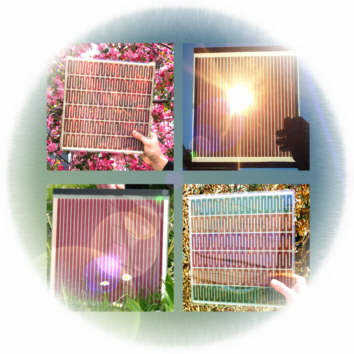
Porphyrin Coordination Complexes for Solar Cells
Porphyrin-based dye-sensitized solar cells achieve high efficiencies. These coordination compounds mimic natural photosynthesis. #chemistry #energy
Porphyrin Coordination Complexes for Solar Cells By Ronald vera saavedra colombia (bogota)ISE; - Transferred from de.wikipedia to Commons., Public domain, https://commons.wikimedia.org/w/index.php?curid=1219106
2014 CE
MOF-74 for Improved Gas Separation
MOF-74 series is developed with open metal sites for selective gas adsorption, enhancing CO2 capture and hydrocarbon separation. #chemistry #materials
2016 CE
Coordination-Driven Self-Assembly of 3D Structures
Highly complex 3D coordination cages and polyhedra are synthesized via self-assembly, enabling applications in drug delivery and catalysis. #chemistry #nanotechnology
2018 CE
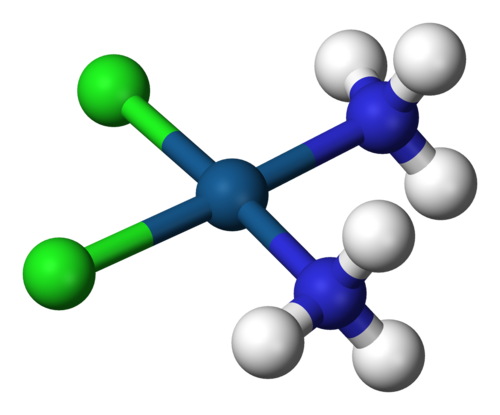
Platinum(IV) Prodrug Complexes for Cancer Therapy
Pt(IV) coordination complexes are developed as prodrugs, reducing side effects of cisplatin. They are activated by reduction in cancer cells. #chemistry #medicine
2020 CE
Coordination Complexes in OLEDs
Iridium and platinum coordination complexes are key phosphorescent materials in organic light-emitting diodes (OLEDs), enabling efficient displays. #chemistry #technology
Coordination Complexes in OLEDs By STRONGlk7 - Own work, CC BY-SA 3.0, https://commons.wikimedia.org/w/index.php?curid=22585310