Encyclopedia/1. The Cosmos & The Natural World/2. Physics & Chemistry • Curated by Admin Timeline.sg
Coordination chemistry explores the structure, bonding, and reactivity of metal complexes, from ancient pigments to modern catalysis. Key milestones include Werner's coordination theory, crystal field theory, and the development of organometallic compounds.
Chronological Storyline (44 Milestones)
3000 BCE
Egyptian Blue Synthesis
Ancient Egyptians synthesize Egyptian blue (CaCuSi4O10), one of the first synthetic coordination compounds, used as a pigment. #chemistry #ancient
Egyptian Blue Synthesis By FK1954 - Own work, Public domain, https://commons.wikimedia.org/w/index.php?curid=9814827
500 BCE
Greek Vitriol Use
Greeks use vitriol (hydrated sulfates of metals) for medicinal and dyeing purposes, early examples of metal complexes. #chemistry #history
Greek Vitriol Use By Unknown author - Deutsche Fotothek, Public domain, https://commons.wikimedia.org/w/index.php?curid=6477821
1704 CE
Prussian Blue Discovered
Heinrich Diesbach accidentally synthesizes Prussian blue (Fe4[Fe(CN)6]3), the first modern coordination compound, used as a dye. #chemistry #discovery
Prussian Blue Discovered By Saalebaer - Own work, CC0, https://commons.wikimedia.org/w/index.php?curid=27936684
1798 CE
Tassaert Observes Cobalt Complex
Tassaert observes the formation of [Co(NH3)6]Cl3, one of the first cobalt-ammine complexes, laying groundwork for coordination chemistry. #chemistry #history
Tassaert Observes Cobalt Complex By Benjah-bmm27 - Own work, Public domain, https://commons.wikimedia.org/w/index.php?curid=1990049
1823 CE
Zeise's Salt Synthesized
William Christopher Zeise synthesizes Zeise's salt (K[PtCl3(C2H4)]), the first organometallic compound with a metal-olefin bond. #chemistry #organometallic
Zeise's Salt Synthesized By Ben Mills - Own work, Public domain, https://commons.wikimedia.org/w/index.php?curid=5962618
1835 CE
Berzelius Proposes Catalysis
Jöns Jacob Berzelius coins the term 'catalysis' and notes the role of metals in accelerating reactions, influencing coordination chemistry. #chemistry #catalysis
Berzelius Proposes Catalysis By Shubhrapdil - Own work, CC BY-SA 4.0, https://commons.wikimedia.org/w/index.php?curid=45524315
1851 CE
Gmelin's Coordination Studies
Leopold Gmelin studies cobalt-ammine complexes and proposes early ideas about their composition. #chemistry #history
Gmelin's Coordination Studies By J. Woelfyle pinxt. G. Cook sculp. - [1], [2], Public domain, https://commons.wikimedia.org/w/index.php?curid=180828
1869 CE
Blomstrand-Jørgensen Chain Theory
Christian Blomstrand and Sophus Mads Jørgensen propose chain theory for metal-ammine complexes, later disproved by Werner. #chemistry #history
1893 CE
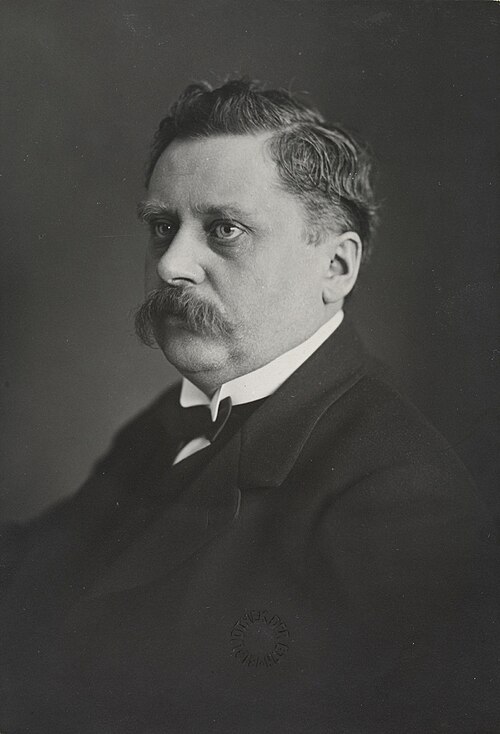
Werner's Coordination Theory
Alfred Werner proposes coordination theory, introducing primary and secondary valences and octahedral geometry for transition metal complexes. #chemistry #Nobel
Werner's Coordination Theory By ETH Zürich - ETH-Bibliothek Zürich, Bildarchiv, CC BY-SA 3.0, https://commons.wikimedia.org/w/index.php?curid=8098260
1898 CE
Werner Resolves Optical Isomers
Alfred Werner resolves chiral cobalt complexes, proving octahedral geometry and earning the 1913 Nobel Prize in Chemistry. #chemistry #Nobel
1901 CE
Mond Process for Nickel
Ludwig Mond develops the Mond process using nickel tetracarbonyl, an organometallic compound, for nickel purification. #chemistry #industry
Mond Process for Nickel By René Rausch - Own work, CC BY-SA 3.0, https://commons.wikimedia.org/w/index.php?curid=11993296
1911 CE
Chugaev's Reagent
Lev Chugaev discovers dimethylglyoxime as a selective reagent for nickel, forming a red coordination complex used in analytical chemistry. #chemistry #analysis
Chugaev's Reagent By User:Innerstream - Own work, Public domain, https://commons.wikimedia.org/w/index.php?curid=154450523
1915 CE
Grignard Reaction
Victor Grignard develops Grignard reagents (organomagnesium compounds), essential in organic synthesis and organometallic chemistry. #chemistry #Nobel
Grignard Reaction By Ben Mills - Own work, Public domain, https://commons.wikimedia.org/w/index.php?curid=2594188
1929 CE
Bethe's Crystal Field Theory
Hans Bethe applies crystal field theory to explain the splitting of d-orbitals in transition metal complexes, later refined by others. #chemistry #physics
1935 CE
Pauling's Valence Bond Theory
Linus Pauling applies valence bond theory to coordination compounds, introducing hybridization and resonance. #chemistry #Nobel
1937 CE
Ferrocene Discovered
Ferrocene, a sandwich compound with iron between two cyclopentadienyl rings, is discovered, revolutionizing organometallic chemistry. #chemistry #organometallic
1940 CE
Schwarzenbach's Complexometry
Gerold Schwarzenbach develops EDTA as a chelating agent for complexometric titrations, widely used in analytical chemistry. #chemistry #analysis
Schwarzenbach's Complexometry By NEUROtiker (talk) - Own work, Public domain, https://commons.wikimedia.org/w/index.php?curid=4366229
1948 CE
Ligand Field Theory Developed
John Hasbrouck Van Vleck and others develop ligand field theory, combining crystal field and molecular orbital theories. #chemistry #theory
1951 CE
Wilkinson's Catalyst
Geoffrey Wilkinson synthesizes Wilkinson's catalyst (RhCl(PPh3)3), a key homogeneous catalyst for hydrogenation. #chemistry #catalysis
Wilkinson's Catalyst By Benjah-bmm27 - Own work, Public domain, https://commons.wikimedia.org/w/index.php?curid=2164431
1952 CE
Hückel's Rule for Aromaticity
Erich Hückel formulates Hückel's rule, explaining aromaticity in organic and organometallic compounds like ferrocene. #chemistry #theory
Hückel's Rule for Aromaticity By NEUROtiker - Own work, Public domain, https://commons.wikimedia.org/w/index.php?curid=1636078
1953 CE
Ziegler-Natta Catalysts
Karl Ziegler and Giulio Natta develop Ziegler-Natta catalysts for olefin polymerization, based on titanium and aluminum complexes. #chemistry #Nobel
1955 CE
Bailar Twist Mechanism
John C. Bailar Jr. proposes the Bailar twist, a mechanism for racemization of octahedral complexes. #chemistry #mechanism
1957 CE
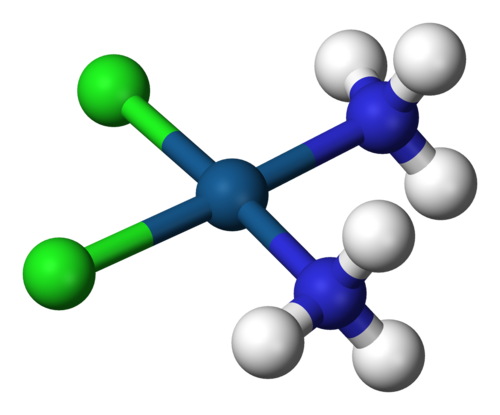
Cisplatin Anticancer Activity
Barnett Rosenberg discovers cisplatin's ability to inhibit cell division, leading to its use as a chemotherapy drug. #chemistry #medicine
Cisplatin Anticancer Activity By Smokefoot - Own work, CC BY 4.0, https://commons.wikimedia.org/w/index.php?curid=152935843
1963 CE
Nobel Prize for Ziegler and Natta
Karl Ziegler and Giulio Natta receive the Nobel Prize for their work on coordination polymerization catalysts. #chemistry #Nobel
1964 CE
Vaska's Complex
Lauri Vaska synthesizes Vaska's complex (IrCl(CO)(PPh3)2), a model for oxidative addition and homogeneous catalysis. #chemistry #catalysis
Vaska's Complex By Smokefoot - Own work, Public domain, https://commons.wikimedia.org/w/index.php?curid=105110119
1965 CE
Wittig Reaction
Georg Wittig develops the Wittig reaction using phosphorus ylides, an organophosphorus compound, earning the Nobel Prize in 1979. #chemistry #Nobel
1967 CE
Crown Ethers Discovered
Charles J. Pedersen discovers crown ethers, macrocyclic ligands that selectively bind metal ions, leading to supramolecular chemistry. #chemistry #Nobel
Crown Ethers Discovered By Ben Mills - Own work, Public domain, https://commons.wikimedia.org/w/index.php?curid=3975265
1969 CE
Hemoglobin Structure Solved
Max Perutz solves the structure of hemoglobin, a coordination complex of iron, using X-ray crystallography. #chemistry #biology
Hemoglobin Structure Solved By Zephyris at English Wikipedia - Transferred from en.wikipedia to Commons., CC BY-SA 3.0, https://commons.wikimedia.org/w/index.php?curid=2300973
1972 CE
Olefin Metathesis Catalysts
Yves Chauvin proposes the mechanism for olefin metathesis, leading to development of Grubbs' and Schrock catalysts. #chemistry #Nobel
Olefin Metathesis Catalysts By Ple210 - Own work, CC BY-SA 4.0, https://commons.wikimedia.org/w/index.php?curid=81966544
1973 CE
Nobel Prize for Coordination Chemistry
Ernst Otto Fischer and Geoffrey Wilkinson receive the Nobel Prize for their work on organometallic sandwich compounds. #chemistry #Nobel
Nobel Prize for Coordination Chemistry By Jü - Own work, CC BY-SA 4.0, https://commons.wikimedia.org/w/index.php?curid=77272420
1976 CE
Photocatalytic Water Splitting
Akira Fujishima and Kenichi Honda discover photocatalytic water splitting using TiO2, a coordination chemistry application. #chemistry #energy
1980 CE
Grubbs' Catalyst
Robert H. Grubbs develops the first well-defined ruthenium metathesis catalyst, revolutionizing organic synthesis. #chemistry #Nobel
1983 CE
Cram's Host-Guest Chemistry
Donald J. Cram develops host-guest chemistry with cryptands and spherands, earning the Nobel Prize in 1987. #chemistry #Nobel
1985 CE
Fullerenes Discovered
Harry Kroto, Robert Curl, and Richard Smalley discover fullerenes (C60), carbon cages that form coordination complexes. #chemistry #Nobel
Fullerenes Discovered By 痛 - Own work, CC BY-SA 4.0, https://commons.wikimedia.org/w/index.php?curid=118428240
1990 CE
Magnetic Coordination Polymers
Olivier Kahn pioneers molecular magnetism using coordination polymers, leading to single-molecule magnets. #chemistry #magnetism
1992 CE
Metal-Organic Frameworks (MOFs)
Omar M. Yaghi synthesizes the first stable metal-organic frameworks, porous coordination polymers for gas storage and catalysis. #chemistry #materials
Metal-Organic Frameworks (MOFs) By Mei Gui Vanessa Weeet et al. - https://onlinelibrary.wiley.com/doi/10.1002/admi.202300065, CC BY 4.0, https://commons.wikimedia.org/w/index.php?curid=136185196
1995 CE
Nobel Prize for Ozone Chemistry
Paul Crutzen, Mario Molina, and F. Sherwood Rowland win the Nobel Prize for work on ozone depletion involving coordination complexes. #chemistry #Nobel
Nobel Prize for Ozone Chemistry By NASA - http://toms.gsfc.nasa.gov/multi/ozone_time_series.jpg, Public domain, https://commons.wikimedia.org/w/index.php?curid=815580
2000 CE
Click Chemistry Emerges
K. Barry Sharpless introduces click chemistry, using copper(I)-catalyzed azide-alkyne cycloaddition, a coordination reaction. #chemistry #Nobel
2001 CE
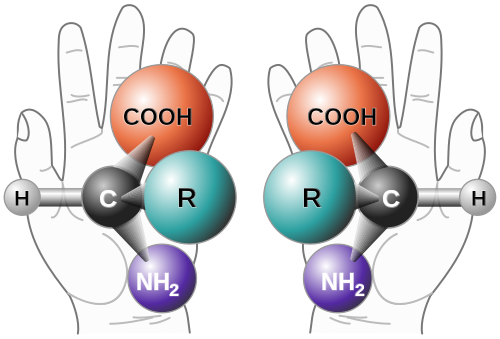
Nobel Prize for Asymmetric Catalysis
William S. Knowles, Ryoji Noyori, and K. Barry Sharpless win the Nobel Prize for chiral metal-catalyzed hydrogenation and oxidation. #chemistry #Nobel
Nobel Prize for Asymmetric Catalysis By Original: Unknown Vector: -- πϵρήλιο - Chirality with hands.jpg, Public domain, https://commons.wikimedia.org/w/index.php?curid=17071045
2005 CE
Nobel Prize for Metathesis
Yves Chauvin, Robert H. Grubbs, and Richard R. Schrock win the Nobel Prize for olefin metathesis catalysts. #chemistry #Nobel