Imperial Celestial Records: 3,000 Years of Chinese Astronomy
Encyclopedia/1. The Cosmos & The Natural World/3. Astronomy & Planetary Science/01. Stellar Astrophysics • Curated by Admin Timeline.sg
A comprehensive timeline of Chinese astronomy from the earliest oracle bone eclipse records in 1200 BCE through the Ming dynasty, including the Dunhuang star atlas, Su Song's mechanical clock tower, observations of the Crab Nebula supernova, Guo Shoujing's calendar, and the Beijing Ancient Observatory.
Chronological Storyline (35 Milestones)
1200 BCE
Oracle Bone Eclipse Record
The earliest known Chinese record of a solar eclipse is inscribed on an oracle bone from the Shang dynasty. This demonstrates the ancient practice of celestial observation for divination. #astronomy #history #China
Oracle Bone Eclipse Record By Unknown author - User Herr Klugbeisser on de.wikipedia Geschossen von im Shanghai-Museum, Januar 2004 Created and published under the GFDL by User Herr Klugbeisser Originally from de.wikipedia; description page is (was) here 18:41, 2. Mai 2004 Herr Klugbeisser 800 x 800 (91585 Byte) (Orakelknochen), CC BY-SA 3.0, https://commons.wikimedia.org/w/index.php?curid=38023
776 BCE
Solar Eclipse in Shijing
The 'Book of Songs' records a solar eclipse, one of the earliest literary references to an eclipse in Chinese history. It reflects the integration of astronomy into cultural texts. #astronomy #literature #China
Solar Eclipse in Shijing By Aethelwolf Emsworth. - Own reproduction of a drawing made by Picnic11219 for Chinese Wikipedia., Public domain, https://commons.wikimedia.org/w/index.php?curid=65689742
613 BCE
Halley's Comet in Zuo Zhuan
The Chinese chronicle 'Zuo Zhuan' records an apparition of Halley's Comet, one of the earliest reliable observations of the periodic comet. This shows early systematic comet tracking. #astronomy #comet #China
Halley's Comet in Zuo Zhuan By NASA/W. Liller - NSSDC's Photo Gallery (NASA): http://nssdc.gsfc.nasa.gov/photo_gallery/photogallery-comets.html http://nssdc.gsfc.nasa.gov/image/planetary/comet/lspn_comet_halley1.jpg, Public domain, https://commons.wikimedia.org/w/index.php?curid=544352
350 BCE
Gan De and Shi Shen Star Catalogs
Astronomers Gan De and Shi Shen compiled some of the earliest star catalogs, listing hundreds of stars and recording celestial phenomena. Their work laid the foundation for Chinese stellar mapping. #astronomy #star_catalog #China
Gan De and Shi Shen Star Catalogs By NASA - https://planetarynames.wr.usgs.gov/Feature/5487, Public domain, https://commons.wikimedia.org/w/index.php?curid=61171516
240 BCE
Halley's Comet in Shiji
Sima Qian's 'Records of the Grand Historian' includes a definitive observation of Halley's Comet, confirming the comet's periodicity. This document is a key source for historical astronomy. #astronomy #history #China
Halley's Comet in Shiji By Zhonghua Book Company - Photo taken by Chinese Wikipedia user huowax, Public domain, https://commons.wikimedia.org/w/index.php?curid=48989967
28 BCE
First Sunspot Observation
Chinese astronomers recorded the earliest known observation of sunspots, noting dark spots on the Sun. This was centuries before telescopic observations in the West. #astronomy #sunspot #China
First Sunspot Observation By NASA - https://www.nasa.gov/mission_pages/sunearth/news/News092511-ar1302.html, Public domain, https://commons.wikimedia.org/w/index.php?curid=16800815
185 CE
Supernova SN 185 Recorded
Chinese astronomers observed a 'guest star' that remained visible for several months, now identified as supernova SN 185. It is one of the earliest supernova records. #astronomy #supernova #China
Supernova SN 185 Recorded By CTIO/NOIRLab/DOE/NSF/AURA T.A. Rector (University of Alaska Anchorage/NSF’s NOIRLab), J. Miller (Gemini Observatory/NSF’s NOIRLab), M. Zamani & D. de Martin (NSF’s NOIRLab) - DECam Images RCW 86, Remains of Supernova Witnessed in 185, CC BY 4.0, https://commons.wikimedia.org/w/index.php?curid=129197422
300 CE
Chen Zhuo's Star Map
Astronomer Chen Zhuo compiled a comprehensive star catalog and map, synthesizing earlier observations. His work influenced later Chinese star charts. #astronomy #star_map #China
393 CE
Supernova SN 393 Recorded
Chinese records describe a new star in Scorpius, later identified as supernova SN 393. This continued the tradition of documenting transient celestial events. #astronomy #supernova #China
Supernova SN 393 Recorded By Torsten Bronger. - Own work: It was created by Torsten Bronger using the program PP3 on 2003/08/18. At PP3's homepage, you also get the input scripts necessary for re-compiling the map., CC BY-SA 3.0, https://commons.wikimedia.org/w/index.php?curid=26667
700 CE
Dunhuang Star Atlas
The Dunhuang star atlas, discovered in the Mogao Caves, is the earliest known complete star map. It depicts over 1,300 stars in multiple constellations and reflects advanced observational skills. #astronomy #star_atlas #China
721 CE
Yi Xing's Meridian Measurement
Buddhist monk and astronomer Yi Xing led a project to measure the length of a meridian arc using shadow measurements. This improved geographic knowledge and calendar accuracy. #astronomy #geodesy #China
Yi Xing's Meridian Measurement By Unknown author - Nara National Museum, CC BY 4.0, https://commons.wikimedia.org/w/index.php?curid=96127166
725 CE
Yi Xing's Escapement Mechanism
Yi Xing and Liang Lingzan built an armillary sphere powered by water with an escapement mechanism, an early step toward mechanical clocks. This innovation influenced timekeeping and observational astronomy. #astronomy #invention #China
Yi Xing's Escapement Mechanism By physical object: Jost Bürgi, Antonius EisenhoitPhotograph: Chris Bainbridge - Photograph: Own work, Public domain, https://commons.wikimedia.org/w/index.php?curid=6089012
976 CE
Song Dynasty Armillary Sphere
The Song dynasty constructed a large bronze armillary sphere for the imperial observatory, used to track celestial movements. It symbolized imperial patronage of astronomy. #astronomy #instrument #China
1006 CE
Supernova SN 1006 Observed
Chinese astronomers recorded a brilliant 'guest star' in Lupus, now known as SN 1006. It was one of the brightest supernovae in history and was visible for months. #astronomy #supernova #China
Supernova SN 1006 Observed By Smithsonian Institution - https://www.flickr.com/photos/25053835@N03/2940666879/in/photolist-5tRFP6-avs4hH-6JHxst-ehJDeH-7owauz-4NC1Me-cMi4E1-7Dhfo3-avrgBx-eokkqh-7DhH5q-8ajz1T-75AgWF-dHvEBe-cXXbgy-dGNSPX-dGNSzH-dGUk8S-dGUjTd-dGUjDU-avKM2D-afkfBd-8kNJEu-cE13Vs-cE1423-cE148S-cE145f-cE13YJ-drZjvP-7MTuTd-ffWzke-9Uhs6J-dWHrNy-dWHrLE-dWBNu6-dWBNU2-dWBNrv-dWBNAR-dWHrzb-dWBNwn-dWHrv1-dWBNGi-dWHrJy-dWBNLB-dWHrDW-da9SvS-9E412Y-7DeD7V-5B6PNC-dWHrdb-dWHrkd, No restrictions, https://commons.wikimedia.org/w/index.php?curid=27561757
1054 CE
Crab Nebula Supernova Recorded
Chinese astronomers observed a new star in Taurus, now known as the Crab Nebula supernova. Its detailed record has been crucial for modern supernova studies. #astronomy #supernova #China
Crab Nebula Supernova Recorded By NASA, ESA, J. Hester and A. Loll (Arizona State University) - HubbleSite: gallery, release., Public domain, https://commons.wikimedia.org/w/index.php?curid=516106
1090 CE
Su Song's Astronomical Clock Tower
Su Song completed a water-driven astronomical clock tower that included an armillary sphere, celestial globe, and animated figures. It featured an early escapement mechanism, a precursor to modern clocks. #astronomy #engineering #China
Su Song's Astronomical Clock Tower By Su Song - File:Clock_Tower_from_Su_Song's_Book.JPG, Public domain, https://commons.wikimedia.org/w/index.php?curid=41581041
1092 CE
Su Song's Book on Clock Tower
Su Song published 'New Design for a Mechanical Clock', a detailed illustrated description of his astronomical clock tower. This work is a key resource on medieval Chinese mechanical engineering. #astronomy #engineering #China
1181 CE
Supernova SN 1181 Recorded
Chinese and Japanese astronomers observed a new star in Cassiopeia, now identified as SN 1181. Its remnant, 3C 58, is a pulsar wind nebula. #astronomy #supernova #China
Supernova SN 1181 Recorded By X-ray: (Chandra) NASA/CXC/U. Manitoba/C. Treyturik, (XMM-Newton) ESA/C. Treyturik; Optical: (Pan-STARRS) NOIRLab/MDM/Dartmouth/R. Fesen; Infrared: (WISE) NASA/JPL/Caltech/; Image Processing: Univ. of Manitoba/Gilles Ferrand and Jayanne English - SNR 1181: Stunning Echo of 800-year-old Explosion, Public domain, https://commons.wikimedia.org/w/index.php?curid=182110189
1247 CE
Suzhou Star Map Carved in Stone
The 'Suzhou star map' was engraved onto a stone stele, showing over 1,400 stars. It is one of the oldest preserved star charts in the world. #astronomy #star_map #China
1276 CE
Guo Shoujing Builds Gaocheng Observatory
Guo Shoujing constructed the Gaocheng Observatory near Dengfeng, with instruments like the gnomon and armillary sphere. It became a central site for Yuan dynasty astronomy. #astronomy #observatory #China
1280 CE
Guo Shoujing's Shoushi Calendar
Guo Shoujing introduced the 'Season-Granting Calendar', which accurately predicted solar terms and eclipses. It remained the most advanced Chinese calendar for centuries. #astronomy #calendar #China
1385 CE
Nanjing Observatory Built
The Ming dynasty constructed an observatory in Nanjing, installing bronze instruments for measurement. It served as the imperial observatory until the capital moved to Beijing. #astronomy #observatory #China
1439 CE
Cast Bronze Armillary Sphere for Beijing
A large bronze armillary sphere was cast for the new observatory in Beijing, reflecting Ming technical skill and the continued importance of astronomical instruments. #astronomy #instrument #China
1442 CE
Beijing Ancient Observatory Established
The Beijing Ancient Observatory was built on the city wall, housing sophisticated bronze instruments like the armillary and celestial globe. It operated for centuries and now is a museum. #astronomy #observatory #China
Beijing Ancient Observatory Established By User:Vmenkov - Own work, CC BY-SA 3.0, https://commons.wikimedia.org/w/index.php?curid=8914465
1450 CE
Instruments Moved to Beijing Observatory
Following the establishment of the Beijing Ancient Observatory, astronomical instruments from Nanjing were moved to Beijing. This centralised imperial astronomy in the new capital. #astronomy #history #China
1490 CE
Comet Record by Ming Astronomers
A bright comet was observed and recorded by Ming astronomers, who tracked its path and tail length. Such records helped maintain the tradition of systematic comet observations. #astronomy #comet #China
Comet Record by Ming Astronomers By E. Kolmhofer, H. Raab; Johannes-Kepler-Observatory, Linz, Austria (https://sternwarte.at) - Own work, CC BY-SA 3.0, https://commons.wikimedia.org/w/index.php?curid=6756556
1500 CE
Ming Star Chart Creation
Chinese astronomers produced detailed star charts during the Ming dynasty, incorporating traditional constellations and improving positional accuracy for calendrical purposes. #astronomy #star_chart #China
Ming Star Chart Creation By Wang Zhiyuan and Huang Shang - https://www.babelstone.co.uk/China/Images/1247Planisphere.jpg (Archived Archived), Public domain, https://commons.wikimedia.org/w/index.php?curid=38305831
1540 CE
Record of a Nova in Ming Dynasty
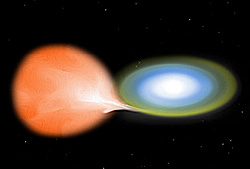
A 'guest star' was recorded in the constellation of Libra, possibly a nova. Chinese astronomers documented its position and brightness, adding to the corpus of transient event records. #astronomy #nova #China
Record of a Nova in Ming Dynasty By NASA/CXC/M.Weiss - Diagram of a Nova type star from http://www.nasa.gov/images/content/62486main_Making_a_Nova.jpg A description and extended credits are listed for a Chandra article: https://chandra.harvard.edu/photo/2001/v1494aql/, Public domain, https://commons.wikimedia.org/w/index.php?curid=380534
1572 CE
Supernova SN 1572 (Tycho's Supernova) Recorded
Chinese and Korean astronomers independently observed the supernova in Cassiopeia, later studied by Tycho Brahe. Their records provide data for modern research. #astronomy #supernova #China
Supernova SN 1572 (Tycho's Supernova) Recorded By NASA/CXC/Rutgers/J.Warren & J.Hughes et al. - http://chandra.harvard.edu/photo/2005/tycho/; see also https://www.flickr.com/photos/smithsonian/2941525398/, Public domain, https://commons.wikimedia.org/w/index.php?curid=6706920
1601 CE
Matteo Ricci Presents Astronomy to Ming Court
Jesuit missionary Matteo Ricci introduced Western astronomical instruments and knowledge to the Ming court, including the telescope. This began a fusion of Chinese and European astronomy. #astronomy #history #China
Matteo Ricci Presents Astronomy to Ming Court By Chinese brother Emmanuel Pereira (born Yu Wen-hui 游文辉) - Unknown source, Public domain, https://commons.wikimedia.org/w/index.php?curid=85942
1604 CE
Supernova SN 1604 (Kepler's Supernova) Observed
Chinese astronomers recorded the supernova in Ophiuchus, later known as Kepler's Supernova. Their observations helped refine the understanding of galactic phenomena. #astronomy #supernova #China
Supernova SN 1604 (Kepler's Supernova) Observed By NASA/ESA/JHU/R.Sankrit & W.Blair - http://www.nasa.gov/multimedia/imagegallery/image_feature_219.html Larger version uploaded from https://chandra.harvard.edu/photo/2012/kepler/ a NASA-sponsored site. Per Bridgeman Art Library v. Corel Corp., no new copyright should apply anyway., Public domain, https://commons.wikimedia.org/w/index.php?curid=14301
1610 CE
Chinese Observations of Sunspots with Telescope
With the arrival of telescopes, Chinese astronomers began studying sunspots in detail, confirming earlier naked-eye findings. This integrated new technology with established tradition. #astronomy #sunspot #China
1626 CE
Wanggongchang Explosion and Astronomical Context
A massive explosion at Wanggongchang, Beijing, destroyed the imperial arsenal near the observatory. Contemporary accounts linked it to comets and celestial omens, showing the intertwining of astronomy and events. #astronomy #history #China
1634 CE
Chongzhen Calendar Compiled
Xu Guangqi, Li Zhizao, and Western missionaries compiled the Chongzhen calendar, incorporating European methods to improve eclipse prediction. It marked a synthesis of Chinese and Western astronomy. #astronomy #calendar #China
Chongzhen Calendar Compiled By Unknown author - "P. Adam Schall Germanus I. Ordinis Mandarinus" ("Father Adam Schall, the German mandarin of the first order"), 1667, from Athanasius Kircher, Tooneel van China..., trans. Jan Hendrick Glazemaker (Amsterdam: Johannes Janssonius van Waesberge, 1668), plate Bb, after page 138. Scanned from Marcia Reed, "A Perfume is Best from Afar: Publishing China for Europe," in China on Paper: European and Chinese Works from the Late Sixteenth to the Early Nineteenth Century, ed. by Marcia Reed and Paola Demattè (Los Angeles: Getty Research Institute, 2007), p. 15., Public domain, https://commons.wikimedia.org/w/index.php?curid=23118884
1644 CE
End of Ming Dynasty and Astronomical Institutions
The fall of the Ming dynasty disrupted imperial astronomical activities. The Qing dynasty later restored and expanded the observatory, but this mark ended the Ming era of Chinese astronomy. #astronomy #history #China
End of Ming Dynasty and Astronomical Institutions By Albert Herrmann Creator:Q1509115 & Georg Westermann - Historical and Commercial Atlas of China, Public domain, https://commons.wikimedia.org/w/index.php?curid=158240988