IG Farben was a German chemical and pharmaceutical conglomerate founded in 1925, infamous for its role in Nazi war crimes and later dissolved after World War II. Its history includes major industrial breakthroughs, wartime exploitation, and post-war breakup into BASF, Bayer, and Hoechst.
Chronological Storyline (34 Milestones)
Dec 2, 1925 CE
Founding of IG Farben
IG Farben is formed through the merger of BASF, Bayer, Hoechst, and other companies, creating the world's largest chemical conglomerate. #history #corporations
Founding of IG Farben By Sith Cookie - Own work, CC BY-SA 3.0, https://commons.wikimedia.org/w/index.php?curid=16567240
1926 CE
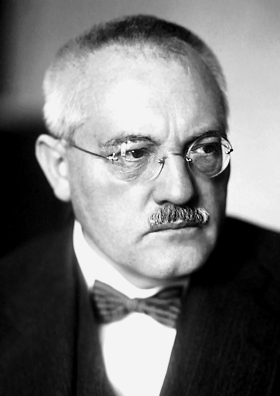
Carl Bosch Appointed Chairman
Carl Bosch becomes the first chairman of IG Farben, guiding its early industrial strategy. #history #leadership
Carl Bosch Appointed Chairman By Nobel Foundation - http://nobelprize.org/nobel_prizes/chemistry/laureates/1931/bosch-bio.html, Public domain, https://commons.wikimedia.org/w/index.php?curid=6224245
1927 CE
IG Farben Building Completed
The iconic IG Farben Building in Frankfurt is completed, later used as a symbol of corporate power. #architecture #history
1928 CE
Development of Coal Liquefaction
IG Farben advances the Bergius process for synthetic fuel production, a key technology for energy independence. #energy #innovation
Development of Coal Liquefaction By B. Schmitz-Sieg - https://wellcomeimages.org/indexplus/obf_images/a1/31/7445c8f8734ee31837bc62bc8cac.jpg Gallery: https://wellcomeimages.org/indexplus/image/L0003155.html Wellcome Collection gallery (2018-03-29): https://wellcomecollection.org/works/stcjuyff CC-BY-4.0, CC BY 4.0, https://commons.wikimedia.org/w/index.php?curid=35864952
1929 CE
Great Depression Impact
The Great Depression reduces demand for chemicals, but IG Farben remains resilient through diversification. #economics #history
1932 CE
Financial Support for Nazi Party
IG Farben executives secretly fund the Nazi Party, seeking favorable policies for industry. #politics #wwii
1933 CE
Hitler's Rise to Power
IG Farben benefits from Nazi rearmament policies, securing government contracts for synthetic materials. #wwii #history
1936 CE
Buna Synthetic Rubber Production
IG Farben begins large-scale production of Buna synthetic rubber, crucial for Germany's war effort. #materials #wwii )
1937 CE
Autarky Policy Expansion
IG Farben intensifies research into ersatz materials to support Nazi self-sufficiency goals. #economics #war
Mar 1, 1938 CE
Anschluss and Austrian Expansion
IG Farben acquires Austrian chemical plants following the Anschluss, expanding its reach. #expansion #wwii
IG Farben takes over chemical plants in occupied countries, exploiting local resources and labor. #wwii #exploitation
1941 CE
Construction of Auschwitz III Monowitz
IG Farben builds a massive synthetic rubber plant at Auschwitz, using forced labor from the concentration camp. #holocaust #wwii
Construction of Auschwitz III Monowitz By Unknown - This image was provided to Wikimedia Commons by the German Federal Archive (Deutsches Bundesarchiv) as part of a cooperation project. The German Federal Archive guarantees an authentic representation only using the originals (negative and/or positive), resp. the digitalization of the originals as provided by the Digital Image Archive., CC BY-SA 3.0 de, https://commons.wikimedia.org/w/index.php?curid=5420105
1942 CE
Forced Labor System Expanded
IG Farben intensifies use of forced laborers, including prisoners of war and concentration camp inmates. #war_crimes #wwii
1943 CE
Zyklon B Production by Degesch Subsidiary
Degesch, a subsidiary of IG Farben, supplies Zyklon B used in gas chambers. #holocaust #war_crimes
Zyklon B Production by Degesch Subsidiary By USHMM, courtesy of National Archives - http://digitalassets.ushmm.org/photoarchives/detail.aspx?id=1069557, Public domain, https://commons.wikimedia.org/w/index.php?curid=178343