Homological Algebra & Modules: Modern Frontiers & Breakthrough Innovations
Encyclopedia/1. The Cosmos & The Natural World/1. Mathematics & Formal Systems/02. Algebra & Symbolic Systems • Curated by Admin Timeline.sg
Homological algebra and module theory, rooted in 19th-century algebra and 20th-century topology, have grown into a powerful framework for solving problems across mathematics. This timeline traces the evolution from early modular concepts to modern derived categories and higher category theory.
Chronological Storyline (41 Milestones)
1843 CE
Hamilton discovers quaternions
William Rowan Hamilton introduces quaternions, a non-commutative ring, providing an early example of a module over a non-commutative algebra. #Algebra #Quaternions
Hamilton discovers quaternions By Cmglee - Own work, CC BY-SA 4.0, https://commons.wikimedia.org/w/index.php?curid=145997978
1858 CE
Cayley introduces matrix multiplication
Arthur Cayley formalizes matrix multiplication, enabling the study of modules as vector spaces over rings. #Algebra #Matrices
Cayley introduces matrix multiplication By Herbert Beraud (1845–1896) - http://www-groups.dcs.st-and.ac.uk/~history/PictDisplay/Cayley.html, Public domain, https://commons.wikimedia.org/w/index.php?curid=904674
1870 CE
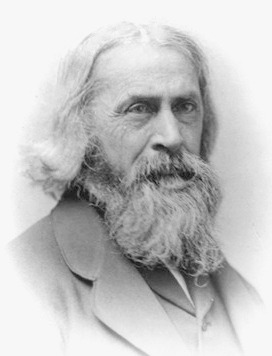
Benjamin Peirce studies idempotents
Benjamin Peirce introduces idempotents and the concept of central elements in algebras, laying groundwork for module decomposition. #Algebra #Rings
Benjamin Peirce studies idempotents By Unknown author - http://www.pragmaticism.net/faq.htm, Public domain, https://commons.wikimedia.org/w/index.php?curid=16249087
1893 CE
Wedderburn's theorem on simple algebras
J. H. M. Wedderburn classifies finite-dimensional simple algebras, influencing the structure of modules over semisimple rings. #Algebra #Rings
1900 CE
Hilbert's basis theorem
David Hilbert proves that every ideal in a polynomial ring over a Noetherian ring is finitely generated, a key result in module theory. #Algebra #Noetherian
1913 CE
Wedderburn's little theorem
Wedderburn shows that every finite division ring is a field, influencing the theory of modules over skew fields. #Algebra #DivisionRings
1920 CE
Emmy Noether's work on ideals and modules
Emmy Noether modernizes abstract algebra, developing the theory of ideals and modules, including the ascending chain condition. #Algebra #Noetherian
Emmy Noether's work on ideals and modules By Unknown authorUnknown author Publisher: Mathematical Association of America [3], Brooklyn Museum [4], Agnes Scott College [5], [6] - Emmy Noether (1882-1935), Archived, Public domain, https://commons.wikimedia.org/w/index.php?curid=158126186
1929 CE
Artin's theorem on semisimple rings
Emil Artin proves the Wedderburn-Artin theorem classifying semisimple rings, fundamental to module theory. #Algebra #Semisimple
1942 CE
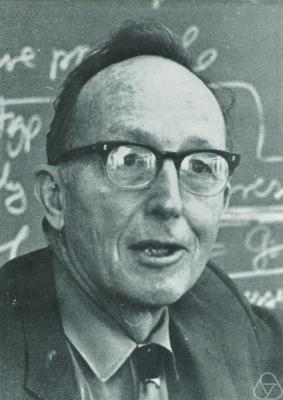
Mac Lane introduces categories
Saunders Mac Lane, with Samuel Eilenberg, introduces categories and functors, providing the language for homological algebra. #CategoryTheory #Algebra
Mac Lane introduces categories By Konrad Jacobs - https://opc.mfo.de/detail?photoID=2684, CC BY-SA 2.0 de, https://commons.wikimedia.org/w/index.php?curid=3937773
1945 CE
Eilenberg and Mac Lane define categories and functors
Samuel Eilenberg and Saunders Mac Lane formally define categories, functors, and natural transformations, key to homological algebra. #CategoryTheory #HomologicalAlgebra
Eilenberg and Mac Lane define categories and functors By User:Cepheus - Own work, based on en:Image:MorphismComposition-01.png, Public domain, https://commons.wikimedia.org/w/index.php?curid=1425613
1950 CE
Cartan and Eilenberg publish Homological Algebra
Henri Cartan and Samuel Eilenberg publish the foundational text 'Homological Algebra', defining derived functors and Ext and Tor. #HomologicalAlgebra #Book )
1954 CE
Serre uses spectral sequences in topology
Jean-Pierre Serre employs spectral sequences in algebraic topology, showing the power of homological techniques. #Topology #SpectralSequences
Serre uses spectral sequences in topology By Mediterranean Institute for the Mathematical Sciences - Extracted from https://www.youtube.com/watch?v=wXCo54RuP1s&t=1502s, CC BY 3.0, https://commons.wikimedia.org/w/index.php?curid=110894720
1955 CE
Grothendieck's Tôhoku paper on abelian categories
Alexander Grothendieck publishes 'Sur quelques points d'algèbre homologique', establishing abelian categories and sheaf cohomology. #AbelianCategory #HomologicalAlgebra
1956 CE
Bousfield and Kan introduce model categories
Aldridge Bousfield and Daniel Kan introduce model categories, later essential for homotopical algebra. #ModelCategories #Homotopy
1958 CE
Auslander and Bridger introduce Gorenstein rings
Maurice Auslander and Mark Bridger develop Gorenstein rings and modules, connecting homological algebra to commutative algebra. #CommutativeAlgebra #Gorenstein
1962 CE
Quillen defines model categories
Daniel Quillen formalizes model categories, providing a homotopy theory framework for homological algebra. #ModelCategories #HomotopicalAlgebra
1963 CE
Verdier defines derived categories
Jean-Louis Verdier introduces derived categories in his PhD thesis, enabling a natural formulation of sheaf cohomology. #DerivedCategories #TriangulatedCategories
1964 CE
Grothendieck's SGA on derived categories
Alexander Grothendieck's Séminaire de Géométrie Algébrique (SGA) further develops derived categories and sheaf theory. #AlgebraicGeometry #DerivedCategories
1965 CE
Bass introduces finite projective dimension
Hyman Bass studies modules of finite projective dimension, linking homological dimensions to ring theory. #HomologicalDimension #Rings
Bass introduces finite projective dimension By The original uploader was Hbass at English Wikipedia. - Transferred from en.wikipedia to Commons by IngerAlHaosului using CommonsHelper., Copyrighted free use, https://commons.wikimedia.org/w/index.php?curid=8968431
1966 CE
Gabriel introduces Auslander-Reiten theory
Pierre Gabriel develops Auslander-Reiten theory for representation theory of artin algebras. #RepresentationTheory #AuslanderReiten
1967 CE
Hilton and Stammbach publish A Course in Homological Algebra
Peter Hilton and Urs Stammbach publish a classic textbook on homological algebra, widely used for decades. #Textbook #HomologicalAlgebra
1970 CE
Hochschild cohomology for algebras
Gerhard Hochschild's cohomology theory for associative algebras becomes a central tool in deformation theory. #HochschildCohomology #DeformationTheory
1972 CE
Auslander and Reiten introduce AR sequences
Maurice Auslander and Idun Reiten introduce almost split sequences, a key tool in representation theory of finite-dimensional algebras. #AuslanderReiten #RepresentationTheory
1975 CE
Happel introduces derived categories for artin algebras
Dieter Happel applies derived categories to the representation theory of artin algebras, opening new avenues. #DerivedCategories #ArtinAlgebras
1978 CE
Quillen's Higher Algebraic K-theory
Daniel Quillen uses homological algebra to define higher algebraic K-theory, a deep connection with topological invariants. #KTheory #AlgebraicTopology
1980 CE
Buchsbaum and Eisenbud on free resolutions
David Buchsbaum and David Eisenbud develop theory of free resolutions and the Buchsbaum-Eisenbud criterion for exactness. #FreeResolutions #CommutativeAlgebra
1983 CE
Kawamata-Miyaoka-Mori view on moduli
Yujiro Kawamata, Yoichi Miyaoka, and Shigefumi Mori apply homological methods to the minimal model program in birational geometry. #AlgebraicGeometry #MMP
1986 CE
Beilinson, Bernstein, Deligne on perverse sheaves
Alexander Beilinson, Joseph Bernstein, and Pierre Deligne develop perverse sheaves, influencing homological algebra in geometry. #PerverseSheaves #DerivedCategories
1990 CE
Neeman improves derived categories
Amnon Neeman simplifies the theory of derived categories using compact objects and Brown representability. #DerivedCategories #TriangulatedCategories
1994 CE
Bondal and Kapranov on enhanced derived categories
Alexei Bondal and Mikhail Kapranov introduce enhanced derived categories via dg categories, a major development. #DGCategories #DerivedCategories
1996 CE
Krause's work on stable module categories
Henning Krause studies stable module categories and their homological properties, linking to representation theory. #StableModuleCategories #HomologicalAlgebra
1998 CE
Keller introduces triangulated categories
Bernhard Keller develops a systematic approach to triangulated categories and derived categories, including Morita theory. #TriangulatedCategories #DerivedCategories
Keller introduces triangulated categories By Schmid, Renate - https://opc.mfo.de/detail?photo_id=13791, CC BY-SA 2.0 de, https://commons.wikimedia.org/w/index.php?curid=47932986
2000 CE
Joyal's quasi-categories (higher categories)
André Joyal introduces quasi-categories, a model for (∞,1)-categories, advancing higher homological algebra. #HigherCategoryTheory #InfinityCategories
2002 CE
Rouquier introduces dimension of triangulated categories
Raphaël Rouquier defines the dimension of a triangulated category, measuring its complexity. #TriangulatedCategories #Dimension
Rouquier introduces dimension of triangulated categories By Renate Schmid - https://opc.mfo.de/detail?photo_id=9368, CC BY-SA 2.0 de, https://commons.wikimedia.org/w/index.php?curid=151056207
2005 CE
Lurie's Higher Topos Theory
Jacob Lurie publishes 'Higher Topos Theory', establishing foundations for derived algebraic geometry and (∞,1)-categories. #HigherCategoryTheory #DerivedAlgebraicGeometry
2007 CE
Iyama introduces cluster categories
Osamu Iyama introduces cluster categories, linking representation theory to cluster algebras. #ClusterAlgebras #RepresentationTheory
2009 CE
Buchweitz and Fløystad on Cohen-Macaulay modules
Ragnar-Olaf Buchweitz and Gunnar Fløystad study Cohen-Macaulay modules via homological algebra, advancing commutative algebra. #CohenMacaulay #CommutativeAlgebra
2012 CE
Rickard's derived equivalences
Jeremy Rickard develops derived equivalences of algebras, simplifying the classification of block algebras. #DerivedEquivalences #RepresentationTheory
Rickard's derived equivalences By Renate Schmid - https://opc.mfo.de/detail?photo_id=7900, Copyright is MFO, CC BY-SA 2.0 de, https://commons.wikimedia.org/w/index.php?curid=23752129
2015 CE
Bhatt and Scholze on perfectoid spaces
Bhargav Bhatt and Peter Scholze use homological algebra in perfectoid spaces, impacting arithmetic geometry. #PerfectoidSpaces #ArithmeticGeometry
2018 CE
Lurie's derived algebraic geometry
Jacob Lurie fully develops derived algebraic geometry, integrating homological algebra with algebraic geometry. #DerivedAlgebraicGeometry #HigherCategoryTheory
2020 CE
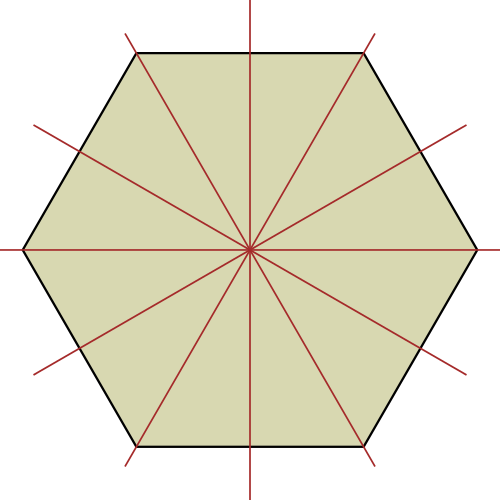
Recent advances in representation theory via homological methods
Ongoing work in representation theory continues to apply homological algebra, such as in silting theory and t-structures. #RepresentationTheory #HomologicalAlgebra
Recent advances in representation theory via homological methods By Krishnavedala - Own work, Public domain, https://commons.wikimedia.org/w/index.php?curid=37213730