Encyclopedia/5. Human Thought & Philosophy/2. Languages, Linguistics & Writing/01. History of Writing Systems • Curated by Admin Timeline.sg
Language Families · Scripts · Writing Systems (mechanics) · Historical & Comparative Linguistics · Phonology & Syntax · Translation · Sign Languages
Chronological Storyline (33 Milestones)
3200 BCE
Cuneiform script emerges in Mesopotamia
The Sumerians developed cuneiform, the world's earliest known writing system, initially using pictographic tablets for administrative and accounting purposes in Uruk. · Wikipedia: https://en.wikipedia.org/wiki/Cuneiform
A large cuneiform inscription found on the south side of the Van Castle hill, four kilometres west of modern-day Van, in eastern Turkey. It's several metres tall and wide, 25 centuries old and the message comes from the Persian king Xerxes. In Old Persian, Babylonian and Elamite, it says (roughly): "Ahuramazda is the great god, the greatest god who created the sky and created the land and created humans Who gave prosperity to the humans Who made Xerxes king King of many kings, being the only ruler of the totality of all lands “I am Xerxes, the great king, the king of kings, the king of the lands, king of all the languages, king of the great and large land, the son of king Darius the Achaemenian” The king Xerxes says: “the king Darius, my father, praised be Ahuramazda, made a lot of good, and this mountain, he ordered to work its cliff and he wrote nothing on it so, me, I ordered to write here. May Ahuramazda protect me, with all the gods and so my kingdom and what I have done." By Bjørn Christian Tørrissen - Own work by uploader, http://bjornfree.com/galleries.html, CC BY-SA 3.0, https://commons.wikimedia.org/w/index.php?curid=8296178Cracking Ancient Codes: Cuneiform Writing - with Irving Finkel
2600 BCE
Egyptian hieroglyphs developed
Ancient Egyptians developed hieroglyphic writing, a complex system combining logographic and alphabetic elements used for monumental inscriptions and papyrus records. Source — Wikipedia:
Fragment of a wall with hieroglyphs from the tomb of Seti I (reign c.1294 or 1290 - 1279 BC) By unknown Egyptian scribe - The British Museum (http://www.egyptarchive.co.uk/html/british_museum_29.html (Jon Bodsworth) - https://www.egyptarchive.co.uk/), Copyrighted free use, https://commons.wikimedia.org/w/index.php?curid=3210751
2500 BCE
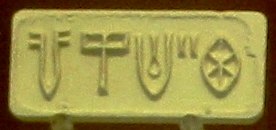
Indus Valley script appears
A still-undeciphered script emerged in the Indus Valley Civilization, used on seals and artifacts across modern-day Pakistan and northwest India. · Wikipedia: https://en.wikipedia.org/wiki/Indus_script
Impression of an Indus Valley seal, showing an "Indus script" string of five characters (British Museum, 2005 photograph) By PHGCOM IndusValleySeals.JPG - IndusValleySeals.JPG, CC BY-SA 3.0, https://commons.wikimedia.org/w/index.php?curid=5243844
1250 BCE
Earliest Chinese oracle bone inscriptions
The earliest known Chinese writing appeared on oracle bones during the Shang dynasty, establishing the roots of the modern Chinese writing system. · Wikipedia: https://en.wikipedia.org/wiki/Oracle_bone_script
Oracle bone from the Bīn 賓 group of diviners from period I, corresponding to the reign of King Wu Ding (late Shang dynasty). By Unknown author - Gary Lee Todd 2011-09-01 12:34:54 https://www.flickr.com/photos/101561334@N08/9830601816/, CC0, https://commons.wikimedia.org/w/index.php?curid=96430584
1200 BCE
Phoenician alphabet spreads
The Phoenician consonantal alphabet emerged in the Levant, becoming the ancestor of most modern alphabets including Greek, Latin, and Arabic through maritime trade. · Wikipedia: https://en.wikipedia.org/wiki/Phoenician_alphabet
500 BCE
Panini formalizes Sanskrit grammar
The Indian scholar Panini composed the Ashtadhyayi, a foundational Sanskrit grammar featuring rules that prefigure modern formal linguistics and computer science. Source — Wikipedia:
300 BCE
Maya hieroglyphic writing flourishes
The Maya developed a sophisticated logosyllabic writing system in Mesoamerica, carving inscriptions on monuments and writing in bark-paper codices. Source — Wikipedia:
Maya stucco glyphs diplayed in the museum at Palenque, Mexico. By User:Kwamikagami - English Wikipedia, Public domain, https://commons.wikimedia.org/w/index.php?curid=1686822
200 BCE
Ge'ez script emerges in Aksum
The Ge'ez script developed in the Kingdom of Aksum (modern Ethiopia/Eritrea), evolving into the liturgical and modern writing system used for Amharic and Tigrinya. · Wikipedia: https://en.wikipedia.org/wiki/Ge'ez_script
Sample of basic consonants of Ge'ez script. By M. Adiputra - Own work, CC BY-SA 3.0, https://commons.wikimedia.org/w/index.php?curid=18809879
100 BCE
Brahmi script established in India
The Brahmi script emerged in the Indian subcontinent, becoming the progenitor of all modern Brahmic scripts used across South and Southeast Asia, including Devanagari. · Wikipedia: https://en.wikipedia.org/wiki/Brahmi_script
Brahmi Varnamala (Alphabet Chart) in modern Noto Sans Brahmi font (Regular) By Symphonicallyu - Own work, CC0, https://commons.wikimedia.org/w/index.php?curid=193839024
105 CE
Papermaking revolutionizes writing media
Cai Lun of the Han dynasty refined papermaking techniques, creating a cheap and portable medium that dramatically expanded the recording and transmission of texts. · Wikipedia: https://en.wikipedia.org/wiki/Cai_Lun
Цай Лунь — (кит. 蔡倫) (50-121) — китайский сановник династии Хань, изобретатель бумаги. By Unknown author - Tsien Tsuen-Hsuin (1985) Needham, Joseph, ed. Science and Civilisation in China: Volume 5, Chemistry and Chemical Technology, Part 1, Paper and Printing, Taipei: Caves Books, pp. 108–109 ISBN: 978-0-521-08690-5. Etnografiska museet, Stockholm: 1935.50.3366.30, Public domain, https://commons.wikimedia.org/w/index.php?curid=3154438
400 CE
N'Ko script created in West Africa
The N'Ko alphabet was created by Solomana Kanté in Guinea as a writing system for Manding languages, demonstrating modern indigenous script innovation. Source — Wikipedia:
"N'Ko" in the N'Ko script using the N'Ko font found on [1] By Wierdw123 (talk) - Own work, Public domain, https://commons.wikimedia.org/w/index.php?curid=95963699
632 CE
Arabic script standardized with Quran
The compilation of the Quran under Caliph Uthman standardized the Arabic script, which subsequently spread across the Islamic world for languages like Persian and Urdu. · Wikipedia: https://en.wikipedia.org/wiki/Arabic_script
Arabic script and a mix of Academic Semitic transliterations with customary English transliterations ا ب ت ث ج ح خ / د ذ ر ز س ش ص / ض ط ظ ع غ ف ق / ك ل م ن ه و ي / By Serg!o. - Own work, Public domain, https://commons.wikimedia.org/w/index.php?curid=179875406
863 CE
Cyril and Methodius create Glagolitic
Byzantine monks Cyril and Methodius created the Glagolitic alphabet to translate Christian texts into Old Church Slavonic, leading to the Cyrillic script used today. · Wikipedia: https://en.wikipedia.org/wiki/Glagolitic_script
Above: example fragment from “Kiev leaflets” (11th-century Bulgarian), written with a round Glagolitic alphabet. Below: example fragment from the “Rhyming gospel” (South Slavic), written with an angular Glagolitic alphabet. By Лобачев Владимир - Own work, CC0, https://commons.wikimedia.org/w/index.php?curid=101745681
1443 CE
King Sejong promulgates Hangul
King Sejong the Great of Joseon promulgated Hangul, a scientifically designed alphabet that made literacy accessible to common Koreans previously excluded by Classical Chinese. Source — Wikipedia:
<The Korean text> "Joseongeul" and "Hangeul," written in Hangul, the native Korean script. By metalslick - Own work, CC BY-SA 4.0, https://commons.wikimedia.org/w/index.php?curid=63996191Sejong the Great: The Greatest King in Korean History & The Creator of the Hangul Alphabet
Feb 2, 1786 CE
Jones identifies Indo-European family
Sir William Jones delivered a speech noting profound similarities between Sanskrit, Latin, and Greek, founding the field of comparative linguistics and the Indo-European language family. Source — Wikipedia: )
A portrait from the Welsh Portrait Collection at the National Library of Wales. Depicted person: William Jones – Anglo-Welsh philologist and scholar of ancient India (1746–1794) By James Posselwhite - This image is available from the National Library of Wales You can view this image in its original context on the NLW Catalogue, Public domain, https://commons.wikimedia.org/w/index.php?curid=95773401
Jul 15, 1799 CE
Rosetta Stone discovered in Egypt
French soldiers in Egypt discovered the Rosetta Stone, whose trilingual inscription (hieroglyphic, demotic, Greek) became the key to deciphering Egyptian hieroglyphs. · Wikipedia: https://en.wikipedia.org/wiki/Rosetta_Stone
The Rosetta Stone in the British Museum. By Hans Hillewaert - Own work, CC BY-SA 4.0, https://commons.wikimedia.org/w/index.php?curid=3153928The Rosetta Stone and what it actually says with Ilona Regulski | Curator's Corner S7 Ep7
Sep 27, 1822 CE
Champollion deciphers hieroglyphs
Jean-François Champollion announced his decipherment of Egyptian hieroglyphs using the Rosetta Stone, unlocking the study of ancient Egyptian language and civilization. · Wikipedia: https://en.wikipedia.org/wiki/Jean-Fran%C3%A7ois_Champollion
Jean-François Champollion By Léon Cogniet - Musée du Louvre, Public domain, https://commons.wikimedia.org/w/index.php?curid=55198613Champollion and the Secret Behind the Decoding of Hieroglyphs | SLICE HISTORY | FULL DOCUMENTARY
1823 CE
Sequoyah completes Cherokee syllabary
Sequoyah, a Cherokee silversmith, completed an 86-character syllabary for the Cherokee language, achieving mass literacy in his nation within a few years. Source — Wikipedia:
Sequoyah completes Cherokee syllabary By Henry Inman - 7gGaC6pslza3Wg at Google Cultural Institute maximum zoom level, Public domain, https://commons.wikimedia.org/w/index.php?curid=21870072
1859 CE
Bopp publishes comparative grammar
Franz Bopp's comparative grammar of Indo-European languages established systematic methods for comparing language structures and tracing historical relationships. · Wikipedia: https://en.wikipedia.org/wiki/Franz_Bopp
Franz Bopp (1791–1867) German linguist. Engraving by Rudolf Strauch, Leipzig (from Lefmann, Franz Boll, Berlin: Reimer). By Rudolf Strauch - Alfred Gudeman: Imagines philologorum. Berlin/Leipzig: Teubner 1911, S. 23., Public domain, https://commons.wikimedia.org/w/index.php?curid=801103
1879 CE
Saussure proposes laryngeal theory
Ferdinand de Saussure published his Mémoire on the primitive vowel system of Indo-European, predicting laryngeal consonants later confirmed by Hittite evidence. · Wikipedia: https://en.wikipedia.org/wiki/Ferdinand_de_Saussure
The Swiss linguist Ferdinand de Saussure (1857–1913) By "F. Jullien Genève", maybe Frank-Henri Jullien (1882–1938) - Indogermanisches Jahrbuch, CC BY-SA 4.0, https://commons.wikimedia.org/w/index.php?curid=89193826
Jul 26, 1887 CE
Esperanto published by Zamenhof
L. L. Zamenhof published Esperanto, the most successful international constructed language, designed to be politically neutral and easy to learn for global communication. Source — Wikipedia:
The flag of the neutral international language Esperanto and the movement associated with it. By Richard H. Geoghegan - Own work, Public domain, https://commons.wikimedia.org/w/index.php?curid=447664
1916 CE
Saussure's Course founds structuralism
Ferdinand de Saussure's Course in General Linguistics was published posthumously, establishing structural linguistics and distinguishing langue (system) from parole (speech). · Wikipedia: https://en.wikipedia.org/wiki/Course_in_General_Linguistics
1925 CE
Sapir publishes on language and culture
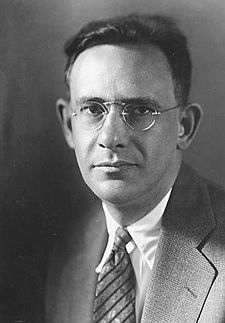
Edward Sapir published his foundational work on language, establishing principles of phonology and exploring the relationship between language and cultural perception. · Wikipedia: https://en.wikipedia.org/wiki/Edward_Sapir
Edward Sapir (1884-1939), linguist, around 1910 By unnkown - http://www.nutquote.com/quote/Edward_Sapir/7, Public domain, https://commons.wikimedia.org/w/index.php?curid=12694253
1957 CE
Chomsky's Syntactic Structures published
Noam Chomsky published Syntactic Structures, revolutionizing linguistics by proposing generative grammar and the idea of innate universal grammatical structures. Source — Wikipedia:
First edition front cover of Syntactic Structures By Unknown author - Image source (v1): https://onedio.com/haber/gelmis-gecmis-en-etkili-32-bilimsel-kitap-335309 Image source (v2): https://www.le-livre.fr/livres/fiche-ro60079168.html, Public domain, https://commons.wikimedia.org/w/index.php?curid=94512399SYN_1957 - Syntactic Structures (N. Chomsky)
1960 CE
Stokoe proves ASL is a true language
William Stokoe published Sign Language Structure, demonstrating that American Sign Language possesses a full phonological, morphological, and syntactic system like spoken languages. Source — Wikipedia:
William C. Stokoe, Jr., American Sign Language scholar By The original uploader was BrianRiley at English Wikipedia. - Transferred from en.wikipedia to Commons., CC BY-SA 3.0, https://commons.wikimedia.org/w/index.php?curid=36294671
1965 CE
Chomsky's Aspects extends generative grammar
Noam Chomsky published Aspects of the Theory of Syntax, further developing transformational-generative grammar and introducing the competence-performance distinction. Source — Wikipedia:
1973 CE
Bleek and Lloyd archive Khoisan languages
The work of Wilhelm Bleek and Lucy Lloyd on |Xam and !Kung languages preserved critical documentation of Khoisan click consonants, establishing the linguistic uniqueness of these endangered languages. Source — Wikipedia:
Wilhelm Bleek, German Linguist By Unknown author - originally uploaded to de.wikipedia by Benutzer:Hoss on 00:29, 3. Jun 2004 under the file name Wilhelm Bleek.jpg.(+/−), Public domain, https://commons.wikimedia.org/w/index.php?curid=593272
1980 CE
Knorozov deciphers Maya script
Yuri Knorozov's phonetic approach to Maya hieroglyphs was finally accepted by the academic community, unlocking the ability to read ancient Mesoamerican inscriptions. · Wikipedia: https://en.wikipedia.org/wiki/Yuri_Knorozov
1990 CE
Greenberg classifies African languages
Joseph Greenberg's classification of African languages into four major families (Afro-Asiatic, Nilo-Saharan, Niger-Congo, Khoisan) provided a foundational framework for African linguistics. Source — Wikipedia:
Photo of linguist Joseph Greenberg By Unknown author - Columbia College today - V. 15 (1967-69), Public domain, https://commons.wikimedia.org/w/index.php?curid=185933064
1996 CE
Unicode standardizes global scripts
The Unicode Standard was widely adopted, providing a universal digital encoding system for all the world's writing systems and enabling multilingual computing. · Wikipedia: https://en.wikipedia.org/wiki/Unicode
Unicode logo used on the Unicode Consortium website launched on 17 July 2019 (https://home.unicode.org/). Replaces the red Unicode logo.svg: with different typeface for the word "Unicode" that was used on the old website. By Unicode Consortium - Provided by the Unicode Consortium, Public domain, https://commons.wikimedia.org/w/index.php?curid=84334780
2007 CE
UN adopts sign language rights
The United Nations Convention on the Rights of Persons with Disabilities entered into force, recognizing sign languages as equal to spoken languages in international law. · Wikipedia: https://en.wikipedia.org/wiki/Convention_on_the_Rights_of_Persons_with_Disabilities
A map of parties to the Convention on the Rights of Persons with Disabilities. Parties in dark green, countries which have signed but not ratified in light green, non-members in grey. By L.tak - Own workhttps://treaties.un.org/Pages/ViewDetails.aspx?src=IND&mtdsg_no=IV-15&chapter=4&clang=_en, Public domain, https://commons.wikimedia.org/w/index.php?curid=21875039
2012 CE
Endangered Languages Project launches
Google and the First Peoples' Cultural Council launched the Endangered Languages Project, a global collaborative online repository for documenting and preserving threatened languages. · Wikipedia: https://en.wikipedia.org/wiki/Endangered_Languages_Project
2022 CE
AI models achieve near-human translation
Large language models like GPT-4 demonstrated near-human performance on many translation and linguistic tasks, transforming computational linguistics and cross-lingual communication. Source — Wikipedia:




!["N'Ko" in the N'Ko script using the N'Ko font found on [1]](https://upload.wikimedia.org/wikipedia/commons/thumb/9/9d/NKo-script.svg/500px-NKo-script.svg.png)