Countries/Singapore • Curated by Admin Timeline.sg
Singapore's maritime trade history spans over 700 years, from its origins as the ancient trading post of Temasek to its modern status as the world's busiest transshipment hub. Key milestones include the establishment of a free port in 1819, the opening of the Suez Canal, the advent of containerization, and the ongoing development of the Tuas Mega Port.
Chronological Storyline (22 Milestones)
1320 CE
Temasek as a Trading Post
The island known as Temasek (meaning 'Sea Town' in Javanese) emerges as a thriving trading post, frequented by Chinese, Indian, and Arab merchants. It serves as a strategic stopover along the maritime Silk Road, trading spices, textiles, and ceramics. #maritime #trade #temasek
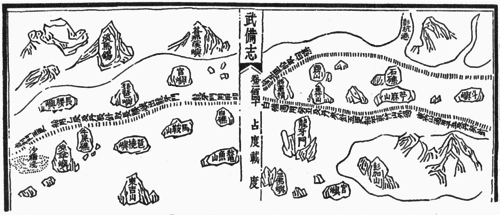
Temasek as a Trading Post By Mao Yuanyi (1594–1640?), editor of the Wubei Zhi; and an unknown cartographer. - Scanned from Paul Wheatley (1961) The Golden Khersonese: Studies in the Historical Geography of the Malay Peninsula before A.D. 1500, Kuala Lumpur: University of Malaya Press OCLC: 504030596. Originally from the Wubei Zhi (Treatise on Armament Technology), a 17th century work with maps based on material dated to the voyages of Zheng He (early 15th century)., Public domain, https://commons.wikimedia.org/w/index.php?curid=41968524
1398 CE
Fall of Temasek
Temasek is sacked by the Majapahit Empire or Siamese forces, leading to its decline. The island is largely abandoned for centuries, with its port activities shifting to other regional centers like Malacca. #history #decline
Feb 6, 1819 CE
Raffles Establishes Free Port
Sir Stamford Raffles of the British East India Company signs a treaty with the Sultan of Johor to establish a trading post in Singapore. He declares it a free port, attracting merchants from across Asia and Europe, laying the foundation for modern Singapore. #raffles #freetrade #colonial
Raffles Establishes Free Port By John Michael Houghton - https://www.roots.gov.sg/Collection-Landing/listing/1254655, Public domain, https://commons.wikimedia.org/w/index.php?curid=105503424
Aug 2, 1824 CE
Singapore Becomes British Colony
The Treaty of Friendship and Alliance cedes Singapore to the British East India Company permanently. This formalizes British control and ensures the port's stability and growth under colonial administration. #colonial #british
Singapore Becomes British Colony By Samhanin - Own work, source: 1934 Color Print Flags Badges British Empire Military Symbols, CC BY 4.0, https://commons.wikimedia.org/w/index.php?curid=148762205
Nov 17, 1869 CE
Opening of the Suez Canal
The Suez Canal opens, drastically reducing travel time between Europe and Asia. Singapore becomes a crucial coaling station and refueling stop for steamships, boosting its maritime importance and trade volumes. #suez #steamship #trade
Opening of the Suez Canal By NASA - http://spaceflight.nasa.gov/gallery/images/station/crew-16/html/iss016e019375.html, Public domain, https://commons.wikimedia.org/w/index.php?curid=3832302
1885 CE
Keppel Harbour Development
The British begin constructing Keppel Harbour, named after Admiral Henry Keppel, to provide deep-water berths and sheltered anchorage. This transforms Singapore into a major naval and commercial port, handling increasing shipping traffic. #harbour #infrastructure
Keppel Harbour Development By Terence Ong - Own work, CC BY 2.5, https://commons.wikimedia.org/w/index.php?curid=1317686
1905 CE
Singapore Harbour Board Established
The Singapore Harbour Board is formed to manage port operations, replacing private management. This centralizes control and improves efficiency, paving the way for modern port administration. #port #management
Singapore Harbour Board Established By Aaaatu - Own work, CC BY-SA 4.0, https://commons.wikimedia.org/w/index.php?curid=147237520
1912 CE
Shift from Coal to Oil Bunkering
The Royal Navy and merchant fleets begin transitioning from coal to oil-powered ships. Singapore adapts by building oil storage facilities and bunkering infrastructure, maintaining its role as a key refueling hub. #oil #bunkering #energy
Shift from Coal to Oil Bunkering By The Great Stahl - Own work, CC BY-SA 4.0, https://commons.wikimedia.org/w/index.php?curid=92112708
Feb 15, 1942 CE
Japanese Occupation of Singapore
Singapore falls to Japanese forces during World War II, disrupting port operations. The port is used for Japanese military logistics, and trade plummets, but post-war reconstruction revitalizes it. #wwii #occupation
Japanese Occupation of Singapore By kahusi - (Talk) - kahusi - (Talk)'s file See also: Flags of the World - Japan, 1870 Merchant Flag Construction sheet., Public domain, https://commons.wikimedia.org/w/index.php?curid=7552269
1964 CE
Port of Singapore Authority (PSA) Formed
The Port of Singapore Authority (PSA) is established to manage and develop the port. This corporatization allows for more efficient planning and investment, setting the stage for Singapore's rise as a global hub. #psa #authority
1972 CE
Tanjong Pagar Container Terminal Opens
Singapore opens its first dedicated container terminal at Tanjong Pagar, with three berths and a capacity of 300,000 TEUs annually. This marks the beginning of Singapore's dominance in container shipping. #container #terminal #shipping
Tanjong Pagar Container Terminal Opens By Deoma12 - Own work, CC BY-SA 4.0, https://commons.wikimedia.org/w/index.php?curid=152322432
1977 CE
PSA Begins Computerization
PSA introduces computerized systems for container tracking and port operations, improving efficiency and reducing turnaround times. This technological edge attracts major shipping lines to Singapore. #technology #innovation
1986 CE
Brani Terminal Opens
The Brani Container Terminal begins operations, adding capacity and advanced facilities. It helps Singapore handle the rapid growth in container traffic, reinforcing its position as a top transshipment hub. #terminal #expansion
1990 CE
PSA Becomes World's Busiest Container Port
Singapore overtakes Hong Kong to become the world's busiest container port by throughput. This milestone reflects decades of strategic investment and efficient operations. #busiest #milestone
1997 CE
PSA International Privatized
PSA is corporatized and renamed PSA International, with the government retaining ownership. This allows PSA to expand globally, investing in ports in China, Europe, and beyond. #privatization #global
2000 CE
Pasir Panjang Terminal Phase 1 Opens
The first phase of Pasir Panjang Terminal begins operations, adding deep-water berths and advanced automation. It helps Singapore maintain its competitive edge amid rising regional competition. #terminal #automation
Pasir Panjang Terminal Phase 1 Opens By yeowatzup - Pasir Panjang Village, West Coast, Singapore. Uploaded by Russavia., CC BY 2.0, https://commons.wikimedia.org/w/index.php?curid=24521439
2005 CE
Maritime and Port Authority (MPA) Formed
The Maritime and Port Authority of Singapore is established to regulate and promote the maritime sector. It focuses on safety, security, and environmental sustainability, supporting the port's growth. #regulation #maritime
2010 CE
Singapore Remains World's Top Transshipment Hub
Singapore continues to lead as the world's busiest transshipment port, handling over 30 million TEUs annually. Its strategic location and efficiency attract major shipping lines and logistics firms. #transshipment #hub
2013 CE
Tuas Mega Port Announced
The Singapore government announces plans to consolidate all port activities at Tuas, creating a mega port with 65 million TEU capacity by 2040. The project aims to future-proof Singapore's maritime industry. #megaport #future
2017 CE
PSA Launches Smart Port Initiatives
PSA introduces AI, IoT, and automation technologies to enhance port operations. These smart port initiatives improve productivity and reduce carbon emissions, setting new industry standards. #smartport #technology
2022 CE
Tuas Port Phase 1 Operational
The first phase of Tuas Port begins operations, with automated cranes and electric vehicles. It marks the start of the gradual relocation from older terminals to the new mega port. #tuas #automation
2024 CE
Singapore Port Handles Record 40 Million TEUs
Singapore's port achieves a record annual throughput of 40 million TEUs, reaffirming its status as a global maritime leader. The milestone is driven by post-pandemic trade recovery and efficient operations. #record #throughput