Encyclopedia/1. The Cosmos & The Natural World/1. Mathematics & Formal Systems/02. Algebra & Symbolic Systems • Curated by Admin Timeline.sg
Group theory, the mathematical study of symmetry, has roots in ancient geometric patterns and evolved through polynomial equations, crystallography, and abstract algebra to become a fundamental tool in physics, chemistry, and beyond.
Chronological Storyline (37 Milestones)
2000 BCE
Babylonian Symmetry in Art and Architecture
Ancient Babylonians create intricate symmetric patterns in art and architecture, demonstrating early intuitive understanding of symmetry. #math #history
Babylonian Symmetry in Art and Architecture By Scott Foresman - publishing company specializing in educational material - Own work based on: Asymmetric (PSF).png:, Public domain, https://commons.wikimedia.org/w/index.php?curid=3214447
500 BCE
Greek Geometric Patterns and Plato
Greek mathematicians and philosophers, including Plato, explore symmetry in geometry and consider it a fundamental property of the cosmos. #math #philosophy
300 BCE
Euclid's Elements and Symmetry
Euclid's Elements lays groundwork for geometric symmetry, including properties of regular polygons and polyhedra. #math
Euclid's Elements and Symmetry By University of Pennsylvania Museum of Archaeology and Anthropology - https://openn.library.upenn.edu/Data/0016/html/e2748.html, CC BY-SA 4.0, https://commons.wikimedia.org/w/index.php?curid=169166171
Islamic Geometric Art and Symmetry By Ian Alexander - Own work, CC BY-SA 4.0, https://commons.wikimedia.org/w/index.php?curid=45782132
1545 CE
Gerolamo Cardano's Ars Magna
Cardano publishes Ars Magna, including solutions to cubic and quartic equations, foreshadowing symmetry in root permutations. #math )
1771 CE
Lagrange's Reflexions on Resolvents
Joseph-Louis Lagrange studies permutations of roots in polynomial equations, introducing concepts that anticipate group theory. #math
Lagrange's Reflexions on Resolvents By Unknown author - File:Joseph_Louis_Lagrange.jpg, CC0, https://commons.wikimedia.org/w/index.php?curid=155608232
1799 CE
Paolo Ruffini's Attempt at Quintic
Paolo Ruffini publishes work on the insolubility of the quintic, using permutation groups, though incomplete. #math
Paolo Ruffini's Attempt at Quintic By Unknown - https://i.bigenc.ru/Azc5DHKsI0yKslqp0YR2mSpJo4HQq_Eu-YfQ3CG3hiU/xl/ODNlOGVjODZkZTQ2OTkyM2NmYTMyNWVlMDNiZmY0Y2YuanBn.webp, CC0, https://commons.wikimedia.org/w/index.php?curid=130821361
1815 CE
Cauchy's Permutation Group Work
Augustin-Louis Cauchy writes important papers on permutation groups, formalizing the concept of a group. #math
Cauchy's Permutation Group Work By Public domain - Library of Congress Prints and Photographs Division. From an illustration in: Das neunzehnte Jahrhundert in Bildnissen / Karl Werckmeister, ed. Berlin : Kunstverlag der photographische gesellschaft, 1840, vol. V, no. 581., Public domain, https://commons.wikimedia.org/w/index.php?curid=7059486
1824 CE
Abel's Proof of Insolvability of Quintic
Niels Henrik Abel proves that the general quintic equation is unsolvable by radicals, using group theory implicitly. #math
1832 CE
Galois' Final Letter and Group Theory
Évariste Galois, on the eve of his death, writes a letter outlining the connection between groups and polynomial equations, founding Galois theory. #math #history
Galois' Final Letter and Group Theory By Unknown author - Iyanaga, Shokichi, "ガロアの時代 ガロアの数学 第一部 時代篇" , Springer-Verlag Tokyo, 1999 http://www.win.tue.nl/~aeb/at/GaloisCorrespondence.html, Public domain, https://commons.wikimedia.org/w/index.php?curid=103351
1844 CE
Cayley's Abstract Group Definition
Arthur Cayley defines an abstract group in terms of multiplication table axioms, moving beyond permutation groups. #math
Cayley's Abstract Group Definition By Herbert Beraud (1845–1896) - http://www-groups.dcs.st-and.ac.uk/~history/PictDisplay/Cayley.html, Public domain, https://commons.wikimedia.org/w/index.php?curid=904674
1854 CE
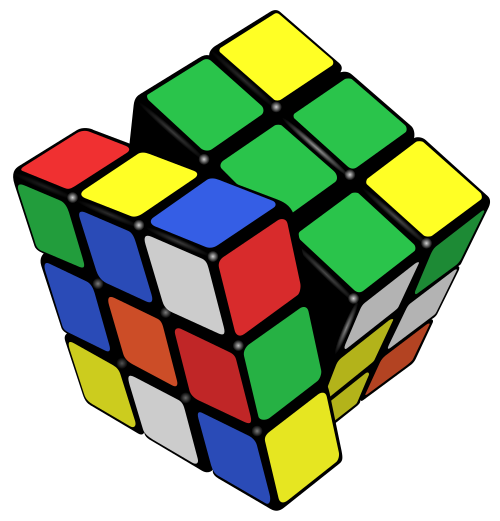
Cayley's Group and Symmetry Concepts
Cayley publishes papers on group theory, introducing Cayley tables and the notion of a group as a set with an associative binary operation, identity, and inverses. #math )
Cayley's Group and Symmetry Concepts By This image was created by me, Booyabazooka - Based on Image:Rubiks cube.jpg, CC BY-SA 3.0, https://commons.wikimedia.org/w/index.php?curid=4771790
1870 CE
Jordan's Traité des Substitutions
Camille Jordan publishes a comprehensive treatise on permutation groups, systematizing Galois theory and group concepts. #math
Jordan's Traité des Substitutions By Eugène Pirou - Archivio storico dell'Accademia delle Scienze - Catalogo digitale, Public domain, https://commons.wikimedia.org/w/index.php?curid=106265667
1872 CE
Felix Klein's Erlangen Program
Felix Klein proposes the Erlangen Program, classifying geometries by their symmetry groups. #math
Felix Klein's Erlangen Program By Unknown author, Public domain, https://commons.wikimedia.org/w/index.php?curid=38617
1878 CE
Frobenius and Character Theory
Ferdinand Georg Frobenius develops representation theory and character theory for finite groups. #math
Frobenius and Character Theory By Furfur - (de): Oberwolfach Photo Collection, aus einem Fotoalbum der Mathematischen Gesellschaft (Hamburg)(en): Oberwolfach Photo Collection, from a photo album of the Mathematische Gesellschaft (Hamburg), CC BY-SA 3.0, https://commons.wikimedia.org/w/index.php?curid=59417515
1881 CE
Lie's Continuous Groups
Sophus Lie introduces continuous groups (Lie groups) and their infinitesimal transformations, linking group theory with differential equations. #math
Lie's Continuous Groups By L. Szaciński (Christiania) - Flickr: Portrett av Sophus Lie, 1896, No restrictions, https://commons.wikimedia.org/w/index.php?curid=64917266
1892 CE
Killing's Classification of Simple Lie Algebras
Wilhelm Killing classifies complex simple Lie algebras, laying foundation for Lie group classification. #math
Killing's Classification of Simple Lie Algebras By Unknown author - http://www-history.mcs.st-andrews.ac.uk/Mathematicians/Killing.html, Public domain, https://commons.wikimedia.org/w/index.php?curid=26763585
1897 CE
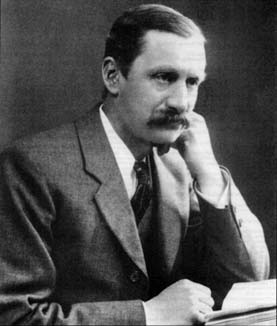
Burnside's Theory of Groups
William Burnside writes 'Theory of Groups of Finite Order', a seminal textbook on group theory. #math
Burnside's Theory of Groups By Unknown author, Copyrighted free use, https://commons.wikimedia.org/w/index.php?curid=545215
1904 CE
Burnside's Lemma
Burnside formulates a lemma counting orbits under group actions, fundamental in combinatorics. #math
1910 CE
Schoenflies and Crystallographic Groups
Arthur Schoenflies classifies crystallographic space groups, applying group theory to crystal symmetry. #math #science
Schoenflies and Crystallographic Groups By No coneguts - MacTutor History of Mathematics: http://www-history.mcs.st-andrews.ac.uk/PictDisplay/Schonflies.html, Public domain, https://commons.wikimedia.org/w/index.php?curid=68422851
1914 CE
Frobenius' Character Theory Complete
Frobenius finishes character theory of finite groups, crucial for representation theory. #math
1923 CE
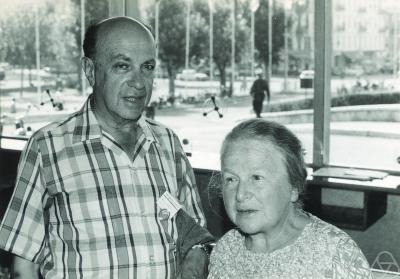
Brauer's Modular Representation Theory
Richard Brauer begins modular representation theory, studying groups over fields with characteristic dividing group order. #math
Brauer's Modular Representation Theory By Jacobs, Konrad - https://opc.mfo.de/detail?photo_id=467, CC BY-SA 2.0 de, https://commons.wikimedia.org/w/index.php?curid=7756475
1925 CE
Noether's Theorem and Symmetry
Emmy Noether proves Noether's theorem, linking conservation laws to symmetry principles in physics. #math #physics
Noether's Theorem and Symmetry By Emmy Noether - "Invariante Variationsprobleme" (Nachrichten von der Gesellschaft der Wissenschaften zu Göttingen, Mathematisch-Physikalische Klasse 1918 (1918): 235-257. <http://eudml.org/doc/59024>), Public domain, https://commons.wikimedia.org/w/index.php?curid=69398536
1929 CE
Weyl's Group Theory and Quantum Mechanics
Hermann Weyl applies group theory to quantum mechanics, publishing 'Gruppentheorie und Quantenmechanik'. #math #physics
Weyl's Group Theory and Quantum Mechanics By ETH Zürich - ETH-Bibliothek Zürich, Bildarchiv, CC BY-SA 3.0, https://commons.wikimedia.org/w/index.php?curid=8098412
1935 CE
Zassenhaus's Lemma
Hans Zassenhaus proves the butterfly lemma, a key tool in group theory and the Schreier refinement theorem. #math
Zassenhaus's Lemma By Claudio Rocchini - Own work, CC BY 3.0, https://commons.wikimedia.org/w/index.php?curid=2773335
1939 CE
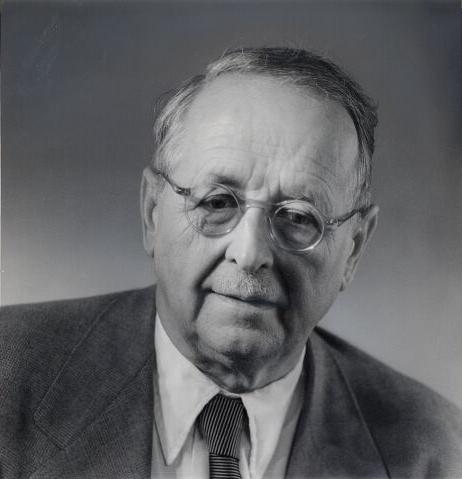
Hall's Subgroup Theorems
Philip Hall publishes fundamental results on finite groups, including Hall subgroups and solvability. #math
Hall's Subgroup Theorems By Konrad Jacobs, Erlangen, Copyright is MFO - Mathematisches Forschungsinstitut Oberwolfach,https://opc.mfo.de/detail?photo_id=1531, CC BY-SA 2.0 de, https://commons.wikimedia.org/w/index.php?curid=12364673
1955 CE
Chevalley Groups
Claude Chevalley constructs algebraic groups over finite fields, now called Chevalley groups. #math
Chevalley Groups By Original: Jakob.scholbach Vector: Pbroks13 - Own work based on: Cyclic group.png, CC BY-SA 3.0, https://commons.wikimedia.org/w/index.php?curid=4370108
1962 CE
Feit–Thompson Theorem
Walter Feit and John G. Thompson prove that every finite group of odd order is solvable, a major step in the classification of finite simple groups. #math
1963 CE
Suzuki's Sporadic Groups
Michio Suzuki discovers the Suzuki sporadic groups, expanding the list of finite simple groups. #math
1968 CE
Conway's Sporadic Groups
John Horton Conway discovers three sporadic simple groups related to the Leech lattice. #math
1973 CE
Fischer's Sporadic Groups
Bernd Fischer discovers the Fischer sporadic groups, including the monster group's precursors. #math
1974 CE
Griess's Monster Group Construction
Robert Griess constructs the Monster group, the largest sporadic simple group, later proven by Griess and Fischer. #math
1981 CE
Classification of Finite Simple Groups Announced
The classification of finite simple groups is announced as complete, though final proof gaps are filled later. #math
2004 CE
Revised Classification Proof Project
Gorenstein, Lyons, and Solomon publish the first volumes of a revised, simplified proof of the classification theorem. #math
2008 CE
Atlas of Finite Groups
The Atlas of Finite Group Representations is completed online, providing data on maximal subgroups and characters. #math
Atlas of Finite Groups By John Horton Conway, Robert Turner Curtis, Simon Phillips Norton, Richard Alan Parker and Robert Arnott Wilson - https://www.amazon.com/Atlas-Finite-Groups-Subgroups-Characters/dp/0198531990, Public domain, https://commons.wikimedia.org/w/index.php?curid=157380096
2012 CE
Mochizuki's Inter-universal Teichmüller Theory
Shinichi Mochizuki claims proof of the ABC conjecture using sophisticated group-theoretic structures, though controversial. #math
2020 CE
Collaborative Proof of the D.C. Theorem
A team including Gross, Landsberg, and others uses group theory to prove results in algebraic geometry, highlighting ongoing relevance. #math