Encyclopedia/1. The Cosmos & The Natural World/5. Life Sciences • Curated by Admin Timeline.sg
Biographical timeline tracking the seminal contributions, inventions, and lasting legacies of leading figures in genomics and gene editing, from the discovery of DNA to modern CRISPR technologies.
Chronological Storyline (45 Milestones)
1869 CE
Friedrich Miescher Discovers Nuclein
Friedrich Miescher isolates nuclein from white blood cells, later identified as DNA. This foundational discovery paves the way for molecular genetics. #genomics #history
Friedrich Miescher Discovers Nuclein By Unknown author - copied from http://www.pbs.org/wgbh/nova/photo51/images/befo-miescher.jpg, Public domain, https://commons.wikimedia.org/w/index.php?curid=789048
1902 CE
Archibald Garrod Describes Inborn Errors of Metabolism
Archibald Garrod proposes that inherited diseases like alkaptonuria result from single gene defects, laying the groundwork for medical genetics. #medicalgenetics #history
Archibald Garrod Describes Inborn Errors of Metabolism By Unknown author - https://wellcomeimages.org/indexplus/image/M0018311.html, CC BY 4.0, https://commons.wikimedia.org/w/index.php?curid=33658267
1909 CE
Wilhelm Johannsen Coins 'Gene'
Danish botanist Wilhelm Johannsen introduces the term 'gene' to describe the unit of heredity, a pivotal concept in genetics. #genetics #terminology
Wilhelm Johannsen Coins 'Gene' By Unknown author - The History of Biology de Erik Nordenskiöld, Ed. Knopf, 1928 (domaine public), Copyrighted free use, https://commons.wikimedia.org/w/index.php?curid=743923
1910 CE
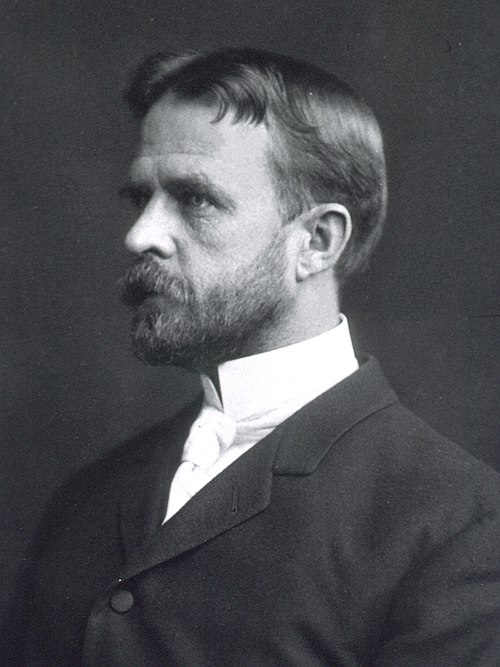
Thomas Hunt Morgan Establishes Drosophila as Model
Thomas Hunt Morgan discovers sex-linked inheritance in fruit flies, demonstrating chromosomal theory of heredity and establishing Drosophila as a key model organism. #genetics #modelorganism
Thomas Hunt Morgan Establishes Drosophila as Model By Unknown author - http://resource.nlm.nih.gov/101422222, Public domain, https://commons.wikimedia.org/w/index.php?curid=549067
1941 CE
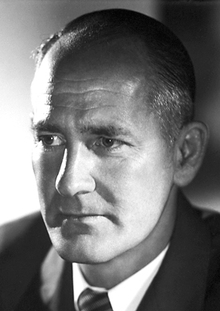
Beadle and Tatum Propose One Gene-One Enzyme
George Beadle and Edward Tatum show that each gene encodes a single enzyme, using Neurospora crassa. This links genes to proteins. #molecularbiology #genetics
Beadle and Tatum Propose One Gene-One Enzyme By Unknown - http://www.nobelprize.org/nobel_prizes/medicine/laureates/1958/, PD-Sweden, https://en.wikipedia.org/w/index.php?curid=31240247
1944 CE
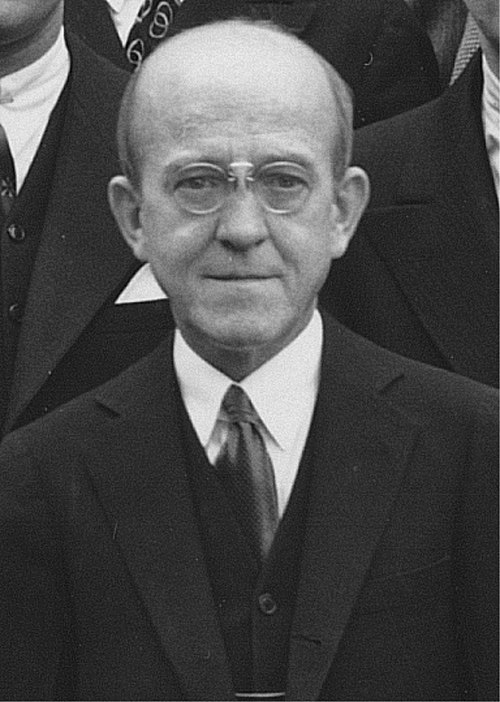
Avery, MacLeod, McCarty Identify DNA as Transforming Principle
Oswald Avery and colleagues demonstrate that DNA, not protein, is the genetic material in bacteria, overturning previous assumptions. #DNA #genetics
Avery, MacLeod, McCarty Identify DNA as Transforming Principle By Unknown author - https://resource.nlm.nih.gov/101584575X15, Public domain, https://commons.wikimedia.org/w/index.php?curid=3677045
1950 CE
Erwin Chargaff Discovers Base Pairing Rules
Erwin Chargaff establishes that DNA composition varies between species and that A=T and G=C, critical for the double helix model. #DNA #biochemistry
1952 CE
Hershey-Chase Experiment Confirms DNA is Genetic Material
Alfred Hershey and Martha Chase use radioactive labeling to prove that DNA, not protein, carries genetic information in phages. #DNA #virology
Hershey-Chase Experiment Confirms DNA is Genetic Material By Thomasione - Modified from German Wikipedia [1], GFDL, https://commons.wikimedia.org/w/index.php?curid=15034881
1953 CE
Watson and Crick Propose DNA Double Helix
James Watson and Francis Crick unveil the double helix model of DNA, based on Rosalind Franklin's X-ray crystallography, revolutionizing biology. #DNA #structure
Watson and Crick Propose DNA Double Helix By Zephyris - Own work, CC BY-SA 3.0, https://commons.wikimedia.org/w/index.php?curid=15027555
1955 CE
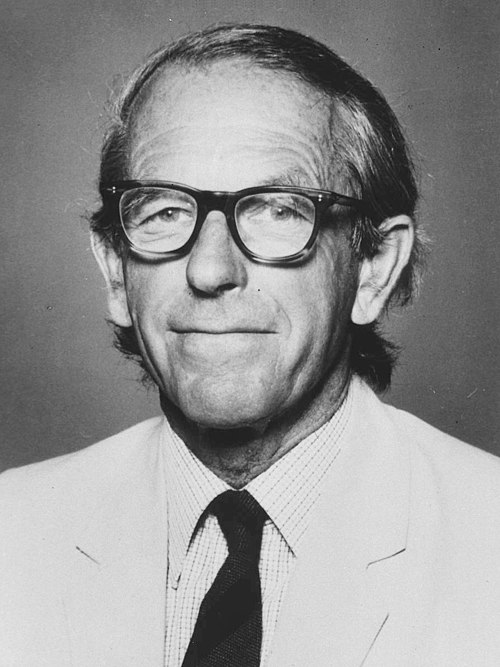
Frederick Sanger Sequences Insulin
Frederick Sanger determines the complete amino acid sequence of insulin, showing proteins have defined sequences, pioneering protein sequencing. #protein #sequencing
Frederick Sanger Sequences Insulin By Unknown author, Public domain, https://commons.wikimedia.org/w/index.php?curid=1249932
1958 CE
Crick Proposes Central Dogma
Francis Crick articulates the Central Dogma: genetic information flows from DNA to RNA to protein, a cornerstone of molecular biology. #molecularbiology #dogma
Matthew Meselson and Franklin Stahl use density gradient centrifugation to demonstrate that DNA replication is semiconservative. #DNA #replication
1961 CE
Nirenberg Cracks the Genetic Code
Marshall Nirenberg deciphers the first codon (UUU codes for phenylalanine), breaking the genetic code and linking RNA to protein synthesis. #geneticcode #biology
Nirenberg Cracks the Genetic Code By National Library of Medicine - https://www.flickr.com/photos/nlmhmd/51276834698/, No restrictions, https://commons.wikimedia.org/w/index.php?curid=111151921
1965 CE
Khorana Synthesizes First Complete Gene
Har Gobind Khorana chemically synthesizes the first complete gene (alanine tRNA), demonstrating artificial gene synthesis. #genesynthesis #biochemistry
Khorana Synthesizes First Complete Gene By Unknown author - http://www.nobelprize.org/nobel_prizes/medicine/laureates/1968/, Public domain, https://commons.wikimedia.org/w/index.php?curid=194932927
1967 CE
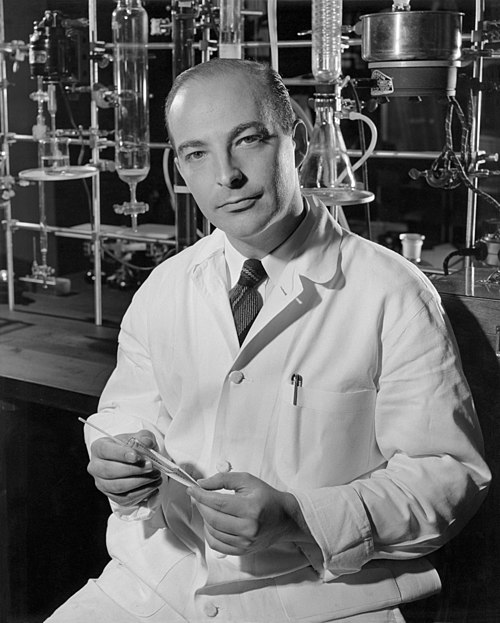
Kornberg Synthesizes Infectious DNA
Arthur Kornberg synthesizes biologically active DNA in vitro, replicating the genome of a bacteriophage. #DNA #synthesis
Kornberg Synthesizes Infectious DNA By NIH History Office, https://www.flickr.com/people/124413887@N04 Restored by: Bammesk - https://www.flickr.com/photos/historyatnih/30828410210/, Public domain, https://commons.wikimedia.org/w/index.php?curid=90604243
1970 CE
Smith and Nathans Discover Restriction Enzymes
Hamilton Smith and Daniel Nathans isolate restriction enzymes that cut DNA at specific sequences, enabling molecular cloning. #restrictionenzyme #biotech
Smith and Nathans Discover Restriction Enzymes By Jane Gitschier - PLoS Genetics, CC BY 2.5, https://commons.wikimedia.org/w/index.php?curid=22003635
1972 CE
Paul Berg Creates First Recombinant DNA
Paul Berg constructs the first recombinant DNA molecule by combining viral and bacterial DNA, launching genetic engineering. #recombinantDNA #biotech
Paul Berg Creates First Recombinant DNA By Unknown author - http://profiles.nlm.nih.gov/CD/B/B/L/L/, Public domain, https://commons.wikimedia.org/w/index.php?curid=3702286
1973 CE
Cohen and Boyer Develop Recombinant DNA Technology
Stanley Cohen and Herbert Boyer use restriction enzymes and plasmids to clone foreign genes in bacteria, founding modern biotechnology. #biotech #cloning
1975 CE
Sanger Develops DNA Sequencing Method
Frederick Sanger introduces the dideoxy chain-termination method for DNA sequencing, making genome analysis possible. #DNASequencing #genomics
Sanger Develops DNA Sequencing Method By Estevezj - Own work, CC BY-SA 3.0, https://commons.wikimedia.org/w/index.php?curid=23264166
1977 CE
Gilbert and Maxam Develop Chemical Sequencing
Walter Gilbert and Allan Maxam publish a chemical method for sequencing DNA, complementary to Sanger's approach. #DNASequencing #genomics
Gilbert and Maxam Develop Chemical Sequencing By Douglas A. Lockard - Science History Institute, Douglas A. Lockard, CC BY-SA 3.0, https://commons.wikimedia.org/w/index.php?curid=33477797
1983 CE
Kary Mullis Invents PCR
Kary Mullis conceives the polymerase chain reaction (PCR), amplifying DNA millions-fold, revolutionizing molecular biology and diagnostics. #PCR #biotech
Kary Mullis Invents PCR By Dona Mapston - Cropped from Flickr image, CC BY-SA 3.0, https://commons.wikimedia.org/w/index.php?curid=5533280
1985 CE
Alec Jeffreys Develops DNA Fingerprinting
Alec Jeffreys discovers repetitive DNA patterns and develops DNA fingerprinting, transforming forensic science and paternity testing. #DNAfingerprint #forensic
Alec Jeffreys Develops DNA Fingerprinting By Jane Gitschier - PLoS Genetics, CC BY 2.5, https://commons.wikimedia.org/w/index.php?curid=22003040
1990 CE
Human Genome Project Launches
The international Human Genome Project begins, aiming to sequence all 3 billion base pairs of human DNA. #genomics #HGP
Human Genome Project Launches By U.S. Department of Energy, Human Genome Project - http://www.ornl.gov/hgmis, Public domain, https://commons.wikimedia.org/w/index.php?curid=2485616
1995 CE
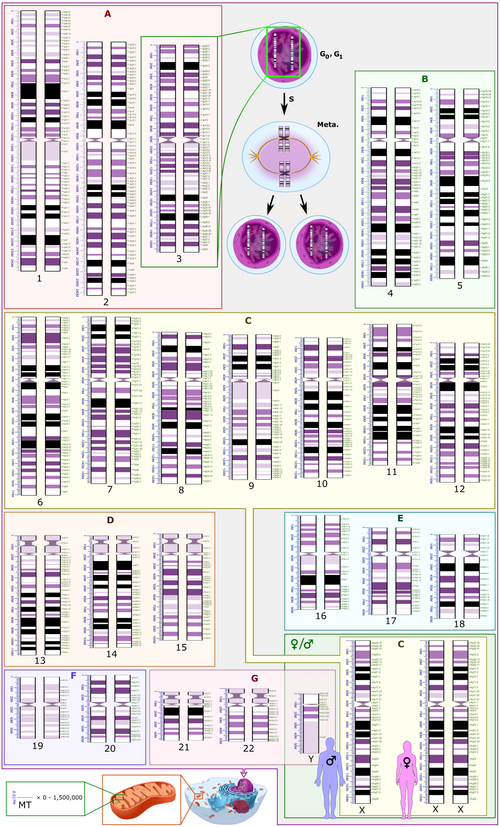
First Bacterial Genome Sequenced
Craig Venter and Hamilton Smith sequence the first complete genome of a free-living organism, Haemophilus influenzae. #genomics #sequencing
First Bacterial Genome Sequenced By Mikael Häggström, M.D. Author info - Reusing images- Conflicts of interest: None Mikael Häggström, M.D.- The work integrates Public Domain source images by Was A Bee, Kelvin Ma and Michał Komorniczak- Also, a special acknowledgement to everyone involved in the Human Genome Project for generating the source data.edit - editOwn work, integrating the following Public Domain pictures: Chromosomes, with annotated bands and sub-bands, by User:Was a bee, in turn using data from the Human Genome Project, as displayed in the Ensembl genome database: Ensembl - Homo sapiens: Animal Cell.svg by Kelvin Ma (for mitochondrial localization) Animal cell cycle-en.svg by Kelvin Ma (for cell cycle changes at top) Female shadow (for the female silhouette), by Mikael Häggström Autodominant en.svg by Michał Komorniczak (for the male silhouette) The purple hue for the chromosomes and cell nuclei was digitally sampled from the following image: Human Chromosomes (crop), before conversion to grayscale, by SANCHITA20. Creative Commons Attribution 4.0 International license., CC0, https://commons.wikimedia.org/w/index.php?curid=125968286
1996 CE
Dolly the Sheep Cloned
Ian Wilmut and colleagues clone Dolly the sheep via somatic cell nuclear transfer, proving adult cells can be reprogrammed. #cloning #stemcells )
1998 CE
RNA Interference Discovered
Andrew Fire and Craig Mello discover RNA interference (RNAi), a mechanism for gene silencing, earning the Nobel Prize. #RNAi #generegulation
RNA Interference Discovered By Dan Cojocari ✉·✍· - Own, This W3C-unspecified vector image was created with Adobe Illustrator., CC BY-SA 3.0, https://commons.wikimedia.org/w/index.php?curid=8697221
1999 CE
Human Chromosome 22 Fully Sequenced
The first human chromosome (22) is fully sequenced by an international consortium, a milestone for the Human Genome Project. #genomics #chromosome
Human Chromosome 22 Fully Sequenced By National Human Genome Research Institute - Cropped from File:Human male karyotpe high resolution.jpg, Public domain, https://commons.wikimedia.org/w/index.php?curid=41377308
2000 CE
Draft Human Genome Announced
Celera Genomics and the Human Genome Project jointly release a draft sequence of the human genome, a landmark achievement. #genomics #human
2001 CE
International HapMap Project Begins
The HapMap project catalogs genetic variation across human populations to identify disease associations. #genetics #variation
2003 CE
Human Genome Project Completed
The Human Genome Project announces the complete sequencing of the human genome, two years ahead of schedule and under budget. #genomics #HGP
2005 CE
454 Sequencing Introduces Next-Gen Sequencing
454 Life Sciences launches the first next-generation sequencing platform, massively increasing throughput. #DNASequencing #nextgen
Yamanaka Creates Induced Pluripotent Stem Cells By 日本学士院 - https://www.japan-acad.go.jp/japanese/members/7/yamanaka_shinya.html, CC BY 4.0, https://commons.wikimedia.org/w/index.php?curid=129928110
2007 CE
James Watson's Genome Sequenced
The first personal genome sequence is published for James Watson, utilizing next-generation sequencing. #genomics #personal
James Watson's Genome Sequenced By Newspaper Enterprise Association - This image is available from the United States Library of Congress's Prints and Photographs division under the digital ID cph.3c37336.This tag does not indicate the copyright status of the attached work. A normal copyright tag is still required. See Commons:Licensing., Public domain, https://commons.wikimedia.org/w/index.php?curid=189390308
2010 CE
First Synthetic Cell Created
Craig Venter and team create Mycoplasma mycoides JCVI-syn1.0, the first self-replicating cell with a synthetic genome. #syntheticbiology #genome
2012 CE
CRISPR-Cas9 Gene Editing Developed
Emmanuelle Charpentier and Jennifer Doudna demonstrate CRISPR-Cas9 as a programmable gene-editing tool, enabling precise DNA modifications. #CRISPR #geneediting
CRISPR-Cas9 Gene Editing Developed By Boghog - Own work, CC BY-SA 4.0, https://commons.wikimedia.org/w/index.php?curid=68597347
2013 CE
CRISPR Used in Human Cells
Feng Zhang and colleagues adapt CRISPR-Cas9 for genome editing in human cells, sparking a biomedical revolution. #CRISPR #genetherapy
CRISPR Used in Human Cells By PuppyEggs - Own work, CC BY-SA 4.0, https://commons.wikimedia.org/w/index.php?curid=66224602
2014 CE
Gene Drive Developed
George Church and colleagues create CRISPR-based gene drive, capable of spreading genetic modifications through populations. #genedrive #CRISPR
Gene Drive Developed By Mariuswalter - Own work, CC BY-SA 4.0, https://commons.wikimedia.org/w/index.php?curid=62766590
2015 CE
Chinese Scientists Edit Human Embryos
Junjiu Huang's team reports editing non-viable human embryos using CRISPR, sparking global ethical debates. #CRISPR #ethics
Chinese Scientists Edit Human Embryos By The He Lab - This image has been extracted from another file, CC BY 3.0, https://commons.wikimedia.org/w/index.php?curid=74768423
2017 CE
FDA Approves First Gene Therapy
The FDA approves tisagenlecleucel (Kymriah), a CAR-T cell therapy for leukemia, marking the first gene therapy in the US. #genetherapy #CAR-T
2018 CE
He Jiankui Edits Human Embryos
He Jiankui claims to have edited the CCR5 gene in twin embryos from HIV-positive parents, leading to global condemnation. #CRISPR #ethics
2019 CE
First CRISPR Clinical Trial Begins
The first CRISPR therapy for sickle cell disease and beta thalassemia (CTX001) enters clinical trials. #CRISPR #clinicaltrial
First CRISPR Clinical Trial Begins By Deposition authors: Nishimasu, H., Ishitani, R., Nureki, O.; Visualization author: Synpath - Atom coordinates: https://www.rcsb.org/structure/4OO8; Visualization: Own work, CC0, https://commons.wikimedia.org/w/index.php?curid=133423568
Oct 7, 2020 CE
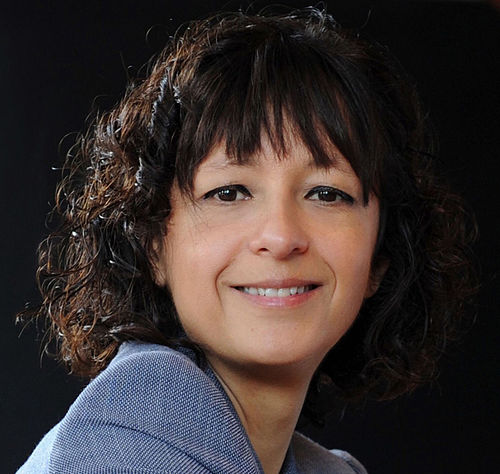
Nobel Prize for CRISPR
Emmanuelle Charpentier and Jennifer Doudna win the Nobel Prize in Chemistry for developing CRISPR-Cas9. #NobelPrize #CRISPR
Nobel Prize for CRISPR By Bianca Fioretti, Hallbauer & Fioretti - Bianca Fioretti, Hallbauer & Fioretti, copyright owned by Emmanuelle Charpentier who made it a Creative commons picture, CC BY-SA 4.0, https://commons.wikimedia.org/w/index.php?curid=44041020
2021 CE
First In Vivo CRISPR Editing
EDIT-101, a CRISPR therapy for Leber congenital amaurosis, is administered directly into the eye, marking the first in vivo gene editing. #CRISPR #genetherapy
2022 CE
UK Approves Gene Editing Therapy
The UK approves exagamglogene autotemcel (Casgevy) for sickle cell disease and beta thalassemia, first approval of a CRISPR-based therapy. #CRISPR #therapy
2023 CE
CRISPR Diagnostics for COVID-19
CRISPR-based diagnostic platforms (e.g., SHERLOCK, DETECTR) are deployed for rapid COVID-19 detection, showcasing versatility. #CRISPR #diagnostics