Genomics & Gene Editing: Modern Frontiers & Breakthrough Innovations
Encyclopedia/1. The Cosmos & The Natural World/5. Life Sciences • Curated by Admin Timeline.sg
This timeline traces the history of genomics and gene editing from the early foundations of genetics through the discovery of DNA, the Human Genome Project, and the revolutionary CRISPR-Cas9 technology, to the most recent clinical applications and future frontiers.
Chronological Storyline (45 Milestones)
1866 CE
Mendel Publishes Laws of Inheritance
Gregor Mendel publishes 'Experiments on Plant Hybrids', laying the foundation for genetics by describing dominant and recessive traits. His work was largely ignored until the 20th century. #genetics #history
Mendel Publishes Laws of Inheritance By Unknown author - http://0.tqn.com/d/biology/1/0/l/e/3244238.jpg, Public domain, https://commons.wikimedia.org/w/index.php?curid=33347279
1900 CE
Rediscovery of Mendel's Work
Hugo de Vries, Carl Correns, and Erich von Tschermak independently rediscover Mendel's laws, sparking modern genetics. #genetics #science
Rediscovery of Mendel's Work By Unknown author, Public domain, https://commons.wikimedia.org/w/index.php?curid=1657230
1902 CE
Garrod Proposes Inborn Errors of Metabolism
Archibald Garrod suggests that diseases like alkaptonuria are inherited, introducing the concept of biochemical genetics. #genetics #medicine
Garrod Proposes Inborn Errors of Metabolism By Unknown author - https://wellcomeimages.org/indexplus/image/M0018311.html, CC BY 4.0, https://commons.wikimedia.org/w/index.php?curid=33658267
1909 CE
Johannsen Coins 'Gene'
Wilhelm Johannsen introduces the term 'gene' to describe the unit of heredity. #genetics #history
Johannsen Coins 'Gene' By Unknown author - The History of Biology de Erik Nordenskiöld, Ed. Knopf, 1928 (domaine public), Copyrighted free use, https://commons.wikimedia.org/w/index.php?curid=743923
1910 CE
Morgan Links Genes to Chromosomes
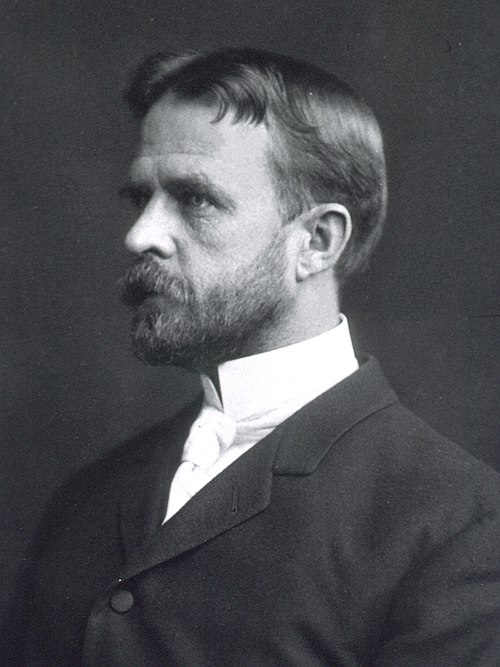
Thomas Hunt Morgan's work on fruit flies confirms that genes are located on chromosomes. #genetics #science
Morgan Links Genes to Chromosomes By Unknown author - http://resource.nlm.nih.gov/101422222, Public domain, https://commons.wikimedia.org/w/index.php?curid=549067
1913 CE
First Genetic Map
Alfred Sturtevant creates the first gene map, showing linear arrangement of genes on a chromosome. #genetics #research
1928 CE
Griffith's Transformation Experiment
Frederick Griffith discovers that bacteria can transfer genetic material through transformation, hinting at DNA as the genetic substance. #genetics #microbiology
1941 CE
Beadle and Tatum Propose One Gene-One Enzyme
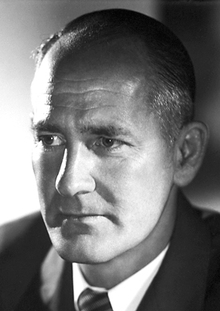
George Beadle and Edward Tatum show that each gene controls the production of a specific enzyme, linking genes to proteins. #genetics #biochemistry
Beadle and Tatum Propose One Gene-One Enzyme By Unknown - http://www.nobelprize.org/nobel_prizes/medicine/laureates/1958/, PD-Sweden, https://en.wikipedia.org/w/index.php?curid=31240247
1944 CE
Avery-MacLeod-McCarty Identifies DNA as Genetic Material
Oswald Avery, Colin MacLeod, and Maclyn McCarty demonstrate that DNA is the substance that transforms bacteria, establishing DNA as the molecule of heredity. #genetics #history
Avery-MacLeod-McCarty Identifies DNA as Genetic Material By Bbkkk - self-made in the Naturkunste Museum in Berlin, CC BY-SA 4.0, https://commons.wikimedia.org/w/index.php?curid=3679283
1950 CE
Chargaff Discovers Base Pairing Rules
Erwin Chargaff finds that in DNA, the amount of adenine equals thymine, and guanine equals cytosine, key to the double helix structure. #genetics #biochemistry
1952 CE
Hershey-Chase Experiment Confirms DNA
Alfred Hershey and Martha Chase use bacteriophages to confirm that DNA, not protein, is the genetic material. #genetics #virology
Hershey-Chase Experiment Confirms DNA By Thomasione - Modified from German Wikipedia [1], GFDL, https://commons.wikimedia.org/w/index.php?curid=15034881
1953 CE
Watson and Crick Propose DNA Double Helix
James Watson and Francis Crick publish their model of DNA's double helix structure, revolutionizing biology. #genetics #dna
Watson and Crick Propose DNA Double Helix By Zephyris - Own work, CC BY-SA 3.0, https://commons.wikimedia.org/w/index.php?curid=15027555
1956 CE
Human Chromosome Number Determined
Joe Hin Tjio and Albert Levan establish that humans have 46 chromosomes, correcting the previous count of 48. #genetics #cytology
Human Chromosome Number Determined By crop of photo by Sam Silverman (File:Leonard A. Scheele and J.H. Tjio.jpg) - Images from the History of Medicine (NLM) (http://ihm.nlm.nih.gov/luna/servlet/view/search?q=B010173) Portrait no. G. 61-60 Call Number: PP050091 num Record UI: 101442455, Public domain, https://commons.wikimedia.org/w/index.php?curid=17949766
Matthew Meselson and Franklin Stahl prove that DNA replicates semi-conservatively, using density gradient centrifugation. #genetics #molecularbiology
1961 CE
Nirenberg Cracks First Genetic Code
Marshall Nirenberg and Heinrich Matthaei decipher the first codon (UUU codes for phenylalanine), starting the cracking of the genetic code. #genetics #biochemistry
Nirenberg Cracks First Genetic Code By National Library of Medicine - https://www.flickr.com/photos/nlmhmd/51276834698/, No restrictions, https://commons.wikimedia.org/w/index.php?curid=111151921
1966 CE
Entire Genetic Code Deciphered
Nirenberg and others complete the genetic code table, showing how 64 codons specify 20 amino acids. #genetics #science
Entire Genetic Code Deciphered By The original uploader was Sverdrup at English Wikipedia. Vectorized by: User:VectorVoyager - Vectorization of https://commons.wikimedia.org/wiki/File:RNA-codon.png, Public domain, https://commons.wikimedia.org/w/index.php?curid=124414787
1970 CE
Discovery of Restriction Enzymes
Hamilton Smith, Daniel Nathans, and Werner Arber discover restriction enzymes that cut DNA at specific sequences, enabling genetic engineering. #genetics #biotechnology
1972 CE
First Recombinant DNA
Paul Berg creates the first recombinant DNA molecule by combining DNA from a virus and a bacterium. #genetics #biotechnology
First Recombinant DNA By Unknown author - http://profiles.nlm.nih.gov/CD/B/B/L/L/, Public domain, https://commons.wikimedia.org/w/index.php?curid=3702286
1973 CE
Cohen and Boyer Pioneer Genetic Engineering
Stanley Cohen and Herbert Boyer develop the method to transfer foreign DNA into bacteria, founding recombinant DNA technology. #genetics #biotech )
Cohen and Boyer Pioneer Genetic Engineering By Unknown author - https://www.nobelprize.org/prizes/medicine/1986/cohen/facts/, Public domain, https://commons.wikimedia.org/w/index.php?curid=182894690
1975 CE
Sanger Develops DNA Sequencing Method
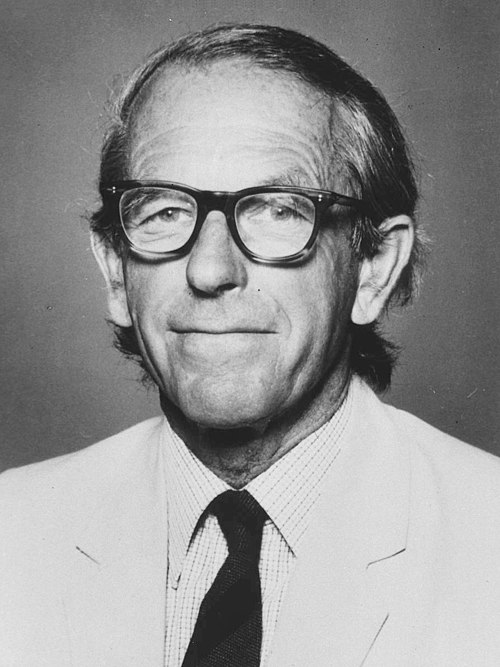
Frederick Sanger introduces the chain-termination method for DNA sequencing, enabling reading of genetic sequences. #genomics #sequencing
Sanger Develops DNA Sequencing Method By Unknown author, Public domain, https://commons.wikimedia.org/w/index.php?curid=1249932
1976 CE
Genentech Founded
Herbert Boyer and Robert Swanson found Genentech, the first biotechnology company, kickstarting the biotech industry. #biotech #history
1977 CE
Introns Discovered
Richard Roberts and Phillip Sharp independently discover that genes contain non-coding regions (introns) that are spliced out. #genetics #molecularbiology
Introns Discovered By paloma.cl - originally posted to Flickr as Interviewing Mr. Roberts, Nobel Prize 1993, CC BY-SA 2.0, https://commons.wikimedia.org/w/index.php?curid=5383603
1980 CE
First Transgenic Mouse
Jon Gordon and Frank Ruddle create the first genetically modified mouse by injecting foreign DNA into embryos, pioneering animal transgenesis. #genetics #biotech
First Transgenic Mouse By Maggie Bartlett, NHGRI. - http://www.genome.gov/pressDisplay.cfm?photoID=5006, Public domain, https://commons.wikimedia.org/w/index.php?curid=19805359
1983 CE
Kary Mullis Invents PCR
Kary Mullis develops the polymerase chain reaction (PCR), enabling rapid amplification of specific DNA sequences. #biotech #genomics
Kary Mullis Invents PCR By Dona Mapston - Cropped from Flickr image, CC BY-SA 3.0, https://commons.wikimedia.org/w/index.php?curid=5533280
1985 CE
Development of DNA Fingerprinting
Alec Jeffreys discovers that repetitive DNA sequences vary between individuals, founding DNA profiling. #genetics #forensics
Development of DNA Fingerprinting By Jane Gitschier - PLoS Genetics, CC BY 2.5, https://commons.wikimedia.org/w/index.php?curid=22003040
1989 CE
Discovery of CRISPR Repeats
Yoshizumi Ishino and colleagues identify unusual repeated DNA sequences in E. coli, later known as CRISPR. #genetics #crispr
Discovery of CRISPR Repeats By Boghog - Own work, CC BY-SA 4.0, https://commons.wikimedia.org/w/index.php?curid=68597347
1990 CE
Human Genome Project Launched
An international consortium begins the Human Genome Project to sequence all 3 billion base pairs of human DNA. #genomics #bigscience
Human Genome Project Launched By U.S. Department of Energy, Human Genome Project - http://www.ornl.gov/hgmis, Public domain, https://commons.wikimedia.org/w/index.php?curid=2485616
1995 CE
First Bacterial Genome Sequenced
The genome of Haemophilus influenzae is sequenced, the first complete genome of a free-living organism. #genomics #microbiology
First Bacterial Genome Sequenced By Stefan Walkowski - Own work, CC BY-SA 4.0, https://commons.wikimedia.org/w/index.php?curid=41492226
1996 CE
First Eukaryotic Genome Sequenced
The genome of the yeast Saccharomyces cerevisiae is completed, the first eukaryotic genome. #genomics #yeast
First Eukaryotic Genome Sequenced By Mogana Das Murtey and Patchamuthu Ramasamy - https://www.intechopen.com/chapters/49652, CC BY 3.0, https://commons.wikimedia.org/w/index.php?curid=52254246
1998 CE
First Animal Genome Sequenced
The genome of the roundworm Caenorhabditis elegans is sequenced, the first animal genome. #genomics #worm
First Animal Genome Sequenced By The original uploader was Kbradnam at English Wikipedia. (Original text: Zeynep F. Altun, Editor of www.wormatlas.org) - Transferred from en.wikipedia to Commons. (Original text: Donated by Zeynep F. Altun), CC BY-SA 2.5, https://commons.wikimedia.org/w/index.php?curid=2680458
2000 CE
First Plant Genome Sequenced
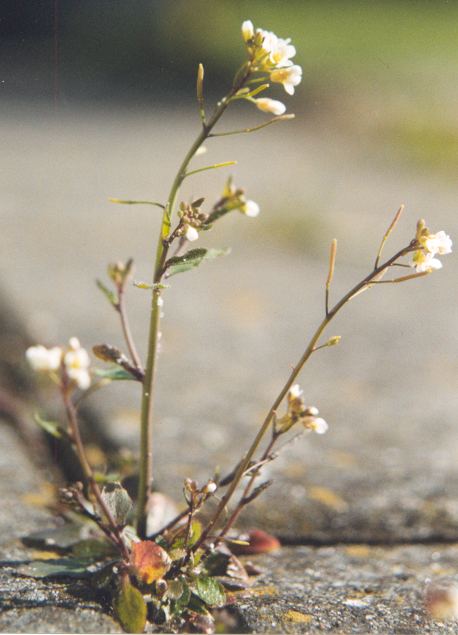
The genome of the thale cress Arabidopsis thaliana is published, a model organism for plant biology. #genomics #plants
First Plant Genome Sequenced By Original uploader was Brona at en.wikipedia. User:Roepers at nl.wikipedia - Transferred from en.wikipedia to Commons by Million_Moments., CC BY-SA 3.0, https://commons.wikimedia.org/w/index.php?curid=3668208
Feb 15, 2001 CE
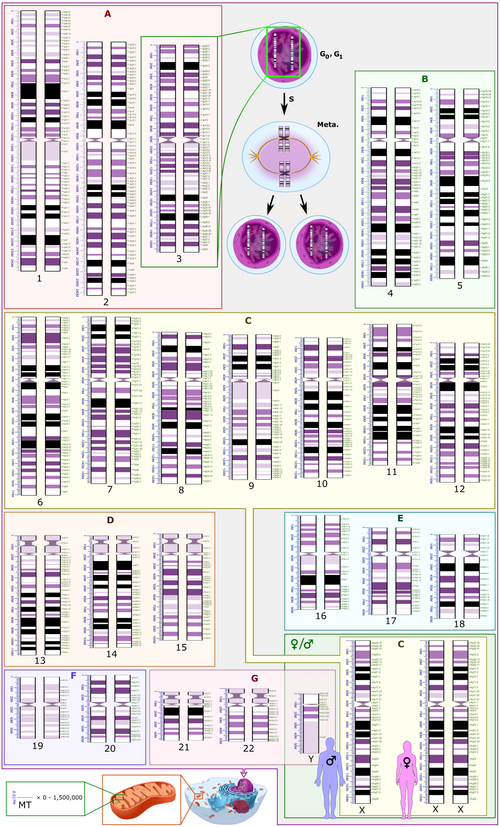
Draft Human Genome Published
The Human Genome Project and Celera Genomics publish the first draft of the human genome, revealing about 20,000-25,000 genes. #genomics #humangenome
Draft Human Genome Published By Mikael Häggström, M.D. Author info - Reusing images- Conflicts of interest: None Mikael Häggström, M.D.- The work integrates Public Domain source images by Was A Bee, Kelvin Ma and Michał Komorniczak- Also, a special acknowledgement to everyone involved in the Human Genome Project for generating the source data.edit - editOwn work, integrating the following Public Domain pictures: Chromosomes, with annotated bands and sub-bands, by User:Was a bee, in turn using data from the Human Genome Project, as displayed in the Ensembl genome database: Ensembl - Homo sapiens: Animal Cell.svg by Kelvin Ma (for mitochondrial localization) Animal cell cycle-en.svg by Kelvin Ma (for cell cycle changes at top) Female shadow (for the female silhouette), by Mikael Häggström Autodominant en.svg by Michał Komorniczak (for the male silhouette) The purple hue for the chromosomes and cell nuclei was digitally sampled from the following image: Human Chromosomes (crop), before conversion to grayscale, by SANCHITA20. Creative Commons Attribution 4.0 International license., CC0, https://commons.wikimedia.org/w/index.php?curid=125968286
Apr 14, 2003 CE
Human Genome Project Completed
The Human Genome Project announces the completion of a high-quality sequence, covering 99% of the euchromatic genome. #genomics #milestone
2005 CE
Next-Generation Sequencing Emerges
454 Life Sciences introduces pyrosequencing, the first next-generation sequencing technology, dramatically reducing sequencing cost. #genomics #sequencing
2011 CE
TALENs Gene Editing Introduced
Transcription activator-like effector nucleases (TALENs) are developed as a programmable tool for precise genome editing. #genetics #geneediting
TALENs Gene Editing Introduced By Ciencias Españolas KoS - File:ADN_2.png File:Pince_a_épiler.png, CC BY-SA 3.0, https://commons.wikimedia.org/w/index.php?curid=75624775
Jun 28, 2012 CE
CRISPR-Cas9 Gene Editing Published
Emmanuelle Charpentier and Jennifer Doudna publish the use of CRISPR-Cas9 as a gene-editing tool, revolutionizing genetic engineering. #crispr #geneediting
Jan 1, 2013 CE
First CRISPR Editing in Human Cells
Several groups demonstrate CRISPR-Cas9 editing in human cells, opening the door for therapeutic applications. #crispr #genetherapy
First CRISPR Editing in Human Cells By Deposition authors: Nishimasu, H., Ishitani, R., Nureki, O.; Visualization author: Synpath - Atom coordinates: https://www.rcsb.org/structure/4OO8; Visualization: Own work, CC0, https://commons.wikimedia.org/w/index.php?curid=133423568
Apr 1, 2015 CE
First CRISPR-Modified Human Embryos
A Chinese team publishes controversial editing of non-viable human embryos, sparking ethical debate. #crispr #ethics
Nov 26, 2018 CE
He Jiankui Claims First CRISPR Babies
Chinese researcher He Jiankui announces the birth of twin girls whose genomes were edited with CRISPR, leading to global condemnation and regulatory changes. #crispr #controversy
He Jiankui Claims First CRISPR Babies By The He Lab - This image has been extracted from another file, CC BY 3.0, https://commons.wikimedia.org/w/index.php?curid=74768423
May 24, 2019 CE
First FDA-Approved Gene Therapy (Zolgensma)
The FDA approves Zolgensma (onasemnogene abeparvovec) for spinal muscular atrophy, a one-time gene replacement therapy. #genetherapy #FDA
Oct 7, 2020 CE
Nobel Prize for CRISPR-Cas9
Emmanuelle Charpentier and Jennifer Doudna win the Nobel Prize in Chemistry for developing CRISPR-Cas9 gene editing. #crispr #nobel
Nobel Prize for CRISPR-Cas9 By Bianca Fioretti, Hallbauer & Fioretti - Bianca Fioretti, Hallbauer & Fioretti, copyright owned by Emmanuelle Charpentier who made it a Creative commons picture, CC BY-SA 4.0, https://commons.wikimedia.org/w/index.php?curid=44041020
Jun 1, 2021 CE
First CRISPR Therapy for Sickle Cell Disease
Vertex and CRISPR Therapeutics announce positive results for exagamglogene autotemcel (exa-cel) in sickle cell disease, a CRISPR-based therapy. #crispr #sicklecell
Apr 1, 2022 CE
Complete Human Genome Sequence (T2T Consortium)
The Telomere-to-Telomere (T2T) Consortium publishes the first truly complete human genome sequence, filling remaining gaps. #genomics #humangenome
Nov 16, 2023 CE
First Ex Vivo CRISPR Therapy Approval (Casgevy)
Casgevy (exagamglogene autotemcel) is approved in the UK for sickle cell disease and beta-thalassemia, the first CRISPR-based therapy. #crispr #genetherapy
2024 CE
Advances in Base and Prime Editing
Base editing and prime editing technologies continue to advance, offering more precise gene editing with fewer off-target effects, entering clinical trials. #geneediting #precisionmedicine
Advances in Base and Prime Editing By Mazhar Adli - review article : The CRISPR tool kit for genome editing and beyond DOI: 10.1038/s41467-018-04252-2, CC BY 4.0, https://commons.wikimedia.org/w/index.php?curid=81074194