General Relativity & Curvature: Global Cross-Cultural Perspectives
Encyclopedia/1. The Cosmos & The Natural World/2. Physics & Chemistry/02. Relativity & Gravitational Physics • Curated by Admin Timeline.sg
A comprehensive timeline of general relativity and the concept of curvature, highlighting contributions from ancient civilizations through modern astrophysics, emphasizing global perspectives and key milestones in understanding gravity and spacetime geometry. From early measurements of Earth's curvature to the detection of gravitational waves, this timeline traces the evolution of our understanding of spacetime and gravity across cultures and centuries.
Chronological Storyline (37 Milestones)
500 BCE
Pythagoreans propose spherical Earth
The Pythagorean school in ancient Greece suggests that the Earth is spherical, based on philosophical reasoning and observations of lunar eclipses. This early recognition of Earth's curvature laid the groundwork for later geodesy and gravitational theory. #history #science
Pythagoreans propose spherical Earth By JMA/NOAA - https://noaa-himawari9.s3.amazonaws.com/index.html, CC BY 4.0, https://commons.wikimedia.org/w/index.php?curid=157044592
350 BCE
Aristotle argues for Earth's sphericity
Aristotle provides multiple empirical arguments for a spherical Earth, including the shape of Earth's shadow on the Moon during lunar eclipses. His works influence Western and Islamic scholarship for centuries. #history #science
Aristotle argues for Earth's sphericity By After Lysippos - Jastrow (2006), Public domain, https://commons.wikimedia.org/w/index.php?curid=1359807
240 BCE
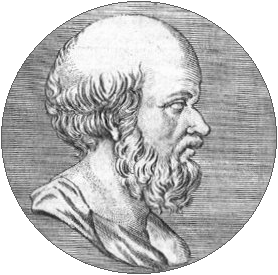
Eratosthenes measures Earth's circumference
Eratosthenes of Cyrene calculates the Earth's circumference with remarkable accuracy using the angle of the Sun at different latitudes, demonstrating the planet's curvature. This is one of the earliest scientific measurements of a global parameter. #science #history
Eratosthenes measures Earth's circumference By Unknown author, Public domain, https://commons.wikimedia.org/w/index.php?curid=494949
Claudius Ptolemy compiles the Almagest, a comprehensive treatise on astronomy that includes a geocentric model with epicycles. This work becomes the authoritative text for over a millennium in Europe and the Islamic world. #history #astronomy
Ptolemy's Almagest synthesizes geocentric astronomy By Ptolemy - http://www.univie.ac.at/hwastro/rare/1515_ptolemae.htm, Public domain, https://commons.wikimedia.org/w/index.php?curid=29985717
499 CE
Aryabhata calculates Earth's circumference and rotation
Indian mathematician-astronomer Aryabhata accurately estimates Earth's circumference and proposes that the Earth rotates on its axis, challenging geocentric assumptions. His work influences Indian and Islamic astronomy. #science #history
Aryabhata calculates Earth's circumference and rotation By Cpjha13 - Own work, CC BY-SA 4.0, https://commons.wikimedia.org/w/index.php?curid=49883192
628 CE
Brahmagupta describes gravity
Indian mathematician Brahmagupta writes in his work Brāhmasphuṭasiddhānta that 'bodies fall towards the earth as it is in the nature of the earth to attract bodies,' an early conception of gravitation. #science #history
1020 CE
Al-Biruni measures Earth's radius using triangulation
Persian scholar Al-Biruni develops a new method using triangulation to measure Earth's radius, obtaining a value close to modern measurements. His work exemplifies the advanced state of Islamic science. #science #history
Al-Biruni measures Earth's radius using triangulation By The original uploader was Romanm at Slovenian Wikipedia. - Originally from sl.wikipedia; description page is/was here., Public domain, https://commons.wikimedia.org/w/index.php?curid=2590841
1230 CE
Robert Grosseteste discusses light and curvature
English scholar Robert Grosseteste in his treatise 'De Luce' speculates about the curvature of space and the nature of light, anticipating later ideas. #philosophy #science
Robert Grosseteste discusses light and curvature By Unknown 14th century scribe - British Library Harley MS 3860, f. 48 Original version adapted from: dead link New version adapted from: dead link; current link, Public domain, https://commons.wikimedia.org/w/index.php?curid=453069
1576 CE
Thomas Digges proposes infinite universe
English astronomer Thomas Digges incorporates Copernican theory and suggests an infinite universe with stars at varying distances, challenging the finite sphere of fixed stars. #astronomy #history
1610 CE
Galileo discovers Jupiter's moons and supports heliocentrism
Galileo Galilei uses his telescope to observe the moons of Jupiter and phases of Venus, providing strong evidence for the heliocentric model and challenging Aristotelian physics. #science #astronomy
Galileo discovers Jupiter's moons and supports heliocentrism By Justus Sustermans - http://collections.rmg.co.uk/collections/objects/14174, Public domain, https://commons.wikimedia.org/w/index.php?curid=62614082
1687 CE
Newton publishes Principia Mathematica
Isaac Newton's Philosophiæ Naturalis Principia Mathematica formulates the law of universal gravitation and laws of motion, explaining planetary orbits and laying the foundation for classical physics. #physics #science
Newton publishes Principia Mathematica By The original uploader was Zhaladshar at English Wikisource. - Transferred from en.wikisource to Commons. (previous image from another copy) Internet Archive (current image from the Bern Dibner copy), Public domain, https://commons.wikimedia.org/w/index.php?curid=2681838
1728 CE
Bradley discovers stellar aberration
English astronomer James Bradley discovers stellar aberration, the apparent shift in star positions due to Earth's motion, providing direct observational evidence for Earth's revolution around the Sun. #astronomy #physics
Bradley discovers stellar aberration By After Thomas Hudson - one or more third parties have made copyright claims against Wikimedia Commons in relation to the work from which this is sourced or a purely mechanical reproduction thereof. This may be due to recognition of the "sweat of the brow" doctrine, allowing works to be eligible for protection through skill and labour, and not purely by originality as is the case in the United States (where this website is hosted). These claims may or may not be valid in all jurisdictions. As such, use of this image in the jurisdiction of the claimant or other countries may be regarded as copyright infringement. Please see Commons:When to use the PD-Art tag for more information., Public domain, https://commons.wikimedia.org/w/index.php?curid=6365466
1783 CE
John Michell conceives dark stars
English cleric John Michell proposes the existence of 'dark stars' so massive that light cannot escape, anticipating the concept of black holes within Newtonian gravity. #physics #astronomy
1798 CE
Cavendish measures gravitational constant
Henry Cavendish uses a torsion balance to measure the gravitational constant G, enabling the calculation of Earth's mass and verifying Newton's law of gravitation. #physics #science
Cavendish measures gravitational constant By Henry Cavendish - Retrieved from Cavendish, Henry, 'Experiments to determine the density of the earth', Phil. Trans. of the Royal Society, 1798, reprinted in MacKenzie, A. Stanley, Ed. (1900) 'The Laws of Gravitation: Memoirs by Newton, Bouguer, and Cavendish', American Book Company, p.63, fig.2, Public domain, https://commons.wikimedia.org/w/index.php?curid=114416174
1829 CE
Lobachevsky presents non-Euclidean geometry
Russian mathematician Nikolai Lobachevsky introduces hyperbolic geometry, a non-Euclidean geometry where the parallel postulate is replaced, opening new possibilities for the geometry of space. #mathematics #history
Lobachevsky presents non-Euclidean geometry By Lev Kryukov - http://cczy.blog.ru/?year=2009&month=11, Public domain, https://commons.wikimedia.org/w/index.php?curid=12821190
1854 CE
Riemann's lecture on geometry's foundations
Bernhard Riemann delivers his habilitation lecture 'On the Hypotheses which lie at the Foundations of Geometry', introducing Riemannian geometry, which later becomes the mathematical basis for general relativity. #mathematics #physics
Riemann's lecture on geometry's foundations By Unknown author - http://www.sil.si.edu/digitalcollections/hst/scientific-identity/explore.htm according to the German Wikipedia., Public domain, https://commons.wikimedia.org/w/index.php?curid=27383
1905 CE
Einstein publishes special relativity
Albert Einstein formulates the special theory of relativity, showing that space and time are relative and that the speed of light is constant, laying groundwork for general relativity. #physics #relativity
Einstein publishes special relativity By Lucien Chavan [1] (1868 - 1942), a friend of Einstein's when he was living in Berne. - Cropped from original at the The Albert Einstein Archives, The Hebrew University of Jerusalem., Public domain, https://commons.wikimedia.org/w/index.php?curid=16699199
1907 CE
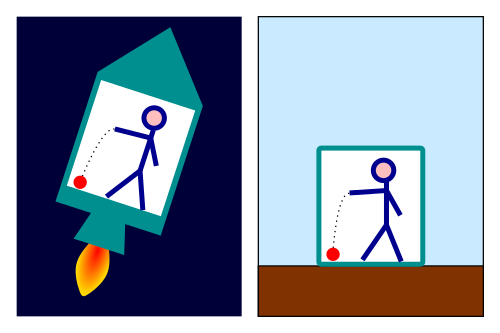
Einstein's equivalence principle
Albert Einstein proposes the equivalence principle, stating that gravitational and inertial mass are equivalent, a key insight that leads to general relativity. #physics #relativity
Einstein's equivalence principle By derivative work: Pbroks13 (talk) Elevator_gravity2.png: Markus Poessel (Mapos) - Elevator_gravity2.png, CC BY-SA 3.0, https://commons.wikimedia.org/w/index.php?curid=4381205
1915 CE
Einstein completes general relativity
Albert Einstein presents the final field equations of general relativity, describing gravity as the curvature of spacetime caused by mass and energy. This revolutionizes our understanding of gravity. #physics #relativity
Einstein completes general relativity By Simulating eXtreme Spacetimes Lensing (SXS) - https://www.ligo.caltech.edu/video/ligo20160211v3 (video link); see also http://www.black-holes.org/gw150914, CC BY-SA 4.0, https://commons.wikimedia.org/w/index.php?curid=46994894
1916 CE
Schwarzschild finds first exact solution
Karl Schwarzschild solves Einstein's field equations for a non-rotating, spherical mass, providing the Schwarzschild metric and predicting the existence of black holes. #physics #relativity
1919 CE
Eddington expeditions confirm light bending
Sir Arthur Eddington leads expeditions to observe a solar eclipse, measuring the bending of starlight by the Sun, confirming a key prediction of general relativity and making Einstein famous. #physics #relativity
Eddington expeditions confirm light bending By ESO/Landessternwarte Heidelberg-Königstuhl/F. W. Dyson, A. S. Eddington, & C. Davidson - https://www.eso.org/public/images/potw1926a/, CC BY 4.0, https://commons.wikimedia.org/w/index.php?curid=80091497
1922 CE
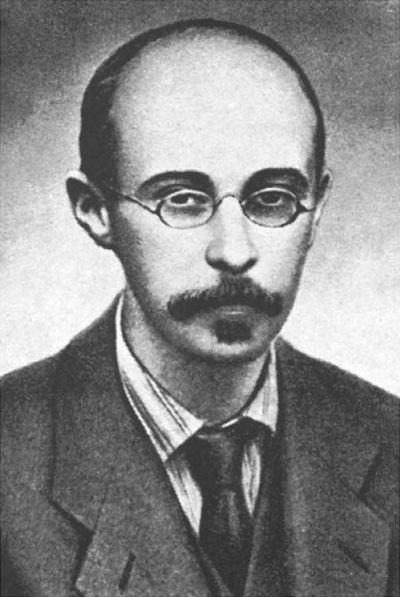
Friedmann proposes expanding universe
Russian mathematician Alexander Friedmann finds solutions to Einstein's equations that describe an expanding universe, later confirmed as the basis for Big Bang theory. #cosmology #physics
Friedmann proposes expanding universe By Unknown author - Cropped From, Public domain, https://commons.wikimedia.org/w/index.php?curid=2630080
1927 CE
Lemaître proposes Big Bang theory
Belgian physicist Georges Lemaître proposes the primeval atom hypothesis, later known as the Big Bang, from his relativistic solutions. He suggests the universe began from a single point. #cosmology #physics
Lemaître proposes Big Bang theory By Unknown author - https://societyforthehistoryofastronomy.com/wp-content/uploads/2023/01/AA14-June-20.pdf, Public domain, https://commons.wikimedia.org/w/index.php?curid=154504242
1929 CE
Hubble discovers cosmological redshift
Edwin Hubble observes that distant galaxies are receding from us, with redshifts proportional to distance (Hubble's law), providing the first observational evidence for an expanding universe. #astronomy #cosmology
Hubble discovers cosmological redshift By w:en:User:ScienceApologist - This image was copied from wikipedia:en. The original description was: The raisin bread model of the universe explains how each galaxy can perceive every other galaxy in the universe as receding from it. From the WMAP website., Public domain, https://commons.wikimedia.org/w/index.php?curid=2615116
1939 CE
Oppenheimer and Snyder model stellar collapse
J. Robert Oppenheimer and Hartland Snyder calculate the gravitational collapse of a massive star, predicting the formation of a black hole where no known forces can stop the collapse. #physics #astronomy
1948 CE
Steady state universe proposed
Fred Hoyle, Thomas Gold, and Hermann Bondi propose the steady state theory as an alternative to the Big Bang, assuming continuous creation of matter as the universe expands. #cosmology #physics
Steady state universe proposed By NASA / WMAP Science Team - http://map.gsfc.nasa.gov/media/121238/ilc_9yr_moll4096.png, Public domain, https://commons.wikimedia.org/w/index.php?curid=23285693
Robert Pound and Glen Rebka measure the gravitational redshift of gamma rays in the Harvard tower, confirming a prediction of general relativity within 1% accuracy. #physics #relativity
Pound-Rebka experiment tests gravitational redshift By http://en.wikipedia.org/wiki/User:Lumidek - http://en.wikipedia.org/wiki/Image:JeffersonLeft.jpg, Public domain, https://commons.wikimedia.org/w/index.php?curid=3421331
1963 CE
Kerr finds rotating black hole solution
Roy Kerr solves Einstein's equations for a rotating massive body, obtaining the Kerr metric that describes rotating black holes, which are more realistic astrophysical objects. #physics #relativity
Kerr finds rotating black hole solution By Yukterez (Simon Tyran, Vienna) - Own work, CC BY-SA 4.0, https://commons.wikimedia.org/w/index.php?curid=50352912
1964 CE
Discovery of cosmic microwave background
Arno Penzias and Robert Wilson accidentally discover the cosmic microwave background radiation, providing strong evidence for the Big Bang and ruling out steady state theory. #cosmology #physics
Discovery of cosmic microwave background By ESA and the Planck Collaboration - Cosmic Microwave Background, CC BY 4.0, https://commons.wikimedia.org/w/index.php?curid=130789180
1967 CE
Pulsars discovered by Jocelyn Bell Burnell
Jocelyn Bell Burnell discovers pulsars, rapidly rotating neutron stars that emit regular radio pulses. These objects provide insights into extreme gravity and serve as gravitational wave detectors. #astronomy #physics
Pulsars discovered by Jocelyn Bell Burnell By NASA/CXC/SAO (X-Ray); NASA/JPL-Caltech (Infrared) - http://www.nasa.gov/sites/default/files/pia18848-wisefacepalm.jpg, Public domain, https://commons.wikimedia.org/w/index.php?curid=36363158
1971 CE
Cygnus X-1 identified as black hole
Cygnus X-1, a strong X-ray source, is identified as the first plausible black hole candidate, with observations showing a compact object in orbit with a massive star. #astronomy #physics
Cygnus X-1 identified as black hole By IAU and Sky & Telescope magazine (Roger Sinnott & Rick Fienberg) - [1], CC BY 4.0, https://commons.wikimedia.org/w/index.php?curid=15406373
1974 CE
Hulse-Taylor binary pulsar discovered
Russell Hulse and Joseph Taylor discover a binary pulsar system (PSR B1913+16) whose orbital decay matches general relativity's predictions for gravitational wave emission, providing indirect evidence for gravitational waves. #physics #relativity
1998 CE
Accelerating universe discovered
Two independent teams studying distant supernovae find that the universe's expansion is accelerating, implying the existence of dark energy, a mysterious force counteracting gravity. #cosmology #physics
2001 CE
WMAP mission maps cosmic microwave background
NASA's Wilkinson Microwave Anisotropy Probe (WMAP) produces high-resolution maps of the CMB, confirming the standard Lambda-CDM model of cosmology and measuring key parameters like curvature of the universe. #cosmology #physics
WMAP mission maps cosmic microwave background By NASA / WMAP Science Team - [1]; converted from the high-resolution TIFF version to a JPEG, Public domain, https://commons.wikimedia.org/w/index.php?curid=3944989
Sep 14, 2015 CE
LIGO detects first gravitational waves
The Laser Interferometer Gravitational-Wave Observatory (LIGO) directly detects gravitational waves from a binary black hole merger, confirming a century-old prediction of general relativity and opening a new window on the universe. #physics #relativity
LIGO detects first gravitational waves By B. P. Abbott et al. (LIGO Scientific Collaboration and Virgo Collaboration) — full list at the end of the article - http://physics.aps.org/featured-article-pdf/10.1103/PhysRevLett.116.061102 . See also the associated Jupyter notebook., CC BY 3.0, https://commons.wikimedia.org/w/index.php?curid=46987868
Apr 10, 2019 CE
Event Horizon Telescope images a black hole
The Event Horizon Telescope collaboration releases the first direct image of a black hole's shadow in the galaxy M87, providing visual evidence for the existence of black holes and testing general relativity near the event horizon. #astronomy #physics
Event Horizon Telescope images a black hole By D. Marrone/UofA - Event Horizon Telescope Collaboration, CC BY 4.0, https://commons.wikimedia.org/w/index.php?curid=133002860
Oct 6, 2020 CE
Nobel Prize for black hole discoveries
The Nobel Prize in Physics is awarded to Roger Penrose for theoretical work on black holes, and to Andrea Ghez and Reinhard Genzel for the discovery of a supermassive black hole at the center of our galaxy. #physics #relativity