Galois Theory & Polynomial Solvability: Pioneer Biographies & Lasting Legacies
Encyclopedia/1. The Cosmos & The Natural World/1. Mathematics & Formal Systems/02. Algebra & Symbolic Systems • Curated by Admin Timeline.sg
This timeline traces the development of Galois theory and polynomial solvability from ancient solutions of quadratic equations to modern advances, highlighting key figures and breakthroughs across cultures.
Chronological Storyline (41 Milestones)
2000 BCE
Babylonian Quadratic Equations
The Babylonians solve quadratic equations using geometric methods. #math #history
Babylonian Quadratic Equations By Urcia, A., Yale Peabody Museum of Natural History, https://peabody.yale.edu, http://hdl.handle.net/10079/8931zqj derivative work, user:Theodor Langhorne Franklin - File:YBC-7289-OBV.jpg, CC0, https://commons.wikimedia.org/w/index.php?curid=76347956
628 CE
Brahmagupta's Quadratic Formula
Brahmagupta gives the first clear description of the quadratic formula in his work Brahmasphutasiddhanta. #math #algebra
820 CE
Al-Khwarizmi's Al-Jabr
Al-Khwarizmi publishes Al-Kitab al-Mukhtasar fi Hisab al-Jabr wal-Muqabala, systematically solving linear and quadratic equations. #algebra #history
Al-Khwarizmi's Al-Jabr By Zarateman - Own work, CC0, https://commons.wikimedia.org/w/index.php?curid=162213187
Omar Khayyam's Geometric Cubic Solutions By Alireza Javaheri - https://web.archive.org/web/20161024154356/http://www.panoramio.com/photo/85093358, CC BY 3.0, https://commons.wikimedia.org/w/index.php?curid=55909539
Qin Jiushao publishes Mathematical Treatise in Nine Sections, including methods for solving polynomial equations up to fourth degree. #math #algebra #china
Qin Jiushao's Numerical Solutions By Qin Jiushao 秦九韶 - 1842 printing Shu Shu Jiu Zhang, Public domain, https://commons.wikimedia.org/w/index.php?curid=3414657
1515 CE
Del Ferro Solves Depressed Cubic
Scipione del Ferro discovers algebraic solution for depressed cubic x^3 + mx = n. #algebra #history
1545 CE
Cardano Publishes Ars Magna
Gerolamo Cardano publishes Ars Magna, including the solution to the cubic and Ferrari's solution to the quartic. #algebra #history )
1591 CE
Vieta Introduces Symbolic Algebra
François Viète publishes In artem analyticem isagoge, introducing symbolic notation for equations. #algebra #math
Vieta Introduces Symbolic Algebra By Unknown author, Public domain, https://commons.wikimedia.org/w/index.php?curid=81021
1637 CE
Descartes' Rule of Signs
René Descartes publishes La Géométrie, including his rule of signs for polynomial roots. #algebra #geometry
1683 CE
Tschirnhaus Transformations
Ehrenfried Walther von Tschirnhaus develops transformations to simplify polynomials. #algebra #history
Tschirnhaus Transformations By Martin Bernigeroth - Stich von M. Bernigeroth, Kupferstichkabinett Dresden, Public domain, https://commons.wikimedia.org/w/index.php?curid=958111
1683 CE
Seki Kowa Studies Equations
Seki Kowa develops methods for solving polynomial equations and discovers Bernoulli numbers independently. #math #algebra #japan
Seki Kowa Studies Equations By upload by AMorozov - Gakken, Public domain, https://commons.wikimedia.org/w/index.php?curid=710154
1770 CE
Lagrange's Réflexions sur la résolution des équations
Joseph-Louis Lagrange analyzes known methods for solving polynomial equations, leading to the concept of permutations. #algebra #grouptheory
Mar 30, 1796 CE
Gauss Constructs a Regular 17-gon
Carl Friedrich Gauss discovers the constructibility of the regular 17-gon, linking algebra to geometry. #geometry #algebra
Gauss Constructs a Regular 17-gon By László Németh - Own work, CC0, https://commons.wikimedia.org/w/index.php?curid=27331800
1799 CE
Ruffini Proves Quintic Insolvability
Paolo Ruffini publishes his proof that the general quintic equation cannot be solved by radicals. #algebra #history
Ruffini Proves Quintic Insolvability By Unknown - https://i.bigenc.ru/Azc5DHKsI0yKslqp0YR2mSpJo4HQq_Eu-YfQ3CG3hiU/xl/ODNlOGVjODZkZTQ2OTkyM2NmYTMyNWVlMDNiZmY0Y2YuanBn.webp, CC0, https://commons.wikimedia.org/w/index.php?curid=130821361
1799 CE
Gauss's Fundamental Theorem of Algebra
Carl Friedrich Gauss proves the Fundamental Theorem of Algebra in his doctoral dissertation. #algebra #analysis
Oct 25, 1811 CE
Évariste Galois Born
Évariste Galois is born in Bourg-la-Reine, France. #algebra #history
Évariste Galois Born By Unknown author - Iyanaga, Shokichi, "ガロアの時代 ガロアの数学 第一部 時代篇" , Springer-Verlag Tokyo, 1999 http://www.win.tue.nl/~aeb/at/GaloisCorrespondence.html, Public domain, https://commons.wikimedia.org/w/index.php?curid=103351
1824 CE
Abel Proves Quintic Insolvability
Niels Henrik Abel publishes his proof that the general quintic equation is unsolvable by radicals. #algebra #history
1829 CE
Galois's First Paper on Continued Fractions
Galois publishes his first paper on continued fractions at age 18. #algebra #math
1830 CE
Galois Submits Memoir on Equations
Galois submits his memoir on the solvability of polynomial equations to the French Academy of Sciences. #algebra #history
Galois dies in a duel at age 20, leaving his revolutionary mathematical work behind. #algebra #history
1837 CE
Wantzel Proves Impossibility of Angle Trisection
Pierre Wantzel uses Galois theory to prove that angle trisection and cube doubling are impossible with compass and straightedge. #geometry #algebra
1843 CE
Liouville Publishes Galois's Memoir
Joseph Liouville publishes Galois's manuscripts, making his work known to the mathematical world. #algebra #history
Liouville Publishes Galois's Memoir By Marie Liouville - https://www.lajauneetlarouge.com/le-college-de-france-et-les-x-au-xixe-siecle-le-savant-et-le-politique/, Public domain, https://commons.wikimedia.org/w/index.php?curid=183132639
1854 CE
Cayley Defines Abstract Group
Arthur Cayley gives the first abstract definition of a group, foundational for Galois theory. #algebra #history
Cayley Defines Abstract Group By Herbert Beraud (1845–1896) - http://www-groups.dcs.st-and.ac.uk/~history/PictDisplay/Cayley.html, Public domain, https://commons.wikimedia.org/w/index.php?curid=904674
1857 CE
Kronecker's Jugendtraum
Leopold Kronecker proposes the Kronecker-Weber theorem, that abelian extensions of Q are cyclotomic. #algebra #numbertheory
1870 CE
Camille Jordan Publishes Traité des Substitutions
Camille Jordan's treatise on permutation groups and Galois theory systematizes the field. #algebra #grouptheory
Camille Jordan Publishes Traité des Substitutions By Eugène Pirou - Archivio storico dell'Accademia delle Scienze - Catalogo digitale, Public domain, https://commons.wikimedia.org/w/index.php?curid=106265667
1872 CE
Klein's Erlanger Programm
Felix Klein's Erlanger Programm uses group theory to classify geometries, influenced by Galois ideas. #geometry #algebra
Klein's Erlanger Programm By Unknown author, Public domain, https://commons.wikimedia.org/w/index.php?curid=38617
1882 CE
Lindemann Proves π is Transcendental
Ferdinand von Lindemann proves π is transcendental, implying the impossibility of squaring the circle. #math #history
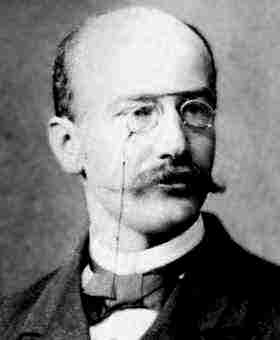
Lindemann Proves π is Transcendental By Unknown author - http://www.math.uha.fr/Pi/trans.html, Public domain, https://commons.wikimedia.org/w/index.php?curid=1060849
1892 CE
Hilbert's Irreducibility Theorem
David Hilbert proves his irreducibility theorem, showing that specialization preserves Galois groups. #algebra #numbertheory
1894 CE
Dedekind's Galois Theory
Richard Dedekind gives a modern abstract formulation of Galois theory. #algebra #history
Dedekind's Galois Theory By Unknown (Mondadori Publishers) - https://www.gettyimages.co.uk/detail/news-photo/portrait-of-the-german-mathematician-richard-dedekind-1900s-news-photo/141551154, Public domain, https://commons.wikimedia.org/w/index.php?curid=41284791
Aug 8, 1900 CE
Hilbert's 12th Problem
David Hilbert proposes the extension of Kronecker's theorem on abelian extensions of number fields as one of 23 problems. #algebra #numbertheory
1910 CE
Steinitz's Abstract Field Theory
Ernst Steinitz publishes an axiomatic theory of fields, essential for modern Galois theory. #algebra #history
Steinitz's Abstract Field Theory By Ar2r4alll - Own work, CC BY 3.0, https://commons.wikimedia.org/w/index.php?curid=8545862
1921 CE
Emmy Noether's Ideal Theory
Emmy Noether publishes her paradigm-shifting work on the theory of ideals, laying foundations for modern algebra. #algebra #history
Emmy Noether's Ideal Theory By Unknown authorUnknown author Publisher: Mathematical Association of America [3], Brooklyn Museum [4], Agnes Scott College [5], [6] - Emmy Noether (1882-1935), Archived, Public domain, https://commons.wikimedia.org/w/index.php?curid=158126186
1923 CE
Krull Introduces Topology to Galois Theory
Wolfgang Krull defines the Krull topology for infinite Galois groups. #algebra #topology
1926 CE
Emil Artin's Galois Theory
Emil Artin publishes a modern, streamlined exposition of Galois theory. #algebra #math
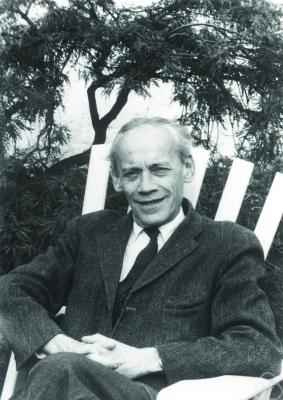
Emil Artin's Galois Theory By Konrad Jacobs, Erlangen - Mathematisches Forschungsinstitut Oberwolfach, https://opc.mfo.de/detail?photoID=116, CC BY-SA 2.0 de, https://commons.wikimedia.org/w/index.php?curid=3898471
1926 CE
Chebotarev Density Theorem
Nikolai Chebotarev proves the density theorem for Galois groups. #algebra #numbertheory
1954 CE
Shafarevich Proves Solvable Group Inverse Galois
Igor Shafarevich proves that every finite solvable group occurs as a Galois group over Q. #algebra #numbertheory
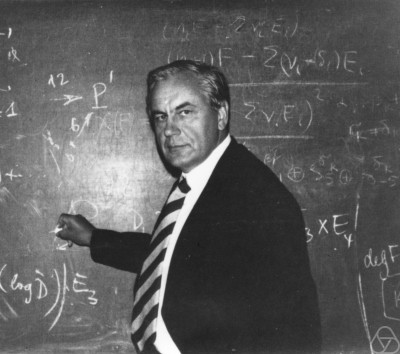
Shafarevich Proves Solvable Group Inverse Galois By Konrad Jacobs, Erlangen - https://opc.mfo.de/detail?photo_id=9019, CC BY-SA 2.0 de, https://commons.wikimedia.org/w/index.php?curid=6619832
1961 CE
Grothendieck's Galois Theory
Alexander Grothendieck develops a categorical approach to Galois theory, applying it to algebraic geometry. #algebra #geometry
1967 CE
Langlands Program Begins
Robert Langlands formulates conjectures connecting Galois groups to automorphic forms. #algebra #numbertheory
1984 CE
Grothendieck's Esquisse d'un Programme
Alexander Grothendieck outlines a program linking Galois theory to combinatorial structures. #algebra #geometry
Sep 19, 1994 CE
Wiles Proves Fermat's Last Theorem
Andrew Wiles uses Galois representations to prove Fermat's Last Theorem. #algebra #numbertheory
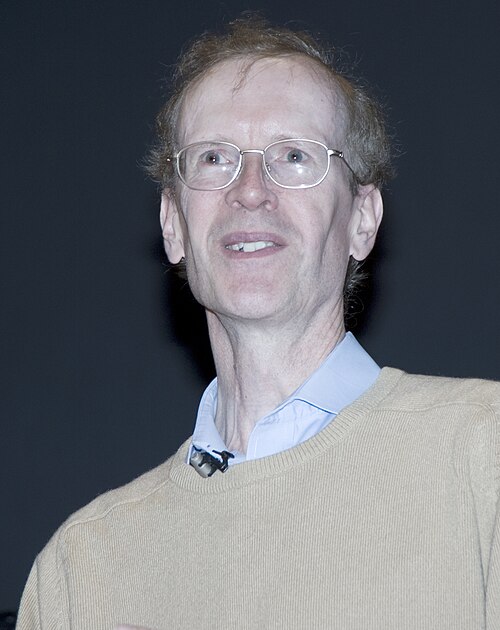
Wiles Proves Fermat's Last Theorem By "copyright C. J. Mozzochi, Princeton N.J" - http://www.mozzochi.org/deligne60/Deligne1/_DSC0024.jpg, Attribution, https://commons.wikimedia.org/w/index.php?curid=2635913