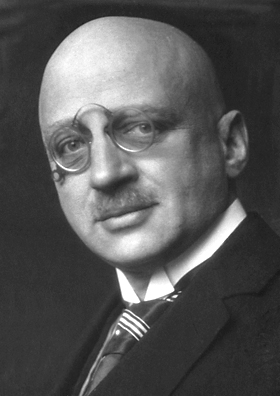
Fritz Haber: Ammonia Synthesis, Chemical Warfare & Nobel Controversy
Encyclopedia/2. Technology & The Built World/5. Materials & Chemical Engineering/03. Materials Engineering Biographies • Curated by Admin Timeline.sg
Biographical timeline of German chemist Fritz Haber, whose ammonia synthesis revolutionized agriculture but whose involvement in chemical warfare during WWI and the Zyklon B controversy cast a complex legacy.
Chronological Storyline (40 Milestones)
Dec 9, 1868 CE
Fritz Haber Born in Breslau
Fritz Haber is born in Breslau, Prussia (now Wrocław, Poland), to a Jewish family. His father is a dye merchant. #history #chemistry
Fritz Haber Born in Breslau By Unknown author - https://beeldbank.spaarnestadphoto.com/search.pp?flush=1&multikeyword=SFA002023057&searchtype=0#ctr-thumbnails, Public domain, https://commons.wikimedia.org/w/index.php?curid=146075789
1886 CE
Begins Chemistry Studies at University of Berlin
Haber enrolls at the University of Berlin to study chemistry under August Wilhelm von Hofmann. #education #chemistry
1889 CE
Doctorate from University of Berlin
Haber earns his PhD in organic chemistry with a dissertation on decomposition products of indigo. #chemistry #academia
1891 CE
Conversion to Protestantism
Haber converts from Judaism to Lutheranism, likely to advance his academic career. #religion #career
1894 CE
Appointed Assistant at Karlsruhe Institute of Technology
Haber takes a position at the Karlsruhe Institute of Technology, beginning his research on thermodynamics and electrochemistry. #chemistry #research
1896 CE
Publishes Textbook on Technical Gas Reactions
Haber publishes 'Grundriss der technischen Elektrochemie' (Outline of Technical Electrochemistry), establishing his expertise. #chemistry #publication
1898 CE
Becomes Associate Professor at Karlsruhe
Haber is promoted to associate professor at the Karlsruhe Institute of Technology. #academia #chemistry
1901 CE
Marries Clara Immerwahr
Haber marries Clara Immerwahr, a chemist and the first woman to earn a PhD at the University of Breslau. #marriage #chemistry
Jun 1, 1902 CE
Birth of Son Hermann Haber
Fritz and Clara's son Hermann is born. #family
1905 CE
Publishes 'Thermodynamics of Technical Gas Reactions'
Haber's influential book on thermodynamics lays groundwork for the Haber process. #chemistry #thermodynamics
1908 CE
Begins Ammonia Synthesis Experiments
Haber and his assistant Robert Le Rossignol start experimenting with high-pressure ammonia synthesis using an osmium catalyst. #chemistry #invention
1909 CE
Haber-Bosch Process Patent Filed
Haber files a patent for the synthesis of ammonia from nitrogen and hydrogen under high pressure. Carl Bosch later scales it up. #chemistry #patent
1911 CE
Appointed Director of Kaiser Wilhelm Institute for Physical Chemistry
Haber becomes the founding director of the Kaiser Wilhelm Institute for Physical Chemistry and Electrochemistry in Berlin-Dahlem. #career #research
1911 CE
First Commercial Ammonia Plant Built by BASF
BASF constructs the first industrial-scale ammonia plant in Oppau, Germany, using the Haber-Bosch process. #industry #chemistry
First Commercial Ammonia Plant Built by BASF By The Nobel Foundation - http://nobelprize.org/chemistry/laureates/1918/index.html, Public domain, https://commons.wikimedia.org/w/index.php?curid=365964
Aug 1, 1914 CE
World War I Begins
With the outbreak of WWI, Haber puts his institute at the service of the German military. #war #history
1914 CE
Develops Gas Masks for German Troops
Haber's team develops effective gas masks to protect German soldiers from chemical weapons. #war #technology
Apr 22, 1915 CE
First Major Gas Attack at Ypres
Haber oversees the first large-scale chlorine gas attack near Ypres, Belgium, marking the beginning of chemical warfare. #war #chemicalweapons
May 2, 1915 CE
Clara Haber Commits Suicide
Haber's wife Clara, a pacifist, shoots herself after a heated argument over his role in gas warfare. #tragedy #family
1915 CE
Promoted to Captain in German Army
Haber is promoted to captain and continues to direct chemical weapons research. #war #military
1916 CE
Marries Charlotte Nathan
Haber marries Charlotte Nathan, a secretary at his institute. #marriage
1917 CE
Develops Zyklon A Gas
Haber's institute develops Zyklon A, a cyanide-based pesticide precursor to Zyklon B. #chemicals #pesticide
Nov 11, 1918 CE
World War I Armistice
WWI ends; Haber fears prosecution as a war criminal but is protected by Friedrich Ebert. #war #history
1918 CE
Awarded Nobel Prize in Chemistry
Haber receives the 1918 Nobel Prize in Chemistry for the Haber-Bosch process, despite controversy over his war work. #award #chemistry
1919 CE
Attempts to Extract Gold from Seawater
Haber initiates a project to extract gold from seawater to help pay Germany's war reparations, but it fails. #science #failure
1920 CE
Kaiser Wilhelm Institute Expands
Haber's institute grows, focusing on physical chemistry and electrochemistry. #research #development
1922 CE
Divorces Charlotte Nathan
Haber and Charlotte divorce after six years. #personal #divorce
1924 CE
Elected to the German Academy of Sciences Leopoldina
Haber is elected a member of the prestigious Leopoldina academy. #honor #science
1927 CE
Invention of the Haber-Bosch Process Wins the Bunsen Medal
Haber receives the Bunsen Medal for his work on ammonia synthesis. #award #chemistry
Jan 30, 1933 CE
Adolf Hitler Becomes Chancellor
The Nazi rise to power begins; Haber, despite his conversion, is targeted due to his Jewish ancestry. #politics #history
Apr 7, 1933 CE
Law for the Restoration of the Professional Civil Service
The Nazi law forces non-Aryan civil servants to retire; Haber is required to dismiss his Jewish staff. #discrimination #politics
Apr 30, 1933 CE
Resigns as Director of Kaiser Wilhelm Institute
Haber resigns in protest of the dismissal of his Jewish colleagues. #protest #career
Jul 1, 1933 CE
Emigrates to England
Haber leaves Germany and accepts an invitation from William Henry Bragg to work at the University of Cambridge. #exile #science
1933 CE
Suffers Heart Attack
Haber has a severe heart attack while in England, his health declining. #health #illness
Jan 29, 1934 CE
Dies in Basel, Switzerland
Fritz Haber dies of heart failure in Basel, Switzerland, while en route to Palestine. #death #biography
1934 CE
Fritz Haber Memorial Established at Hebrew University
A memorial is established at the Hebrew University of Jerusalem, recognizing his contributions. #legacy #honor
1934 CE
Buried in Basel
Haber is buried in the Hörnli Cemetery in Basel. #death #legacy
1951 CE
Posthumous Controversy Over Zyklon B
Haber's connection to Zyklon B, used in Nazi gas chambers, becomes a subject of ethical debate. #ethics #history
1998 CE
Fritz Haber Institute Renamed
The Max Planck Society renames the Fritz Haber Institute to avoid association with his wartime work. #legacy #rename
2001 CE
Biography 'The Holiest of Wars' Published
Daniel Charles's biography 'The Holiest of Wars' examines Haber's life and the moral dilemmas he faced. #biography #literature
2011 CE
Fritz Haber's Legacy in Agriculture and Warfare
The dual-use nature of the Haber-Bosch process continues to be discussed in the context of global food production and chemical warfare. #science #ethics