FIFA World Cup 1970 — Mexico (31 May – 21 June 1970)
Sports/Football/World Cups • Curated by Admin Timeline.sg
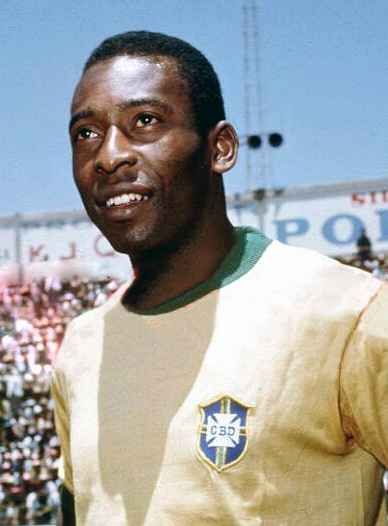
Brazil's Pelé-led team, regarded as one of the greatest in history, beat Italy 4–1 in the Final to win a third title and retire the Jules Rimet Trophy outright.
Chronological Storyline (16 Milestones)
May 31, 1970 CE
1970 World Cup opens in Mexico
The ninth FIFA World Cup kicked off at Mexico City's Estadio Azteca with a 0–0 draw between the Soviet Union and Mexico before 107,000 fans. It was the first World Cup broadcast live in color worldwide and the first held outside Europe and South America. · Wikipedia: https://en.wikipedia.org/wiki/1970_FIFA_World_Cup
The logo of 1970 FIFA World Cup – 9th FIFA World Cup, held in Mexico By FIFA - Own work using: https://seeklogo.com/vector-logo/447912/fifa-world-cup-mexico-1970, Public domain, https://commons.wikimedia.org/w/index.php?curid=133073125
Jun 2, 1970 CE
Group 1: Mexico and USSR advance
Hosts Mexico and the Soviet Union progressed from Group 1, both finishing unbeaten on five points. Belgium edged El Salvador to third, while the tournament debutants from El Salvador lost all three matches without scoring. Source — Wikipedia:
Jun 3, 1970 CE
Iconic moment: Banks's save denies Pelé
In a Group 3 match in Guadalajara, England's Gordon Banks produced one of the most famous saves in football history, somehow diving to push Pelé's powerful downward header over the crossbar. Brazil won 1–0 through Jairzinho's second-half goal, but Banks's save became an enduring World Cup legend. · Wikipedia: https://en.wikipedia.org/wiki/Banks_save
Jun 7, 1970 CE
Group 2: Italy and Uruguay qualify
Italy topped Group 2 after narrow wins over Sweden and Uruguay, with all three of their group matches decided by a single goal. Uruguay joined them in the quarterfinals as runners-up, while Sweden and Israel were eliminated. Source — Wikipedia:
Jun 7, 1970 CE
Group 3: Brazil and England advance
Brazil won Group 3 with a perfect record, scoring eight goals across three matches, with Jairzinho scoring in every group-stage game. Reigning champions England finished as runners-up despite conceding only one goal, setting up a quarterfinal against West Germany. · Wikipedia: https://en.wikipedia.org/wiki/1970_FIFA_World_Cup_Group_3
Jun 8, 1970 CE
Group 4: West Germany and Peru progress
West Germany topped Group 4, highlighted by Gerd Müller's hat-trick in a 5–2 win over Bulgaria. Peru's Teófilo Cubillas announced himself on the world stage with five goals as the South Americans claimed the runners-up spot, while Morocco and Australia were eliminated. · Wikipedia: https://en.wikipedia.org/wiki/1970_FIFA_World_Cup_Group_4
Jun 10, 1970 CE
Quarterfinal: Italy 4–3 West Germany (aet)
In a quarterfinal of extraordinary drama in Mexico City, Italy led 1–0 through Roberto Boninsegna before Karl-Heinz Schnellinger equalized in the 90th minute. Gerd Müller put West Germany ahead in extra time, but Tarcisio Burgnich and Luigi Riva responded for Italy before Müller's second forced a 4–4 scoreline that was settled by Gianni Rivera's 111th-minute winner in a 4–3 Italian victory. Source — Wikipedia: )
Commemorative plaque at Stadium Azteca, Mexico City, for the so called “Partido del Siglo” (Game of the Century), the association football game between Italy and West Germany, which Italy eventually won 4-3 a.e.t. after a dramatic match. The plate is written in Spanish and its translation reads: "The Azteca Stadium pays homage to the National Teams of Italy (4) and Germany (3), who starred in the 1970 FIFA World Cup, the "Game of the Century". June 17, 1970." By Hellner - Aztekenstadion.jpg on de.wiki, Public domain, https://commons.wikimedia.org/w/index.php?curid=4237577
Jun 10, 1970 CE
Quarterfinal: Uruguay 1–0 USSR (aet)
Uruguay stunned the Soviet Union in a quarterfinal decided by a single extra-time goal from Víctor Espárrago in Mexico City. The Soviet Union, who had topped their group unbeaten, were eliminated despite creating numerous chances against a disciplined Uruguayan side. · Wikipedia: https://en.wikipedia.org/wiki/Uruguay_v_Soviet_Union_(1970_FIFA_World_Cup)
Jun 11, 1970 CE
Quarterfinal: West Germany 3–2 England (aet)
West Germany came from 2–0 down to eliminate reigning champions England in León. Alan Mullery and Martin Peters had England in control, but Franz Beckenbauer pulled one back before Uwe Seeler's 82nd-minute header forced extra time, where Gerd Müller's 108th-minute goal sealed a 3–2 comeback victory. Source — Wikipedia: )
Jun 14, 1970 CE
Semifinal: Italy 4–3 West Germany (aet) — Game of the Century
In what became known as the 'Game of the Century,' Italy and West Germany produced a semifinal of unparalleled drama at the Estadio Azteca. Roberto Boninsegna's early goal was cancelled by Karl-Heinz Schnellinger's 90th-minute equalizer, and after five extra-time goals from Müller, Burgnich, Riva, Müller again, and finally Gianni Rivera's 111th-minute winner, Italy prevailed 4–3 in one of the greatest matches ever played. Source — Wikipedia: )
Commemorative plaque at Stadium Azteca, Mexico City, for the so called “Partido del Siglo” (Game of the Century), the association football game between Italy and West Germany, which Italy eventually won 4-3 a.e.t. after a dramatic match. The plate is written in Spanish and its translation reads: "The Azteca Stadium pays homage to the National Teams of Italy (4) and Germany (3), who starred in the 1970 FIFA World Cup, the "Game of the Century". June 17, 1970." By Hellner - Aztekenstadion.jpg on de.wiki, Public domain, https://commons.wikimedia.org/w/index.php?curid=4237577
Jun 17, 1970 CE
Semifinal: Brazil 3–1 Uruguay
Brazil overcame their South American rivals Uruguay in Guadalajara to reach the Final. Clodoaldo and Jairzinho turned the match in Brazil's favor after Víctor Espárrago had given Uruguay a first-half lead, and Pelé sealed a 3–1 victory, keeping Brazil on course for their third World Cup title. Source — Wikipedia: )
Jun 20, 1970 CE
Third-place playoff: West Germany 1–0 Uruguay
West Germany secured third place with a 1–0 victory over Uruguay in León, decided by Wolfgang Overath's 26th-minute goal. Uruguay finished fourth despite a spirited tournament run that had seen them eliminate the Soviet Union in the quarterfinals. · Wikipedia: https://en.wikipedia.org/wiki/1970_FIFA_World_Cup_knockout_stage
Jun 21, 1970 CE
Brazil's 1970 side hailed as greatest team ever
The 1970 Brazil team, featuring Pelé, Jairzinho, Gérson, Tostão, Rivelino, and Carlos Alberto, is widely regarded as the greatest side in football history. Their combination of tactical discipline under Mário Zagallo, attacking flair, and five different goalscorers across the knockout rounds set a standard no subsequent team has matched. Source — Wikipedia:
Pelé celebrating the World Cup By Unknown - Distributed by the Associated Press - El Gráfico, Public domain, https://commons.wikimedia.org/w/index.php?curid=95449751
Jun 21, 1970 CE
Final: Brazil 4–1 Italy — Jules Rimet retired
Brazil defeated Italy 4–1 in the Final at Mexico City's Estadio Azteca to win their third World Cup, permanently retiring the Jules Rimet Trophy. Pelé opened the scoring with a powerful header, and after Roberto Boninsegna's equalizer, Gérson, Jairzinho, and Carlos Alberto each scored in the second half to complete a dominant victory. · Wikipedia: https://en.wikipedia.org/wiki/1970_FIFA_World_Cup_Final
both teams before the match By Unknown author - El Gráfico no. 2649, Public domain, https://commons.wikimedia.org/w/index.php?curid=192555577
Jun 21, 1970 CE
Iconic moment: Carlos Alberto's legendary team goal
Brazil's fourth goal in the Final, scored by captain Carlos Alberto in the 86th minute, is widely regarded as one of the greatest team goals in football history. After a sweeping move involving Clodoaldo and Pelé's perfectly weighted pass, Carlos Alberto arrived unmarked to blast the ball past Albertosi, encapsulating Brazil's attacking philosophy. Source — Wikipedia:
both teams before the match By Unknown author - El Gráfico no. 2649, Public domain, https://commons.wikimedia.org/w/index.php?curid=192555577
Jun 21, 1970 CE
Pelé's last World Cup appearance
The 1970 Final marked Pelé's fourth and final World Cup, capping a career in which he scored in four different tournaments. His opening header against Italy was his 12th and final World Cup goal, and he lifted the Jules Rimet Trophy for the third time, cementing his legacy as the tournament's greatest player. Source — Wikipedia:
Pelé with Brazil. By Unknown author - El Gráfico, Public domain, https://commons.wikimedia.org/w/index.php?curid=127169624