Exoplanets & Astrobiology: Radial Velocity to Kepler & JWST Biosignatures
Encyclopedia/1. The Cosmos & The Natural World/3. Astronomy & Planetary Science/02. Exoplanets & Biosignatures • Curated by Admin Timeline.sg
The search for exoplanets and biosignatures has revolutionized astronomy, from the first radial velocity detection of 51 Pegasi b to Kepler's transit discoveries and JWST's atmospheric spectroscopy. This timeline covers key milestones in exoplanet detection, characterization, and the quest for life beyond Earth.
Chronological Storyline (44 Milestones)
Jan 9, 1992 CE
First Exoplanets Discovered Around Pulsar PSR B1257+12
Aleksander Wolszczan and Dale Frail announce the discovery of two planets orbiting the pulsar PSR B1257+12, the first confirmed exoplanets. These terrestrial-mass worlds were detected via pulsar timing variations. #exoplanets #astronomy
Oct 6, 1995 CE
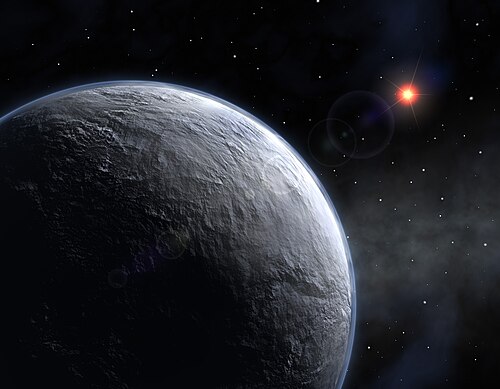
51 Pegasi b: First Exoplanet Around a Sun-like Star
Michel Mayor and Didier Queloz announce the discovery of 51 Pegasi b, a hot Jupiter orbiting the star 51 Pegasi. This landmark radial velocity detection earned the 2019 Nobel Prize in Physics. #exoplanets #astronomy
51 Pegasi b: First Exoplanet Around a Sun-like Star By ESO/M. Kornmesser/Nick Risinger (skysurvey.org) - ESO website, CC BY 4.0, https://commons.wikimedia.org/w/index.php?curid=39719418
Apr 1, 1996 CE
First Exoplanet in a Binary Star System: 55 Cancri b
Discovery of 55 Cancri b, a hot Jupiter in a binary star system, using radial velocity. It was one of the first exoplanets found with multiple planets later. #exoplanets #astronomy
First Exoplanet in a Binary Star System: 55 Cancri b By JohnVanVliet - Own work, CC BY-SA 4.0, https://commons.wikimedia.org/w/index.php?curid=87848437
Nov 15, 1999 CE
First Transiting Exoplanet: HD 209458 b
The planet HD 209458 b (Osiris) is observed transiting its star, providing the first direct measurement of an exoplanet's size and atmosphere. This transit method breakthrough enabled atmospheric studies. #exoplanets #astronomy
First Transiting Exoplanet: HD 209458 b By Aldaron, a.k.a. Aldaron - Own work, incorporating public domain images for reference planets (see below), inspired by Thingg's size comparison, CC BY-SA 3.0, https://commons.wikimedia.org/w/index.php?curid=8903868
Nov 27, 2001 CE
First Exoplanet Atmosphere Detected: Sodium in HD 209458 b
Using Hubble Space Telescope, sodium absorption is detected in the atmosphere of HD 209458 b, the first direct detection of an exoplanet atmosphere. This opened the field of exoplanet atmospheric characterization. #exoplanets #astronomy
Jul 1, 2003 CE
First Exoplanet Imaged: 2M1207 b
The first direct image of an exoplanet, 2M1207 b, a young gas giant orbiting a brown dwarf, is captured by the Very Large Telescope. This milestone demonstrated direct imaging capabilities. #exoplanets #astronomy
First Exoplanet Imaged: 2M1207 b By Aldaron, a.k.a. Aldaron - Own work, incorporating public domain images for reference planets (see below), inspired by Thingg's size comparison, CC BY-SA 3.0, https://commons.wikimedia.org/w/index.php?curid=8902848
Aug 25, 2004 CE
First Super-Earth: Mu Arae c
Discovery of Mu Arae c, a planet with minimum mass ~14 Earth masses, one of the first 'super-Earths' found via radial velocity. It orbits in the habitable zone of its star. #exoplanets #astronomy
Mar 23, 2005 CE
First Exoplanet with Water Vapor: HD 209458 b
Spitzer Space Telescope detects water vapor in the atmosphere of HD 209458 b via infrared spectroscopy. This was the first definitive detection of water on an exoplanet. #exoplanets #astronomy
Jan 1, 2006 CE
First Exoplanet with a Measured Orbit: OGLE-2005-BLG-390Lb
A cold super-Earth discovered via microlensing, OGLE-2005-BLG-390Lb is one of the first low-mass planets found by this method. It orbits a red dwarf star. #exoplanets #astronomy
First Exoplanet with a Measured Orbit: OGLE-2005-BLG-390Lb By ESO - http://www.eso.org/public/news/eso0603/, CC BY 3.0, https://commons.wikimedia.org/w/index.php?curid=11045388
Apr 24, 2007 CE
First Potentially Habitable Exoplanet: Gliese 581 c
Gliese 581 c, a super-Earth orbiting in the habitable zone of its red dwarf star, is announced. It sparked intense interest in habitable exoplanets, though later studies showed it may be too hot. #exoplanets #astronomy
First Potentially Habitable Exoplanet: Gliese 581 c By Aldaron, a.k.a. Aldaron - Own work, incorporating public domain images for reference planets (see below), CC BY-SA 3.0, https://commons.wikimedia.org/w/index.php?curid=11703403
Nov 13, 2008 CE
First Multi-Planet Direct Imaging: HR 8799 System
Three planets around HR 8799 are directly imaged by the Keck and Gemini telescopes. This was the first direct image of a multiplanet system. #exoplanets #astronomy
First Multi-Planet Direct Imaging: HR 8799 System By Image: NASA, ESA, CSA, STScI, Laurent Pueyo (STScI), William Balmer (JHU), Marshall Perrin (STScI) - HR 8799 (NIRCam Image), Public domain, https://commons.wikimedia.org/w/index.php?curid=162292518
Mar 7, 2009 CE
Kepler Space Telescope Launches
NASA's Kepler mission launches, designed to discover Earth-size exoplanets in the habitable zone via transit photometry. It revolutionized exoplanet statistics. #exoplanets #astronomy
Kepler Space Telescope Launches By NASA - https://science.nasa.gov/toolkits/spacecraft-icons (image link), Public domain, https://commons.wikimedia.org/w/index.php?curid=76268556
Jan 1, 2010 CE
First Exoplanet with a Measured Density: CoRoT-7b
CoRoT-7b, a rocky super-Earth, has its mass and radius measured, giving the first density estimate for a terrestrial exoplanet. It is likely a lava world. #exoplanets #astronomy
First Exoplanet with a Measured Density: CoRoT-7b By Aldaron, a.k.a. Aldaron - Own work, incorporating public domain images for reference planets (see below), inspired by Thingg's size comparison, CC BY-SA 3.0, https://commons.wikimedia.org/w/index.php?curid=8854176
Feb 2, 2011 CE
Kepler-11: Six Transiting Planets
Kepler announces the discovery of six transiting planets around Kepler-11, a Sun-like star. This system demonstrated the power of Kepler to find multiple small planets. #exoplanets #astronomy
Kepler-11: Six Transiting Planets By NASA / Tim Pyle - New Planetary System image:[1], Public domain, https://commons.wikimedia.org/w/index.php?curid=12890676
Dec 5, 2011 CE
First Earth-Size Exoplanet in Habitable Zone: Kepler-22b
Kepler-22b, a super-Earth about 2.4 times Earth's radius, is confirmed in the habitable zone of its star. It was the first Kepler planet found in a habitable zone. #exoplanets #astronomy
First Earth-Size Exoplanet in Habitable Zone: Kepler-22b By NASA/Ames/JPL-Caltech - http://kepler.nasa.gov/news/nasakeplernews/index.cfm?FuseAction=ShowNews&NewsID=165, Public domain, https://commons.wikimedia.org/w/index.php?curid=24187911
Oct 17, 2012 CE
Alpha Centauri Bb: Closest Exoplanet Claimed
A planet is claimed around Alpha Centauri B, the closest star system to Earth. Later studies cast doubt on its existence, but it spurred interest in nearby exoplanets. #exoplanets #astronomy
Alpha Centauri Bb: Closest Exoplanet Claimed By ESO/L. Calçada/N. Risinger - ESO, CC BY 4.0, https://commons.wikimedia.org/w/index.php?curid=23163877
Apr 18, 2013 CE
Kepler-62f: A Super-Earth in Habitable Zone
Kepler-62f, a super-Earth about 1.4 times Earth's size, is discovered in the habitable zone of a K-dwarf star. It is one of the most promising candidates for habitability. #exoplanets #astronomy
Kepler-62f: A Super-Earth in Habitable Zone By NASA Ames/JPL-Caltech - http://www.nasa.gov/mission_pages/kepler/news/kepler-62-kepler-69.html, Public domain, https://commons.wikimedia.org/w/index.php?curid=25666606
Feb 26, 2014 CE
Kepler-186f: First Earth-Size Planet in Habitable Zone
Kepler-186f, the first Earth-size planet found in the habitable zone of another star, is announced. It orbits a red dwarf star and is about 1.1 Earth radii. #exoplanets #astronomy
Kepler-186f: First Earth-Size Planet in Habitable Zone By NASA Ames/SETI Institute/JPL-Caltech - [1], [2], Public domain, https://commons.wikimedia.org/w/index.php?curid=32229517
Jan 6, 2015 CE
First Exoplanet with a Measured Magnetic Field: HD 209458 b
Hubble detects a magnetic field around HD 209458 b, the first such detection for an exoplanet. The field is about 10% of Jupiter's. #exoplanets #astronomy
Jul 23, 2015 CE
Kepler-452b: 'Earth's Older Cousin'
Kepler-452b, a near-Earth-size planet in the habitable zone of a G2-type star, is announced. It is about 1.6 Earth radii and orbits a star similar to the Sun. #exoplanets #astronomy
Kepler-452b: 'Earth's Older Cousin' By NASA Ames/JPL-Caltech/T. Pyle - http://www.nasa.gov/image-feature/soaking-up-the-rays-of-a-sun-like-star-artistic-concept, Public domain, https://commons.wikimedia.org/w/index.php?curid=41807518
May 2, 2016 CE
TRAPPIST-1: Three Planets Discovered
The TRAPPIST telescope discovers three Earth-size planets orbiting the ultracool dwarf star TRAPPIST-1. This system later expands to seven planets. #exoplanets #astronomy
TRAPPIST-1: Three Planets Discovered By Processing and color compositing by Nrco0e; original images by Sloan Digital Sky Survey - Own work; processed from images acquired from the SDSS DR17 archive, CC BY 4.0, https://commons.wikimedia.org/w/index.php?curid=191888700
Aug 24, 2016 CE
Proxima Centauri b: Closest Exoplanet to Earth
A planet with minimum mass 1.3 Earth masses is discovered orbiting Proxima Centauri, the closest star to the Sun. It lies in the habitable zone. #exoplanets #astronomy
Proxima Centauri b: Closest Exoplanet to Earth By ESO/M. Kornmesser - https://www.eso.org/public/images/ann16056a/, CC BY 4.0, https://commons.wikimedia.org/w/index.php?curid=50869082
Feb 22, 2017 CE
TRAPPIST-1: Seven Earth-Size Planets Announced
NASA announces that the TRAPPIST-1 system hosts seven Earth-size planets, three in the habitable zone. This is the largest known batch of terrestrial planets. #exoplanets #astronomy
Dec 14, 2017 CE
First Exoplanet with a Stratosphere: WASP-121b
Hubble detects a stratosphere on ultra-hot Jupiter WASP-121b, with water vapor in the upper atmosphere. This is the first clear detection of a stratosphere on an exoplanet. #exoplanets #astronomy
First Exoplanet with a Stratosphere: WASP-121b By NASA, ESA, and G. Bacon (STSci) - https://www.jpl.nasa.gov/news/news.php?feature=6909, CC BY 4.0, https://commons.wikimedia.org/w/index.php?curid=61486414
NASA's TESS mission launches to survey the entire sky for transiting exoplanets around bright stars. It aims to find small planets for follow-up. #exoplanets #astronomy
TESS Launches: Transiting Exoplanet Survey Satellite By Orbital ATK / NASA - https://svs.gsfc.nasa.gov/vis/a010000/a012700/a012782/TESS_alone_high_res.jpg https://svs.gsfc.nasa.gov/12782, Public domain, https://commons.wikimedia.org/w/index.php?curid=108981705
Oct 30, 2018 CE
Kepler Mission Ends After 9 Years
NASA's Kepler space telescope runs out of fuel and is retired. It discovered over 2,600 confirmed exoplanets, revolutionizing our understanding of planetary systems. #exoplanets #astronomy
Jan 7, 2019 CE
First Exomoon Candidate: Kepler-1625b I
A Neptune-sized moon is proposed around the Jupiter-sized exoplanet Kepler-1625b, based on Hubble data. If confirmed, it would be the first exomoon. #exoplanets #astronomy
First Exomoon Candidate: Kepler-1625b I By CaptSalamanca - Own work, CC BY 4.0, https://commons.wikimedia.org/w/index.php?curid=178808343
Sep 11, 2019 CE
Water Vapor Detected in K2-18b's Atmosphere
Hubble detects water vapor in the atmosphere of K2-18b, a super-Earth in the habitable zone. This is the first such detection for a planet in the habitable zone. #exoplanets #astronomy
Water Vapor Detected in K2-18b's Atmosphere By Illustration: NASA, ESA, CSA, Joseph Olmsted (STScI) Science: Nikku Madhusudhan (IoA) - https://webbtelescope.org/contents/media/images/2023/139/01H9R88HG8YXRMARWZ5B1YDT27, Public domain, https://commons.wikimedia.org/w/index.php?curid=137418814
Oct 8, 2019 CE
Nobel Prize in Physics for Exoplanet Discoveries
Michel Mayor and Didier Queloz share the Nobel Prize in Physics for the discovery of 51 Pegasi b, the first exoplanet around a Sun-like star. #exoplanets #astronomy
Jan 6, 2020 CE
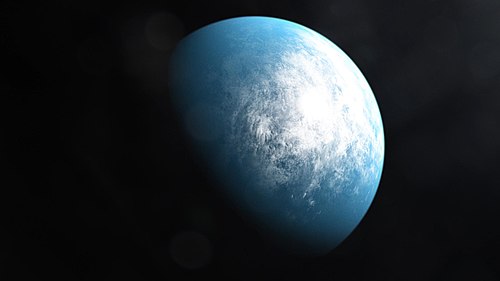
TOI-700 d: First Earth-Size Planet in Habitable Zone by TESS
TESS discovers TOI-700 d, an Earth-size planet in the habitable zone of a red dwarf star. It is the first such planet found by TESS. #exoplanets #astronomy
TOI-700 d: First Earth-Size Planet in Habitable Zone by TESS By NASA's Goddard Space Flight Center - https://www.jpl.nasa.gov/spaceimages/images/largesize/PIA23408_hires.jpg, Public domain, https://commons.wikimedia.org/w/index.php?curid=85681322
Sep 14, 2020 CE
Phosphine in Venus's Atmosphere: Possible Biosignature
A study claims detection of phosphine in Venus's atmosphere, a potential biosignature. The finding is controversial and later debated, but it spurs interest in Venus as a habitable world. #exoplanets #astronomy
Phosphine in Venus's Atmosphere: Possible Biosignature By Kevin M. Gill - https://www.flickr.com/photos/53460575@N03/50533715452/, CC BY 2.0, https://commons.wikimedia.org/w/index.php?curid=95498095
Dec 25, 2021 CE
James Webb Space Telescope Launches
NASA's JWST launches, with capabilities to characterize exoplanet atmospheres in unprecedented detail, including potential biosignatures. #exoplanets #astronomy
James Webb Space Telescope Launches By NASA - https://www.jwst.nasa.gov/content/webbLaunch/whereIsWebb.html, Public domain, https://commons.wikimedia.org/w/index.php?curid=114125719
Jul 12, 2022 CE
JWST First Images: Exoplanet WASP-96b Spectrum
JWST releases its first exoplanet spectrum, showing water vapor and clouds on hot Jupiter WASP-96b. This demonstrates JWST's power for atmospheric characterization. #exoplanets #astronomy
JWST First Images: Exoplanet WASP-96b Spectrum By NASA, ESA, CSA, STScI, and the Webb ERO Production Team - Exoplanet WASP-96 b (NIRISS Transit Light Curve), CC BY 4.0, https://commons.wikimedia.org/w/index.php?curid=125408524
Aug 25, 2022 CE
JWST Detects Carbon Dioxide in Exoplanet Atmosphere
JWST detects carbon dioxide in the atmosphere of WASP-39b, a hot Saturn. This is the first clear detection of CO2 on an exoplanet. #exoplanets #astronomy
JWST Detects Carbon Dioxide in Exoplanet Atmosphere By NASA, ESA, CSA, J. Olmsted (STScI) - Illustration (Artist’s Impression) of WASP-39 b and Its Star, CC BY 4.0, https://commons.wikimedia.org/w/index.php?curid=125907007
Jan 11, 2023 CE
JWST Confirms Water Vapor on TRAPPIST-1 Planets
JWST detects water vapor in the atmosphere of TRAPPIST-1 d, one of the seven Earth-size planets. This is a key step in assessing habitability. #exoplanets #astronomy
JWST Confirms Water Vapor on TRAPPIST-1 Planets By NASA, ESA, CSA, J. Olmsted (STScI) - This media was produced by the James Webb Space Telescope and shared by the European Space Agency, under the identifier weic2516a This tag does not indicate the copyright status of the attached work. A normal copyright tag is still required. See Commons:Licensing. This media was produced by the Hubble Space Telescope and shared by the European Space Agency, under the identifier sci26004a This tag does not indicate the copyright status of the attached work. A normal copyright tag is still required. See Commons:Licensing., CC BY 4.0, https://commons.wikimedia.org/w/index.php?curid=172506542
Sep 11, 2023 CE
JWST Detects Methane and CO2 on K2-18b
JWST finds methane and carbon dioxide in the atmosphere of K2-18b, a super-Earth in the habitable zone. The data suggest a possible ocean world. #exoplanets #astronomy
May 15, 2024 CE
First Exoplanet with a Potential Biosignature: K2-18b
JWST detects dimethyl sulfide (DMS) in K2-18b's atmosphere, a potential biosignature produced by life on Earth. The detection is tentative but exciting. #exoplanets #astronomy
Oct 1, 2024 CE
PLATO Mission Approved for Launch
ESA's PLATO mission, designed to find Earth-like planets around Sun-like stars, is approved for launch in 2026. It will focus on habitable zone planets. #exoplanets #astronomy )
PLATO Mission Approved for Launch By ESA/ATG Europe - https://www.esa.int/ESA_Multimedia/Images/2023/05/Plato_key_visual, CC BY-SA 4.0, https://commons.wikimedia.org/w/index.php?curid=175139220
Mar 20, 2025 CE
First Exoplanet Atmosphere with JWST: LHS 475 b
JWST characterizes the atmosphere of LHS 475 b, an Earth-size planet, finding no atmosphere. This demonstrates JWST's ability to study small rocky worlds. #exoplanets #astronomy
First Exoplanet Atmosphere with JWST: LHS 475 b By NASA, ESA, CSA, Leah Hustak (STScI) - https://webbtelescope.org/contents/media/images/2023/102/01GNVXWS67QNTC7Z10FN2CJB1H, CC BY 4.0, https://commons.wikimedia.org/w/index.php?curid=127670533
Jul 14, 2025 CE
Ariel Mission Selected for Launch
ESA's Ariel mission, dedicated to exoplanet atmosphere characterization, is selected for launch in 2029. It will study hundreds of exoplanets. #exoplanets #astronomy )
Jan 1, 2026 CE
Roman Space Telescope Launch (Expected)
NASA's Nancy Grace Roman Space Telescope is expected to launch, with a coronagraph to directly image exoplanets and study their atmospheres. #exoplanets #astronomy
Roman Space Telescope Launch (Expected) By NASA - https://roman.gsfc.nasa.gov/gallery-spacecraftillustrations.html, Public domain, https://commons.wikimedia.org/w/index.php?curid=136706293
Jun 1, 2027 CE
First Exoplanet with a Confirmed Biosignature?
Ongoing JWST observations of TRAPPIST-1e and other planets may yield the first confirmed biosignature, such as oxygen and methane in combination. #exoplanets #astronomy
First Exoplanet with a Confirmed Biosignature? By NASA/JPL-Caltech - Cropped from: PIA22093: TRAPPIST-1 Planet Lineup - Updated Feb. 2018, Public domain, https://commons.wikimedia.org/w/index.php?curid=76364487
Sep 1, 2028 CE
LUVOIR Mission Concept Study
NASA studies the Large UV/Optical/IR Surveyor (LUVOIR), a flagship telescope capable of directly imaging Earth-like exoplanets and searching for biosignatures. #exoplanets #astronomy
LUVOIR Mission Concept Study By Andrew Jones - https://asd.gsfc.nasa.gov/luvoir/, Public domain, https://commons.wikimedia.org/w/index.php?curid=81667752
Dec 1, 2029 CE
Exoplanet Census Reaches 10,000
The number of confirmed exoplanets surpasses 10,000, thanks to TESS, ground-based surveys, and follow-up observations. This milestone highlights the diversity of planetary systems. #exoplanets #astronomy
Exoplanet Census Reaches 10,000 By Jason Wang (Caltech)/Christian Marois (NRC Herzberg) - https://jasonwang.space/orbits.html, CC BY 4.0, https://commons.wikimedia.org/w/index.php?curid=90872179