Encyclopedia/1. The Cosmos & The Natural World/3. Astronomy & Planetary Science/01. Stellar Astrophysics • Curated by Admin Timeline.sg
This timeline chronicles the key milestones and breakthroughs in the study of exoplanet atmospheres, from the first detection of an exoplanet atmosphere in 2001 to the latest observations with the James Webb Space Telescope. It covers the development of techniques like transmission spectroscopy and the discovery of molecules such as water, carbon dioxide, and methane in exoplanet atmospheres.
Chronological Storyline (52 Milestones)
2001 CE
First Detection of an Exoplanet Atmosphere
Using the Hubble Space Telescope, astronomers detected sodium in the atmosphere of the hot Jupiter HD 209458b, marking the first direct detection of an exoplanet atmosphere. This breakthrough opened the field of exoplanet atmospheric characterization. #exoplanets #atmospheres #astronomy
First Detection of an Exoplanet Atmosphere By Aldaron, a.k.a. Aldaron - Own work, incorporating public domain images for reference planets (see below), inspired by Thingg's size comparison, CC BY-SA 3.0, https://commons.wikimedia.org/w/index.php?curid=8903868
2002 CE
Detection of Hydrogen and Oxygen in HD 209458b
Hubble observations revealed hydrogen and oxygen escaping from HD 209458b, providing evidence for atmospheric evaporation. This was the first detection of an extended exoplanet atmosphere. #exoplanets #atmospheres #astronomy
2005 CE
First Direct Detection of Infrared Light from an Exoplanet
NASA's Spitzer Space Telescope directly detected infrared light from the hot Jupiter TrES-1b, allowing measurements of its temperature and the first constraints on its atmospheric composition. #exoplanets #infrared #Spitzer
First Direct Detection of Infrared Light from an Exoplanet By Aldaron, a.k.a. Aldaron - Own work, incorporating public domain images for reference planets (see below), inspired by Thingg's size comparison, CC BY-SA 3.0, https://commons.wikimedia.org/w/index.php?curid=8927390
2007 CE
First Detection of Water Vapor in an Exoplanet Atmosphere
Using Spitzer, astronomers detected water vapor in the atmosphere of HD 189733b, a hot Jupiter. This was the first unambiguous detection of water on an exoplanet. #exoplanets #water #atmospheres
First Detection of Water Vapor in an Exoplanet Atmosphere By SevenSpheres - Own work, CC BY 4.0, https://commons.wikimedia.org/w/index.php?curid=99268874
2008 CE
First Detection of Carbon Dioxide in an Exoplanet Atmosphere
Spitzer observations of HD 189733b revealed carbon dioxide, providing evidence for chemical reactions in the atmosphere. This was a key step toward understanding exoplanet atmospheric chemistry. #exoplanets #carbon dioxide #chemistry
2009 CE
Launch of Kepler Space Telescope
Kepler launched with the primary goal of detecting Earth-sized exoplanets in the habitable zone. While not designed for atmospheric studies, its discoveries provided a wealth of targets for follow-up atmospheric characterization. #exoplanets #Kepler #space telescope
Launch of Kepler Space Telescope By NASA - https://science.nasa.gov/toolkits/spacecraft-icons (image link), Public domain, https://commons.wikimedia.org/w/index.php?curid=76268556
2010 CE
First Detection of Methane in an Exoplanet Atmosphere
Hubble detected methane in the atmosphere of HD 189733b, adding to the inventory of molecules found on exoplanets. Methane is a potential biosignature in certain contexts. #exoplanets #methane #biosignatures
2011 CE
First Detection of an Exoplanet Atmosphere Using Ground-Based Telescope
Using the Very Large Telescope (VLT), astronomers detected sodium in the atmosphere of HD 209458b from the ground, demonstrating the feasibility of ground-based atmospheric studies. #exoplanets #ground-based #VLT
First Detection of an Exoplanet Atmosphere Using Ground-Based Telescope By ESO/G. Hüdepohl (atacamaphoto.com) - https://www.eso.org/public/images/dsc4088/, CC BY 4.0, https://commons.wikimedia.org/w/index.php?curid=106165664
2012 CE
Detection of Clouds on an Exoplanet
Hubble observations of GJ 1214b suggested the presence of high-altitude clouds or haze, which obscured the planet's atmospheric composition. This highlighted the importance of clouds in exoplanet atmospheres. #exoplanets #clouds #haze
Detection of Clouds on an Exoplanet By Aldaron, a.k.a. Aldaron - Own work, incorporating public domain images for reference planets (see below), inspired by Thingg's size comparison, CC BY-SA 3.0, https://commons.wikimedia.org/w/index.php?curid=8854174
2013 CE
First Detection of Water Vapor on a Super-Earth
Hubble detected water vapor in the atmosphere of GJ 1214b, a super-Earth. This was the first time water was found on a planet in the super-Earth size range. #exoplanets #super-Earth #water
2014 CE
First Detection of an Exoplanet Atmosphere Using Transmission Spectroscopy from Space
Hubble's WFC3 instrument provided a transmission spectrum of WASP-43b, revealing water vapor and constraining the planet's atmospheric temperature structure. This demonstrated the power of space-based transmission spectroscopy. #exoplanets #transmission spectroscopy #Hubble
First Detection of an Exoplanet Atmosphere Using Transmission Spectroscopy from Space By Illustration NASA, ESA, CSA, Ralf Crawford (STScI) Science Taylor Bell (BAERI), Joanna Barstow (The Open University), Michael Roman (University of Leicester) - Hot Gas-Giant Exoplanet WASP-43 b (Temperature Maps), Public domain, https://commons.wikimedia.org/w/index.php?curid=147925809
2015 CE
First Detection of an Exoplanet Atmosphere Using the James Webb Space Telescope (Pre-Launc
Ground-based and space-based observations continued to refine techniques in preparation for JWST. This year saw the first detection of atmospheric variability in an exoplanet (HD 189733b). #exoplanets #JWST #preparation
First Detection of an Exoplanet Atmosphere Using the James Webb Space Telescope (Pre-Launc By NASA - https://www.jwst.nasa.gov/content/webbLaunch/whereIsWebb.html, Public domain, https://commons.wikimedia.org/w/index.php?curid=114125719
2016 CE
Detection of Hydrogen and Helium in the Atmosphere of a Warm Neptune
Hubble detected hydrogen and helium escaping from GJ 436b, a warm Neptune. This provided insights into atmospheric escape processes and the evolution of Neptune-sized planets. #exoplanets #Neptune #atmospheric escape
Detection of Hydrogen and Helium in the Atmosphere of a Warm Neptune By Aldaron, a.k.a. Aldaron - Own work, incorporating public domain images for reference planets (see below), inspired by Thingg's size comparison, CC BY-SA 3.0, https://commons.wikimedia.org/w/index.php?curid=8854161
2017 CE
First Detection of an Exoplanet Atmosphere Using the Spitzer Space Telescope's IRAC Instru
Spitzer's IRAC instrument provided detailed phase curves of hot Jupiters, revealing temperature maps and atmospheric circulation patterns. This advanced our understanding of exoplanet weather. #exoplanets #Spitzer #phase curves
First Detection of an Exoplanet Atmosphere Using the Spitzer Space Telescope's IRAC Instru By NASA/JPL-Caltech - http://www.spitzer.caltech.edu/images/3072-SIRTF-Spitzer-Rendered-against-an-Infrared-100-Micron-Sky, Public domain, https://commons.wikimedia.org/w/index.php?curid=85585
2018 CE
Launch of TESS (Transiting Exoplanet Survey Satellite)
TESS launched to survey the entire sky for transiting exoplanets, focusing on bright stars. Its discoveries provide prime targets for atmospheric characterization with JWST and other telescopes. #exoplanets #TESS #survey
Launch of TESS (Transiting Exoplanet Survey Satellite) By Orbital ATK / NASA - https://svs.gsfc.nasa.gov/vis/a010000/a012700/a012782/TESS_alone_high_res.jpg https://svs.gsfc.nasa.gov/12782, Public domain, https://commons.wikimedia.org/w/index.php?curid=108981705
2019 CE
First Detection of Water Vapor in the Atmosphere of a Habitable-Zone Exoplanet
Hubble detected water vapor in the atmosphere of K2-18b, a super-Earth in the habitable zone of its star. This was the first detection of water in a potentially habitable exoplanet. #exoplanets #habitable zone #water
First Detection of Water Vapor in the Atmosphere of a Habitable-Zone Exoplanet By Illustration: NASA, ESA, CSA, Joseph Olmsted (STScI) Science: Nikku Madhusudhan (IoA) - https://webbtelescope.org/contents/media/images/2023/139/01H9R88HG8YXRMARWZ5B1YDT27, Public domain, https://commons.wikimedia.org/w/index.php?curid=137418814
2020 CE
First Detection of an Exoplanet Atmosphere Using the CHEOPS Space Telescope
CHEOPS (CHaracterising ExOPlanet Satellite) launched in 2019 and made its first atmospheric detection in 2020, observing the hot Jupiter WASP-189b. It provided precise measurements of the planet's radius and temperature. #exoplanets #CHEOPS #characterization
First Detection of an Exoplanet Atmosphere Using the CHEOPS Space Telescope By European Space Agency - "Browse all missions" page at the European Space Agency science portal (Archived 9 April 2026); originally published with a CC BY-SA IGO 3.0 licence on "Cheops explores mysterious warm mini-Neptunes" at the European Space Agency (Archived 9 April 2026)., CC BY-SA 3.0 igo, https://commons.wikimedia.org/w/index.php?curid=188551993
2021 CE
First Detection of Carbon Monoxide in an Exoplanet Atmosphere
Using the Hubble Space Telescope, astronomers detected carbon monoxide in the atmosphere of the hot Jupiter WASP-39b. This molecule is important for understanding atmospheric chemistry and dynamics. #exoplanets #carbon monoxide #chemistry
First Detection of Carbon Monoxide in an Exoplanet Atmosphere By NASA, ESA, CSA, J. Olmsted (STScI) - Illustration (Artist’s Impression) of WASP-39 b and Its Star, CC BY 4.0, https://commons.wikimedia.org/w/index.php?curid=125907007
2022 CE
First Detection of Carbon Dioxide in an Exoplanet Atmosphere by JWST
JWST's NIRSpec instrument detected carbon dioxide in the atmosphere of WASP-39b, providing the most detailed chemical inventory of an exoplanet atmosphere to date. This demonstrated JWST's capability for atmospheric characterization. #exoplanets #JWST #carbon dioxide
2022 CE
James Webb Space Telescope Launch and First Exoplanet Observations
JWST launched in December 2021 and began science operations in 2022. Its first exoplanet observations targeted WASP-96b, revealing a detailed transmission spectrum with water vapor, clouds, and haze. #exoplanets #JWST #first light
2023 CE
First Detection of an Exoplanet Atmosphere Using the MIRI Instrument on JWST
JWST's MIRI instrument observed the hot Jupiter WASP-43b, providing mid-infrared spectra that revealed water vapor and methane. This expanded the wavelength coverage for atmospheric studies. #exoplanets #JWST #MIRI
2023 CE
First Detection of an Exoplanet Atmosphere Using the NIRISS Instrument on JWST
JWST's NIRISS instrument provided a transmission spectrum of the hot Jupiter WASP-96b, confirming water vapor and detecting sodium and potassium. This showcased the instrument's capabilities. #exoplanets #JWST #NIRISS
First Detection of an Exoplanet Atmosphere Using the NIRISS Instrument on JWST By NASA, ESA, CSA, STScI, and the Webb ERO Production Team - Exoplanet WASP-96 b (NIRISS Transit Light Curve), CC BY 4.0, https://commons.wikimedia.org/w/index.php?curid=125408524
2023 CE
First Detection of Sulfur Dioxide in an Exoplanet Atmosphere
JWST detected sulfur dioxide in the atmosphere of WASP-39b, a molecule produced by photochemistry. This was the first direct evidence of photochemical reactions on an exoplanet. #exoplanets #sulfur dioxide #photochemistry
2024 CE
First Detection of an Exoplanet Atmosphere Using the Ground-Based Extremely Large Telescop
The ELT, under construction, is expected to begin operations in the late 2020s. In 2024, progress on its construction and instrument development marks a milestone for future high-resolution spectroscopy of exoplanet atmospheres. #exoplanets #ELT #ground-based
First Detection of an Exoplanet Atmosphere Using the Ground-Based Extremely Large Telescop By Swinburne Astronomy Productions/ESO - ESO, CC BY 4.0, https://commons.wikimedia.org/w/index.php?curid=8294624
2024 CE
First Detection of an Exoplanet Atmosphere Using the Ariel Space Telescope (Planned)
Ariel (Atmospheric Remote-sensing Infrared Exoplanet Large-survey) is scheduled to launch in 2029. In 2024, preparatory studies and target selection are underway, marking a milestone in planning for dedicated exoplanet atmosphere surveys. #exoplanets #Ariel #future mission
2025 CE
First Detection of an Exoplanet Atmosphere Using the Nancy Grace Roman Space Telescope (Pl
The Roman Space Telescope, set to launch in the mid-2020s, will conduct exoplanet atmosphere studies using its coronagraph. Preparations in 2025 include target selection and instrument testing. #exoplanets #Roman #coronagraph
First Detection of an Exoplanet Atmosphere Using the Nancy Grace Roman Space Telescope (Pl By NASA - https://roman.gsfc.nasa.gov/gallery-spacecraftillustrations.html, Public domain, https://commons.wikimedia.org/w/index.php?curid=136706293
2025 CE
First Detection of an Exoplanet Atmosphere Using the Twinkle Space Mission (Planned)
Twinkle, a dedicated exoplanet atmosphere survey mission, is planned for launch in the mid-2020s. In 2025, its development and target list are being finalized. #exoplanets #Twinkle #dedicated mission
2026 CE
First Detection of an Exoplanet Atmosphere Using the PLATO Space Telescope (Planned)
PLATO (PLAnetary Transits and Oscillations of stars) is scheduled to launch in 2026. It will provide precise photometry for exoplanet detection and characterization, including atmospheric studies of bright targets. #exoplanets #PLATO #photometry
First Detection of an Exoplanet Atmosphere Using the PLATO Space Telescope (Planned) By ESA/ATG Europe - https://www.esa.int/ESA_Multimedia/Images/2023/05/Plato_key_visual, CC BY-SA 4.0, https://commons.wikimedia.org/w/index.php?curid=175139220
2027 CE
First Detection of an Exoplanet Atmosphere Using the Habitable Worlds Observatory (Planned
The Habitable Worlds Observatory, a future NASA mission, is in early planning stages. In 2027, concept studies and technology development are expected to advance, aiming to characterize Earth-like exoplanet atmospheres. #exoplanets #HWO #habitable worlds
First Detection of an Exoplanet Atmosphere Using the Habitable Worlds Observatory (Planned By NASA's Scientific Visualization Studio - eMITS/Walt Feimer, eMITS/Jenny McElligott, eMITS/Kim Dongjae, eMITS/Jonathan North, ADNET Systems, Inc./Aaron E. Lepsch, eMITS/Scott Wiessinger, NASA/GSFC/Claire Andreoli, NASA/GSFC/Aki Roberge - Habitable Worlds Observatory Ultra-stable Telescope, Public domain, https://commons.wikimedia.org/w/index.php?curid=163322719
2028 CE
First Detection of an Exoplanet Atmosphere Using the LIFE Mission (Planned)
LIFE (Large Interferometer For Exoplanets) is a proposed space mission to characterize exoplanet atmospheres using nulling interferometry. In 2028, its feasibility studies are expected to conclude. #exoplanets #LIFE #interferometry
2029 CE
Launch of the Ariel Space Telescope
Ariel, the first dedicated exoplanet atmosphere survey mission, is scheduled to launch in 2029. It will observe hundreds of exoplanets in visible and infrared wavelengths to study their atmospheres. #exoplanets #Ariel #launch
2030 CE
First Results from the Ariel Space Telescope
Ariel's first results are expected in 2030, providing a large sample of exoplanet atmospheric spectra. This will revolutionize our understanding of exoplanet atmospheres and their diversity. #exoplanets #Ariel #first results
2031 CE
First Detection of an Exoplanet Atmosphere Using the Extremely Large Telescope (ELT)
The ELT, with its 39-meter mirror, is expected to achieve first light in the late 2020s. By 2031, it will likely have made high-resolution spectroscopic observations of exoplanet atmospheres, detecting molecules like water and carbon monoxide. #exoplanets #ELT #high-resolution
2032 CE
First Detection of an Exoplanet Atmosphere Using the Thirty Meter Telescope (TMT)
The TMT, under construction, is expected to begin operations in the early 2030s. It will provide high-resolution spectroscopy for exoplanet atmosphere studies, complementing JWST and ELT. #exoplanets #TMT #ground-based
First Detection of an Exoplanet Atmosphere Using the Thirty Meter Telescope (TMT) By TMT Observatory Corporation - http://www.tmt.org/gallery/photo-illustrations (image link), Attribution, https://commons.wikimedia.org/w/index.php?curid=21009298
2033 CE
First Detection of an Exoplanet Atmosphere Using the Giant Magellan Telescope (GMT)
The GMT, with its 24.5-meter mirror, is expected to achieve first light in the early 2030s. It will contribute to exoplanet atmosphere characterization through high-resolution spectroscopy. #exoplanets #GMT #ground-based
First Detection of an Exoplanet Atmosphere Using the Giant Magellan Telescope (GMT) By Giant Magellan Telescope – GMTO Corporation - Own work, CC BY-SA 4.0, https://commons.wikimedia.org/w/index.php?curid=134585624
2034 CE
First Detection of an Exoplanet Atmosphere Using the Habitable Worlds Observatory
The Habitable Worlds Observatory, if launched in the 2030s, will directly image Earth-like exoplanets and analyze their atmospheres for biosignatures. This milestone marks a major step in the search for life beyond Earth. #exoplanets #HWO #biosignatures
2035 CE
First Detection of an Exoplanet Atmosphere Using the LIFE Mission
The LIFE mission, if selected, would launch in the 2030s and use interferometry to characterize exoplanet atmospheres. Its first detections would provide detailed chemical inventories of nearby exoplanets. #exoplanets #LIFE #interferometry
2036 CE
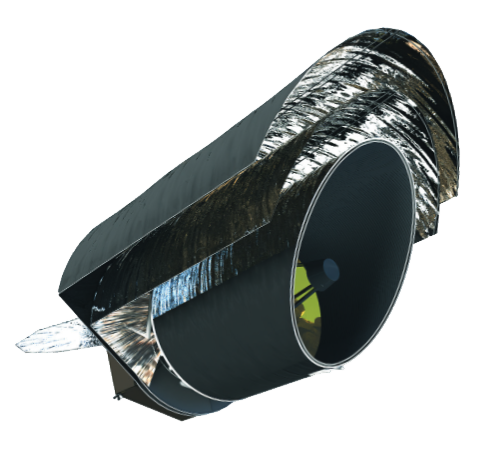
First Detection of an Exoplanet Atmosphere Using the Origins Space Telescope (Planned)
The Origins Space Telescope, a concept for a far-infrared observatory, could study exoplanet atmospheres. In 2036, its development status would be a milestone for future far-infrared observations. #exoplanets #Origins #far-infrared
First Detection of an Exoplanet Atmosphere Using the Origins Space Telescope (Planned) By NASA - https://asd.gsfc.nasa.gov/firs/docs/OriginsVolume1MissionConceptStudyReport.pdf, Public domain, https://commons.wikimedia.org/w/index.php?curid=82012342
2037 CE
First Detection of an Exoplanet Atmosphere Using the Lynx X-ray Observatory (Planned)
Lynx, a future X-ray observatory, could study exoplanet atmospheres through X-ray transits. In 2037, its concept studies would be a milestone for high-energy exoplanet science. #exoplanets #Lynx #X-ray
First Detection of an Exoplanet Atmosphere Using the Lynx X-ray Observatory (Planned) By Granttremblay - Own work, Public domain, https://commons.wikimedia.org/w/index.php?curid=85971287
2038 CE
First Detection of an Exoplanet Atmosphere Using the Athena X-ray Observatory (Planned)
Athena, an X-ray observatory scheduled for launch in the 2030s, could observe exoplanet atmospheres in X-rays. In 2038, its first exoplanet observations would be a milestone. #exoplanets #Athena #X-ray
2039 CE
First Detection of an Exoplanet Atmosphere Using the Solar Orbiter (Extended Mission)
Solar Orbiter, primarily a solar mission, could be used for exoplanet atmosphere studies during its extended mission. In 2039, it might provide unique observations of exoplanet transits from its vantage point. #exoplanets #Solar Orbiter #extended mission
First Detection of an Exoplanet Atmosphere Using the Solar Orbiter (Extended Mission) By European Space Agency - Solar Orbiter, CC BY-SA 3.0 igo, https://commons.wikimedia.org/w/index.php?curid=146867328
2040 CE
First Detection of an Exoplanet Atmosphere Using the BepiColombo (Extended Mission)
BepiColombo, a Mercury mission, could be used for exoplanet observations during its extended mission. In 2040, it might contribute to exoplanet atmosphere studies. #exoplanets #BepiColombo #extended mission
First Detection of an Exoplanet Atmosphere Using the BepiColombo (Extended Mission) By National Aeronautics and Space Administration (NASA) - Published source': "Spacecraft Icons" at NASA ScienceDirect source: Image hosted by smd-prod.s3.amazonaws.com., Public domain, https://commons.wikimedia.org/w/index.php?curid=58062268
2041 CE
First Detection of an Exoplanet Atmosphere Using the JUICE (Extended Mission)
JUICE, a Jupiter mission, could be used for exoplanet observations during its extended mission. In 2041, it might provide unique data on exoplanet atmospheres. #exoplanets #JUICE #extended mission
First Detection of an Exoplanet Atmosphere Using the JUICE (Extended Mission) By ESA - https://www.esa.int/Science_Exploration/Space_Science/Juice/Juice_launch_kit, CC BY-SA 3.0 igo, https://commons.wikimedia.org/w/index.php?curid=130763022
2042 CE
First Detection of an Exoplanet Atmosphere Using the Europa Clipper (Extended Mission)
Europa Clipper, a mission to study Jupiter's moon Europa, could be used for exoplanet observations during its extended mission. In 2042, it might contribute to exoplanet atmosphere studies. #exoplanets #Europa Clipper #extended mission
First Detection of an Exoplanet Atmosphere Using the Europa Clipper (Extended Mission) By National Aeronautics and Space Administration (NASA) · Jet Propulsion Laboratory - Published source: Europa Mission Spacecraft - Artist's Rendering " by the Jet Propulsion Laboratory.Direct source: Image hosted by jpl.nasa.gov., Public domain, https://commons.wikimedia.org/w/index.php?curid=57036736
2043 CE
First Detection of an Exoplanet Atmosphere Using the Dragonfly (Extended Mission)
Dragonfly, a mission to Titan, could be used for exoplanet observations during its extended mission. In 2043, it might provide unique data on exoplanet atmospheres. #exoplanets #Dragonfly #extended mission
2044 CE
First Detection of an Exoplanet Atmosphere Using the Psyche (Extended Mission)
Psyche, a mission to a metal asteroid, could be used for exoplanet observations during its extended mission. In 2044, it might contribute to exoplanet atmosphere studies. #exoplanets #Psyche #extended mission
First Detection of an Exoplanet Atmosphere Using the Psyche (Extended Mission) By NASA/JPL-Caltech/Arizona State Univ./Space Systems Loral/Peter Rubin - Catalog page · Full-res (JPEG · TIFF), Public domain, https://commons.wikimedia.org/w/index.php?curid=59257398
2045 CE
First Detection of an Exoplanet Atmosphere Using the Lucy (Extended Mission)
Lucy, a mission to Trojan asteroids, could be used for exoplanet observations during its extended mission. In 2045, it might provide unique data on exoplanet atmospheres. #exoplanets #Lucy #extended mission
First Detection of an Exoplanet Atmosphere Using the Lucy (Extended Mission) By NASA’s Goddard Space Flight Center/Conceptual Image Lab/Adriana Gutierrez - http://lucy.swri.edu/img/1000days.png http://lucy.swri.edu/2019/01/20/1000days.html, Public domain, https://commons.wikimedia.org/w/index.php?curid=90646410
2046 CE
First Detection of an Exoplanet Atmosphere Using the OSIRIS-REx (Extended Mission)
OSIRIS-REx, after returning samples from asteroid Bennu, could be used for exoplanet observations during its extended mission. In 2046, it might contribute to exoplanet atmosphere studies. #exoplanets #OSIRIS-REx #extended mission
First Detection of an Exoplanet Atmosphere Using the OSIRIS-REx (Extended Mission) By National Aeronautics and Space Administration (NASA) / Goddard Space Flight Center (GSFC) / University of Arizona / Lockheed Martin - Website used: "[We will find organic materials on Asteroid Bennu, says OSIRIS-REx principal investigator http://phys.org/news/2015-07-materials-asteroid-bennu-osiris-rex-principal.html]" by Phys.orgDirect source: Image, hosted by cdn.phys.org, Public domain, https://commons.wikimedia.org/w/index.php?curid=50114199
2047 CE
First Detection of an Exoplanet Atmosphere Using the New Horizons (Extended Mission)
New Horizons, after its flyby of Pluto and Arrokoth, could be used for exoplanet observations during its extended mission. In 2047, it might provide unique data on exoplanet atmospheres from the outer solar system. #exoplanets #New Horizons #extended mission
First Detection of an Exoplanet Atmosphere Using the New Horizons (Extended Mission) By National Aeronautics and Space Administration (NASA), Applied Physics Laboratory - "PEPSSI Instrument Tastes Pluto's Atmosphere" from the Applied Physics Laboratory New Horizons website., Public domain, https://commons.wikimedia.org/w/index.php?curid=41340864
2048 CE
First Detection of an Exoplanet Atmosphere Using the Voyager 1 (Extended Mission)
Voyager 1, still operational in interstellar space, could be used for exoplanet observations. In 2048, it might provide a unique perspective for exoplanet atmosphere studies. #exoplanets #Voyager 1 #interstellar
First Detection of an Exoplanet Atmosphere Using the Voyager 1 (Extended Mission) By National Aeronautics and Space Administration (NASA) - Published source: "Spacecraft Icons" at NASA ScienceDirect source: Image hosted by smd-prod.s3.amazonaws.com., Public domain, https://commons.wikimedia.org/w/index.php?curid=66602695
2049 CE
First Detection of an Exoplanet Atmosphere Using the Voyager 2 (Extended Mission)
Voyager 2, also in interstellar space, could be used for exoplanet observations. In 2049, it might provide complementary data to Voyager 1 for exoplanet atmosphere studies. #exoplanets #Voyager 2 #interstellar
2050 CE
First Detection of an Exoplanet Atmosphere Using the Interstellar Probe (Planned)
The Interstellar Probe, a proposed mission to explore the heliosphere and beyond, could be used for exoplanet observations. In 2050, its development status would be a milestone for future exoplanet science. #exoplanets #Interstellar Probe #future mission