Evolution of Writing Systems & Decipherment: Oracle Bones, Rosetta Stone & Alphabets
Encyclopedia/5. Human Thought & Philosophy/2. Languages, Linguistics & Writing/01. History of Writing Systems • Curated by Admin Timeline.sg
This timeline traces the evolution of writing systems from pictographic origins to phonetic alphabets, encompassing major scripts such as Sumerian cuneiform, Egyptian hieroglyphs, Chinese oracle bone script, the Phoenician alphabet, and key decipherments like the Rosetta Stone and Linear B. It highlights global contributions from Mesopotamia, Egypt, China, Mesoamerica, the Indus Valley, and others.
Chronological Storyline (42 Milestones)
3400 BCE
Earliest Sumerian Pictographic Tablets
Clay tablets from Uruk (modern Iraq) bear the earliest known pictographic writing, recording economic transactions. These proto-cuneiform signs evolve into the cuneiform script. #history #writing
Earliest Sumerian Pictographic Tablets By Bjørn Christian Tørrissen - Own work by uploader, http://bjornfree.com/galleries.html, CC BY-SA 3.0, https://commons.wikimedia.org/w/index.php?curid=8296178
3200 BCE
Proto-Elamite Script in Iran
The Proto-Elamite script emerges in Susa (modern Iran), used for accounting. It remains largely undeciphered. #history #writing
Proto-Elamite Script in Iran By Seyed Mansour Seyed Sajjadi & Hosein Moradi - https://www.persicaantiqua.ir/article_151873_be120be0c2769c5fbdc710323fe0c8ac.pdf, CC BY-SA 4.0, https://commons.wikimedia.org/w/index.php?curid=127936144
3100 BCE
Early Egyptian Hieroglyphs
The Narmer Palette shows early hieroglyphic signs, marking the beginning of Egyptian writing. Hieroglyphs remain in use for over 3,000 years. #history #ancient
Early Egyptian Hieroglyphs By unknown Egyptian scribe - The British Museum (http://www.egyptarchive.co.uk/html/british_museum_29.html (Jon Bodsworth) - https://www.egyptarchive.co.uk/), Copyrighted free use, https://commons.wikimedia.org/w/index.php?curid=3210751
2600 BCE
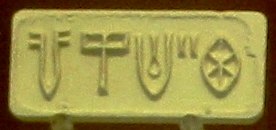
Indus Valley Script in Use
Seals and tablets from the Indus Valley civilization (modern Pakistan/India) bear a script of about 400 symbols. It remains undeciphered. #history #ancient
Indus Valley Script in Use By PHGCOM IndusValleySeals.JPG - IndusValleySeals.JPG, CC BY-SA 3.0, https://commons.wikimedia.org/w/index.php?curid=5243844
2400 BCE
Akkadian Cuneiform Adapts Sumerian Script
The Akkadian Empire adapts Sumerian cuneiform to write the Semitic Akkadian language, creating the first fully phonetic writing system. #history #writing
Akkadian Cuneiform Adapts Sumerian Script By Unknown artist - Mbzt, CC BY 3.0, https://commons.wikimedia.org/w/index.php?curid=16898522
2000 BCE
Minoan Linear A Script on Crete
Linear A, a syllabic script, appears on Crete for the Minoan language. It remains undeciphered. #history #ancient
Minoan Linear A Script on Crete By Evans, Arthur, Sir (1851-1941) - Sir Arthur Evans: Scripta Minoa: The Written Documents of Minoan Crete. With Special Reference to the Archives of Knossos. Vol. 1, Oxford 1909, p. 29, Public domain, https://commons.wikimedia.org/w/index.php?curid=4494576
1800 BCE
Chinese Oracle Bone Precursors
Pottery markings at sites like Banpo (Shaanxi) show early symbols that may be precursors to Chinese writing, though not yet a full script. #history #china
Chinese Oracle Bone Precursors By Unknown author - Gary Lee Todd 2011-09-01 12:34:54 https://www.flickr.com/photos/101561334@N08/9830601816/, CC0, https://commons.wikimedia.org/w/index.php?curid=96430584
1600 BCE
Mycenaean Linear B Script
Linear B, a syllabic script derived from Linear A, is used to write Mycenaean Greek. Deciphered in 1952 by Michael Ventris. #history #linguistics
Mycenaean Linear B Script By Sharon Mollerus - originally posted to Flickr as How Cool Is Writing?, CC BY 2.0, https://commons.wikimedia.org/w/index.php?curid=7633385
1500 BCE
Proto-Sinaitic Inscriptions
Semitic-speaking workers in the Sinai Peninsula create a consonantal alphabet derived from Egyptian hieroglyphs, the ancestor of the Phoenician alphabet. #history #alphabet
Proto-Sinaitic Inscriptions By unknown Uploaded by Kwamikagami at en.wikipedia - William Foxwell Albright, The Proto-Sinaitic Inscriptions and Their Decipherment Transferred from en.wikipedia to Commons by SreeBot., Public domain, https://commons.wikimedia.org/w/index.php?curid=17815571
1400 BCE
Cuneiform Ugaritic Alphabet
The city of Ugarit (modern Syria) develops a 30-character cuneiform alphabet used for Ugaritic, a Semitic language. #history #writing
Cuneiform Ugaritic Alphabet By Chaos - self-scan of old picture more than 10 years in syria (PD in syria), Public domain, https://commons.wikimedia.org/w/index.php?curid=2194766
1200 BCE
Shang Dynasty Oracle Bone Script
The earliest known Chinese writing appears on oracle bones used for divination at Anyang. The script is a logographic system. #history #china
1050 BCE
Phoenician Alphabet Standardized
The Phoenician alphabet, a 22-letter consonantal script, spreads across the Mediterranean. It becomes the ancestor of Greek, Latin, and many modern alphabets. #history #alphabet
800 BCE
Greek Alphabet with Vowels
The Greeks adapt the Phoenician alphabet, adding vowels to create the first true alphabet. This innovation enables precise representation of spoken language. #history #alphabet
700 BCE
Etruscan Alphabet Adopted from Greek
The Etruscans adopt and modify the Greek alphabet for their language, influencing the later Latin alphabet. #history #alphabet
Etruscan Alphabet Adopted from Greek By Shonagon - Own work, CC0, https://commons.wikimedia.org/w/index.php?curid=30705415
600 BCE
Olmec Writing in Mesoamerica
The Cascajal Block, a serpentine slab with 62 incised signs, suggests an early Olmec writing system, possibly the first in the Americas. #history #mesoamerica
Olmec Writing in Mesoamerica By Cascajal-text.jpg: Michael Everson derivative work: Jon C (talk) - This file was derived from: Cascajal-text.jpg:, CC BY 3.0, https://commons.wikimedia.org/w/index.php?curid=18082601
500 BCE
Old Persian Cuneiform Created
Darius I commissions a simplified cuneiform alphabet for Old Persian, used in monumental inscriptions like at Behistun. #history #writing
Old Persian Cuneiform Created By Diego Delso - This image has been extracted from another file, CC BY-SA 4.0, https://commons.wikimedia.org/w/index.php?curid=75161226
400 BCE
Aramaic Script Spreads Across Near East
The Aramaic alphabet, derived from Phoenician, becomes the lingua franca of the Achaemenid Empire, influencing Hebrew, Arabic, and many other scripts. #history #writing
Aramaic Script Spreads Across Near East By Unknown artist - Jastrow (2007), Public domain, https://commons.wikimedia.org/w/index.php?curid=1527801
300 BCE
Brahmi Script in South Asia
The Brahmi script, ancestor of most Indian and Southeast Asian scripts, appears in Ashokan edicts. Its origin may be from Aramaic or indigenous. #history #india
Brahmi Script in South Asia By Symphonicallyu - Own work, CC0, https://commons.wikimedia.org/w/index.php?curid=193839024
200 BCE
Zapotec Writing in Oaxaca
The Zapotec civilization develops a script using carved stones, one of the earliest writing systems in Mesoamerica. #history #mesoamerica
Zapotec Writing in Oaxaca By LBM1948 - Own work, CC BY-SA 4.0, https://commons.wikimedia.org/w/index.php?curid=81296474
100 BCE
Nabataean Script Emerges
The Nabataean alphabet, derived from Aramaic, evolves into the Arabic script in later centuries. #history #writing
Nabataean Script Emerges By Sabulhab - Own work, CC BY-SA 3.0, https://commons.wikimedia.org/w/index.php?curid=21857234
100 CE
Maya Hieroglyphic Writing Flourishes
Maya script, a logosyllabic system, is used for monuments and codices. It records history and ritual. #history #mesoamerica
Maya Hieroglyphic Writing Flourishes By User:Kwamikagami - English Wikipedia, Public domain, https://commons.wikimedia.org/w/index.php?curid=1686822
200 CE
Chinese Clerical Script Standardized
During the Han dynasty, the clerical script (lishu) becomes the standard writing style, evolving from seal script and leading to modern Chinese characters. #history #china
Chinese Clerical Script Standardized By Unknown author, Public domain, https://commons.wikimedia.org/w/index.php?curid=41801
300 CE
Ge'ez Script Developed in Aksum
The Ge'ez script, derived from South Arabian, becomes the writing system for the Aksumite Empire (Ethiopia). It is still used for liturgical Ge'ez. #history #africa
Ge'ez Script Developed in Aksum By M. Adiputra - Own work, CC BY-SA 3.0, https://commons.wikimedia.org/w/index.php?curid=18809879
400 CE
Korean Idu Script Uses Chinese Characters
The Korean Idu system adapts Chinese characters to represent Korean sounds and grammar, an early form of writing Korean. #history #korea
Korean Idu Script Uses Chinese Characters By Unknown author, Public domain, https://commons.wikimedia.org/w/index.php?curid=2796121
500 CE
Runiform Turkic Script (Orkhon) Created
The Orkhon script, used for Old Turkic, is created based on earlier alphabets. It is found on memorial stelae in Mongolia. #history #centralasia
600 CE
Arabic Script Becomes Prominent
With the rise of Islam, the Arabic alphabet (derived from Nabataean) spreads across the Middle East and North Africa, used for Qur'anic texts. #history #islam
Arabic Script Becomes Prominent By Serg!o. - Own work, Public domain, https://commons.wikimedia.org/w/index.php?curid=179875406
700 CE
N'Ko Script for Manding Languages
The N'Ko script is invented by Solomana Kante for writing the Manding languages of West Africa. It remains in use today. #history #africa
N'Ko Script for Manding Languages By Wierdw123 (talk) - Own work, Public domain, https://commons.wikimedia.org/w/index.php?curid=95963699
800 CE
Japanese Kanji and Kana Develop
Japanese writing adapts Chinese characters (kanji) for Japanese, and develops hiragana and katakana syllabaries from simplified kanji. #history #japan
Japanese Kanji and Kana Develop By User:Hatukanezumi - 二葉亭四迷 (Futabatei Shimei) (1908-March) 平凡 (Heibon), 東京 (Tokyo): 如山堂, pp. pp.10−11 Copied, trimmed and converted to JPEG by User:Hatukanezumi, from collection of 国立国会図書館近代デジタルライブラリー (Digital Library from the Meiji Era, Japan National Diet Library)., Public domain, https://commons.wikimedia.org/w/index.php?curid=2436806
900 CE
Cyrillic Script Invented
Saints Cyril and Methodius' disciples develop the Cyrillic alphabet in the First Bulgarian Empire, based on the Greek alphabet, for Slavic languages. #history #linguistics
Cyrillic Script Invented By Пакко - File:Romanian-kirilitza-tatal-nostru.jpg, CC BY-SA 3.0, https://commons.wikimedia.org/w/index.php?curid=10873524
1000 CE
Rongorongo Script on Easter Island
The Rongorongo script appears on wooden tablets on Rapa Nui (Easter Island). It remains undeciphered. #history #polynesia
Rongorongo Script on Easter Island By Rongorongo_B-v_Aruku-Kurenga_(color).jpg: unknown derivative work: Mfield (talk) - Rongorongo_B-v_Aruku-Kurenga_(color).jpg, Public domain, https://commons.wikimedia.org/w/index.php?curid=6420206
1100 CE
Tibetan Script Derived from Brahmi
The Tibetan alphabet, based on the Brahmi-derived Gupta script, is created to translate Buddhist texts. #history #tibet
Tibetan Script Derived from Brahmi By Symphonicallyu - Own work, CC0, https://commons.wikimedia.org/w/index.php?curid=192864485
1200 CE
Cherokee Syllabary Invented
Sequoyah, a Cherokee silversmith, creates the Cherokee syllabary of 85 characters, enabling mass literacy among the Cherokee. #history #nativeamerican
Cherokee Syllabary Invented By Kaldari - Own work, CC0, https://commons.wikimedia.org/w/index.php?curid=58872791
1300 CE
Mongolian Script Adapted from Uyghur
The Mongolian script, derived from the Uyghur alphabet, is adopted under Genghis Khan. It is still used in Inner Mongolia. #history #mongolia
Mongolian Script Adapted from Uyghur By Injinash Banchinval - Vanchinbalyn Injinash, Public domain, https://commons.wikimedia.org/w/index.php?curid=68754334
1440 CE
Hangul Alphabet Created in Korea
King Sejong the Great promulgates the Hangul alphabet, a phonemic script designed to increase literacy among commoners. #history #korea
Hangul Alphabet Created in Korea By metalslick - Own work, CC BY-SA 4.0, https://commons.wikimedia.org/w/index.php?curid=63996191
1450 CE
Gutenberg Printing Press Revolutionizes Writing
Johannes Gutenberg's movable type printing press in Europe drastically reduces the cost of book production, standardizing scripts and spreading literacy. #history #technology
Gutenberg Printing Press Revolutionizes Writing By vlasta2 - Flickr: PrintMus 038, CC BY 2.0, https://commons.wikimedia.org/w/index.php?curid=16412858
1822 CE
Champollion Deciphers Egyptian Hieroglyphs
Jean-François Champollion uses the Rosetta Stone to crack the hieroglyphic code, unlocking Egyptian history. #linguistics #history
Champollion Deciphers Egyptian Hieroglyphs By Portrait de Champollion Le Jeune par Madame de Rumilly.jpg: User:Jvillafruela Derivative work: User:A. Parrot - Portrait de Champollion Le Jeune par Madame de Rumilly.jpg, Public domain, https://commons.wikimedia.org/w/index.php?curid=69290464
1830 CE
Cuneiform Deciphered by Grotefend and Rawlinson
Georg Friedrich Grotefend and later Henry Rawlinson (via the Behistun Inscription) decipher Old Persian cuneiform, leading to the understanding of Mesopotamian scripts. #linguistics #history
Cuneiform Deciphered by Grotefend and Rawlinson By Grotefend, in 1815 - Historical researches into the politics, intercourse, and trade of the principal nations of antiquity p.332, Public domain, https://commons.wikimedia.org/w/index.php?curid=90589192
1850 CE
Mayan Script Begins to Be Deciphered
Early scholars like Constantine Rafinesque and later Yuri Knorozov and Tatiana Proskouriakoff make breakthroughs in deciphering Maya hieroglyphs. #linguistics #mesoamerica
1905 CE
Ugaritic Alphabet Deciphered
The Ugaritic cuneiform alphabet is deciphered by Hans Bauer and others after its discovery in 1929, revealing a Semitic language. #linguistics #history
1952 CE
Ventris Deciphers Linear B
Michael Ventris, with help from John Chadwick, proves that Linear B is an early form of Greek, revolutionizing Mycenaean studies. #linguistics #history
1960 CE
Knorozov's Breakthrough in Maya Script
Yuri Knorozov demonstrates that Maya writing is partly phonetic, paving the way for full decipherment. #linguistics #mesoamerica
1999 CE
Oracle Bone Script Decipherment Advances
Modern scholarship continues to decipher Shang oracle bone inscriptions, revealing details of early Chinese civilization. #linguistics #china