Euclid of Alexandria: Elements, Axiomatic Geometry & Optics
Encyclopedia/1. The Cosmos & The Natural World/1. Mathematics & Formal Systems/14. Mathematical Biographies • Curated by Admin Timeline.sg
Euclid of Alexandria (c. 325–265 BCE) is the father of geometry, whose 13-book Elements was the world's primary mathematics textbook for over 2,000 years. His axiomatic approach and works on optics and number theory laid the foundation for Western mathematics.
Chronological Storyline (40 Milestones)
325 BCE
Euclid born in Tyre
Euclid is born, likely in Tyre, Phoenicia, though his exact birth year is unknown. He will become the father of geometry. #history #mathematics
Euclid born in Tyre By Jusepe de Ribera (Spanish / Italian, 1591 - 1652) (1591 - 1652) – artist (Spanish / Italian) Details on Google Art Project - wAGVeSb2M1HfDA at Google Cultural Institute maximum zoom level, Public domain, https://commons.wikimedia.org/w/index.php?curid=21993409
310 BCE
Euclid studies at Plato's Academy
Euclid is believed to have studied at Plato's Academy in Athens, where he absorbed the works of Eudoxus and other mathematicians. #history #mathematics
300 BCE
Euclid founds mathematics school
Euclid establishes a renowned mathematics school in Alexandria, training scholars and compiling knowledge. #history #mathematics
300 BCE
Euclid moves to Alexandria
Ptolemy I Soter invites Euclid to Alexandria, Egypt, where he establishes the mathematics school at the Library of Alexandria. #history #mathematics
295 BCE
Euclid defines parallel postulate
In Book I of Elements, Euclid states his controversial fifth postulate, which later sparked the development of non-Euclidean geometry. #geometry #history
Euclid defines parallel postulate By Dickdock - Own work based on: Parallel postulate.svg by Harkonnen2, Public domain, https://commons.wikimedia.org/w/index.php?curid=4559984
295 BCE
Euclid proves Pythagorean theorem
In Elements Book I, Proposition 47, Euclid provides one of the earliest proofs of the Pythagorean theorem. #geometry #mathematics
Euclid proves Pythagorean theorem By en:User:Wapcaplet - Transwikied from en:. Originally created by en:User:Michael Hardy, then scaled, with colour and labels being added by en:User:Wapcaplet, transformed in svg format by fr:Utilisateur:Steff, changed colors and font by de:Leo2004, CC BY-SA 3.0, https://commons.wikimedia.org/w/index.php?curid=640875
294 BCE
Completes Book II (geometric algebra)
Euclid's Book II of Elements covers geometric algebra, including the dissection of rectangles and squares. #geometry #mathematics
Completes Book II (geometric algebra) By University of Pennsylvania Museum of Archaeology and Anthropology - https://openn.library.upenn.edu/Data/0016/html/e2748.html, CC BY-SA 4.0, https://commons.wikimedia.org/w/index.php?curid=169166171
293 BCE
Completes Books III and IV (circles and polygons)
Books III and IV of Elements treat circles, their properties, and the construction of regular polygons. #geometry #mathematics
292 BCE
Completes Books V and VI (proportion and similarity)
Books V and VI of Elements expound Eudoxus's theory of proportion and similarity of figures. #geometry #mathematics
291 BCE
Completes Books VII-IX (number theory)
Books VII-IX of Elements cover number theory, including the Euclidean algorithm and the infinitude of primes. #numbertheory #mathematics
291 BCE
Euclid proves infinitude of primes
In Elements Book IX, Proposition 20, Euclid proves that there are infinitely many prime numbers. #mathematics #numbertheory
291 BCE
Euclid introduces Euclidean algorithm
In Elements Book VII, Euclid describes an efficient algorithm for finding the greatest common divisor of two numbers. #mathematics #algorithms
Euclid introduces Euclidean algorithm By user:Wvbailey, converted to SVG by hand by user:brighterorange - File:Euclid's_algorithm_Book_VII_Proposition_2_3.png, CC BY 3.0, https://commons.wikimedia.org/w/index.php?curid=141615561
290 BCE
Completes Book X (incommensurables)
Book X of Elements is a comprehensive treatment of incommensurable (irrational) magnitudes. #geometry #mathematics
289 BCE
Completes Books XI-XIII (solid geometry)
Books XI-XIII of Elements cover solid geometry, culminating in the classification of the five Platonic solids. #geometry #mathematics
285 BCE
Euclid's 'royal road' reply to Ptolemy
When Ptolemy I asks for an easier way to learn geometry, Euclid famously replies, 'There is no royal road to geometry.' #history #mathematics
280 BCE
Elements completed in 13 books
Euclid finishes the 13-book Elements, which becomes the most successful mathematics textbook in history. #mathematics #history
278 BCE
Writes Data
Euclid writes the Data, a collection of geometric propositions for solving problems given certain data. #geometry #mathematics
276 BCE
Publishes Optics
Euclid's Optics is the earliest surviving work on perspective, explaining visual perception using geometry. #optics #science
Publishes Optics By Euclid - Available in the BEIC digital library and uploaded in partnership with BEIC Foundation., Public domain, https://commons.wikimedia.org/w/index.php?curid=37857016
275 BCE
Writes Catoptrics
Euclid's Catoptrics studies the reflection of light from mirrors, laying groundwork for geometric optics. #optics #physics
Writes Catoptrics By Unknown author, CC BY-SA 3.0, https://commons.wikimedia.org/w/index.php?curid=85228
274 BCE
Writes Phaenomena
Euclid's Phaenomena applies geometry to astronomy, describing the rising and setting of celestial bodies. #astronomy #mathematics
273 BCE
Writes On Divisions of Figures
Euclid writes On Divisions of Figures, a treatise on dividing geometric shapes into equal or proportional parts. #geometry #mathematics
272 BCE
Writes Surface Loci (lost)
Euclid composes Surface Loci (Περὶ τόπων), a lost work on loci on surfaces, known only from later references. #history #mathematics
271 BCE
Writes Porisms (lost)
Euclid writes Porisms (Περὶ πορισμάτων), a lost collection of geometric propositions on porisms, cited by Pappus. #history #mathematics
270 BCE
Writes Conics (lost)
Euclid writes a treatise on conic sections (Conics), later built upon by Apollonius. #geometry #mathematics
265 BCE
Euclid dies in Alexandria
Euclid dies, likely in Alexandria, leaving a legacy as the father of geometry. #history #mathematics
150 BCE
Hypsicles adds Book XIV to Elements
Greek mathematician Hypsicles writes Book XIV of Elements, on regular polyhedra, later appended to Euclid's work. #geometry #history
380 CE
Theon of Alexandria edits Elements
Theon of Alexandria produces an influential edition of Elements with commentary, the basis for many later versions. #history #mathematics
750 CE
First Arabic translation by al-Hajjaj
The first Arabic translation of Elements is made by al-Hajjaj ibn Matar, preserving the work through the Islamic Golden Age. #history #mathematics
860 CE
Thābit ibn Qurra revises Arabic translation
Thābit ibn Qurra produces a critical revision of the Arabic Elements, improving its accuracy. #mathematics #history
1120 CE
Adelard of Bath translates Elements into Latin
Adelard of Bath makes the first Latin translation of Elements from Arabic, reintroducing Euclid to medieval Europe. #history #mathematics
Adelard of Bath translates Elements into Latin By Unknown author - via manuscript Adelardi Bathensis Regulae abaci SCA 1, Public domain, https://commons.wikimedia.org/w/index.php?curid=99827166
1482 CE
First printed edition of Elements
Erhard Ratdolt prints the first edition of Elements in Venice, using Latin from the Arabic translation. #history #mathematics
1505 CE
First Latin translation from Greek by Zamberti
Bartolomeo Zamberti produces the first Latin translation directly from Greek manuscripts. #history #mathematics
1533 CE
First Greek edition published
Simon Grynaeus edits the first printed Greek edition of Elements, published by the Aldine Press. #history #mathematics
First Greek edition published By Internet Archive Book Images - https://www.flickr.com/photos/internetarchivebookimages/14766254732/ Source book page: https://archive.org/stream/bezasiconesconte00mccr/bezasiconesconte00mccr#page/n193/mode/1up, No restrictions, https://commons.wikimedia.org/w/index.php?curid=44044090
1570 CE
First English translation by Billingsley
Henry Billingsley publishes the first complete English translation of Elements, with a preface by John Dee. #history #mathematics
1607 CE
First Chinese translation by Ricci and Xu
Matteo Ricci and Xu Guangqi translate parts of Elements into Chinese, introducing Euclidean geometry to East Asia. #history #mathematics
First Chinese translation by Ricci and Xu By Chinese brother Emmanuel Pereira (born Yu Wen-hui 游文辉) - Unknown source, Public domain, https://commons.wikimedia.org/w/index.php?curid=85942
1660 CE
Wallis lectures on Euclid, influences Newton
John Wallis's lectures on Euclid help shape Isaac Newton's mathematical approach in the Principia. #history #mathematics
Wallis lectures on Euclid, influences Newton By After Godfrey Kneller - one or more third parties have made copyright claims against Wikimedia Commons in relation to the work from which this is sourced or a purely mechanical reproduction thereof. This may be due to recognition of the "sweat of the brow" doctrine, allowing works to be eligible for protection through skill and labour, and not purely by originality as is the case in the United States (where this website is hosted). These claims may or may not be valid in all jurisdictions. As such, use of this image in the jurisdiction of the claimant or other countries may be regarded as copyright infringement. Please see Commons:When to use the PD-Art tag for more information., Public domain, https://commons.wikimedia.org/w/index.php?curid=6365975
Lobachevsky, Bolyai, and Gauss independently develop non-Euclidean geometry, proving the parallel postulate is not necessary. #geometry #history
1868 CE
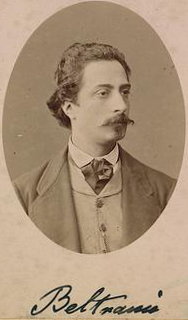
Beltrami proves consistency of non-Euclidean geometry
Eugenio Beltrami provides a model proving that non-Euclidean geometry is as consistent as Euclidean geometry. #mathematics #geometry
Beltrami proves consistency of non-Euclidean geometry By Unknown author, Public domain, https://commons.wikimedia.org/w/index.php?curid=2094478
1883 CE
Heiberg produces definitive edition of Euclid
Johan Ludvig Heiberg publishes a critical edition of Euclid's works based on Greek manuscripts, the standard for modern scholarship. #history #mathematics
Heiberg produces definitive edition of Euclid By photo by Fred. Riise - Kgl.Bibl. Cph., Public domain, https://commons.wikimedia.org/w/index.php?curid=2749072
1899 CE
Hilbert publishes Foundations of Geometry
David Hilbert's Grundlagen der Geometrie presents a complete axiomatization of Euclidean geometry, inspired by Euclid. #geometry #mathematics