Eastern Philosophy: Confucian Analects, Dao De Jing, Buddhism & Neo-Confucianism
Encyclopedia/5. Human Thought & Philosophy/1. Philosophy, Religion & Ethics/01. Eastern Philosophy & Religious Thought • Curated by Admin Timeline.sg
This timeline traces the development of Eastern philosophy from the foundational texts of Confucianism and Daoism through the transmission of Mahayana Buddhism to China and the synthesis of Neo-Confucianism, highlighting key figures and works that shaped moral and metaphysical thought across East Asia.
Chronological Storyline (41 Milestones)
600 BCE
Laozi Composes the Dao De Jing
According to tradition, Laozi writes the Dao De Jing, a foundational text of Daoism that explores the concept of the Dao (the Way) and advocates for wuwei (non-action). #daoism #philosophy
Laozi Composes the Dao De Jing By Unknown author - Mawangdui Silk Manuscript Volume First, Wen Wu Publishing, Beijing, China, 1980-03, Public domain, https://commons.wikimedia.org/w/index.php?curid=19264100
551 BCE
Birth of Confucius
Confucius is born in the state of Lu (present-day Qufu, Shandong). His teachings emphasize moral rectitude, social harmony, and filial piety, forming the basis of Confucianism. #philosophy #confucianism
Birth of Confucius By Wu Daozi, 685-758, Tang Dynasty. - https://i.pinimg.com/originals/77/95/19/7795198cc338e4642d2ce7ac965458b2.jpg, Public domain, https://commons.wikimedia.org/w/index.php?curid=857482
479 BCE
Death of Confucius
Confucius dies, and his disciples compile his teachings into the Analects, which become a cornerstone of Chinese ethical and political philosophy. #philosophy #confucianism
Death of Confucius By Confucius and his disciples, - From here., Public domain, https://commons.wikimedia.org/w/index.php?curid=2581568
372 BCE
Birth of Mencius
Mencius is born; he later becomes a leading Confucian philosopher arguing for the inherent goodness of human nature and the right of revolution against tyrannical rulers. #confucianism #philosophy
Birth of Mencius By anonymous - Portraits of the Sage. Teacher Exemplar for a Myriad Generations: Confucius in Painting, Calligraphy, and Print Through the Ages (exhibit). Taipei: National Palace Museum., Public domain, https://commons.wikimedia.org/w/index.php?curid=64582790
369 BCE
Birth of Zhuangzi
Zhuangzi is born, later writing the Zhuangzi, a key Daoist text filled with parables and paradoxes that challenge conventional thinking, such as the famous 'Butterfly Dream.' #daoism #philosophy )
Birth of Zhuangzi By Lu Zhi - Upload of December 2007: http://www.asianart.com/exhibitions/taoism/butterfly.html Upload of April 2012: Not given, Public domain, https://commons.wikimedia.org/w/index.php?curid=3300456
310 BCE
Birth of Xunzi
Xunzi is born; he develops a Confucian philosophy emphasizing ritual and education to counteract human inclinations, advocating that human nature is evil and requires correction. #confucianism #philosophy
289 BCE
Death of Mencius
Mencius dies; his teachings are compiled into the book Mencius, which later becomes one of the Four Books of Neo-Confucianism. #confucianism #philosophy )
Death of Mencius By Medieval Chinese publishing house - http://www.npm.gov.tw/exh98/books_archives/en_02_2.html, Public domain, https://commons.wikimedia.org/w/index.php?curid=42034596
136 BCE
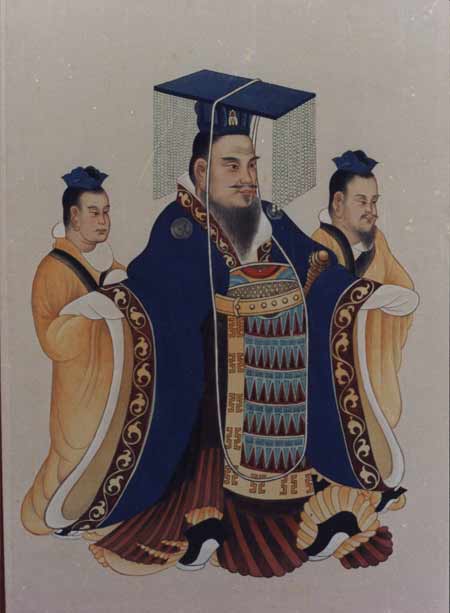
Confucianism Made State Ideology
Emperor Wu of Han establishes Confucianism as the official state ideology, basing civil service exams on Confucian texts, which profoundly shapes Chinese governance for centuries. #confucianism #history
Confucianism Made State Ideology By Unknown author - Colored portrait and a black and white rubbing of the portrait, Public domain, https://commons.wikimedia.org/w/index.php?curid=8151462
67 CE
Buddhism Reaches China: White Horse Temple
Buddhist scriptures are brought to China on a white horse, leading to the construction of the White Horse Temple in Luoyang, marking the official introduction of Buddhism to China. #buddhism #history
148 CE
An Shigao Translates Buddhist Texts
The Parthian monk An Shigao arrives in China and begins translating Buddhist scriptures into Chinese, laying the groundwork for the spread of Buddhism in East Asia. #buddhism #translation
226 CE
Birth of Wang Bi
Wang Bi is born; he becomes a pivotal commentator on the Dao De Jing and Yijing, infusing Daoist concepts with Confucian metaphysics, influencing Neo-Daoism. #daoism #philosophy
Birth of Wang Bi By AnonymousUnknown author - Digitized by National Palace Museum; file is directly from Shuge, Public domain, https://commons.wikimedia.org/w/index.php?curid=126996540
249 CE
Death of Wang Bi
Wang Bi dies young; his commentaries become standard references for Daoist and Confucian thought, shaping later Chinese philosophy. #daoism #philosophy
343 CE
Birth of Huiyuan
Huiyuan is born; he becomes a influential Chinese Buddhist monk, founder of the Pure Land tradition and advocate of Buddhist synthesis with native thought. #buddhism #pureland )
Birth of Huiyuan By Unknown - "Wan hsiao tang-Chu chuang -Hua chuan(晩笑堂竹荘畫傳)" published in 1921(民国十年), Public domain, https://commons.wikimedia.org/w/index.php?curid=1188045
401 CE
Kumarajiva Arrives in Chang'an
The Kuchean monk Kumarajiva arrives in Chang'an and begins translating Buddhist sutras (e.g., Lotus Sutra) into Chinese, greatly expanding the Chinese Buddhist canon. #buddhism #translation
Kumarajiva Arrives in Chang'an By Yoshi Canopus - Own work, CC BY-SA 3.0, https://commons.wikimedia.org/w/index.php?curid=110447098
520 CE
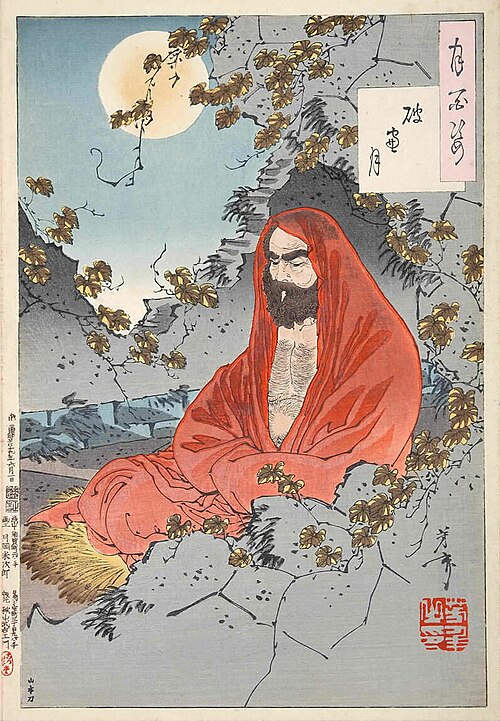
Bodhidharma Arrives in China
The Indian monk Bodhidharma arrives in China, traditionally founding Chán (Zen) Buddhism and emphasizing direct meditation and sudden enlightenment. #buddhism #zen
Bodhidharma Arrives in China By Yoshitoshi - 1. en.wikipedia 2. [1], Public domain, https://commons.wikimedia.org/w/index.php?curid=280892
638 CE
Birth of Huineng
Huineng is born; he becomes the Sixth Patriarch of Chán Buddhism, known for his illiterate background and emphasis on sudden enlightenment as recorded in the Platform Sutra. #buddhism #zen
Birth of Huineng By Unknown author, Public domain, https://commons.wikimedia.org/w/index.php?curid=563929
713 CE
Death of Huineng
Huineng dies; his teachings are compiled into the Platform Sutra, a central text of Chán (Zen) Buddhism that emphasizes innate Buddha-nature and sudden awakening. #buddhism #zen
Death of Huineng By Unknown author - https://www.artoftheancestors.com/blog/stories-of-paper-louvre-abu-dhabi, Public domain, https://commons.wikimedia.org/w/index.php?curid=142568992
845 CE
Great Anti-Buddhist Persecution
Emperor Wuzong of Tang orders the suppression of Buddhism, destroying thousands of monasteries and returning monks to lay life, leading to a decline of institutional Buddhism in China. #buddhism #history
Great Anti-Buddhist Persecution By Wang Qi - http://www.chinapage.com/emperor/tang0815.jpg and https://baike.baidu.com/pic/李炎/62587/0/1c950a7b02087bf4ea852162f2d3572c10dfcfd4?fr=lemma&ct=single#aid=0&pic=4d497006eb941f37020881eb, Public domain, https://commons.wikimedia.org/w/index.php?curid=3969740
1000 CE
Linji School Flourishes
The Linji school of Chán Buddhism, founded by Linji Yixuan, becomes dominant, known for its use of gongan (koans) and direct teaching methods that shape Zen in East Asia. #buddhism #zen
Linji School Flourishes By David Chen (Iamdavidtheking 12:33, 9 September 2007 (UTC)) - Photo by and (c)2007 David Chen, CC BY 3.0, https://commons.wikimedia.org/w/index.php?curid=2710270
1017 CE
Birth of Zhou Dunyi
Zhou Dunyi is born; his essay 'Taijitu Shuo' (Explanation of the Diagram of the Supreme Ultimate) becomes a foundational text of Neo-Confucian cosmology, synthesizing Daoist and Confucian ideas. #neoconfucianism #philosophy
Birth of Zhou Dunyi By Unknown author - 《歷代名臣像解》, Public domain, https://commons.wikimedia.org/w/index.php?curid=152107872
1130 CE
Birth of Zhu Xi
Zhu Xi is born; he will become the most influential Neo-Confucian philosopher, synthesizing Confucian ethics with a metaphysical system based on li (principle) and qi (material force). #neoconfucianism #philosophy
Birth of Zhu Xi By Unknown author - scan from 《社会历史博物馆》 ISBN 7-5347-1397-8, Public domain, https://commons.wikimedia.org/w/index.php?curid=93319
1139 CE
Birth of Lu Jiuyuan
Lu Jiuyuan is born; he develops a rival idealist Neo-Confucian philosophy emphasizing the mind as principle (xin ji li), influencing later Wang Yangming. #neoconfucianism #philosophy
Birth of Lu Jiuyuan By Unknown author, Public domain, https://commons.wikimedia.org/w/index.php?curid=1165668
1190 CE
Zhu Xi Compiles the Four Books
Zhu Xi selects and annotates the Analects, Mencius, Great Learning, and Doctrine of the Mean as the Four Books, which become the core curriculum for civil service exams in China for 600 years. #neoconfucianism #education
Zhu Xi Compiles the Four Books By Aethelwolf Emsworth. - Own reproduction of a drawing made by Picnic11219 for Chinese Wikipedia., Public domain, https://commons.wikimedia.org/w/index.php?curid=65689742
1200 CE
Death of Zhu Xi
Zhu Xi dies; his interpretation of Confucianism becomes orthodox in China, Korea, and Japan, profoundly shaping East Asian thought and governance. #neoconfucianism #philosophy
1225 CE
Dogen Introduces Zen to Japan
The Japanese monk Dogen travels to China and returns to found the Soto school of Zen, emphasizing zazen (sitting meditation) and writing the Shobogenzo. #buddhism #zen
Dogen Introduces Zen to Japan By Unknown author - http://kousin242.sakura.ne.jp/wordpress015/宗教/禅宗/道元/ , https://web.archive.org/web/20200125164535/http://kousin242.sakura.ne.jp/wordpress015/宗教/禅宗/道元/, Public domain, https://commons.wikimedia.org/w/index.php?curid=109119359
1392 CE
Neo-Confucianism Becomes Joseon State Ideology
The Joseon Dynasty adopts Neo-Confucianism as its official ideology, implementing a rigorous examination system and moral governance that lasts for over 500 years in Korea. #neoconfucianism #history
Neo-Confucianism Becomes Joseon State Ideology By Daniil Ivanov - [1], Public domain, https://commons.wikimedia.org/w/index.php?curid=1762046
1472 CE
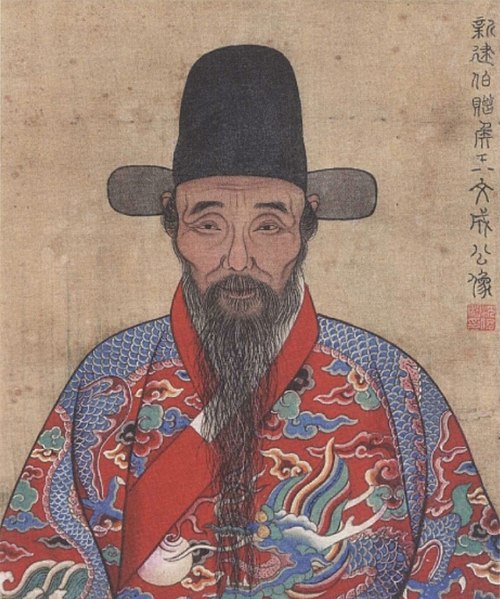
Birth of Wang Yangming
Wang Yangming is born; he develops the philosophy of 'innate knowledge' (liangzhi) and 'unity of knowledge and action,' challenging Zhu Xi's dualism. #neoconfucianism #philosophy
Birth of Wang Yangming By Shen Junhui (沈俊繪) - Create a new portrait of Marquis Wang Wencheng : 新建伯贈侯王文成公像, Public domain, https://commons.wikimedia.org/w/index.php?curid=80389785
1501 CE
Birth of Yi Hwang (Toegye)
Yi Hwang is born; he becomes the leading Korean Neo-Confucian scholar, known for his rigorous study of li and qi and his influence on Korean philosophy. #neoconfucianism #philosophy
Birth of Yi Hwang (Toegye) By Integral - Own work, CC BY-SA 2.0 kr, https://commons.wikimedia.org/w/index.php?curid=3727479
1529 CE
Death of Wang Yangming
Wang Yangming dies; his teachings spread widely in China and Japan, influencing later movements like the Ming-Qing transition and Japanese Neo-Confucianism. #neoconfucianism #philosophy
1570 CE
Death of Yi Hwang
Yi Hwang dies; his works, especially the 'Ten Diagrams on Sage Learning,' continue to be studied in Korean Confucianism and East Asian philosophy. #neoconfucianism #philosophy
1590 CE
Matteo Ricci Translates Confucian Classics
Jesuit missionary Matteo Ricci translates Confucian texts into Latin, introducing Confucian thought to Europe and sparking interest in Chinese philosophy among Enlightenment thinkers. #confucianism #translation
Matteo Ricci Translates Confucian Classics By Chinese brother Emmanuel Pereira (born Yu Wen-hui 游文辉) - Unknown source, Public domain, https://commons.wikimedia.org/w/index.php?curid=85942
1600 CE
Publication of 'The Four Books' in Chinese
The Four Books (Analects, Mencius, Great Learning, Doctrine of the Mean) are published together as a standard edition, used for civil service exams in late imperial China. #neoconfucianism #education
1619 CE
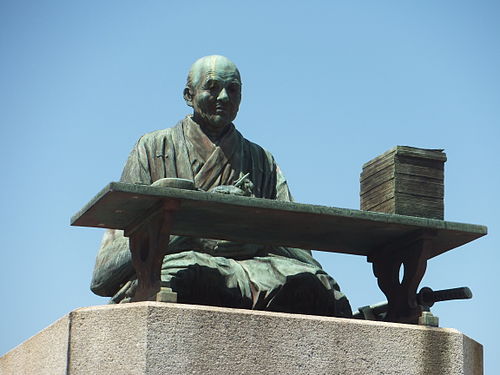
Birth of Kaibara Ekken
Kaibara Ekken is born; he becomes a prominent Japanese Neo-Confucian scholar who integrates Confucianism with Shinto and emphasizes empirical study of nature. #neoconfucianism #philosophy
Birth of Kaibara Ekken By WolfgangMichel - Own work, CC0, https://commons.wikimedia.org/w/index.php?curid=19242212
1666 CE
Birth of Ogyu Sorai
Ogyu Sorai is born; he develops a philological approach to Confucian texts in Japan, advocating for a return to ancient teachings and influencing Japanese thought. #neoconfucianism #philosophy
Birth of Ogyu Sorai By 有朋堂書店 - Japanese Book 『先哲像伝 近世畸人傳 百家琦行傳』, Public domain, https://commons.wikimedia.org/w/index.php?curid=3959261
1714 CE
Death of Kaibara Ekken
Kaibara Ekken dies; his works on Confucian ethics and natural philosophy leave a lasting impact on Japanese education and thought. #neoconfucianism #philosophy
1728 CE
Death of Ogyu Sorai
Ogyu Sorai dies; his philological methods and critique of Zhu Xi's interpretations influence later Japanese Confucians and the Kokugaku movement. #neoconfucianism #philosophy
1776 CE
Publication of 'The Works of Mencius' in Europe
Mencius's works are translated into French and English, spreading Confucian ideas of human nature and good governance to the Western Enlightenment. #confucianism #translation )
1893 CE
World's Parliament of Religions Includes Eastern Philosophy
At the World's Parliament of Religions in Chicago, representatives of Eastern philosophies, including Confucianism and Buddhism, gain international recognition, sparking Western interest. #philosophy #interfaith
World's Parliament of Religions Includes Eastern Philosophy By Unknown, Public domain, https://commons.wikimedia.org/w/index.php?curid=8676899
1919 CE
May Fourth Movement Criticizes Confucianism
Chinese intellectuals in the May Fourth Movement reject Confucianism as feudal, calling for modernization, which leads to a reassessment of its role in modern China. #confucianism #history
May Fourth Movement Criticizes Confucianism By Unknown author - Hong Kong Central Library (zh:香港中央圖書館) exhibition in April 2019 for the celebration of the 100th anniversary of May Fourth Movement. Taken from April 2019 SSG 17.jpg., Public domain, https://commons.wikimedia.org/w/index.php?curid=437318
1973 CE
Mawangdui Silk Manuscripts Discovered
Ancient silk manuscripts of the Dao De Jing and other philosophical texts are unearthed at Mawangdui, China, providing earlier versions of key Daoist and Confucian works. #daoism #archaeology
Mawangdui Silk Manuscripts Discovered By 猫猫的日记本 - Own work, CC BY-SA 4.0, https://commons.wikimedia.org/w/index.php?curid=38272681
1993 CE
Guodian Chu Slips Unearth Early Daoist Texts
Bamboo slips from the Guodian tomb contain partial texts of the Dao De Jing and the 'Five Aspects of Conduct,' shedding light on early Confucian-Daoist interactions. #daoism #archaeology
Guodian Chu Slips Unearth Early Daoist Texts By Sharkman - Own work, CC BY-SA 3.0, https://commons.wikimedia.org/w/index.php?curid=6420298