Encyclopedia/4. Arts & Literature/1. Literature, Mythology & Folklore/01. Classical & Ancient Literature • Curated by Admin Timeline.sg
This timeline highlights key milestones in Eastern literary classics, spanning from ancient Chinese poetry to Persian Sufi mysticism and Japanese courtly novels. It features legendary authors such as Li Bai, Du Fu, Murasaki Shikibu, Rumi, and Cao Xueqin, whose works have profoundly influenced world literature.
Chronological Storyline (43 Milestones)
1000 BCE
Compilation of the Classic of Poetry
The Shijing, or Classic of Poetry, is the oldest existing collection of Chinese poetry, comprising 305 works dating from the 11th to 7th centuries BCE. It became a foundational text for Confucian education and Chinese literary tradition. #poetry #china #classics
Compilation of the Classic of Poetry By Aethelwolf Emsworth. - Own reproduction of a drawing made by Picnic11219 for Chinese Wikipedia., Public domain, https://commons.wikimedia.org/w/index.php?curid=65689742
500 BCE
Laozi Composes the Tao Te Ching
Attributed to the sage Laozi, the Tao Te Ching is a fundamental text of Taoism, consisting of 81 short chapters. Its poetic and philosophical verses have influenced Chinese culture and literature for millennia. #philosophy #china #classics
Laozi Composes the Tao Te Ching By Unknown author - Mawangdui Silk Manuscript Volume First, Wen Wu Publishing, Beijing, China, 1980-03, Public domain, https://commons.wikimedia.org/w/index.php?curid=19264100
400 BCE
Confucius's Analects Compiled
The Analects (Lunyu) record the teachings and conversations of Confucius, compiled by his disciples after his death. This work became the cornerstone of Chinese ethical and political thought. #philosophy #china #classics
Confucius's Analects Compiled By Confucius and his disciples, - From here., Public domain, https://commons.wikimedia.org/w/index.php?curid=2581568
300 BCE
Qu Yuan and the Chu Ci Anthology
Qu Yuan, a poet of the Warring States period, is credited with the Chu Ci (Songs of Chu), a collection of shamanistic and lyrical poems. His work influenced later Chinese romantic poetry. #poetry #china #classics
Qu Yuan and the Chu Ci Anthology By Chen Hongshou - http://www.chinaculture.org/classics/2011-06/28/content_419325_4.htm, Public domain, https://commons.wikimedia.org/w/index.php?curid=20685994
100 CE
Sima Qian Completes Records of the Grand Historian
Sima Qian's Shiji is a monumental history of China from the mythical Yellow Emperor to his own time. It set the standard for Chinese historiography and is a literary masterpiece. #history #china #classics
Sima Qian Completes Records of the Grand Historian By Zhonghua Book Company - Photo taken by Chinese Wikipedia user huowax, Public domain, https://commons.wikimedia.org/w/index.php?curid=48989967
700 CE
Li Bai and Du Fu Flourish in Tang Dynasty
Li Bai and Du Fu, two of China's greatest poets, produced iconic works during the Tang dynasty. Li Bai's romanticism and Du Fu's social realism shaped Chinese poetry forever. #poetry #china #tang
Li Bai and Du Fu Flourish in Tang Dynasty By Liang Kai - Cropped from original file located at: E0008311 李白吟行図 - 東京国立博物館 画像検索. Tokyo National Museum., Public domain, https://commons.wikimedia.org/w/index.php?curid=35134
750 CE
Wang Wei's Nature Poetry
Wang Wei, a Tang poet and painter, became renowned for his landscape poetry that blends Buddhist philosophy with natural imagery. His works influenced Chinese literati painting. #poetry #china #nature
Wang Wei's Nature Poetry By Unknown author, Public domain, https://commons.wikimedia.org/w/index.php?curid=1169187
800 CE
Bo Juyi's Social Commentary Poetry
Bo Juyi (Bai Juyi) wrote accessible poems criticizing social injustice and celebrating everyday life. His works were widely popular in China and Japan. #poetry #china #social
Bo Juyi's Social Commentary Poetry By Unknown author - 清宮殿藏本, Public domain, https://commons.wikimedia.org/w/index.php?curid=151753840
900 CE
Al-Mutanabbi's Arabic Poetry
Al-Mutanabbi, a celebrated Arab poet of the Abbasid era, composed panegyrics, satires, and philosophical verses. His work remains a cornerstone of Arabic literature. #poetry #arabic #classics
Al-Mutanabbi's Arabic Poetry By Muntadher Saleh - Expo 2020, CC BY-SA 4.0, https://commons.wikimedia.org/w/index.php?curid=193790542
1008 CE
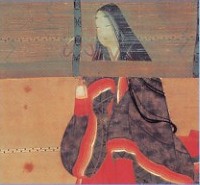
Murasaki Shikibu Writes The Tale of Genji
The Tale of Genji, written by Murasaki Shikibu, is considered the world's first novel. It depicts the life and loves of Prince Genji in Heian Japan, profoundly influencing Japanese literature. #novel #japan #classics
Murasaki Shikibu Writes The Tale of Genji By Imperial Palace Kyoto - 1. Gotoh Museum [1], 2. Geidai.ac.jp [2], Public domain, https://commons.wikimedia.org/w/index.php?curid=3596328
1010 CE
Sei Shōnagon's The Pillow Book
Sei Shōnagon's Pillow Book is a collection of essays, lists, and observations from the Heian court. It offers a vivid portrait of court life and is a classic of Japanese literature. #essays #japan #classics
Sei Shōnagon's The Pillow Book By 土佐光起 (Tosa Mitsuoki) - [1], Public domain, https://commons.wikimedia.org/w/index.php?curid=3616093
1048 CE
Omar Khayyam's Rubaiyat Composed
Persian mathematician and poet Omar Khayyam wrote quatrains (rubaiyat) exploring themes of fate, mortality, and pleasure. His work gained global fame through Edward FitzGerald's translation. #poetry #persia #classics
Omar Khayyam's Rubaiyat Composed By Alireza Javaheri - https://web.archive.org/web/20161024154356/http://www.panoramio.com/photo/85093358, CC BY 3.0, https://commons.wikimedia.org/w/index.php?curid=55909539
1100 CE
The Tale of the Heike Emerges
The Tale of the Heike is an epic account of the Genpei War between the Taira and Minamoto clans. It became a foundational text of Japanese warrior culture and literature. #epic #japan #war
The Tale of the Heike Emerges By Unknown artist of the Kano school - Clark Center for Japanese Art and Culture, ArtDaily.com, Public domain, https://commons.wikimedia.org/w/index.php?curid=26527740
1207 CE
Rumi's Masnavi Begins
Jalal ad-Din Muhammad Rumi, a Persian poet and Sufi mystic, started composing the Masnavi, a six-volume poem exploring divine love and spiritual journey. It remains a masterpiece of Sufi literature. #poetry #persia #sufi
Rumi's Masnavi Begins By Georges Jansoone (JoJan) - Self-photographed, CC BY 3.0, https://commons.wikimedia.org/w/index.php?curid=2728374
1258 CE
Saadi Shirazi's Gulistan Published
Saadi's Gulistan (The Rose Garden) is a collection of moral stories and poems in Persian prose. It is celebrated for its wisdom and elegant style. #prose #persia #classics
1300 CE
Hafez's Divan Compiled
Hafez, a Persian poet, composed ghazals on love, wine, and spirituality. His Divan is a beloved classic in Iran and influenced Goethe and other Western poets. #poetry #persia #classics
Hafez's Divan Compiled By Anselm Feuerbach - Zeno.org, ID number 20004012399, Public domain, https://commons.wikimedia.org/w/index.php?curid=192241107
1320 CE
Yoshida Kenkō's Essays in Idleness
Kenkō's Tsurezuregusa is a collection of essays reflecting on Buddhist impermanence and aesthetic beauty. It is a key work of Japanese medieval literature. #essays #japan #buddhism
Yoshida Kenkō's Essays in Idleness By Unknown author, Public domain, https://commons.wikimedia.org/w/index.php?curid=632686
1400 CE
Luo Guanzhong's Romance of the Three Kingdoms
Attributed to Luo Guanzhong, this historical novel dramatizes the fall of the Han dynasty and the Three Kingdoms period. It is one of China's Four Great Classical Novels. #novel #china #classics
Luo Guanzhong's Romance of the Three Kingdoms By 周曰校(Before 1640) - 《新刊校正古本大字音释三国志通俗演义》.内附版画.二百四十幅.明万历十九年书林周曰校刊本, Public domain, https://commons.wikimedia.org/w/index.php?curid=81270250
1500 CE
Shi Nai'an's Water Margin
Water Margin, attributed to Shi Nai'an, tells the story of 108 outlaws rebelling against corrupt officials. It is a classic of Chinese literature and influenced later adventure tales. #novel #china #adventure
Shi Nai'an's Water Margin By Shi Nai'an - Luo Guanzhong - http://base.kb.dk/manus_pub/cv/manus/VariantManusPage.xsql?nnoc=manus_pub&p_ManusId=104&p_PageNo=1&p_PageVarSeqNo=1&p_Lang=alt, Public domain, https://commons.wikimedia.org/w/index.php?curid=48185902
1592 CE
Wu Cheng'en's Journey to the West
Wu Cheng'en's Journey to the West fictionalizes the pilgrimage of Xuanzang to India, accompanied by the Monkey King. It is a beloved Chinese classic blending fantasy and satire. #novel #china #fantasy
Wu Cheng'en's Journey to the West By Unknown author, Public domain, https://commons.wikimedia.org/w/index.php?curid=11575
1610 CE
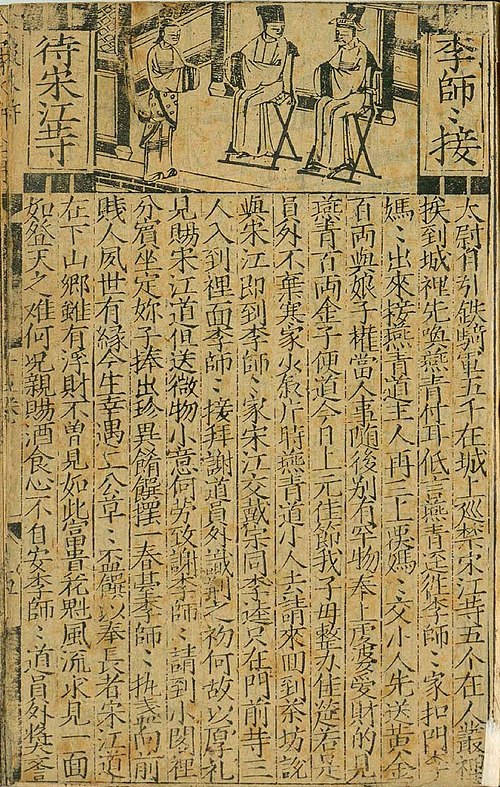
The Plum in the Golden Vase Published
This anonymous Ming dynasty novel, Jin Ping Mei, depicts the decadent life of a merchant. It is noted for its realistic portrayal of society and explicit content. #novel #china #classics
The Plum in the Golden Vase Published By Unknown author, Public domain, https://commons.wikimedia.org/w/index.php?curid=143930209
1680 CE
Matsuo Bashō's Narrow Road to the Deep North
Bashō, a master of haiku, wrote this travelogue combining prose and poetry. It is a pinnacle of Japanese literature, capturing the beauty of nature and transience. #poetry #japan #travel
1700 CE
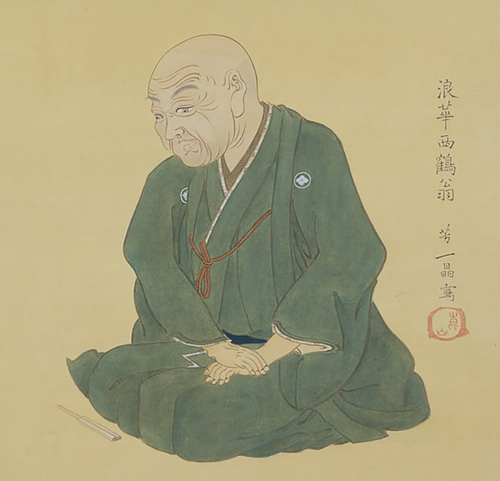
Ihara Saikaku's The Life of an Amorous Man
Saikaku's novel follows the erotic adventures of a townsman, reflecting the ukiyo (floating world) culture of Edo Japan. It pioneered the genre of ukiyo-zōshi. #novel #japan #erotica
Ihara Saikaku's The Life of an Amorous Man By Unknown author - Tokyo National Museum https://webarchives.tnm.jp/imgsearch/show/C0072588, Public domain, https://commons.wikimedia.org/w/index.php?curid=95050746
1715 CE
Chikamatsu Monzaemon's Puppet Plays
Chikamatsu, Japan's greatest playwright, wrote bunraku and kabuki dramas. His works, like The Love Suicides at Sonezaki, explore love and duty. #theater #japan #classics
Chikamatsu Monzaemon's Puppet Plays By Chikamatsu Monzaemon - http://homepage2.nifty.com/hay/chikamatsu.html, Public domain, https://commons.wikimedia.org/w/index.php?curid=1466077
1791 CE
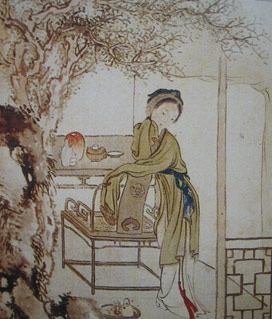
Cao Xueqin's Dream of the Red Chamber
Cao Xueqin's semi-autobiographical novel, also known as The Story of the Stone, depicts the decline of a wealthy family. It is considered the pinnacle of Chinese fiction. #novel #china #classics
Cao Xueqin's Dream of the Red Chamber By Unknown author, Public domain, https://commons.wikimedia.org/w/index.php?curid=567593
1800 CE
The Scholars by Wu Jingzi
Wu Jingzi's satirical novel The Scholars criticizes the imperial examination system and Confucian hypocrisy. It is a classic of Qing dynasty literature. #novel #china #satire
The Scholars by Wu Jingzi By 《民国丛书》编辑委员会 - Fudan University, Public domain, https://commons.wikimedia.org/w/index.php?curid=126094104
1850 CE
Pu Songling's Strange Tales from a Chinese Studio
Pu Songling's collection of supernatural tales blends folklore with social commentary. It is a masterpiece of Chinese short fiction. #stories #china #supernatural
Pu Songling's Strange Tales from a Chinese Studio By 蒲留仙 - Jilin University, Public domain, https://commons.wikimedia.org/w/index.php?curid=125953564
1900 CE
Natsume Sōseki's I Am a Cat
Sōseki's satirical novel, narrated by a cat, critiques Meiji-era Japanese society. It launched his career as a leading modern Japanese author. #novel #japan #satire
Natsume Sōseki's I Am a Cat By 橋口五葉 - https://brbl-dl.library.yale.edu/vufind/Record/3578239, Public domain, https://commons.wikimedia.org/w/index.php?curid=66731765
1914 CE
Lu Xun's Diary of a Madman
Lu Xun's short story, inspired by Gogol, is a critique of traditional Chinese society. It is considered the first modern Chinese story and a landmark of vernacular literature. #story #china #modern
Lu Xun's Diary of a Madman By Shizhao - Own work, Public domain, https://commons.wikimedia.org/w/index.php?curid=5145160
1921 CE
Rabindranath Tagore's Gitanjali Wins Nobel
Tagore's poetry collection Gitanjali earned him the Nobel Prize in Literature, the first for an Asian. His work blended Bengali tradition with universal spirituality. #poetry #india #nobel
1930 CE
Yukio Mishima's Early Works
Mishima began his literary career with novels like Confessions of a Mask, exploring themes of identity and beauty. He became a major figure in post-war Japanese literature. #novel #japan #modern
Yukio Mishima's Early Works By Ken Domon - https://unregardoblique.com/2018/02/04/ken-domon-yukio-mishima-1955/, Public domain, https://commons.wikimedia.org/w/index.php?curid=163969377
1948 CE
Yasunari Kawabata's Snow Country
Kawabata's novel Snow Country exemplifies his lyrical style and won him the Nobel Prize in 1968. It is a classic of modern Japanese literature. #novel #japan #nobel
1957 CE
Mao Dun's Midnight Published
Mao Dun's novel Midnight depicts Shanghai's capitalist society in the 1930s. It is a landmark of Chinese socialist realism. #novel #china #socialist
1960 CE
Kōbō Abe's The Woman in the Dunes
Abe's existential novel about a man trapped in a sand pit won critical acclaim. It was adapted into an award-winning film. #novel #japan #existential
1968 CE
Yasunari Kawabata Wins Nobel Prize
Kawabata became the first Japanese author to win the Nobel Prize in Literature, recognized for his narrative mastery and deep insight into the Japanese spirit. #nobel #japan #literature
Yasunari Kawabata Wins Nobel Prize By Unknown author - http://mhsteger.tumblr.com/post/697607461/yasunari-kawabata-born-14-june-1899-died-16, Public domain, https://commons.wikimedia.org/w/index.php?curid=18724828
1970 CE
Mishima's Death and Final Works
Yukio Mishima committed seppuku after a failed coup attempt. His tetralogy The Sea of Fertility was completed on the day of his death. #novel #japan #death
1981 CE
Salman Rushdie's Midnight's Children
Rushdie's novel, blending magic realism with Indian history, won the Booker Prize. It is a landmark of postcolonial literature. #novel #india #postcolonial
1988 CE
Naguib Mahfouz Wins Nobel Prize
Mahfouz, an Egyptian novelist, became the first Arabic-language writer to win the Nobel Prize. His Cairo Trilogy is a masterpiece of modern Arabic literature. #nobel #egypt #arabic
Naguib Mahfouz Wins Nobel Prize By The original uploader was Producer at Arabic Wikipedia. - Transferred from ar.wikipedia to Commons., Public domain, https://commons.wikimedia.org/w/index.php?curid=65466571
1994 CE
Kenzaburō Ōe Wins Nobel Prize
Ōe, a Japanese author, won the Nobel for his poetic force and exploration of the human condition. His works often address nuclear issues and personal struggles. #nobel #japan #literature
Kenzaburō Ōe Wins Nobel Prize By Thesupermat - Own work, CC BY-SA 3.0, https://commons.wikimedia.org/w/index.php?curid=19577900
2000 CE
Gao Xingjian Wins Nobel Prize
Gao Xingjian, a Chinese-born French novelist and playwright, won the Nobel for his universal validity and keen insights. His novel Soul Mountain is a key work. #nobel #china #drama
Gao Xingjian Wins Nobel Prize By Jwh - Own work, CC BY-SA 3.0 lu, https://commons.wikimedia.org/w/index.php?curid=65200522
2006 CE
Orhan Pamuk Wins Nobel Prize
Pamuk, a Turkish novelist, won the Nobel for his quest for the melancholic soul of his native city. His novel My Name Is Red blends history and mystery. #nobel #turkey #novel
Orhan Pamuk Wins Nobel Prize By David Shankbone - Orhan Pamuk discusses his new book about love, CC BY 3.0, https://commons.wikimedia.org/w/index.php?curid=13151115
2012 CE
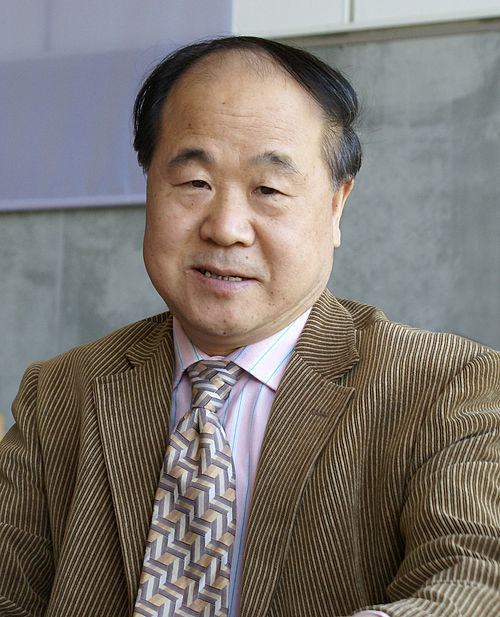
Mo Yan Wins Nobel Prize
Mo Yan, a Chinese novelist, won the Nobel for his hallucinatory realism merging folk tales, history, and the contemporary. His novel Red Sorghum is iconic. #nobel #china #novel
Mo Yan Wins Nobel Prize By Johannes Kolfhaus, Gymn. Marienthal - [1], CC BY-SA 3.0, https://commons.wikimedia.org/w/index.php?curid=4827061
2017 CE
Kazuo Ishiguro Wins Nobel Prize
Ishiguro, a British-Japanese author, won the Nobel for his emotionally powerful novels uncovering the abyss beneath our sense of connection. His works include Never Let Me Go. #nobel #japan #novel
Kazuo Ishiguro Wins Nobel Prize By Martin Kraft - Own work, CC BY-SA 4.0, https://commons.wikimedia.org/w/index.php?curid=170815130