Companies/United States • Curated by Admin Timeline.sg
Digital Equipment Corporation (DEC) was a pioneering American computer company from its founding in 1957 to its acquisition by Compaq in 1998. It revolutionized computing with minicomputers like the PDP and VAX series, becoming a global leader before declining in the PC era.
Chronological Storyline (35 Milestones)
Aug 1, 1957 CE
DEC Founded by Ken Olsen and Harlan Anderson
Ken Olsen and Harlan Anderson founded Digital Equipment Corporation (DEC) in Maynard, Massachusetts, with initial funding from American Research and Development Corporation (ARD). The company aimed to build small, interactive computers. #computing #history
DEC Founded by Ken Olsen and Harlan Anderson By Daderot - Own work, CC0, https://commons.wikimedia.org/w/index.php?curid=74092844
Nov 1, 1960 CE
Introduction of the PDP-1
DEC introduced the Programmed Data Processor-1 (PDP-1), one of the first minicomputers. It featured a 18-bit word size and a CRT display, and became famous as the platform for the first computer game, Spacewar!. #computing #innovation
Introduction of the PDP-1 By Alexey Komarov - Own work, CC BY-SA 4.0, https://commons.wikimedia.org/w/index.php?curid=75337442
1962 CE
DEC Goes Public
DEC held its initial public offering (IPO) on the New York Stock Exchange, raising capital to expand its product line and market presence. The stock performed well, reflecting investor confidence in the burgeoning computer industry. #finance #history
1965 CE
Launch of the PDP-8, the First Successful Minicomputer
DEC launched the PDP-8, a 12-bit minicomputer that was small, affordable, and easy to use. It sold over 50,000 units, establishing DEC as a leader in the minicomputer market and democratizing access to computing. #computing #milestone
Launch of the PDP-8, the First Successful Minicomputer By Kris Arnold - https://www.flickr.com/photos/wka/3735964493/, CC BY-SA 2.0, https://commons.wikimedia.org/w/index.php?curid=110392229
1967 CE
DEC Opens First International Subsidiary in the UK
DEC expanded globally by establishing a subsidiary in Reading, England, to support sales and service in Europe. This marked the beginning of DEC's international growth. #business #global
1970 CE
Introduction of the PDP-11
DEC introduced the PDP-11, a 16-bit minicomputer that became one of the most popular minicomputers in history. Its architecture influenced later designs, including the VAX and even the Intel x86. #computing #innovation
Introduction of the PDP-11 By Stefan_Kögl - Own work, CC BY-SA 3.0, https://commons.wikimedia.org/w/index.php?curid=466937
1971 CE
DEC Unveils the DECsystem-10
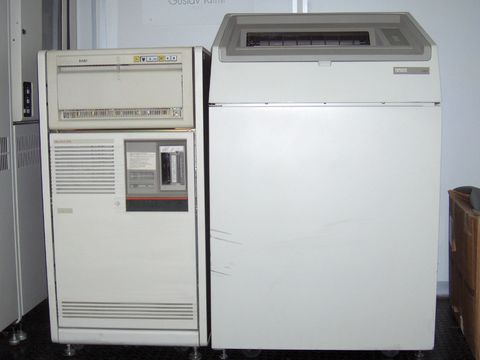
The DECsystem-10, also known as the PDP-10, was a mainframe-class computer. It was widely used in universities and research institutions, supporting time-sharing and interactive computing. #computing #education
DEC Unveils the DECsystem-10 By Gah4 - Own work, CC BY-SA 4.0, https://commons.wikimedia.org/w/index.php?curid=137481564
1975 CE
DEC Introduces the VT100 Video Terminal
The VT100 became one of the most popular video terminals in the industry, known for its ANSI escape code support. It set standards for terminal emulation and was widely used with DEC minicomputers. #computing #hardware
DEC Introduces the VT100 Video Terminal By Jason Scott - Flickr: IMG_9976, CC BY 2.0, https://commons.wikimedia.org/w/index.php?curid=29457452
Oct 15, 1977 CE
Launch of the VAX-11/780
DEC introduced the VAX-11/780, the first implementation of the VAX architecture. The Virtual Address eXtension (VAX) offered a 32-bit architecture and virtual memory, becoming the backbone of DEC's success for two decades. #computing #milestone
Launch of the VAX-11/780 By Digital Equipment Corporation - Own vectorization, adapted from File:Dec-vax-logo.png, Public domain, https://commons.wikimedia.org/w/index.php?curid=114816868
1978 CE
DEC Becomes Number 2 in Computer Industry
By 1978, DEC had grown to become the second largest computer company in the world, behind IBM. Its minicomputers dominated the mid-range market. #business #growth
1979 CE
DEC Opens Manufacturing Plant in Ireland
DEC expanded its manufacturing footprint by opening a plant in Galway, Ireland, to serve European markets. This was part of a broader international expansion strategy. #manufacturing #global
1980 CE
DEC Introduces the VMS Operating System
The VMS (Virtual Memory System) operating system was introduced for the VAX line. It became known for its reliability, clustering capabilities, and tight integration with VAX hardware. #software #computing
1982 CE
DEC Enters the Personal Computer Market with the Rainbow 100
DEC released the Rainbow 100, a personal computer that could run both CP/M and MS-DOS. However, it struggled against the IBM PC and Apple Macintosh, marking a misstep in the PC market. #computing #business
DEC Enters the Personal Computer Market with the Rainbow 100 By Sleeps-Darkly - Own work; taken using Fujian 35mm 1.7 lens on an Olympus E-M10MarkII camera, CC BY-SA 4.0, https://commons.wikimedia.org/w/index.php?curid=127195036
1983 CE
DEC Announces the VAXcluster Technology
DEC introduced VAXcluster, allowing multiple VAX systems to be linked together for high availability and scalability. This technology was a key selling point for enterprise customers. #computing #innovation
1985 CE
DEC Ships One Millionth Terminal
DEC reached the milestone of shipping its one millionth video terminal, reflecting its dominance in the terminal market. #milestone #manufacturing
1986 CE
DEC Introduces the MicroVAX II
The MicroVAX II brought VAX architecture to a smaller, lower-cost package, expanding the reach of VMS and VAX into new markets like departmental computing. #computing #hardware
DEC Introduces the MicroVAX II By Emiliano Russo, Associazione Culturale VerdeBinario - http://it.wikipedia.org/wiki/Immagine:Microvax_3600.jpg, Public domain, https://commons.wikimedia.org/w/index.php?curid=4807104
1987 CE
DEC Acquires the Computer Division of Philips
DEC acquired the European computer division of Philips to strengthen its position in the European market and gain additional technology. #acquisition #business
1988 CE
DEC Releases the DECnet Phase V
DEC updated its networking protocol suite with DECnet Phase V, supporting OSI standards. This enhanced DEC's ability to interoperate with other vendors' systems. #networking #computing
1989 CE
DEC Announces the Alpha Architecture
DEC revealed plans for the Alpha architecture, a high-performance 64-bit RISC processor. Alpha was designed to succeed the VAX and compete with other RISC chips like MIPS and SPARC. #computing #innovation
DEC Announces the Alpha Architecture By Unknown author - https://web.archive.org/web/19961224010827/http://www.digital.com:80/info/alphaserver/alphasrv300/as300.pdf, Public domain, https://commons.wikimedia.org/w/index.php?curid=100044589
1990 CE
DEC Suffers First Quarterly Loss
DEC reported its first quarterly loss due to declining minicomputer sales and increased competition from PCs. This marked the beginning of financial struggles. #finance #business
1992 CE
DEC Opens a Software Development Center in India
DEC expanded its global R&D by establishing a software development center in Bangalore, India, tapping into the country's growing talent pool. #global #software
1992 CE
Introduction of the Alpha AXP 64-bit Processor
DEC launched the first Alpha AXP 21064 processor, running at 200 MHz, making it one of the fastest microprocessors at the time. It was used in DEC's own systems and sold to other vendors. #computing #hardware
1994 CE
DEC Wins Antitrust Case Against Intel
DEC filed a patent infringement suit against Intel, which was settled with a cross-licensing agreement and a $700 million payment from Intel. This provided a financial boost but did not reverse DEC's decline. #legal #business
1995 CE
DEC Announces the Prioris PC Line
DEC launched the Prioris line of personal computers based on Intel Pentium processors, attempting to compete in the PC market. Despite good reviews, it failed to gain significant market share. #computing #hardware
1996 CE
DEC Sells Its Database Software Business to Oracle
DEC sold its Rdb database software to Oracle Corporation, focusing on core hardware and services. This was part of a strategy to streamline operations. #acquisition #software
1997 CE
DEC Acquires the Networking Company, Prominet
DEC acquired Prominet, a start-up specializing in Gigabit Ethernet switching, to bolster its networking capabilities. This was a late attempt to capture the growing Ethernet market. #acquisition #networking
1997 CE
Ken Olsen Retires as CEO
Founder Ken Olsen stepped down as CEO after 40 years, replaced by Robert Palmer. Olsen's departure marked the end of an era, as DEC struggled to adapt to the changing market. #leadership #history
Ken Olsen Retires as CEO By Rochester Institute of Technology - News & Events 1986 at the RIT Digital Archive, Public domain, https://commons.wikimedia.org/w/index.php?curid=172035098
Jan 26, 1998 CE
DEC Is Acquired by Compaq
Compaq announced the acquisition of DEC for $9.6 billion. The deal aimed to create a major force in enterprise computing, but Compaq itself would later be acquired by Hewlett-Packard. #acquisition #history
Jun 1, 1998 CE
Compaq Completes Acquisition of DEC
The acquisition was finalized, marking the end of DEC as an independent company. Many DEC employees were integrated into Compaq, and DEC's product lines were gradually phased out. #business #history
1999 CE
Compaq Dissolves the DEC Brand
Compaq retired the DEC brand name, rebranding remaining products under its own name. This effectively ended the corporate identity of Digital Equipment Corporation. #branding #history
2000 CE
Compaq Acquires the Remainder of DEC's Alpha Chip Business
Compaq continued to sell Alpha-based systems, but ultimately the architecture was discontinued. Intel's Itanium was initially planned as a successor, but Alpha development ceased. #computing #hardware
2001 CE
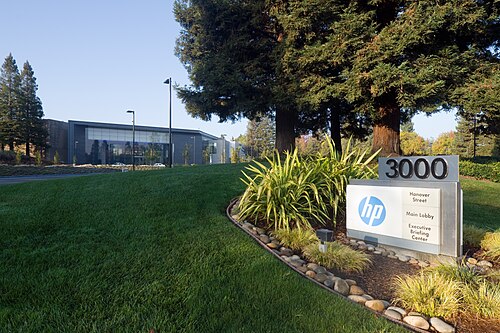
HP Acquires Compaq, Absorbing DEC's Legacy
Hewlett-Packard (HP) acquired Compaq, including all DEC assets and technologies. Many former DEC patents and technologies were integrated into HP's product lines. #acquisition #history
HP Acquires Compaq, Absorbing DEC's Legacy By LPS.1 - Own work, CC0, https://commons.wikimedia.org/w/index.php?curid=29344244
2007 CE
HP Discontinues OpenVMS on Alpha
HP announced the end of life for OpenVMS on Alpha systems, though the operating system remains available on Itanium and other platforms via third-party support. #software #legacy
2012 CE
DEC Alumni and Enthusiasts Hold 50th Anniversary Reunion
Former DEC employees gathered in Marlborough, Massachusetts, to celebrate the 50th anniversary of DEC's founding. The event highlighted DEC's enduring legacy in computing. #community #history
2014 CE
OpenVMS Community Releases Version 8.4 for Integrity Servers
VMS Software Inc. (VSI), a company formed by former DEC engineers, released OpenVMS 8.4 for HP Integrity servers, continuing the legacy of the operating system. #software #legacy