Differential & Integral Calculus: Modern Frontiers & Breakthrough Innovations
Encyclopedia/1. The Cosmos & The Natural World/1. Mathematics & Formal Systems/03. Calculus & Mathematical Analysis • Curated by Admin Timeline.sg
This timeline traces the evolution of differential and integral calculus from ancient origins through modern breakthroughs, highlighting global contributions and cutting-edge developments in mathematical analysis.
Chronological Storyline (41 Milestones)
1800 BCE
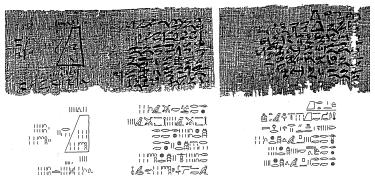
Moscow Papyrus: Volume of Frustum
An Egyptian mathematical text includes the correct formula for the volume of a truncated pyramid (frustum), an early precursor to integral calculus. #math #history
Moscow Papyrus: Volume of Frustum By Hieroglyphic transcript is made by I. I. Perepelkin - Struve, Vasilij Vasil'evič, and Boris Turaev. 1930. Mathematischer Papyrus des Staatlichen Museums der Schönen Künste in Moskau. Quellen und Studien zur Geschichte der Mathematik; Abteilung A: Quellen 1. Berlin: J. Springer, Public domain, https://commons.wikimedia.org/w/index.php?curid=6309027
300 BCE
Eudoxus' Method of Exhaustion
Eudoxus of Cnidus develops the method of exhaustion, a geometric technique for calculating areas and volumes that anticipates integration. #math #ancient
250 BCE
Archimedes' Quadrature of the Parabola
Archimedes computes the area under a parabola using a geometric series, embodying early integration. #math #geometry
Archimedes' Quadrature of the Parabola By en:User:Jim.belk (original); Pbroks13 (talk) (redraw) - http://en.wikipedia.org/wiki/Image:Parabolic_Segment.png, Public domain, https://commons.wikimedia.org/w/index.php?curid=4303759
300 CE
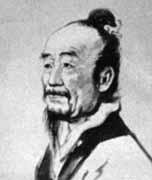
Chinese Volume of a Sphere (Liu Hui)
Liu Hui calculates the volume of a sphere using the method of dissection and Cavalieri-like principles in his commentary on the Nine Chapters. #math #china
Chinese Volume of a Sphere (Liu Hui) By Unknown - "Liu Hui (220 - 280) - Biography - MacTutor History of Mathematics" https://mathshistory.st-andrews.ac.uk/Biographies/Liu_Hui/, CC BY-SA 4.0, https://commons.wikimedia.org/w/index.php?curid=130481910
500 CE
Aryabhata's Infinite Series
Indian mathematician Aryabhata explores summation of series and approximates π using infinite processes, early calculus concepts. #math #india
Aryabhata's Infinite Series By Cpjha13 - Own work, CC BY-SA 4.0, https://commons.wikimedia.org/w/index.php?curid=49883192
1050 CE
Alhazen's Integration Techniques (Ibn al-Haytham)
Alhazen develops methods to sum powers of integers and compute volumes of solids of revolution, advancing integral calculus. #math #islamic
Alhazen's Integration Techniques (Ibn al-Haytham) By Adolph Boÿ, engraved by Jeremias Falck. Used as the frontispiece to Johannes Hevelius, Selenographia, 1647 - https://www.loc.gov/resource/rbctos.2017rosen1321/?sp=9&r=0.059,0.617,0.327,0.182,0, Public domain, https://commons.wikimedia.org/w/index.php?curid=165125519
1150 CE
Bhāskara II's Differential Ideas
Bhāskara II discusses instantaneous motion and uses the concept of the derivative in his astronomical works. #math #india
Bhāskara II's Differential Ideas By Unknown author - Own work, Public domain, https://commons.wikimedia.org/w/index.php?curid=150275955
1356 CE
Oresme's Graphical Integration
Nicole Oresme uses geometric methods to analyze the integral of a function, representing it as an area under a curve. #math #medieval
Oresme's Graphical Integration By Nicole Oresme / Aristotle - Nicole Oresme (1400-1420) Traité de la sphère; Aristote, De caelo et de mundo, traduction française par Nicole Oresme, p. 1r OCLC: 1177977521., Public domain, https://commons.wikimedia.org/w/index.php?curid=436922
1400 CE
Kerala School: Infinite Series
The Kerala school of astronomy and mathematics (Madhava, etc.) develops power series expansions for trigonometric functions and the Leibniz series for π, centuries before Europe. #math #india
Kerala School: Infinite Series By ChandlerMinh - Own work, CC BY-SA 4.0, https://commons.wikimedia.org/w/index.php?curid=92927231
1635 CE
Cavalieri's Principle
Bonaventura Cavalieri publishes his principle of indivisibles, a geometric method for computing volumes that foreshadows integral calculus. #math #geometry
Cavalieri's Principle By Christopher Grattoni - demonstrations.wolfram.com, CC BY 4.0, https://commons.wikimedia.org/w/index.php?curid=145384849
1669 CE
Newton's De analysi
Isaac Newton writes 'De analysi per aequationes numero terminorum infinitas', introducing his method of fluxions (derivatives) and infinite series. #math #history
Oct 1, 1684 CE
Leibniz Publishes Differential Calculus
Gottfried Wilhelm Leibniz publishes 'Nova Methodus pro Maximis et Minimis', the first paper on differential calculus, introducing the d-notation. #math #history
Leibniz Publishes Differential Calculus By G. W. Leibniz - https://archive.org/details/s1id13206500/page/467/mode/1up, Public domain, https://commons.wikimedia.org/w/index.php?curid=140197496
Jul 5, 1687 CE
Newton's Principia Mathematica
Newton publishes the Principia, applying his calculus (fluxions) to mechanics and gravitation, cementing calculus as a fundamental tool in physics. #physics #math
Newton's Principia Mathematica By The original uploader was Zhaladshar at English Wikisource. - Transferred from en.wikisource to Commons. (previous image from another copy) Internet Archive (current image from the Bern Dibner copy), Public domain, https://commons.wikimedia.org/w/index.php?curid=2681838
1696 CE
L'Hôpital's Rule
Guillaume de L'Hôpital publishes the first textbook on differential calculus, 'Analyse des Infiniment Petits', which includes the rule for evaluating indeterminate forms. #math #analysis
1748 CE
Euler's Introductio in Analysin Infinitorum
Leonhard Euler publishes his comprehensive work on infinitesimal analysis, laying the foundation for modern calculus and introducing functions, series, and the number e. #math #analysis
Euler's Introductio in Analysin Infinitorum By Cronholm144 at English Wikipedia - Transferred from en.wikipedia to Commons., CC BY-SA 3.0, https://commons.wikimedia.org/w/index.php?curid=3128774
1789 CE
Lagrange's Calculus of Variations
Joseph-Louis Lagrange develops the calculus of variations, providing a powerful generalization of calculus to find functions that optimize functionals. #math #analysis
1821 CE
Cauchy Rigorizes Calculus
Augustin-Louis Cauchy publishes 'Cours d'Analyse', giving a rigorous definition of limits, continuity, and derivatives using epsilon-delta arguments. #math #analysis
Cauchy Rigorizes Calculus By Augustin Louis Cauchy - screenshot of https://archive.org/details/bub_gb_OlxT3B6EjykC/page/n5/mode/2up, CC0, https://commons.wikimedia.org/w/index.php?curid=94855343
1854 CE
Riemann Integral Definition
Bernhard Riemann formally defines the Riemann integral, establishing a rigorous foundation for integration. #math #analysis
Riemann Integral Definition By Brad219 - Own work created using Inkscape 1.3. Redrawn from original PNG source authored by KSmrq, CC0, https://commons.wikimedia.org/w/index.php?curid=150414772
1872 CE
Weierstrass' Continuous Non-Differentiable Function
Karl Weierstrass presents a function that is continuous everywhere but differentiable nowhere, challenging intuition and deepening analysis. #math #analysis
Weierstrass' Continuous Non-Differentiable Function By Eeyore22 - Own work, Public domain, https://commons.wikimedia.org/w/index.php?curid=5075959
1882 CE
Volterra's Function and Early Generalized Integration
Vito Volterra constructs a function with a derivative that is bounded but not Riemann integrable, motivating extended integration theories. #math #analysis
Volterra's Function and Early Generalized Integration By Rocchini - Own work, CC BY 3.0, https://commons.wikimedia.org/w/index.php?curid=19554046
1902 CE
Lebesgue Measure and Integral
Henri Lebesgue introduces measure theory and the Lebesgue integral, vastly generalizing Riemann integration and enabling analysis of more functions. #math #analysis
Lebesgue Measure and Integral By ~~helix84 15:43, 27 November 2006 (UTC) - own work, based on en:Image:Integral-area-under-curve.png, Public domain, https://commons.wikimedia.org/w/index.php?curid=1409775
1910 CE
Functional Analysis Emerges (Volterra, Fréchet)
Early work by Volterra and Maurice Fréchet on function spaces leads to functional analysis, where calculus is extended to infinite-dimensional spaces. #math #analysis
Functional Analysis Emerges (Volterra, Fréchet) By Oleg Alexandrov - Own work, Public domain, https://commons.wikimedia.org/w/index.php?curid=3375138
1933 CE
Stochastic Calculus (Wiener Process)
Norbert Wiener mathematically defines the Wiener process (Brownian motion), laying the groundwork for stochastic calculus. #math #probability
Stochastic Calculus (Wiener Process) By Unknown author, CC BY-SA 4.0, https://commons.wikimedia.org/w/index.php?curid=146079160
1944 CE
Itô Calculus
Kiyoshi Itô develops the Itô calculus, a theory of integration and differentiation for stochastic processes, essential in finance and physics. #math #stochastic
Itô Calculus By Shiyu Ji - Own work, CC BY-SA 4.0, https://commons.wikimedia.org/w/index.php?curid=53067749
1960 CE
Non-Standard Analysis (Robinson)
Abraham Robinson introduces non-standard analysis, rigorously reviving infinitesimals using model theory, providing an alternative foundation for calculus. #math #foundations
Non-Standard Analysis (Robinson) By Christoph Bernhard Francke - Herzog Anton Ulrich-Museum Braunschweig, Public domain, https://commons.wikimedia.org/w/index.php?curid=57268659
1965 CE
Fractional Calculus (Oldham & Spanier)
The book 'The Fractional Calculus' by Kenneth Oldham and Jerome Spanier popularizes derivatives and integrals of non-integer order, with applications in viscoelasticity and diffusion. #math #fractional
1966 CE
Geometric Calculus (Hestenes)
David Hestenes introduces geometric calculus (Clifford algebra), unifying vector calculus, differential forms, and complex analysis with a single framework. #math #geometry
1970 CE
Calculus on Manifolds (Spivak's Book)
Michael Spivak's 'Calculus on Manifolds' provides a rigorous, modern approach to differential forms and Stokes' theorem, essential in differential geometry. #math #manifolds )
1974 CE
Malliavin Calculus
Paul Malliavin develops the Malliavin calculus, an infinite-dimensional differential calculus for stochastic processes, used in mathematical finance and PDEs. #math #stochastic
1982 CE
Rough Path Theory (Lyons)
Terry Lyons introduces rough path theory, providing a pathwise calculus for highly irregular signals, connecting to stochastic calculus and control theory. #math #analysis
1990 CE
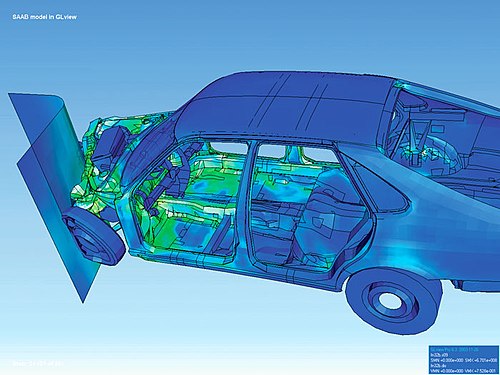
Numerical Calculus: Finite Element Method Matures
The finite element method for solving PDEs becomes a standard computational tool, enabling numerical integration and differentiation on complex geometries. #math #computational
Numerical Calculus: Finite Element Method Matures By Unknown author, Public domain, https://commons.wikimedia.org/w/index.php?curid=641911
1995 CE
Automatic Differentiation Revolutionized
The modern development of automatic differentiation (AD) techniques, especially reverse-mode AD (backpropagation), enables efficient computation of derivatives in machine learning and optimization. #math #computing
2000 CE
Discrete Calculus: Finite Differences and Summations
The formalization of discrete calculus (or calculus of finite differences) gains prominence in numerical analysis, computer graphics, and algorithmic differentiation. #math #discrete
2004 CE
Parabolic Inclusions and Viscosity Solutions
Caffarelli et al. develop regularity theory for fully nonlinear PDEs using viscosity solutions, extending calculus-based techniques to non-smooth settings. #math #PDE
2006 CE
Perelman's Proof of the Geometrization Conjecture
Grigori Perelman uses Ricci flow (a PDE evolving metrics) to prove the Poincaré conjecture, showcasing advanced calculus on manifolds. #math #topology
Perelman's Proof of the Geometrization Conjecture By CBM - Own work, Public domain, https://commons.wikimedia.org/w/index.php?curid=8867273
2010 CE
Advances in Fractional Calculus: Caputo-Fabrizio Derivative
Caputo and Fabrizio propose a new fractional derivative with exponential kernel, sparking developments in fractional modeling of real-world phenomena. #math #fractional
Deep learning frameworks popularize automatic differentiation, making gradient-based optimization accessible for millions of parameters. #math #AI
2017 CE
Neural ODEs (Chen et al.)
Researchers introduce Neural Ordinary Differential Equations, treating neural networks as continuous transformations parameterized by ODEs, melding calculus with deep learning. #math #AI
2020 CE
Calculus in High Dimensions: Wasserstein Gradient Flows
The theory of Wasserstein gradient flows (based on optimal transport) becomes a powerful calculus for probability measures, with applications in generative models. #math #optimization
2021 CE
Fractional Stochastic Calculus Advances
New results in fractional stochastic calculus allow for modeling of systems with memory and noise, with applications in finance and physics. #math #stochastic
2023 CE
Quantum Calculus: q-Calculus and Quantum Integrals
Ongoing developments in quantum calculus (q-calculus) provide a framework for dealing with quantum groups and combinatorial identities, extending classical calculus. #math #quantum