Differential & Integral Calculus: Major Case Studies & Paradigm Shifts
Encyclopedia/1. The Cosmos & The Natural World/1. Mathematics & Formal Systems/03. Calculus & Mathematical Analysis • Curated by Admin Timeline.sg
This timeline traces the development of differential and integral calculus from ancient methods of exhaustion to modern non-standard analysis, highlighting key breakthroughs, figures, and global contributions.
Chronological Storyline (40 Milestones)
370 BCE
Eudoxus Develops Method of Exhaustion
Eudoxus of Cnidus formalizes the method of exhaustion, a precursor to integration used to compute areas and volumes by successive approximation. #mathematics #history
250 BCE
Archimedes Computes the Quadrature of the Parabola
Archimedes uses the method of exhaustion to determine the area under a parabola, a foundational example of integral calculus. #mathematics #ancient
Archimedes Computes the Quadrature of the Parabola By en:User:Jim.belk (original); Pbroks13 (talk) (redraw) - http://en.wikipedia.org/wiki/Image:Parabolic_Segment.png, Public domain, https://commons.wikimedia.org/w/index.php?curid=4303759
263 CE
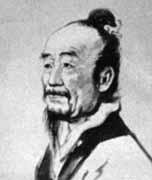
Liu Hui Calculates π Using Exhaustion
Chinese mathematician Liu Hui improves π calculation by inscribing regular polygons in a circle, demonstrating early limit concepts. #mathematics #china
Liu Hui Calculates π Using Exhaustion By Unknown - "Liu Hui (220 - 280) - Biography - MacTutor History of Mathematics" https://mathshistory.st-andrews.ac.uk/Biographies/Liu_Hui/, CC BY-SA 4.0, https://commons.wikimedia.org/w/index.php?curid=130481910
480 CE
Zu Chongzhi Refines π Approximation
Zu Chongzhi calculates π to between 3.1415926 and 3.1415927 using his father's algorithm, showcasing advanced approximation methods. #mathematics #china
Zu Chongzhi Refines π Approximation By 三猎 - Own work, CC BY-SA 4.0, https://commons.wikimedia.org/w/index.php?curid=54922069
499 CE
Aryabhata Writes the Aryabhatiya
Indian mathematician Aryabhata includes sine tables and a method for finite differences, anticipating derivative concepts. #mathematics #india
Aryabhata Writes the Aryabhatiya By Cpjha13 - Own work, CC BY-SA 4.0, https://commons.wikimedia.org/w/index.php?curid=49883192
1000 CE
Alhazen Solves Summation of Cubes
Ibn al-Haytham (Alhazen) uses integration to find the volume of a paraboloid, deriving a formula for the sum of fourth powers. #mathematics #islamic
Alhazen Solves Summation of Cubes By Adolph Boÿ, engraved by Jeremias Falck. Used as the frontispiece to Johannes Hevelius, Selenographia, 1647 - https://www.loc.gov/resource/rbctos.2017rosen1321/?sp=9&r=0.059,0.617,0.327,0.182,0, Public domain, https://commons.wikimedia.org/w/index.php?curid=165125519
1150 CE
Bhaskara II Discusses Differential Calculus
Bhaskara II introduces ideas related to differential calculus, including a derivative-like concept of instantaneous motion, in his Siddhanta Shiromani. #mathematics #india
Bhaskara II Discusses Differential Calculus By Unknown author - Own work, Public domain, https://commons.wikimedia.org/w/index.php?curid=150275955
1400 CE
Madhava Discovers Infinite Series for Arctan
Madhava of Sangamagrama, part of the Kerala school, discovers the infinite series expansion for arctan, a precursor to Taylor series. #mathematics #india
1500 CE
Kerala School Develops Power Series for Sine and Cosine
The Kerala school of astronomy and mathematics discovers power series expansions for sine and cosine, predating European work by centuries. #mathematics #india
Kerala School Develops Power Series for Sine and Cosine By ChandlerMinh - Own work, CC BY-SA 4.0, https://commons.wikimedia.org/w/index.php?curid=92927231
1635 CE
Cavalieri Introduces Method of Indivisibles
Bonaventura Cavalieri publishes Geometria indivisibilibus continuorum, a key step toward integral calculus using indivisibles. #mathematics #europe
Cavalieri Introduces Method of Indivisibles By Unknown author - Trattato della sfera e prattiche per vso di essa, Roma, 1682, Public domain, https://commons.wikimedia.org/w/index.php?curid=8546341
1637 CE
Descartes Publishes La Géométrie
René Descartes bridges algebra and geometry, enabling analytical treatment of curves essential for calculus. #mathematics #france
Descartes Publishes La Géométrie By Original uploader was User:Caton at [1] - Originally from fr.wikipedia; description page is/was here., Public domain, https://commons.wikimedia.org/w/index.php?curid=1379032
1638 CE
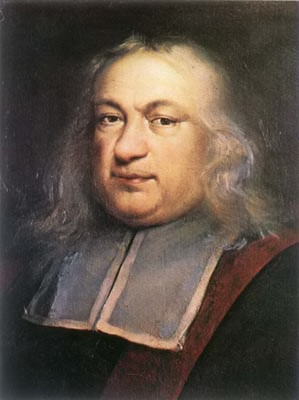
Fermat Uses Adequality for Maxima and Minima
Pierre de Fermat develops a method of adequality to find tangents and extrema, an early form of differentiation. #mathematics #france
Fermat Uses Adequality for Maxima and Minima By Unknown author - https://web.archive.org/web/20191028044928/http://www-groups.dcs.st-and.ac.uk/~history/PictDisplay/Fermat.html, Public domain, https://commons.wikimedia.org/w/index.php?curid=36804
1643 CE
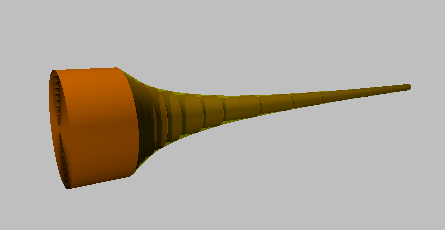
Torricelli Discovers Gabriel's Horn
Evangelista Torricelli shows that an infinite area can generate a finite volume, challenging intuition about infinite processes. #mathematics #italy
Torricelli Discovers Gabriel's Horn By HB - Own work, CC BY-SA 3.0, https://commons.wikimedia.org/w/index.php?curid=6940677
1659 CE
Huygens Solves Cycloid Problems
Christiaan Huygens uses evolution of curves to design the cycloidal pendulum, applying calculus ideas before formalization. #mathematics #dutch
Huygens Solves Cycloid Problems By Caspar Netscher - http://ressources2.techno.free.fr/informatique/sites/inventions/inventions.html, Public domain, https://commons.wikimedia.org/w/index.php?curid=44047
1665 CE
Newton Develops Fluxions
Isaac Newton develops fluxional calculus to handle rates of change and areas, laying the foundation for differential and integral calculus. #mathematics #england
Newton Develops Fluxions By Cham at French Wikipedia - Transferred from fr.wikipedia to Commons by Bloody-libu using CommonsHelper., Public domain, https://commons.wikimedia.org/w/index.php?curid=17998452
1680 CE
Seki Takakazu Discovers Calculus in Japan
Japanese mathematician Seki Takakazu independently develops calculus concepts including definite integrals and a form of Taylor series. #mathematics #japan
Seki Takakazu Discovers Calculus in Japan By upload by AMorozov - Gakken, Public domain, https://commons.wikimedia.org/w/index.php?curid=710154
1684 CE
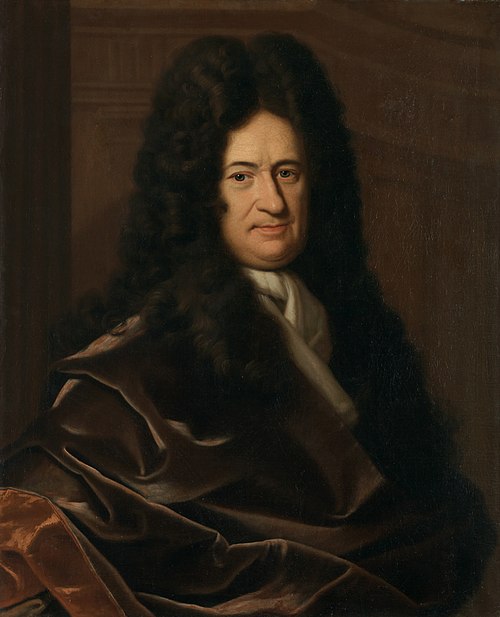
Leibniz Publishes First Calculus Paper
Gottfried Wilhelm Leibniz publishes Nova Methodus pro Maximis et Minimis, introducing the notation and rules of differential calculus. #mathematics #germany
Leibniz Publishes First Calculus Paper By Christoph Bernhard Francke - Herzog Anton Ulrich-Museum, online, Public domain, https://commons.wikimedia.org/w/index.php?curid=53159699
1687 CE
Newton Publishes Principia Mathematica
Newton's Philosophiæ Naturalis Principia Mathematica uses calculus to describe laws of motion and universal gravitation, revolutionizing physics. #physics #mathematics
Newton Publishes Principia Mathematica By The original uploader was Zhaladshar at English Wikisource. - Transferred from en.wikisource to Commons. (previous image from another copy) Internet Archive (current image from the Bern Dibner copy), Public domain, https://commons.wikimedia.org/w/index.php?curid=2681838
1696 CE
Bernoulli Solves the Brachistochrone Problem
Johann Bernoulli poses and solves the brachistochrone problem, establishing the calculus of variations. #mathematics #switzerland
Bernoulli Solves the Brachistochrone Problem By Mkwadee - Own work, CC BY-SA 4.0, https://commons.wikimedia.org/w/index.php?curid=148684213
1747 CE
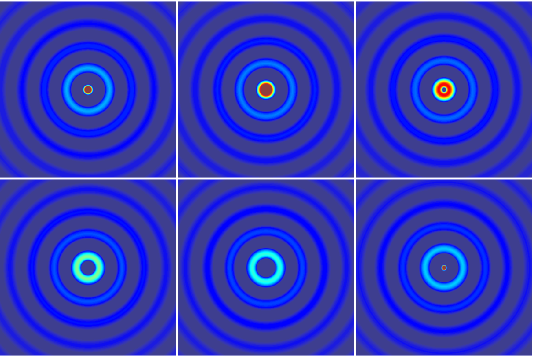
d'Alembert Derives the Wave Equation
Jean le Rond d'Alembert formulates the one-dimensional wave equation, pioneering partial differential equations. #mathematics #france
d'Alembert Derives the Wave Equation By Oleg Alexandrov - self-made with MATLAB, Public domain, https://commons.wikimedia.org/w/index.php?curid=3036844
1748 CE
Euler Publishes Introductio in Analysin Infinitorum
Leonhard Euler systematizes calculus and introduces many modern notations, including the function concept and infinite series. #mathematics #switzerland
Euler Publishes Introductio in Analysin Infinitorum By Cronholm144 at English Wikipedia - Transferred from en.wikipedia to Commons., CC BY-SA 3.0, https://commons.wikimedia.org/w/index.php?curid=3128774
1760 CE
Lagrange Begins Calculus of Variations
Joseph-Louis Lagrange develops the calculus of variations, providing a general method for optimization problems. #mathematics #italy
1768 CE
Euler Develops the Euler Method for ODEs
Leonhard Euler introduces a simple numerical method for solving ordinary differential equations, foundational for computational calculus. #mathematics #switzerland
Euler Develops the Euler Method for ODEs By Unknown author, Public domain, https://commons.wikimedia.org/w/index.php?curid=2143753
1813 CE
Gauss Contributes to Curvature and Integration
Carl Friedrich Gauss publishes Disquisitiones generales circa superficies curvas, introducing differential geometry and the Gauss-Bonnet theorem. #mathematics #germany
Gauss Contributes to Curvature and Integration By Wladik Derevianko - Own work, Public domain, https://commons.wikimedia.org/w/index.php?curid=9466195
1821 CE
Cauchy Rigorizes Calculus with Limits
Augustin-Louis Cauchy publishes Cours d'Analyse, defining limits, continuity, and derivatives with epsilon-delta rigor. #mathematics #france
Cauchy Rigorizes Calculus with Limits By Augustin Louis Cauchy - screenshot of https://archive.org/details/bub_gb_OlxT3B6EjykC/page/n5/mode/2up, CC0, https://commons.wikimedia.org/w/index.php?curid=94855343
1822 CE
Fourier Publishes the Analytic Theory of Heat
Joseph Fourier introduces Fourier series and the heat equation, using calculus to model heat diffusion. #mathematics #physics
1828 CE
Green's Theorem Established
George Green publishes An Essay on the Application of Mathematical Analysis to the Theories of Electricity and Magnetism, containing Green's theorem. #mathematics #england
1832 CE
Liouville Pioneers Fractional Calculus
Joseph Liouville publishes early work on fractional derivatives, extending calculus to non-integer orders. #mathematics #france
1854 CE
Stokes' Theorem Formulated
George Gabriel Stokes states a theorem relating surface integrals to line integrals, fundamental in vector calculus. #mathematics #england
Stokes' Theorem Formulated By Cronholm144 - Own work, CC BY-SA 3.0, https://commons.wikimedia.org/w/index.php?curid=2209453
1854 CE
Riemann Defines the Riemann Integral
Bernhard Riemann formalizes the definite integral as a limit of sums, providing a rigorous foundation for integration. #mathematics #germany
Riemann Defines the Riemann Integral By Brad219 - Own work created using Inkscape 1.3. Redrawn from original PNG source authored by KSmrq, CC0, https://commons.wikimedia.org/w/index.php?curid=150414772
1872 CE
Weierstrass Presents Continuous but Nowhere Differentiable Function
Karl Weierstrass shocks the mathematical community by demonstrating a function that is continuous everywhere but differentiable nowhere. #mathematics #germany
Weierstrass Presents Continuous but Nowhere Differentiable Function By Eeyore22 - Own work, Public domain, https://commons.wikimedia.org/w/index.php?curid=5075959
1901 CE
Runge-Kutta Method Published
Carl Runge and Martin Kutta develop higher-order numerical integration methods for differential equations, widely used in applied calculus. #mathematics #germany
Runge-Kutta Method Published By png image Svchb; svg image tobi; English translation by Profywld - English translation of File:Runge-kutta.svg (in German). R code available at the German image's description page., CC BY-SA 3.0, https://commons.wikimedia.org/w/index.php?curid=141422714
1902 CE
Lebesgue Introduces Measure Theory and Integral
Henri Lebesgue develops a new integral based on measure theory, vastly expanding the class of integrable functions. #mathematics #france
Lebesgue Introduces Measure Theory and Integral By ~~helix84 15:43, 27 November 2006 (UTC) - own work, based on en:Image:Integral-area-under-curve.png, Public domain, https://commons.wikimedia.org/w/index.php?curid=1409775
1915 CE
Einstein Uses Tensor Calculus for General Relativity
Albert Einstein employs Riemannian geometry and tensor calculus to formulate general relativity, linking calculus to spacetime curvature. #physics #mathematics
Einstein Uses Tensor Calculus for General Relativity By Simulating eXtreme Spacetimes Lensing (SXS) - https://www.ligo.caltech.edu/video/ligo20160211v3 (video link); see also http://www.black-holes.org/gw150914, CC BY-SA 4.0, https://commons.wikimedia.org/w/index.php?curid=46994894
1925 CE
Lotka-Volterra Equations Introduced
Alfred Lotka and Vito Volterra model predator-prey dynamics using differential equations, applying calculus to ecology. #mathematics #biology
1940 CE
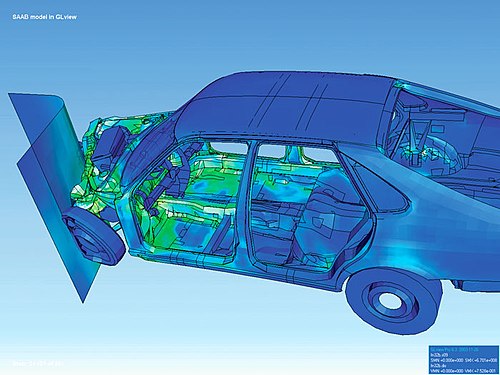
Finite Element Method Emerges
Richard Courant introduces the finite element method for solving boundary value problems, a major numerical calculus tool. #mathematics #usa
Finite Element Method Emerges By Unknown author, Public domain, https://commons.wikimedia.org/w/index.php?curid=641911
1944 CE
Itō Develops Stochastic Calculus
Kiyoshi Itō publishes the theory of stochastic differential equations, founding stochastic calculus for random processes. #mathematics #japan
Itō Develops Stochastic Calculus By Shiyu Ji - Own work, CC BY-SA 4.0, https://commons.wikimedia.org/w/index.php?curid=53067749
1960 CE
Robinson Creates Non-Standard Analysis
Abraham Robinson uses mathematical logic to develop non-standard analysis, reintroducing infinitesimals in a rigorous framework. #mathematics #usa
Robinson Creates Non-Standard Analysis By Christoph Bernhard Francke - Herzog Anton Ulrich-Museum Braunschweig, Public domain, https://commons.wikimedia.org/w/index.php?curid=57268659
1965 CE
Spivak Publishes Calculus on Manifolds
Michael Spivak's textbook reformulates calculus in terms of differential forms on manifolds, modernizing advanced calculus. #mathematics #usa )
1975 CE
Mandelbrot Publishes Fractal Geometry
Benoit Mandelbrot introduces fractal calculus concepts like fractional dimensions, influencing calculus on irregular sets. #mathematics #france
Mandelbrot Publishes Fractal Geometry By Steve Jurvetson - https://www.flickr.com/photos/jurvetson/4770047266/, CC BY 2.0, https://commons.wikimedia.org/w/index.php?curid=155438846