Differential & Integral Calculus: Global Cross-Cultural Perspectives
Encyclopedia/1. The Cosmos & The Natural World/1. Mathematics & Formal Systems/03. Calculus & Mathematical Analysis • Curated by Admin Timeline.sg
Differential and integral calculus, developed over millennia by diverse civilizations, encompasses the study of continuous change. This timeline highlights cross-cultural contributions from ancient Babylonian and Greek methods to Indian, Islamic, Chinese, and European innovations, culminating in modern rigorous foundations and expansions.
Chronological Storyline (36 Milestones)
450 BCE
Antiphon's Method of Exhaustion
The Greek philosopher Antiphon proposed the method of exhaustion, an early precursor to integration by inscribing polygons in a circle to approximate its area. This idea influenced later rigorous treatments of limits and area. #history #math
350 BCE
Eudoxus Formalizes Exhaustion
Eudoxus of Cnidus developed a rigorous theory of proportion and the method of exhaustion, providing a foundation for calculating areas and volumes by exhaustion. His work was later used by Archimedes. #history #math
240 BCE
Archimedes Computes Area of Parabola
Archimedes used the method of exhaustion to find the area of a parabolic segment, effectively calculating an integral. He also derived formulas for volumes of spheres, cones, and cylinders. #history #math
Archimedes Computes Area of Parabola By Domenico Fetti - http://archimedes2.mpiwg-berlin.mpg.de/archimedes_templates/popup.htm, Public domain, https://commons.wikimedia.org/w/index.php?curid=146592
263 CE
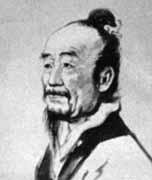
Liu Hui's Circle Exhaustion
Chinese mathematician Liu Hui computed the area of a circle by inscribing polygons with many sides, achieving a pi approximation of 3.1416. His method anticipated integral calculus. #history #math
Liu Hui's Circle Exhaustion By Unknown - "Liu Hui (220 - 280) - Biography - MacTutor History of Mathematics" https://mathshistory.st-andrews.ac.uk/Biographies/Liu_Hui/, CC BY-SA 4.0, https://commons.wikimedia.org/w/index.php?curid=130481910
480 CE
Zu Chongzhi Calculates Pi
Chinese scientist Zu Chongzhi computed pi to between 3.1415926 and 3.1415927 using a method similar to exhaustion, a record for centuries. He also derived the volume of a sphere. #history #math
Zu Chongzhi Calculates Pi By 三猎 - Own work, CC BY-SA 4.0, https://commons.wikimedia.org/w/index.php?curid=54922069
499 CE
Aryabhata's Summation of Series
Indian mathematician Aryabhata provided summation formulas for arithmetic and geometric series, and an early form of indefinite integration. His work influenced later Islamic and European mathematics. #history #math
Aryabhata's Summation of Series By Cpjha13 - Own work, CC BY-SA 4.0, https://commons.wikimedia.org/w/index.php?curid=49883192
900 CE
Thābit ibn Qurra's Volume of Paraboloid
Islamic mathematician Thābit ibn Qurra computed volumes of paraboloids and other solids using integration-like methods. He also extended the method of exhaustion. #history #math
1000 CE
Ibn al-Haytham's Integral of Powers
Alhazen (Ibn al-Haytham) derived formulas for sums of integral powers, enabling volume calculations of solids obtained by rotating curves. His work anticipated the disconnection between integration and summation. #history #math
Ibn al-Haytham's Integral of Powers By Adolph Boÿ, engraved by Jeremias Falck. Used as the frontispiece to Johannes Hevelius, Selenographia, 1647 - https://www.loc.gov/resource/rbctos.2017rosen1321/?sp=9&r=0.059,0.617,0.327,0.182,0, Public domain, https://commons.wikimedia.org/w/index.php?curid=165125519
1000 CE
al-Karaji's Algebraic Summation of Cubes
Islamic mathematician al-Karaji developed algebraic methods to sum cubes and other powers, using a form of induction. His work built a bridge between algebra and integral calculus. #history #math
al-Karaji's Algebraic Summation of Cubes By en:Al-Karaji - Schoenberg Center for Electronic Text and Imaging, University of Pennsylvania, Public domain, https://commons.wikimedia.org/w/index.php?curid=46916790
1150 CE
Bhāskara II's Differential Calculus
Indian mathematician Bhāskara II introduced the concept of instantaneous velocity, anticipating the derivative. He also made contributions to integral calculus and infinite series. #history #math
Bhāskara II's Differential Calculus By Unknown author - Own work, Public domain, https://commons.wikimedia.org/w/index.php?curid=150275955
1200 CE
Shen Kuo's Interpolation
Chinese polymath Shen Kuo developed higher-order interpolation formulas for astronomical calculations, an early step toward calculus concepts. #history #math
Shen Kuo's Interpolation By Hans A. Rosbach - Own work, CC BY-SA 3.0, https://commons.wikimedia.org/w/index.php?curid=89508454
1300 CE
Oresme's Graphical Analysis of Motion
French mathematician Nicole Oresme used graphical methods to represent velocity and distance, laying groundwork for the relationship between functions and areas under curves. #history #math
Oresme's Graphical Analysis of Motion By Nicole Oresme / Aristotle - Nicole Oresme (1400-1420) Traité de la sphère; Aristote, De caelo et de mundo, traduction française par Nicole Oresme, p. 1r OCLC: 1177977521., Public domain, https://commons.wikimedia.org/w/index.php?curid=436922
1400 CE
Madhava's Power Series for Sine
Indian mathematician Madhava of Sangamagrama discovered infinite series expansions for sine, cosine, and arctangent, including the Leibniz series for π, a key contribution to calculus. #history #math
1585 CE
Stevin's Decimal Fractions and Center of Gravity
Flemish mathematician Simon Stevin introduced decimal fractions and computed centers of gravity using integration-like techniques, improving computational calculus. #history #math
Stevin's Decimal Fractions and Center of Gravity By Unknown author - Digitool Leiden University Library, http://digitalcollections.universiteitleiden.nl, Public domain, https://commons.wikimedia.org/w/index.php?curid=72690
1635 CE
Cavalieri's Method of Indivisibles
Bonaventura Cavalieri introduced the method of indivisibles, treating areas and volumes as sums of infinite lines or slices, a precursor to definite integration. #history #math
Cavalieri's Method of Indivisibles By Christopher Grattoni - demonstrations.wolfram.com, CC BY 4.0, https://commons.wikimedia.org/w/index.php?curid=145384849
1637 CE
Descartes' Analytic Geometry
René Descartes published La Géométrie, joining algebra and geometry, enabling the algebraic treatment of curves and eventually calculus. #history #math
Descartes' Analytic Geometry By Original uploader was User:Caton at [1] - Originally from fr.wikipedia; description page is/was here., Public domain, https://commons.wikimedia.org/w/index.php?curid=1379032
1655 CE
Wallis's Arithmetica Infinitorum
John Wallis's book introduced the concept of 'infinite' as a systematic tool, computed areas under curves, and expressed π as an infinite product. #history #math
Wallis's Arithmetica Infinitorum By After Godfrey Kneller - one or more third parties have made copyright claims against Wikimedia Commons in relation to the work from which this is sourced or a purely mechanical reproduction thereof. This may be due to recognition of the "sweat of the brow" doctrine, allowing works to be eligible for protection through skill and labour, and not purely by originality as is the case in the United States (where this website is hosted). These claims may or may not be valid in all jurisdictions. As such, use of this image in the jurisdiction of the claimant or other countries may be regarded as copyright infringement. Please see Commons:When to use the PD-Art tag for more information., Public domain, https://commons.wikimedia.org/w/index.php?curid=6365975
1665 CE
Newton's Fluxions
Isaac Newton developed his method of fluxions (derivatives) during his 'Annus Mirabilis', laying the foundation of differential calculus. He connected derivatives with areas (integration). #history #math
Newton's Fluxions By Issac Newton - This image has been extracted from another file, Public domain, https://commons.wikimedia.org/w/index.php?curid=94991399
1670 CE
Barrow's Geometrical Proof of the Fundamental Theorem
Isaac Barrow proved the inverse relationship between differentiation and integration geometrically, a key step toward the Fundamental Theorem of Calculus. #history #math
Barrow's Geometrical Proof of the Fundamental Theorem By Mary Beale - https://artuk.org/discover/artworks/isaac-barrow-16301677-master-16731677-mathematician-and-theologian-134861, Public domain, https://commons.wikimedia.org/w/index.php?curid=60043167
1683 CE
Seki Takakazu's Discovery of Calculus
Japanese mathematician Seki Takakazu independently developed calculus-like methods, including a form of the derivative and integration, and solved cubic equations. #history #math
Seki Takakazu's Discovery of Calculus By upload by AMorozov - Gakken, Public domain, https://commons.wikimedia.org/w/index.php?curid=710154
1684 CE
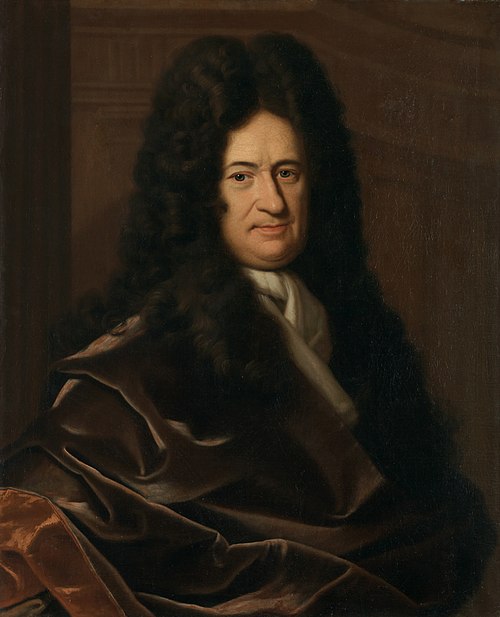
Leibniz Publishes Differential Calculus
Gottfried Wilhelm Leibniz published his first paper on differential calculus, introducing the notation dy/dx and the rules for differentiation, sparking a priority dispute with Newton. #history #math
Leibniz Publishes Differential Calculus By Christoph Bernhard Francke - Herzog Anton Ulrich-Museum, online, Public domain, https://commons.wikimedia.org/w/index.php?curid=53159699
1696 CE
Bernoulli's Brachistochrone Problem
Johann Bernoulli solved the brachistochrone problem, challenging contemporaries and solidifying the calculus of variations. This problem helped establish the power of the new calculus. #history #math
Bernoulli's Brachistochrone Problem By Mkwadee - Own work, CC BY-SA 4.0, https://commons.wikimedia.org/w/index.php?curid=148684213
1734 CE
Berkeley's The Analyst
Bishop George Berkeley critiqued the logical foundations of calculus, questioning the concept of infinitesimals. His criticism spurred efforts to rigorize calculus. #history #math
Berkeley's The Analyst By George Berkeley - https://archive.org/details/theanalystoradis00berkuoft/page/n3/mode/2up, Public domain, https://commons.wikimedia.org/w/index.php?curid=181022569
1748 CE
Euler's Introductio in Analysin Infinitorum
Leonhard Euler published his Introductio, systematizing analysis, introducing functions, and developing infinite series. His work became a standard calculus text. #history #math
Euler's Introductio in Analysin Infinitorum By Cronholm144 at English Wikipedia - Transferred from en.wikipedia to Commons., CC BY-SA 3.0, https://commons.wikimedia.org/w/index.php?curid=3128774
1755 CE
Euler's Institutiones Calculi Differentialis
Euler published a comprehensive treatise on differential calculus, consolidating notation and results, including rules for differentiation and applications. #history #math
Euler's Institutiones Calculi Differentialis By Jakob Emanuel Handmann - This file was derived from: Leonhard Euler.jpg Edited by: Bammesk Original source: Kunstmuseum Basel, Public domain, https://commons.wikimedia.org/w/index.php?curid=113056351
1772 CE
Lagrange's Theory of Analytic Functions
Joseph-Louis Lagrange developed a purely algebraic approach to calculus using power series, attempting to avoid infinitesimals. His work influenced later rigor. #history #math
Lagrange's Theory of Analytic Functions By Unknown author - File:Joseph_Louis_Lagrange.jpg, CC0, https://commons.wikimedia.org/w/index.php?curid=155608232
1821 CE
Cauchy's Cours d'Analyse
Augustin-Louis Cauchy published his Cours d'Analyse, defining limits, continuity, and the derivative in terms of epsilon-delta, greatly improving the rigor of calculus. #history #math
Cauchy's Cours d'Analyse By Augustin Louis Cauchy - screenshot of https://archive.org/details/bub_gb_OlxT3B6EjykC/page/n5/mode/2up, CC0, https://commons.wikimedia.org/w/index.php?curid=94855343
1823 CE
Cauchy Defines the Definite Integral
Cauchy established the first rigorous definition of the definite integral using sums, developing a theory that circumvented problematic infinitesimals. #history #math
Cauchy Defines the Definite Integral By KSmrq - self-made using text editor, CC BY-SA 3.0, https://commons.wikimedia.org/w/index.php?curid=2268147
1854 CE
Riemann's Integral Definition
Bernhard Riemann formulated the modern definition of the integral using partitions and sums, extending integrability to a wider class of functions. #history #math
Riemann's Integral Definition By Brad219 - Own work created using Inkscape 1.3. Redrawn from original PNG source authored by KSmrq, CC0, https://commons.wikimedia.org/w/index.php?curid=150414772
1872 CE
Weierstrass's Nowhere Differentiable Function
Karl Weierstrass presented a continuous function that is nowhere differentiable, challenging intuition and showing the need for rigor in analysis. #history #math
Weierstrass's Nowhere Differentiable Function By Eeyore22 - Own work, Public domain, https://commons.wikimedia.org/w/index.php?curid=5075959
1902 CE
Lebesgue's Measure and Integral
Henri Lebesgue developed measure theory and the Lebesgue integral, generalizing integration to a broader class of functions and establishing modern analysis. #history #math
Lebesgue's Measure and Integral By ~~helix84 15:43, 27 November 2006 (UTC) - own work, based on en:Image:Integral-area-under-curve.png, Public domain, https://commons.wikimedia.org/w/index.php?curid=1409775
1919 CE
Fréchet's Calculus on Metric Spaces
Maurice Fréchet extended calculus to abstract metric spaces, introducing the concept of differentials in general settings, a foundational step for functional analysis. #history #math
Fréchet's Calculus on Metric Spaces By Unknown author - MacTutor, Public domain, https://commons.wikimedia.org/w/index.php?curid=1980574
1930 CE
Sobolev Spaces and Weak Derivatives
Sergei Sobolev introduced Sobolev spaces, allowing differentiation in a weak sense, crucial for solving partial differential equations, and forming a cornerstone of modern calculus. #history #math
1960 CE
Robinson's Non-Standard Analysis
Abraham Robinson developed non-standard analysis, providing a rigorous foundation for infinitesimals in the calculus, reviving Leibniz's original intuition. #history #math
Robinson's Non-Standard Analysis By Christoph Bernhard Francke - Herzog Anton Ulrich-Museum Braunschweig, Public domain, https://commons.wikimedia.org/w/index.php?curid=57268659
1970 CE
Computer Algebra Systems for Calculus
Early computer algebra systems like Macsyma and later Mathematica and Maple began performing symbolic differentiation and integration, transforming calculus education and research. #history #math
2000 CE
Calculus Reform Movement
Debates over calculus instruction led to reforms emphasizing conceptual understanding, multipronged approaches (graphical, numerical, analytical), and active learning. #history #math