← Open Interactive Timeline Board

Differential & Integral Calculus: Foundational Epochs & Key Milestones

Encyclopedia/1. The Cosmos & The Natural World/1. Mathematics & Formal Systems/03. Calculus & Mathematical Analysis  •  Curated by Admin Timeline.sg

Differential and integral calculus evolved from ancient geometric methods through independent developments in India, the Islamic world, and Europe, culminating in rigorous foundations and modern extensions. Key milestones include Archimedes' exhaustion, Madhava's series, Newton and Leibniz's breakthroughs, and Lebesgue's integration theory.

Chronological Storyline (44 Milestones)

300 BCE

Eudoxus of Cnidus Develops Method of Exhaustion

Eudoxus formalizes the method of exhaustion for computing areas and volumes by inscribing polygons, laying a geometric foundation for integral calculus. #math #history

250 BCE

Archimedes Uses Infinitesimals

Archimedes computes the area under a parabola and the volume of a sphere using infinitesimal techniques, anticipating integral calculus. #math #history

Archimedes Uses Infinitesimals
By Domenico Fetti - http://archimedes2.mpiwg-berlin.mpg.de/archimedes_templates/popup.htm, Public domain, https://commons.wikimedia.org/w/index.php?curid=146592
263 CE

Liu Hui Improves π Approximation

Chinese mathematician Liu Hui develops a recursive polygon algorithm to approximate π, demonstrating early limit concepts. #math #history
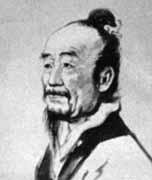
Liu Hui Improves π Approximation
By Unknown - "Liu Hui (220 - 280) - Biography - MacTutor History of Mathematics" https://mathshistory.st-andrews.ac.uk/Biographies/Liu_Hui/, CC BY-SA 4.0, https://commons.wikimedia.org/w/index.php?curid=130481910
500 CE

Zu Chongzhi Calculates π Precisely

Zu Chongzhi computes π between 3.1415926 and 3.1415927 using polygon methods, a record for centuries. #math #history

Zu Chongzhi Calculates π Precisely
By 三猎 - Own work, CC BY-SA 4.0, https://commons.wikimedia.org/w/index.php?curid=54922069
965 CE

Alhazen's Problem on Volume

Ibn al-Haytham (Alhazen) attempts to find the volume of a paraboloid using a method analogous to integration, influencing later European calculus. #math #history

Alhazen's Problem on Volume
By Adolph Boÿ, engraved by Jeremias Falck. Used as the frontispiece to Johannes Hevelius, Selenographia, 1647 - https://www.loc.gov/resource/rbctos.2017rosen1321/?sp=9&r=0.059,0.617,0.327,0.182,0, Public domain, https://commons.wikimedia.org/w/index.php?curid=165125519
1070 CE

Omar Khayyam's Geometric Calculus

Omar Khayyam develops algebraic methods for solving cubic equations and uses geometric techniques resembling integration to find areas. #math #history

Omar Khayyam's Geometric Calculus
By Alireza Javaheri - https://web.archive.org/web/20161024154356/http://www.panoramio.com/photo/85093358, CC BY 3.0, https://commons.wikimedia.org/w/index.php?curid=55909539
1400 CE

Madhava's Infinite Series for Trig Functions

Madhava of Sangamagrama discovers power series expansions for sine, cosine, and arctangent, founding the Kerala school of calculus. #math #history

1500 CE

Kerala School Synthesizes Calculus Ideas

Indian mathematicians of the Kerala school, including Nilakantha Somayaji, develop calculus-like methods for series and integration, predating Newton and Leibniz. #math #history

Kerala School Synthesizes Calculus Ideas
By ChandlerMinh - Own work, CC BY-SA 4.0, https://commons.wikimedia.org/w/index.php?curid=92927231
1635 CE

Cavalieri's Principle of Indivisibles

Bonaventura Cavalieri publishes Geometria Indivisibilibus, introducing indivisibles to compute areas and volumes, a precursor to integral calculus. #math #history

Cavalieri's Principle of Indivisibles
By Christopher Grattoni - demonstrations.wolfram.com, CC BY 4.0, https://commons.wikimedia.org/w/index.php?curid=145384849
1637 CE

Descartes Links Algebra and Geometry

René Descartes' La Géométrie establishes analytic geometry, enabling algebraic treatment of curves and providing a foundation for calculus. #math #history

Descartes Links Algebra and Geometry
By Original uploader was User:Caton at [1] - Originally from fr.wikipedia; description page is/was here., Public domain, https://commons.wikimedia.org/w/index.php?curid=1379032
1655 CE

Fermat's Method of Finding Tangents

Pierre de Fermat develops a method for finding tangents to curves using a technique similar to differentiation, anticipating the derivative concept. #math #history

1666 CE

Newton's Fluxions and Fluents

Isaac Newton begins developing his calculus of fluxions (derivatives) and fluents (integrals), applying it to physics and motion. #math #history

1670 CE

Seki Takakazu's Similar Developments in Japan

Japanese mathematician Seki Takakazu independently develops calculus-like methods for solving problems in geometry and algebra, contributing to wasan tradition. #math #history

Seki Takakazu's Similar Developments in Japan
By upload by AMorozov - Gakken, Public domain, https://commons.wikimedia.org/w/index.php?curid=710154
1684 CE

Leibniz Publishes Differential Calculus

Gottfried Wilhelm Leibniz publishes 'Nova Methodus pro Maximis et Minimis', presenting differential calculus notation (dx, dy) and rules. #math #history

Leibniz Publishes Differential Calculus
By G. W. Leibniz - https://archive.org/details/s1id13206500/page/467/mode/1up, Public domain, https://commons.wikimedia.org/w/index.php?curid=140197496
1687 CE

Newton's Principia Mathematica

Isaac Newton's Philosophiæ Naturalis Principia Mathematica uses calculus concepts to describe universal gravitation and laws of motion, revolutionizing science. #math #history

Newton's Principia Mathematica
By The original uploader was Zhaladshar at English Wikisource. - Transferred from en.wikisource to Commons. (previous image from another copy) Internet Archive (current image from the Bern Dibner copy), Public domain, https://commons.wikimedia.org/w/index.php?curid=2681838
1696 CE

Bernoulli Family Contributions

Johann and Jacob Bernoulli extend calculus, solving the brachistochrone problem and developing the calculus of variations. #math #history

1696 CE

L'Hôpital's Rule Published

Guillaume de l'Hôpital publishes Analyse des Infiniment Petits, containing the rule for evaluating limits with indeterminate forms (attributed to Johann Bernoulli). #math #history

1715 CE

Brook Taylor Derives Taylor Series

Brook Taylor publishes Methodus Incrementorum Directa et Inversa, introducing the Taylor series expansion for functions. #math #history

Brook Taylor Derives Taylor Series
By IkamusumeFan - Own work, CC BY-SA 3.0, https://commons.wikimedia.org/w/index.php?curid=27865201
1734 CE

Euler's Notation for e and π

Leonhard Euler introduces the notation e for Euler's number and popularizes π, standardizing symbols crucial for calculus. #math #history

1748 CE

Euler's Introductio in analysin infinitorum

Leonhard Euler's seminal textbook systematically treats functions, series, and calculus, establishing notation and concepts like e and π. #math #history

Euler's Introductio in analysin infinitorum
By Cronholm144 at English Wikipedia - Transferred from en.wikipedia to Commons., CC BY-SA 3.0, https://commons.wikimedia.org/w/index.php?curid=3128774
1760 CE

Lagrange's Calculus of Variations

Joseph-Louis Lagrange develops the calculus of variations, introducing the Euler-Lagrange equation and variational methods. #math #history

1781 CE

Laplace's Mécanique Céleste

Pierre-Simon Laplace applies calculus to celestial mechanics, developing the Laplace equation and potential theory. #math #history

1797 CE

Lagrange's Theory of Functions

Lagrange publishes Théorie des fonctions analytiques, attempting to base calculus on algebraic foundations without infinitesimals. #math #history

1821 CE

Cauchy's Cours d'analyse

Augustin-Louis Cauchy formalizes limits, continuity, and convergence in Cours d'analyse, providing a rigorous foundation for calculus. #math #history

Cauchy's Cours d'analyse
By Augustin Louis Cauchy - screenshot of https://archive.org/details/bub_gb_OlxT3B6EjykC/page/n5/mode/2up, CC0, https://commons.wikimedia.org/w/index.php?curid=94855343
1822 CE

Fourier's Théorie analytique de la chaleur

Joseph Fourier publishes his work on heat conduction, introducing Fourier series and expansion of functions in trigonometric series. #math #history

1823 CE

Cauchy's Definition of the Definite Integral

Cauchy defines the definite integral as a limit of sums, providing a rigorous foundation for integration. #math #history

Cauchy's Definition of the Definite Integral
By KSmrq - self-made using text editor, CC BY-SA 3.0, https://commons.wikimedia.org/w/index.php?curid=2268147
1850 CE

Riemann's Theory of Complex Functions

Bernhard Riemann's work on complex analysis, including the Cauchy-Riemann equations, connects complex differentiation to calculus. #math #history

Riemann's Theory of Complex Functions
By Cauchy-Riemann.png: Keenan Crane vector version: VectorVoyager - This file was derived from: Cauchy-Riemann.png:, CC BY-SA 4.0, https://commons.wikimedia.org/w/index.php?curid=127954258
1854 CE

Riemann's Definition of the Integral

Bernhard Riemann presents the Riemann integral definition in his habilitation thesis, formalizing integration of arbitrary functions. #math #history

Riemann's Definition of the Integral
By Brad219 - Own work created using Inkscape 1.3. Redrawn from original PNG source authored by KSmrq, CC0, https://commons.wikimedia.org/w/index.php?curid=150414772
1861 CE

Weierstrass Epsilon-Delta Definition of Limit

Karl Weierstrass provides the modern ε-δ definition of limits, rigorously establishing the foundation of differential calculus. #math #history

1872 CE

Weierstrass Constructs Continuous Everywhere, Differentiable Nowhere Function

Weierstrass presents an example of a function that is continuous but not differentiable at any point, expanding understanding of calculus. #math #history

Weierstrass Constructs Continuous Everywhere, Differentiable Nowhere Function
By Eeyore22 - Own work, Public domain, https://commons.wikimedia.org/w/index.php?curid=5075959
1874 CE

Cantor's Set Theory and Transfinite Numbers

Georg Cantor develops set theory, which later influences measure theory and integration, including the concept of cardinality. #math #history
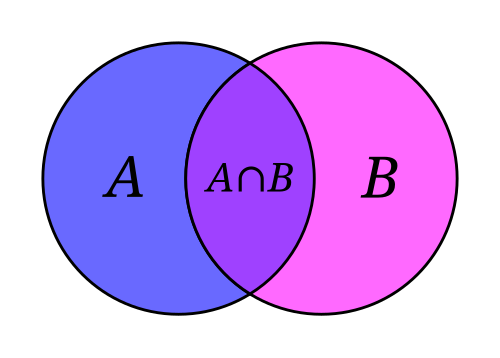
Cantor's Set Theory and Transfinite Numbers
By Cepheus - Own work, Public domain, https://commons.wikimedia.org/w/index.php?curid=1234767
1880 CE

Frege's Foundations of Arithmetic

Gottlob Frege's Begriffsschrift introduces logical foundations for mathematics, influencing later rigor in analysis. #math #history

Frege's Foundations of Arithmetic
By Unknown author - digitized version at https://gallica.bnf.fr/ark:/12148/bpt6k65658c, Public domain, https://commons.wikimedia.org/w/index.php?curid=2669038
1887 CE

Poincaré's Qualitative Theory of Differential Equations

Henri Poincaré introduces the qualitative theory of differential equations, using topology to study their behavior. #math #history

1902 CE

Lebesgue Integration Theory

Henri Lebesgue introduces measure theory and the Lebesgue integral, generalizing Riemann integration and enabling wider integrability. #math #history

Lebesgue Integration Theory
By ~~helix84 15:43, 27 November 2006 (UTC) - own work, based on en:Image:Integral-area-under-curve.png, Public domain, https://commons.wikimedia.org/w/index.php?curid=1409775
1904 CE

Zermelo's Axiom of Choice and Set Theory

Ernst Zermelo's axiom of choice is debated, affecting the foundations of analysis and integration. #math #history
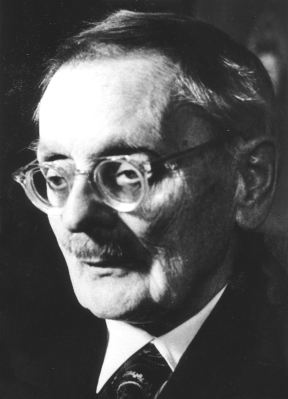
Zermelo's Axiom of Choice and Set Theory
By Konrad Jacobs - https://opc.mfo.de/detail?photo_id=8666, CC BY-SA 2.0 de, https://commons.wikimedia.org/w/index.php?curid=6092305
1918 CE

Wiener's Generalized Harmonic Analysis

Norbert Wiener develops generalized harmonic analysis, applying integration theory to stochastic processes and communication. #math #history
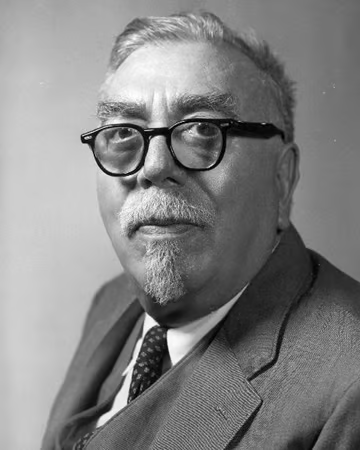
Wiener's Generalized Harmonic Analysis
By Garry Olsh - Own work, CC0, https://commons.wikimedia.org/w/index.php?curid=148383228
1930 CE

Distribution Theory by Laurent Schwartz

Laurent Schwartz develops distribution theory, extending the concept of derivative to generalized functions like the Dirac delta. #math #history )

1933 CE

Kolmogorov's Axiomatization of Probability

Andrey Kolmogorov publishes Foundations of the Theory of Probability, using measure theory to ground probability in calculus. #math #history

Kolmogorov's Axiomatization of Probability
By Ainali - Own work, CC BY-SA 3.0, https://commons.wikimedia.org/w/index.php?curid=3141713
1945 CE

Schwartz's Théorie des Distributions

Laurent Schwartz publishes Théorie des distributions, formalizing distribution theory for calculus and partial differential equations. #math #history

1960 CE

Robinson's Non-Standard Analysis

Abraham Robinson introduces non-standard analysis, rigorously reviving infinitesimals within a hyperreal number system. #math #history

Robinson's Non-Standard Analysis
By Christoph Bernhard Francke - Herzog Anton Ulrich-Museum Braunschweig, Public domain, https://commons.wikimedia.org/w/index.php?curid=57268659
1966 CE

Bishop's Constructive Analysis

Errett Bishop publishes Foundations of Constructive Analysis, offering a constructive approach to calculus without the law of excluded middle. #math #history

1970 CE

Non-Standard Analysis Refinements

Abraham Robinson's non-standard analysis gains traction, providing a rigorous framework for infinitesimals used in calculus. #math #history

1990 CE

Computer Algebra Systems and Calculus

Software like Mathematica and Maple enable symbolic differentiation and integration, revolutionizing calculus education and research. #math #history

2000 CE

Calculus Reform Movement

Educational initiatives emphasize conceptual understanding, technology use, and applications, reshaping calculus teaching. #math #history