Desalination & Clean Water Systems: Reverse Osmosis to Advanced Sanitation
Encyclopedia/2. Technology & The Built World/6. Agriculture, Food & Environmental Technology/02. Water & Environmental Control • Curated by Admin Timeline.sg
This timeline traces the evolution of desalination and advanced water purification from sand filtration and chlorination to modern reverse osmosis, NEWater recycling, and megascale SWRO plants, highlighting key innovations and global milestones from 1850 to present.
Chronological Storyline (37 Milestones)
1854 CE
John Snow's Cholera Investigation
John Snow traces a cholera outbreak to the Broad Street pump, demonstrating the link between water contamination and disease. This seminal epidemiological study catalyzes modern water sanitation. #history #publichealth
John Snow's Cholera Investigation By Unknown author - [1] Originally from en.wikipedia; description page is/was here., Public domain, https://commons.wikimedia.org/w/index.php?curid=403227
1855 CE
London Metropolitan Water Act
The UK Parliament passes the Metropolis Water Act, requiring London's water companies to filter water through slow sand filters. This legislation establishes mandatory water filtration for a major city. #sanitation #history
1865 CE
Louis Pasteur's Germ Theory
Louis Pasteur publishes his germ theory of disease, establishing that microorganisms cause illness. This foundational work drives the development of water disinfection and sterilization. #science #medicine
Louis Pasteur's Germ Theory By Unknown author, Copyrighted free use, https://commons.wikimedia.org/w/index.php?curid=197609
1892 CE
Hamburg Cholera Outbreak
A severe cholera outbreak in Hamburg, Germany, kills over 8,000 people due to unfiltered river water. The catastrophe spurs adoption of water filtration and disinfection worldwide. #history #publichealth
Feb 10, 1908 CE
First Municipal Water Chlorination
Jersey City, New Jersey, begins continuous chlorination of its water supply, the first large-scale municipal use of chlorine for disinfection. This marks a revolution in public health, drastically reducing waterborne diseases. #sanitation #publichealth
First Municipal Water Chlorination By Staff Sgt. Eric Summers - https://www.dvidshub.net/image/5421482/jtf-b-assess-educates-honduran-community, Public domain, https://commons.wikimedia.org/w/index.php?curid=79385802
1914 CE
US Drinking Water Standards
The U.S. Public Health Service sets the first federal standards for drinking water quality, regulating bacterial contaminants. These standards become a model for global water safety regulations. #water #policy
1925 CE
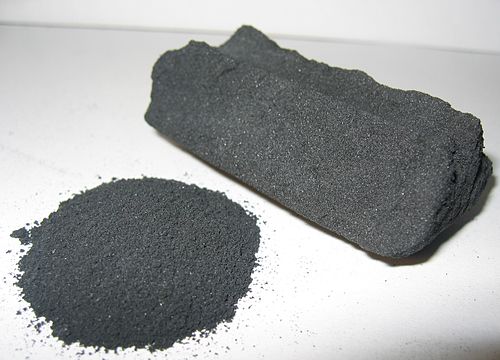
Activated Carbon for Water Treatment
Activated carbon is first used in water treatment plants to remove taste and odor compounds, enhancing palatability. This technology remains widely used for adsorption of organic contaminants. #technology #sanitation
Activated Carbon for Water Treatment By Ravedave (talk) - Own work, CC BY 2.5, https://commons.wikimedia.org/w/index.php?curid=1038326
1935 CE
Ion Exchange Water Softening
Ion exchange resins are commercially introduced for water softening, removing calcium and magnesium ions. This process becomes a standard method for household and industrial water treatment. #chemistry #innovation
Ion Exchange Water Softening By Bugman at English Wikipedia - Transferred from en.wikipedia to Commons by GcG., Public domain, https://commons.wikimedia.org/w/index.php?curid=3500663
1947 CE
US Office of Saline Water Established
The U.S. government creates the Office of Saline Water to fund desalination research, aiming to address water scarcity in arid regions. This initiative jumpstarts modern desalination technology. #policy #innovation
1957 CE
First Multistage Flash Desalination Plant
The first multistage flash (MSF) distillation plant is commissioned in Kuwait, using thermal energy to evaporate and condense seawater. MSF becomes the dominant desalination method in the Middle East. #engineering #water
1960 CE
Loeb-Sourirajan Reverse Osmosis Membrane
Sidney Loeb and Srinivasa Sourirajan invent the first asymmetric reverse osmosis (RO) membrane at UCLA, enabling practical seawater desalination at lower energy and pressure. This breakthrough revolutionizes water purification. #science #innovation
1965 CE
First Commercial RO Desalination Plant
The first commercial reverse osmosis desalination plant, with a capacity of 25,000 gallons per day, is installed in Coalinga, California. It proves RO viability for brackish water treatment. #water #technology
1966 CE
First Large MSF Plant in the Middle East
A large multistage flash desalination plant begins operation in Kuwait with a capacity of 4 million gallons per day, establishing MSF as the backbone of water supply in arid oil-exporting nations. #engineering #water
1970 CE
Yuma Desalting Plant Initiated
The U.S. Bureau of Reclamation begins planning the Yuma Desalting Plant in Arizona to treat brackish agricultural drainage. It later becomes the largest RO facility in the world for its era. #water #environment
1975 CE
Spiral Wound Membrane Module Developed
The spiral wound configuration for reverse osmosis membranes is commercialized, greatly increasing membrane surface area per unit volume and reducing cost. This design becomes the industry standard. #technology #innovation
1980 CE
First Membrane Bioreactor for Wastewater
The membrane bioreactor (MBR) technology, combining biological treatment with membrane filtration, is introduced for wastewater treatment. MBR produces high-quality effluent suitable for reuse. #sanitation #innovation
1986 CE
China's First Desalination Plant
China builds its first small-scale desalination plant on the island of Hainan, using electrodialysis. This marks the beginning of China's efforts to address water scarcity with desalination. #water #technology
1990 CE
UV Disinfection Gains Traction
Ultraviolet (UV) disinfection is increasingly adopted for water treatment as a chemical-free alternative to chlorination. Advances in UV lamp efficiency make it viable for large-scale municipal use. #sanitation #technology
UV Disinfection Gains Traction By Newbie~commonswiki - Own work, Public domain, https://commons.wikimedia.org/w/index.php?curid=609576
1992 CE
Dual Membrane Filtration for Reuse
The first large-scale dual membrane system (microfiltration followed by reverse osmosis) for wastewater reuse is commissioned in Water Factory 21, California. This pioneering scheme demonstrates safe indirect potable reuse. #water #innovation
Dual Membrane Filtration for Reuse By Wateralex - Own work, CC BY-SA 4.0, https://commons.wikimedia.org/w/index.php?curid=45828357
1994 CE
First Commercial SWRO Plant in Saudi Arabia
Saudi Arabia opens its first large-scale seawater reverse osmosis (SWRO) plant in Jeddah, producing 56,000 m³/day. This shifts the kingdom toward RO alongside thermal desalination. #water #engineering
First Commercial SWRO Plant in Saudi Arabia By The Shura Council - Saudi Flag Website, Image of the Flag, Flag Guideline (Arabic), Flag Guideline (English), Public domain, https://commons.wikimedia.org/w/index.php?curid=27000408
1997 CE
Singapore's Water Reclamation Study
Singapore launches the Water Reclamation Study (NEWater) to explore advanced membrane treatment for producing high-purity reclaimed water. The project aims to reduce dependence on imported water. #water #innovation
Singapore's Water Reclamation Study By Unknown author, CC BY-SA 2.5, https://commons.wikimedia.org/w/index.php?curid=269932
2000 CE
Tampa Bay Seawater Desalination Plant
The Tampa Bay Seawater Desalination Plant in Florida, one of the largest in the Western Hemisphere, begins construction. It faces technical challenges but later provides drought security. #water #infrastructure
2002 CE
Singapore NEWater Official Launch
Singapore officially launches NEWater, produced from treated wastewater using microfiltration, RO, and UV disinfection. It becomes a key component of Singapore's water supply, serving industrial and indirect potable uses. #water #sustainability
2005 CE
Carlsbad Desalination Plant Proposed
Poseidon Resources proposes the Carlsbad Desalination Plant in San Diego County, California. After lengthy regulatory battles, it becomes the largest SWRO plant in the Western Hemisphere when completed in 2015. #water #environment
2008 CE
Ashkelon SWRO Plant Commenced
The Ashkelon seawater reverse osmosis plant in Israel, one of the largest at the time, begins operation with a capacity of 118 million m³/year. It demonstrates large-scale, energy-efficient RO desalination. #water #technology
2010 CE
Ras Al-Khair Desalination Plant Begins
The Ras Al-Khair desalination plant in Saudi Arabia, a massive hybrid RO and MSF facility, starts operation. It is the largest desalination plant in the world at the time, producing over 1 million m³/day. #engineering #water
2013 CE
Sorek Desalination Plant Commissioned
The Sorek desalination plant near Tel Aviv, Israel, becomes operational as the world's largest SWRO plant, producing 624,000 m³/day. It sets new efficiency records using pressure exchanger energy recovery. #water #innovation
2015 CE
Carlsbad Desalination Plant Fully Operational
The Carlsbad Desalination Plant in California begins full commercial operation, producing 50 million gallons per day and providing a drought-proof water source for San Diego County. #water #infrastructure
2016 CE
Forward Osmosis Pilot Trials
Forward osmosis (FO) technology undergoes pilot-scale trials for desalination, offering potential for lower energy consumption. Although not yet commercial, FO research advances membrane science. #science #innovation
Forward Osmosis Pilot Trials By Starsend - Own work, CC BY 4.0, https://commons.wikimedia.org/w/index.php?curid=35809588
2017 CE
Africa's Largest SWRO Plant in Algeria
The Magtaa desalination plant in Algeria, with a capacity of 500,000 m³/day, becomes the largest SWRO plant in Africa. It provides critical water supply to Oran and surrounding areas, alleviating chronic shortages. #water #africa
2018 CE
Graphene-Based Membranes Developed
Researchers develop graphene oxide membranes for water filtration, demonstrating potential for highly selective, low-energy desalination. This nanotechnology breakthrough promises future advances. #science #materials
2019 CE
China's Largest Seawater Desalination Plant
China's largest seawater desalination plant, the Kaifeng Multi-Effect Distillation (MED) plant, begins operation in Tianjin, producing 200,000 m³/day. It supports industrial water needs in water-scarce northern China. #water #asia
2020 CE
Solar-Powered Desalination Advances
Solar-powered desalination systems, using photovoltaic or thermal energy, achieve improved efficiency in pilot projects in Australia and the Middle East. These technologies offer off-grid solutions for remote communities. #energy #sustainability
2021 CE
Israel's Potable Reuse Regulations
Israel updates its water reuse regulations to expand indirect potable reuse, treating nearly 90% of wastewater for agricultural and environmental purposes. This model is studied globally for water security. #policy #sustainability
2022 CE
Membrane Capacitive Deionization
Membrane capacitive deionization (MCDI) emerges as an energy-efficient technology for brackish water desalination, achieving commercial deployment in some regions. It selectively removes ions using electric fields. #technology #innovation
2023 CE
Global Desalination Capacity Exceeds 100 Million m³/Day
Worldwide installed desalination capacity surpasses 100 million cubic meters per day, with Saudi Arabia, UAE, and China leading expansion. Reverse osmosis accounts for over 70% of capacity. #water #statistics
Global Desalination Capacity Exceeds 100 Million m³/Day By James Grellier - Own work, CC BY-SA 3.0, https://commons.wikimedia.org/w/index.php?curid=11038652
2024 CE
Biomimetic Aquaporin Membranes
Aquaporin-based biomimetic membranes enter commercial trials for desalination, emulating natural water channels to achieve ultra-high permeability and selectivity. This could dramatically reduce energy demand. #science #biotech
Biomimetic Aquaporin Membranes By Vossman - Own work, CC BY-SA 3.0, https://commons.wikimedia.org/w/index.php?curid=1445738