Companies/South Africa • Curated by Admin Timeline.sg
Historical events timeline.
Chronological Storyline (41 Milestones)
1867 CE
First Diamond Discovered in South Africa
A 21.25-carat diamond, the Eureka, is found near Hopetown on the Orange River, triggering a diamond rush. This discovery leads to the establishment of diamond fields that would later become De Beers' foundation. #history #diamonds
1871 CE
Discovery of Kimberley Diamond Pipe
The Kimberley diamond pipe is discovered, leading to the development of the Kimberley Mine (Big Hole). Massive diamond deposits are found, attracting miners and entrepreneurs including Cecil Rhodes. #mining #diamonds
Discovery of Kimberley Diamond Pipe By South African Tourism from South Africa - Big Hole, Kimberley, Northern Cape, South Africa, CC BY 2.0, https://commons.wikimedia.org/w/index.php?curid=67615802
1880 CE
Cecil Rhodes Founds De Beers Mining Company
Cecil Rhodes and Charles Rudd establish the De Beers Mining Company, named after the farm De Beers where diamonds were found. The company begins consolidating smaller claims in the Kimberley area. #business #history
Cecil Rhodes Founds De Beers Mining Company By Minnaert - Own work, CC BY-SA 3.0, https://commons.wikimedia.org/w/index.php?curid=4039922
Mar 13, 1888 CE
De Beers Consolidated Mines Founded
De Beers Consolidated Mines is officially formed through the merger of several mining companies, including De Beers Mining Company and Kimberley Central Diamond Mining Company. Cecil Rhodes becomes chairman, consolidating control over South African diamond production. #history #corporate
1889 CE
De Beers Partners with Barney Barnato
Cecil Rhodes negotiates a merger with Barney Barnato's Kimberley Central Diamond Mining Company, giving De Beers near-monopoly over the diamond fields. The company controls about 90% of global diamond production. #monopoly #business
De Beers Partners with Barney Barnato By Unknown author - African Library, Kimberley, Public domain, https://commons.wikimedia.org/w/index.php?curid=2074320
1902 CE
Cecil Rhodes Dies; Leadership Transition
Cecil Rhodes dies, and control of De Beers passes to the Rhodes Trust and later to Ernst Oppenheimer. The company continues its dominance but faces new challenges from the discovery of diamonds elsewhere. #legacy #history
Cecil Rhodes Dies; Leadership Transition By Alexander Bassano - National Library of Norway, Public domain, https://commons.wikimedia.org/w/index.php?curid=170545920
1917 CE
Ernst Oppenheimer Founds Anglo American
Ernst Oppenheimer establishes the Anglo American Corporation, which will later become the majority shareholder in De Beers. This marks the beginning of the Oppenheimer family's control over the diamond industry. #business #finance
1926 CE
Ernst Oppenheimer Becomes Chairman of De Beers
Ernst Oppenheimer becomes chairman of De Beers, consolidating his control. He expands the company's influence and establishes the Central Selling Organization (CSO) to control diamond distribution. #leadership #monopoly
1930 CE
Central Selling Organization (CSO) Established
De Beers creates the CSO, a global cartel that controls the supply and pricing of rough diamonds. The CSO becomes the single channel through which most diamonds are sold, stabilizing prices. #cartel #business
1950 CE
De Beers Expands into Botswana
De Beers begins exploration in Botswana, leading to the discovery of major diamond deposits in the 1960s. Botswana becomes a key source of diamonds and a strategic partner for De Beers. #expansion #africa
1957 CE
Discovery of the Orapa Diamond Mine in Botswana
De Beers geologists discover the Orapa kimberlite pipe in Botswana, one of the largest diamond mines in the world. It begins production in 1971, solidifying De Beers' presence in Botswana. #mining #diamonds
Discovery of the Orapa Diamond Mine in Botswana By NASA/METI/AIST/Japan Space Systems, and U.S./Japan ASTER Science Team - This image or video was catalogued by Jet Propulsion Laboratory of the United States National Aeronautics and Space Administration (NASA) under Photo ID: orapa., Public domain, https://commons.wikimedia.org/w/index.php?curid=133847400
1967 CE
De Beers Partners with Botswana Government
De Beers and the government of Botswana form the Debswana Diamond Company, a 50/50 joint venture to mine diamonds. This partnership brings immense wealth to Botswana and ensures De Beers' supply. #jointventure #africa
1971 CE
Orapa Diamond Mine Opens
The Orapa mine in Botswana commences operations, becoming the largest diamond mine by area. De Beers' production capacity increases substantially. #mining #diamonds
1973 CE
De Beers Launches the "Diamond Engagement Ring" Campaign Globally
De Beers expands its marketing campaign to Japan and other countries, promoting diamond engagement rings. The campaign successfully creates a new market in Japan, where traditional customs are replaced with Western-style rings. #marketing #global
1980 CE
Discovery of the Jwaneng Diamond Mine in Botswana
The Jwaneng diamond mine, the richest in the world by value, is discovered in Botswana. De Beers develops it in partnership with the government. #mining #diamonds
1982 CE
Jwaneng Mine Opens
The Jwaneng mine begins production, significantly boosting De Beers' output and revenue. It becomes a cornerstone of the Botswana economy. #mining #economics
1985 CE
De Beers Enters the Soviet Market
De Beers signs a supply agreement with the Soviet Union (later Russia) to sell its rough diamonds through the CSO. This ensures the cartel controls a vast majority of global diamond supply. #coldwar #trade
1990 CE
Nicky Oppenheimer Becomes Chairman of De Beers
Nicky Oppenheimer succeeds his father Harry Oppenheimer as chairman. He leads the company through a period of globalization and challenges from synthetic diamonds. #leadership #transition
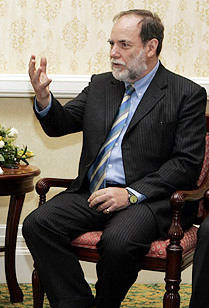
Nicky Oppenheimer Becomes Chairman of De Beers By Presidential Press and Information Office - Official Visit to South Africa - Официальный визит в Южную Африку, CC BY 4.0, https://commons.wikimedia.org/w/index.php?curid=116138596
1991 CE
De Beers Faces Antitrust Investigation in the US
The US Department of Justice investigates De Beers for antitrust violations related to its diamond cartel practices. The company is indicted but avoids prosecution by staying out of the US market. #legal #antitrust
1994 CE
De Beers Opens a Diamond Trading Company (DTC) in London
The Diamond Trading Company is established in London to sort and distribute rough diamonds. It becomes the hub of the CSO's operations. #business #diamonds
1995 CE
Discovery of Diamonds in Canada's Northwest Territories
Diamonds are discovered in Canada, leading to the Ekati and Diavik mines. De Beers initially ignores the region but later acquires operations there. #mining #canada
Discovery of Diamonds in Canada's Northwest Territories By Jason Pineau, photographer - https://www.flickr.com/photos/jspitfire/4903066304/sizes/z/in/photostream/, CC BY-SA 3.0, https://commons.wikimedia.org/w/index.php?curid=12654151
1996 CE
De Beers Establishes Diamond Trading Company Botswana
De Beers moves its sorting operations to Botswana through a partnership with the government, establishing the Diamond Trading Company Botswana (DTCB). #africa #business
1998 CE
De Beers Begins Marketing Synthetic Diamonds?
De Beers launches a campaign to inform consumers about synthetic diamonds, emphasizing the difference between natural and lab-grown stones. This reinforces the value of natural diamonds. #marketing #diamonds
1999 CE
De Beers Acquires Diamond Mine in Canada
De Beers acquires the Snap Lake diamond project in Canada, its first Canadian mining operation. It later develops the Victor and Gahcho Kué mines. #expansion #canada
De Beers Acquires Diamond Mine in Canada By Michael Fuller from Perth, Australia - IMG_7322 Portalfog2.JPG Uploaded by PDTillman, CC BY-SA 2.0, https://commons.wikimedia.org/w/index.php?curid=12633941
2000 CE
De Beers Rebrands to "De Beers Group"
De Beers restructures its business, creating the De Beers Group as a holding company. The CSO is renamed to Diamond Trading Company (DTC). #corporate #rebranding
2001 CE
De Beers Launches the "Forevermark" Brand
De Beers introduces the Forevermark brand for diamonds that are conflict-free and ethically sourced. This is a response to concerns about blood diamonds. #ethics #branding
2004 CE
De Beers Pleads Guilty to Antitrust Charges in the US
De Beers pleads guilty to price-fixing charges brought by the US Department of Justice and pays a $10 million fine. The company agrees to reform its business practices. #legal #antitrust
2005 CE
De Beers Sells Its Interest in Diamond Mines to Focus on Retail?
De Beers decides to sell some mining assets to focus on downstream retail and branding. The company faces declining market share. #strategy #restructuring
2008 CE
De Beers Launches "De Beers Jewelry" Stores
De Beers opens its own retail stores in major cities (London, New York, etc.) to sell branded diamond jewelry directly to consumers. This marks a shift from wholesale to retail. #retail #luxury )
2011 CE
Anglo American Acquires De Beers
Anglo American plc acquires a 40% stake in De Beers from the Oppenheimer family, increasing its ownership to 85%. The transaction values De Beers at $8.8 billion. #mergers #acquisitions
2012 CE
De Beers Opens the Gahcho Kué Mine in Canada
De Beers' Gahcho Kué diamond mine in Canada begins operations, becoming one of the world's largest new diamond mines. It strengthens De Beers' presence in Canada. #mining #diamonds
2013 CE
De Beers Launches the "Building Forever" Sustainability Program
De Beers introduces a sustainability framework focusing on ethical sourcing, environmental stewardship, and community development. #sustainability #ethics
2015 CE
De Beers Introduces the "Diamond Insight Report"
De Beers publishes its first annual Diamond Insight Report, providing market analysis and industry data. It aims to increase transparency in the diamond trade. #marketresearch #report
2016 CE
De Beers Sells Its Stake in Diamond Mine to Focus on Retail?
De Beers sells its interest in the Kimberley mines to focus on its retail and branding operations. #restructuring
2018 CE
De Beers Launches Lightbox Jewelry for Lab-Grown Diamonds
De Beers launches Lightbox, a brand selling lab-grown diamonds at lower prices, acknowledging the growing market for synthetics. This disrupts its traditional stance against lab-grown diamonds. #innovation #diamonds
2019 CE
De Beers Expands Lightbox to Include Colored Diamonds
Lightbox introduces colored lab-grown diamonds, further diversifying its product line. This move signals De Beers' full acceptance of the synthetic diamond market. #productlaunch #diamonds
2020 CE
De Beers Faces Challenges from COVID-19 Pandemic
The COVID-19 pandemic disrupts global diamond supply chains and reduces demand. De Beers sees a significant drop in sales and implements cost-cutting measures. #covid19 #crisis
2021 CE
De Beers Rebounds with Strong Sales Recovery
Diamond demand recovers strongly in 2021, driven by US engagement ring sales and luxury spending. De Beers reports improved financial results. #economics #recovery
2022 CE
De Beers Signs Sales Agreement with Botswana Government
De Beers and Botswana negotiate a new 10-year sales agreement, ensuring continued access to diamonds from Debswana. The deal includes commitments to local beneficiation. #africa #trade
2023 CE
De Beers Invests in Blockchain Traceability
De Beers launches the Tracr blockchain platform for diamond traceability, aiming to assure consumers of ethical sourcing. #technology #blockchain
2024 CE
De Beers Announces Closure of Some Canadian Mines
De Beers announces the planned closure of the Snap Lake and Victor mines due to depletion, focusing on longer-life assets in Botswana and Namibia. #mining