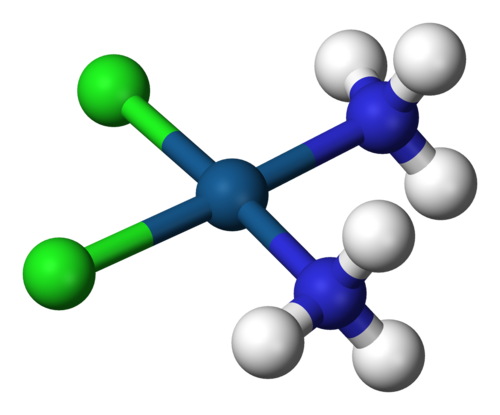
Coordination Chemistry & Complex Compounds: Alfred Werner to Organometallics
Encyclopedia/1. The Cosmos & The Natural World/2. Physics & Chemistry/03. Chemistry & Periodic Table of Elements • Curated by Admin Timeline.sg
Coordination chemistry, from Alfred Werner's foundational theory to modern organometallics, explores the bonding, structure, and reactivity of transition metal complexes. This timeline spans ancient pigments, landmark syntheses like ferrocene, and Nobel Prize-winning catalysis, highlighting global contributions and key sub-genres such as ligand field theory and metathesis catalysis.
Chronological Storyline (37 Milestones)
2600 BCE
Egyptian Blue Synthesized
Egyptian blue, a calcium copper silicate complex, is first used as a pigment in ancient Egypt and Mesopotamia. It represents one of the earliest synthetic coordination compounds. #chemistry #ancient
Egyptian Blue Synthesized By FK1954 - Own work, Public domain, https://commons.wikimedia.org/w/index.php?curid=9814827
800 BCE
Mayan Blue Developed
The Maya civilization creates a durable pigment by intercalating indigo into palygorskite clay, forming an organic-inorganic complex. This demonstrates early understanding of host-guest chemistry. #chemistry #ancient
Mayan Blue Developed By Constantino Reyes - http://www.azulmaya.com/images/azulm6.jpg, Public domain, https://commons.wikimedia.org/w/index.php?curid=4406011
1704 CE
Prussian Blue Discovered
Heinrich Diesbach accidentally synthesizes Prussian blue, Fe4[Fe(CN)6]3·xH2O, the first modern synthetic coordination compound. It becomes widely used as a pigment and in medicine. #chemistry #pigment
Prussian Blue Discovered By Saalebaer - Own work, CC0, https://commons.wikimedia.org/w/index.php?curid=27936684
1798 CE
Tassaert Observes Cobalt Ammines
French chemist Louis Tassaert notes color changes in cobalt chloride with ammonia, foreshadowing coordination chemistry. These cobalt ammine complexes later become model systems for Werner's theory. #chemistry
Tassaert Observes Cobalt Ammines By Benjah-bmm27 - Own work, Public domain, https://commons.wikimedia.org/w/index.php?curid=1990049
1835 CE
Magnus's Green Salt Characterized
Magnus's green salt, [Pt(NH3)4][PtCl4], is one of the first well-defined coordination compounds with a platinum chain structure. Its study contributes to early theories of metal-ammonia complexes. #chemistry
Magnus's Green Salt Characterized By Ben Mills - Own work, Public domain, https://commons.wikimedia.org/w/index.php?curid=7321443
1842 CE
Potassium Ferricyanide Studied
Leopold Gmelin investigates potassium ferricyanide, K3[Fe(CN)6], expanding understanding of iron cyanide complexes. This compound becomes important in analytical chemistry. #chemistry
Potassium Ferricyanide Studied By Keresluna - Own work, CC BY-SA 4.0, https://commons.wikimedia.org/w/index.php?curid=145708572
1869 CE
Blomstrand's Chain Theory Proposed
Christian Wilhelm Blomstrand suggests a chain model for coordination compounds, where ligands are linked in chains. Though later disproven, it stimulates debate leading to Werner's coordination theory. #chemistry
1893 CE
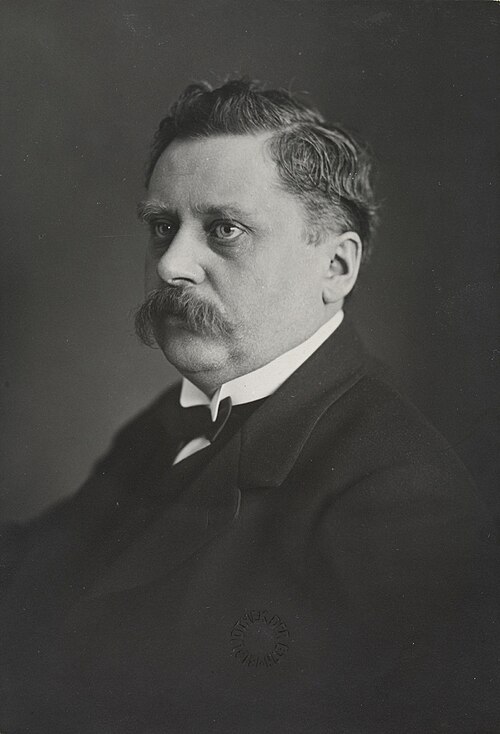
Werner Proposes Coordination Theory
Alfred Werner publishes his coordination theory, proposing that metal ions have primary and secondary valences and that ligands arrange octahedrally. This revolutionizes inorganic chemistry. #chemistry #Nobel
Werner Proposes Coordination Theory By ETH Zürich - ETH-Bibliothek Zürich, Bildarchiv, CC BY-SA 3.0, https://commons.wikimedia.org/w/index.php?curid=8098260
1894 CE
Werner Resolves Coordination Isomers
Alfred Werner reports the optical resolution of cobalt coordination compounds, confirming his octahedral model. This is the first demonstration of chirality in inorganic compounds. #chemistry #stereochemistry
1913 CE
Werner Wins Nobel Prize
Alfred Werner is awarded the Nobel Prize in Chemistry for his work on the linkage of atoms in molecules, particularly the coordination theory. His work lays the foundation for modern coordination chemistry. #chemistry #Nobel
1927 CE
Sidgwick Introduces Effective Atomic Number
Nevil Sidgwick proposes the effective atomic number (EAN) rule to predict stability of coordination compounds. This concept parallels the 18-electron rule in organometallics. #chemistry
1929 CE
Bethe Develops Crystal Field Theory
Hans Bethe applies electrostatic principles to explain the splitting of d-orbitals in transition metal complexes. Crystal field theory provides a basis for understanding colors and magnetic properties. #chemistry #physics
1935 CE
Pauling Applies Valence Bond Theory to Complexes
Linus Pauling extends his valence bond theory to coordination compounds, introducing hybridization (e.g., d2sp3) and explaining magnetic behavior. This model complements crystal field theory. #chemistry
1937 CE
Ligand Field Theory Developed
John H. Van Vleck and others combine crystal field theory with molecular orbital theory, creating ligand field theory. This more accurately describes bonding in transition metal complexes. #chemistry #physics
Dec 15, 1951 CE
Ferrocene Discovered
Ferrocene, Fe(C5H5)2, is independently synthesized by two groups: Kealy and Pauson, and Miller, Tebboth, and Tremaine. Its sandwich structure marks the birth of modern organometallic chemistry. #chemistry #organometallic
1952 CE
Ferrocene Structure Elucidated
Geoffrey Wilkinson and Ernst Otto Fischer independently determine the sandwich structure of ferrocene using X-ray crystallography and other methods. This opens the field of metallocenes. #chemistry #organometallic
1953 CE
Ziegler-Natta Catalysts Discovered
Karl Ziegler and Giulio Natta develop catalysts based on titanium chlorides and organoaluminum compounds for olefin polymerization. These catalysts are coordination complexes that revolutionized plastics. #chemistry #catalysis
1954 CE
Taube Studies Electron Transfer
Henry Taube begins investigating electron transfer mechanisms in coordination complexes, distinguishing between inner-sphere and outer-sphere pathways. He later wins the Nobel Prize for this work. #chemistry
Taube Studies Electron Transfer By ENERGY.GOV - HD.3F.005, Public domain, https://commons.wikimedia.org/w/index.php?curid=36085847
1958 CE
Structure of Vitamin B12 Determined
Dorothy Hodgkin uses X-ray crystallography to solve the structure of vitamin B12, a cobalt-containing coordination complex. This reveals the corrin ring and highlights the role of metal complexes in biology. #chemistry #biology
Structure of Vitamin B12 Determined By Hbf878 - Own work, Public domain, https://commons.wikimedia.org/w/index.php?curid=92994807
1963 CE
Ziegler and Natta Win Nobel Prize
Karl Ziegler and Giulio Natta receive the Nobel Prize in Chemistry for their discoveries in polymerization using coordination catalysts. Their work underpins modern plastics manufacturing. #chemistry #Nobel
1965 CE
Nozaki and Noyori Report Asymmetric Hydrogenation
Hideki Shirai? Actually, Nozaki and Noyori develop the first asymmetric hydrogenation catalyst using a chiral rhodium complex. This marks a milestone in enantioselective catalysis. #chemistry #catalysis
1971 CE
Grubbs Begins Work on Olefin Metathesis
Robert H. Grubbs starts investigating olefin metathesis, later developing well-defined ruthenium catalysts. His work earns a share of the 2005 Nobel Prize. #chemistry #catalysis
Grubbs Begins Work on Olefin Metathesis By Duncan.Hull - Own work, CC BY-SA 4.0, https://commons.wikimedia.org/w/index.php?curid=76457605
1973 CE
Wilkinson and Fischer Win Nobel for Organometallics
Geoffrey Wilkinson and Ernst Otto Fischer are awarded the Nobel Prize in Chemistry for their independent work on the chemistry of organometallic sandwich compounds. #chemistry #Nobel
Wilkinson and Fischer Win Nobel for Organometallics By Jü - Own work, CC BY-SA 4.0, https://commons.wikimedia.org/w/index.php?curid=77272420
1975 CE
Schrock Reports First Well-Defined Metathesis Catalyst
Richard R. Schrock synthesizes the first well-defined metathesis catalyst, a tungsten alkylidene complex. This leads to highly active and selective catalysts for alkene metathesis. #chemistry #catalysis
Schrock Reports First Well-Defined Metathesis Catalyst By R._Schrock_-_IChO_2012_Opening_Ceremony.JPG: A.mela93 derivative work: Materialscientist - This file was derived from: R. Schrock - IChO 2012 Opening Ceremony.JPG:, CC BY-SA 3.0, https://commons.wikimedia.org/w/index.php?curid=23573706
1977 CE
Shilov Discovers Alkane Activation by Platinum
Alexander Shilov reports the first catalytic alkane C-H activation using platinum complexes, opening the field of organometallic C-H activation. #chemistry #catalysis
1983 CE
Taube Wins Nobel for Electron Transfer
Henry Taube receives the Nobel Prize in Chemistry for his work on electron transfer reactions in coordination compounds, particularly inner-sphere and outer-sphere mechanisms. #chemistry #Nobel
Fullerenes (C60) are discovered by Kroto, Curl, and Smalley. These carbon cages form coordination complexes with metals, leading to new organometallic materials. #chemistry #materials
Fullerene Discovered, Spawning Coordination Chemistry By 痛 - Own work, CC BY-SA 4.0, https://commons.wikimedia.org/w/index.php?curid=118428240
1990 CE
First Metal-Organic Framework Reported
Omar M. Yaghi and coworkers synthesize the first stable metal-organic framework (MOF), MOF-5, a porous crystalline solid with high surface area. MOFs become a major area of coordination chemistry. #chemistry #materials
First Metal-Organic Framework Reported By Mei Gui Vanessa Weeet et al. - https://onlinelibrary.wiley.com/doi/10.1002/admi.202300065, CC BY 4.0, https://commons.wikimedia.org/w/index.php?curid=136185196
1995 CE
Grubbs Catalyst Second Generation
Robert Grubbs develops the second-generation olefin metathesis catalyst, a ruthenium complex with improved stability and functional group tolerance. It becomes a standard tool in organic synthesis. #chemistry #catalysis
2000 CE
Conductive Polymers Highlight Coordination
Alan Heeger, Alan MacDiarmid, and Hideki Shirakawa win the Nobel Prize for conductive polymers. While not purely coordination, dopants and metal complexes are often used to enhance conductivity. #chemistry #Nobel
Conductive Polymers Highlight Coordination By Smokefoot - Own work, Public domain, https://commons.wikimedia.org/w/index.php?curid=6893639
2001 CE
Knowles and Noyori Win Nobel for Asymmetric Catalysis
William S. Knowles and Ryoji Noyori share the Nobel Prize in Chemistry for their work on asymmetric hydrogenation using chiral metal complexes. This underscores the impact of coordination chemistry in drug synthesis. #chemistry #Nobel
2005 CE
Nobel for Olefin Metathesis
Yves Chauvin, Robert H. Grubbs, and Richard R. Schrock are awarded the Nobel Prize in Chemistry for the development of the metathesis method in organic synthesis. Their catalysts are organometallic complexes. #chemistry #Nobel
Nobel for Olefin Metathesis By Ple210 - Own work, CC BY-SA 4.0, https://commons.wikimedia.org/w/index.php?curid=81966544
2010 CE
MOFs for Gas Storage and Separation
Research into metal-organic frameworks expands rapidly, with applications in hydrogen storage, carbon capture, and catalysis. The ability to tailor pore size and functionality makes MOFs versatile coordination materials. #chemistry #materials
2014 CE
Single-Atom Catalysts Emerge
Single-atom catalysts (SACs), where isolated metal atoms are coordinated on supports, are developed for efficient catalysis. This concept bridges coordination chemistry and heterogeneous catalysis. #chemistry #catalysis
2016 CE
Nobel for Molecular Machines
Jean-Pierre Sauvage, Sir J. Fraser Stoddart, and Bernard L. Feringa win the Nobel Prize in Chemistry for designing molecular machines. Their work relies on coordination chemistry to create mechanically interlocked molecules like catenanes and rotaxanes. #chemistry #Nobel
Nobel for Molecular Machines By PKS615 - Own work, CC BY 4.0, https://commons.wikimedia.org/w/index.php?curid=147658142
2020 CE
Hemoglobin Oxygen Binding Study Reveals Allostery
Advances in structural biology using techniques like cryo-EM elucidate the coordination changes in hemoglobin during oxygen binding. Iron porphyrin complexes are central to this process. #chemistry #biology
Hemoglobin Oxygen Binding Study Reveals Allostery By Zephyris at English Wikipedia - Transferred from en.wikipedia to Commons., CC BY-SA 3.0, https://commons.wikimedia.org/w/index.php?curid=2300973
2023 CE
Organometallic Frustrated Lewis Pairs
The concept of frustrated Lewis pairs (FLPs) expands to include transition metal complexes, enabling metal-free catalysis of hydrogenation and other reactions. This merges main-group and coordination chemistry. #chemistry #catalysis