Encyclopedia/2. Technology & The Built World/1. Computing, AI & Information Technology • Curated by Admin Timeline.sg
Computer vision and pattern recognition have evolved from ancient optical theories to modern deep learning, enabling machines to interpret visual data. This timeline traces key milestones from the camera obscura to today's transformer-based models.
Chronological Storyline (43 Milestones)
400 BCE
Mozi Describes Camera Obscura
Chinese philosopher Mozi and his disciples document the principles of the camera obscura, an optical device that projects an image onto a surface. This early understanding of optics lays groundwork for future imaging. #history #optics
Mozi Describes Camera Obscura By Vjacheslav Rublevskiy - https://www.flickr.com/photos/193162016@N04/51221161306/, CC0, https://commons.wikimedia.org/w/index.php?curid=106219380
1021 CE
Ibn al-Haytham's Book of Optics
Ibn al-Haytham (Alhazen) publishes his influential work on optics, explaining how the eye perceives visual information and describing the camera obscura in detail. His work forms a foundation for modern optical science. #science #history #islamicgoldenage
Ibn al-Haytham's Book of Optics By Ibn al-Haytham, Vitello, Friedrich Risner - University of Oklahoma History of Science Collections et BnF Gallica : http://gallica.bnf.fr/ark:/12148/bpt6k312873d.r=Haytham?rk=407727;2, Public domain, https://commons.wikimedia.org/w/index.php?curid=48189707
1685 CE
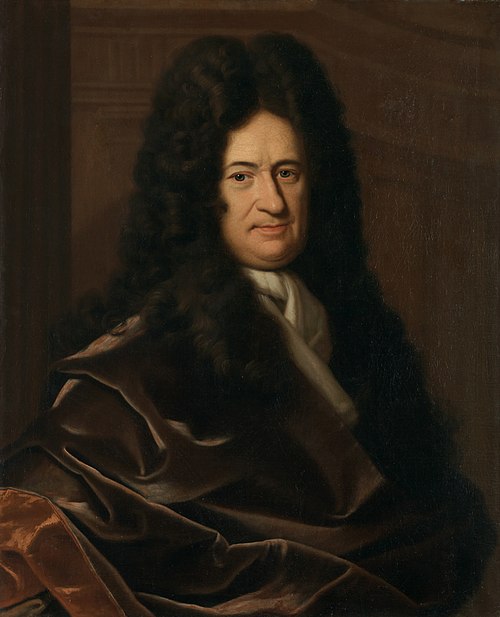
Leibniz's Binary System
Gottfried Wilhelm Leibniz develops the binary numeral system, which later becomes essential for digital image processing and pattern recognition. His work on the 'characteristica universalis' influences symbolic computation. #math #history
Leibniz's Binary System By Christoph Bernhard Francke - Herzog Anton Ulrich-Museum, online, Public domain, https://commons.wikimedia.org/w/index.php?curid=53159699
1839 CE
Daguerreotype Introduced
Louis Daguerre announces the daguerreotype, the first commercially successful photographic process. This enables fixed visual records, which later fuel the need for automated image analysis. #photography #history
Daguerreotype Introduced By UnknownUnknown Restored by Wcamp9 - This file was derived from: Portrait of a Daguerreotypist, 1845.jpg, Public domain, https://commons.wikimedia.org/w/index.php?curid=157814697
1929 CE
Gustav Tauschek's Reading Machine
Austrian engineer Gustav Tauschek patents a machine for optical character recognition (OCR), one of the earliest pattern recognition devices. It uses light-sensitive cells to read characters. #technology #history
Gustav Tauschek's Reading Machine By Vassia Atanassova - Spiritia - Own work, CC BY-SA 4.0, https://commons.wikimedia.org/w/index.php?curid=56688550
1950 CE
Turing's 'Computing Machinery and Intelligence'
Alan Turing proposes the concept of machine intelligence and the 'Imitation Game,' later known as the Turing test. This paper lays philosophical foundations for artificial perception. #AI #history #philosophy
1956 CE
Dartmouth Summer Research Project
The term 'artificial intelligence' is coined at the Dartmouth Workshop. Participants explore early concepts of computer vision and pattern recognition, including the 'Perceptron' idea. #AI #history
1957 CE
Rosenblatt's Perceptron
Frank Rosenblatt introduces the Perceptron, an early neural network that can recognize visual patterns and is implemented in hardware. It marks a major milestone in pattern recognition. #neuralnetworks #history #AI
1960 CE
Hubel and Wiesel's Visual Cortex Work
David Hubel and Torsten Wiesel discover that neurons in cat visual cortex respond to edges and lines, establishing the hierarchical organization of visual processing. Their work earns a Nobel Prize and inspires computer vision architectures. #neuroscience #history #vision
Hubel and Wiesel's Visual Cortex Work By Joey cantod - Own work, CC BY-SA 4.0, https://commons.wikimedia.org/w/index.php?curid=79369186
1963 CE
Larry Roberts' PhD Thesis on 'Machine Perception of 3D Solids'
Often considered the first PhD thesis in computer vision, Larry Roberts describes a program that interprets line drawings of simple blocks as 3D objects. This work lays foundations for scene analysis. #computervision #history #AI )
Larry Roberts' PhD Thesis on 'Machine Perception of 3D Solids' By Unknown author - https://www.livinginternet.com/i/ii_roberts.htm, CC BY-SA 4.0, https://commons.wikimedia.org/w/index.php?curid=63249375
1966 CE
MIT Summer Vision Project
MIT begins the 'Summer Vision Project' aimed at building a computer vision system to recognize objects. It is one of the first structured efforts in the field, though overly optimistic. #computervision #history
1969 CE
Minsky and Papert's 'Perceptrons'
Marvin Minsky and Seymour Papert publish 'Perceptrons,' highlighting limitations of single-layer networks. This book leads to an 'AI winter' for neural networks, but also spurs development of more complex architectures. #AI #history #neuralnetworks )
1970 CE
Fujitsu Develops First OCR System
Fujitsu creates one of the first commercial optical character recognition (OCR) systems, capable of reading Japanese characters. This showcases early pattern recognition in industry. #technology #history #japan
1971 CE
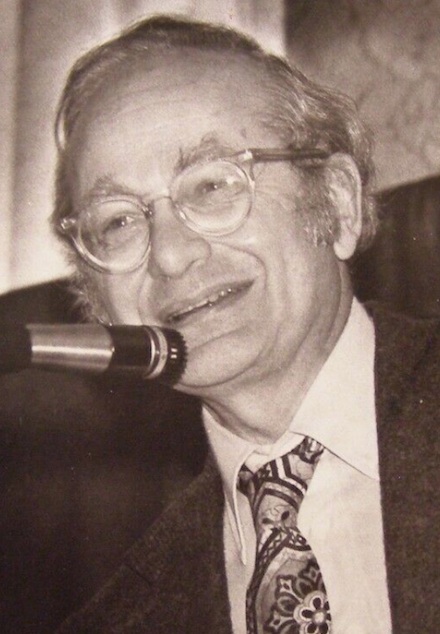
Vaughan Pratt Publishes 'Pattern Recognition'
Vaughan Pratt's book 'Pattern Recognition' formalizes many mathematical techniques, and he later develops the Pratt algorithm for shape matching. His work influences computer vision and graphics. #computervision #history
Vaughan Pratt Publishes 'Pattern Recognition' By Vaughan Pratt - Photograph taken and owned by Vaughan Pratt, CC BY-SA 3.0, https://commons.wikimedia.org/w/index.php?curid=5771111
1972 CE
Fukushima's Neocognitron
Kunihiko Fukushima proposes the Neocognitron, a hierarchical neural network model for pattern recognition inspired by the visual cortex. It is an early precursor to convolutional neural networks. #neuralnetworks #history #japan
1977 CE
Marr's Computational Theory of Vision
David Marr publishes a seminal paper outlining a computational theory of vision, dividing it into three levels: computational, algorithmic, and implementation. His work strongly influences modern computer vision research. #vision #AI #history )
1980 CE
Backpropagation Algorithm Developed
Multiple researchers, including Paul Werbos, develop the backpropagation algorithm for training multi-layer neural networks. This breakthrough enables learning of complex patterns and revives neural network research. #neuralnetworks #AI #history
1982 CE
Canny Edge Detector Introduced
John Canny publishes his edge detection algorithm, which remains a foundational tool in computer vision. It provides a multi-stage method to detect a wide range of edges in images. #computervision #history
Canny Edge Detector Introduced By Simpsons contributor at English Wikipedia (Original text: Simpsons contributor (talk)) - Own work (Original text: self-made), CC BY-SA 3.0, https://commons.wikimedia.org/w/index.php?curid=3610719
1983 CE
Otsu's Method for Thresholding
Nobuyuki Otsu develops a method for automatic image thresholding, widely used for separating foreground from background. This technique is a classic in pattern recognition. #computervision #history #japan
Otsu's Method for Thresholding By Pikez33 - http://en.wikipedia.org/wiki/File:Image_processing_post_otsus_algorithm.jpg#file, CC BY 1.0, https://commons.wikimedia.org/w/index.php?curid=10634740
1986 CE
Rumelhart et al. Popularize Backpropagation
David Rumelhart, Geoffrey Hinton, and Ronald Williams publish a paper demonstrating backpropagation in multi-layer networks, sparking renewed interest in neural networks and pattern recognition. #neuralnetworks #AI #history
Rumelhart et al. Popularize Backpropagation By Rolf Kickuth - Own work, CC BY-SA 4.0, https://commons.wikimedia.org/w/index.php?curid=102164732
1991 CE
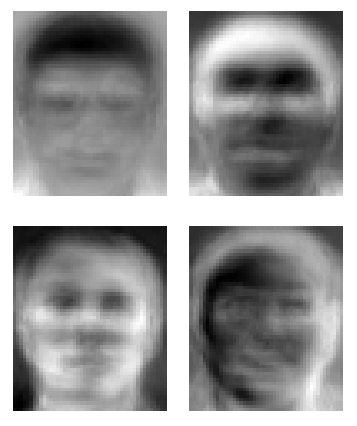
Turk and Pentland's Eigenfaces
Matthew Turk and Alex Pentland introduce the 'Eigenfaces' approach for facial recognition using principal component analysis. It is a landmark in face recognition and computer vision. #facialrecognition #computervision #history
Turk and Pentland's Eigenfaces By Unknown author, Attribution, https://commons.wikimedia.org/w/index.php?curid=442472
1992 CE
Support Vector Machines (SVMs) for Pattern Recognition
Vladimir Vapnik and colleagues introduce Support Vector Machines, a powerful supervised learning algorithm for classification and pattern recognition. SVMs become a major tool in computer vision. #machinelearning #history #AI
1997 CE
First Face Recognition System in NiFi
The first widely deployed face recognition system, 'NiFi' (NeuroFinder), is used by the UK police. It pioneers automated surveillance pattern recognition. #facialrecognition #history #surveillance
1997 CE
IBM Deep Blue Defeats Kasparov
IBM's Deep Blue beats world chess champion Garry Kasparov, demonstrating the power of pattern recognition in game playing. Though not purely vision, it showcases AI pattern analysis. #AI #history #chess )
IBM Deep Blue Defeats Kasparov By James the photographer - https://www.flickr.com/photos/22453761@N00/592436598/, CC BY 2.0, https://commons.wikimedia.org/w/index.php?curid=3511068
1999 CE
SIFT Algorithm Introduced
David Lowe publishes the Scale-Invariant Feature Transform (SIFT) algorithm for detecting and describing local features in images. It becomes foundational for object recognition and image stitching. #computervision #history
2001 CE
Viola-Jones Face Detection Framework
Paul Viola and Michael Jones develop a real-time face detection algorithm using Haar-like features and AdaBoost. It enables rapid, robust face detection for the first time. #facialrecognition #computervision #history
2004 CE
Lowe's SIFT Paper Published
David Lowe formally publishes his SIFT method in the International Journal of Computer Vision. It becomes one of the most cited papers in computer vision, with applications across multiple domains. #computervision #history #research
2006 CE
Hinton's Deep Belief Networks
Geoffrey Hinton introduces deep belief networks and greedy layer-wise pretraining, sparking the deep learning revolution. This rekindles interest in neural networks for pattern recognition. #deeplearning #AI #history
Hinton's Deep Belief Networks By Qwertyus - Own work, CC0, https://commons.wikimedia.org/w/index.php?curid=30324766
2009 CE
ImageNet Dataset Created
Fei-Fei Li and colleagues release ImageNet, a large-scale image database with over 14 million labeled images. It becomes the benchmark for visual recognition algorithms and fuels the deep learning explosion. #computervision #datasets #history
2010 CE
First ImageNet Large Scale Visual Recognition Challenge (ILSVRC)
The first ILSVRC competition tasks algorithms with classifying over 1.2 million images. The challenge becomes a driving force for advancing computer vision models. #computervision #competitions #history
2012 CE
AlexNet Wins ILSVRC
Alex Krizhevsky, Ilya Sutskever, and Geoffrey Hinton win ImageNet challenge with a deep convolutional neural network (AlexNet), dramatically reducing error rates. This marks the breakthrough of deep learning in computer vision. #deeplearning #computervision #history
AlexNet Wins ILSVRC By Zhang, Aston and Lipton, Zachary C. and Li, Mu and Smola, Alexander J. - https://github.com/d2l-ai/d2l-en, CC BY-SA 4.0, https://commons.wikimedia.org/w/index.php?curid=152265712
2014 CE
Generative Adversarial Networks (GANs) Introduced
Ian Goodfellow introduces Generative Adversarial Networks, a framework where two neural networks compete, enabling realistic image generation and unsupervised pattern learning. GANs become a revolutionary tool in computer vision. #deeplearning #AI #history
Generative Adversarial Networks (GANs) Introduced By Zhang, Aston and Lipton, Zachary C. and Li, Mu and Smola, Alexander J. - https://github.com/d2l-ai/d2l-en, CC BY-SA 4.0, https://commons.wikimedia.org/w/index.php?curid=152265649
2014 CE
DeepFace by Facebook
Facebook's DeepFace system achieves near-human accuracy in facial recognition using deep neural networks, sparking widespread commercial use of face recognition. #facialrecognition #deeplearning #history
2015 CE
ResNet Wins ILSVRC
Kaiming He and colleagues introduce ResNet (Residual Networks), winning ImageNet challenge. The deep residual learning architecture enables training of very deep networks (over 100 layers), further improving performance. #deeplearning #computervision #history
ResNet Wins ILSVRC By LunarLullaby - Own work, CC BY-SA 4.0, https://commons.wikimedia.org/w/index.php?curid=131458370
2015 CE
YOLO Real-Time Object Detection
Joseph Redmon and colleagues introduce YOLO (You Only Look Once), a real-time object detection system that processes images in a single pass, achieving high speed and accuracy. #computervision #deeplearning #history
YOLO Real-Time Object Detection By (MTheiler) - Own work, CC BY-SA 4.0, https://commons.wikimedia.org/w/index.php?curid=75843378
2016 CE
AlphaGo Defeats Lee Sedol
DeepMind's AlphaGo beats world Go champion Lee Sedol, using deep reinforcement learning and pattern recognition. The move impresses global audiences and showcases AI's visual pattern abilities. #AI #history #deeplearning
2017 CE
Transformer Architecture Introduced
Vaswani et al. publish 'Attention is All You Need,' introducing the Transformer model. Originally for NLP, it later becomes dominant in vision (Vision Transformers) for pattern recognition. #deeplearning #AI #history )
Transformer Architecture Introduced By dvgodoy - https://github.com/dvgodoy/dl-visuals/?tab=readme-ov-file, CC BY 4.0, https://commons.wikimedia.org/w/index.php?curid=151216016
2018 CE
BERT Pre-training for NLP (and Vision)
Google releases BERT, a transformer-based model pre-trained on large text corpora. Its architecture later inspires vision-language models and self-supervised learning in computer vision. #deeplearning #AI #history )
2020 CE
Vision Transformer (ViT) Outperforms CNNs
Dosovitskiy et al. show that a pure Transformer applied to image patches can achieve state-of-the-art results on image classification, marking a paradigm shift from CNNs to transformers in computer vision. #computervision #deeplearning #history
2021 CE
DALL-E by OpenAI
OpenAI introduces DALL-E, a generative model that creates images from text descriptions, demonstrating advanced visual pattern synthesis. It pushes boundaries of AI creativity. #AI #computervision #generativemodel
DALL-E by OpenAI By DALL·E 2 - https://cdn.openai.com/dall-e-2/demos/text2im/teddy_bears/ai_research/underwater/4.jpg, Public domain, https://commons.wikimedia.org/w/index.php?curid=120317263
2022 CE
Stable Diffusion Open-Source Release
Stability AI releases Stable Diffusion, an open-source text-to-image model, democratizing generative AI and enabling widespread experimentation in visual pattern generation. #AI #computervision #opensource
Stable Diffusion Open-Source Release By VulcanSphere - Generated in HuggingFace Space with Stable Diffusion 3.5 Large (https://huggingface.co/spaces/stabilityai/stable-diffusion-3.5-large), archived at https://archive.org/details/vulcansphere-ai-art-raw, Public domain, https://commons.wikimedia.org/w/index.php?curid=154192857
2023 CE
Segment Anything Model (SAM)
Meta AI releases the Segment Anything Model (SAM), a promptable segmentation system that can segment any object in any image without task-specific training. It represents a major advance in universal segmentation. #computervision #deeplearning #history
2024 CE
Sora Video Generation by OpenAI
OpenAI reveals Sora, a text-to-video generation model that creates realistic videos from text prompts, showcasing advanced understanding of visual patterns and temporal dynamics. #AI #computervision #videogeneration )