Encyclopedia/2. Technology & The Built World/1. Computing, AI & Information Technology • Curated by Admin Timeline.sg
Computer vision and image processing enable machines to interpret visual data, evolving from early edge detection to deep learning models like CNNs and segmentation frameworks. Key milestones include the Sobel filter, LeNet-5, AlexNet's ImageNet victory, YOLO, and the Segment Anything Model.
Chronological Storyline (42 Milestones)
350 BCE
Aristotle Describes Camera Obscura
Aristotle observes the principle of the camera obscura, where light passing through a small hole projects an inverted image. This early understanding of optics lays groundwork for image formation. #history #optics
Aristotle Describes Camera Obscura By Pitchayawat - Own work, CC BY-SA 4.0, https://commons.wikimedia.org/w/index.php?curid=94609473
1021 CE
Ibn al-Haytham's Book of Optics
Ibn al-Haytham (Alhazen) publishes his influential work on optics, explaining vision, light, and the camera obscura. His scientific method influences later image understanding. #science #history
Ibn al-Haytham's Book of Optics By Ibn al-Haytham, Vitello, Friedrich Risner - University of Oklahoma History of Science Collections et BnF Gallica : http://gallica.bnf.fr/ark:/12148/bpt6k312873d.r=Haytham?rk=407727;2, Public domain, https://commons.wikimedia.org/w/index.php?curid=48189707
1685 CE
Johann Zahn Designs Portable Camera Obscura
Johann Zahn describes a portable camera obscura that could be used for drawing, anticipating photographic cameras. This advances image capture technology. #history #technology
1826 CE
Niépce Captures First Photograph
Joseph Nicéphore Niépce creates the first permanent photograph using a camera obscura and bitumen-coated pewter plate. This marks the birth of photography. #photography #history
Niépce Captures First Photograph By Nicéphore Niépce - Harry Ransom Center, Public domain, https://commons.wikimedia.org/w/index.php?curid=153804961
Aug 19, 1839 CE
Daguerreotype Announced
Louis Daguerre's daguerreotype process is announced to the public, producing detailed images on silver-plated copper. It becomes the first widely used photographic method. #photography #history
Daguerreotype Announced By UnknownUnknown Restored by Wcamp9 - This file was derived from: Portrait of a Daguerreotypist, 1845.jpg, Public domain, https://commons.wikimedia.org/w/index.php?curid=157814697
1888 CE
George Eastman Introduces Kodak Camera
George Eastman launches the Kodak camera with roll film, making photography accessible to amateurs. The slogan 'You press the button, we do the rest' popularizes snapshot photography. #photography #technology
George Eastman Introduces Kodak Camera By Work-Order Studio - https://www.kodak.com/, Public domain, https://commons.wikimedia.org/w/index.php?curid=52387539
1956 CE
Dartmouth Summer Research Project on AI
The Dartmouth Conference coins the term 'artificial intelligence' and includes early discussions on computer vision. This event marks the formal birth of AI as a field. #AI #history
1959 CE
Hubel and Wiesel Discover Orientation Columns
David Hubel and Torsten Wiesel discover that neurons in the cat visual cortex respond to oriented edges, inspiring later computer vision models. Their work earns a Nobel Prize. #neuroscience #vision
Hubel and Wiesel Discover Orientation Columns By Joey cantod - Own work, CC BY-SA 4.0, https://commons.wikimedia.org/w/index.php?curid=79369186
1963 CE
Larry Roberts Publishes 'Machine Perception of Three-Dimensional Solids'
Larry Roberts' MIT PhD thesis describes extracting 3D information from 2D line drawings, one of the earliest computer vision systems. It introduces edge detection and object recognition. #computervision #history )
Larry Roberts Publishes 'Machine Perception of Three-Dimensional Solids' By Unknown author - https://www.livinginternet.com/i/ii_roberts.htm, CC BY-SA 4.0, https://commons.wikimedia.org/w/index.php?curid=63249375
1966 CE
MIT Summer Vision Project
Marvin Minsky and Seymour Papert launch the MIT Summer Vision Project, aiming to build a complete vision system. Though overly ambitious, it spurs foundational research in computer vision. #AI #computervision
1968 CE
Sobel Operator Developed
Irwin Sobel and Gary Feldman present the Sobel operator at Stanford, an edge detection algorithm using 3x3 convolution kernels. It becomes a fundamental tool in image processing. #imageprocessing #computervision
Sobel Operator Developed By Simpsons contributor - http://en.wikipedia.org/wiki/File:Valve_original_%281%29.PNG, CC BY-SA 3.0, https://commons.wikimedia.org/w/index.php?curid=8904364
1970 CE
Canny Edge Detector Invented
John Canny develops the Canny edge detector, a multi-stage algorithm for optimal edge detection. It remains widely used in computer vision. #computervision #imageprocessing
Canny Edge Detector Invented By Simpsons contributor at English Wikipedia (Original text: Simpsons contributor (talk)) - Own work (Original text: self-made), CC BY-SA 3.0, https://commons.wikimedia.org/w/index.php?curid=3610719
1971 CE
Fourier Transform Applied to Image Processing
The fast Fourier transform (FFT) is applied to image processing, enabling efficient frequency-domain analysis. This technique is crucial for filtering and compression. #imageprocessing #math
Fourier Transform Applied to Image Processing By Yangwenbo99 - Own work, CC BY-SA 4.0, https://commons.wikimedia.org/w/index.php?curid=111271197
1979 CE
Marr's Computational Theory of Vision
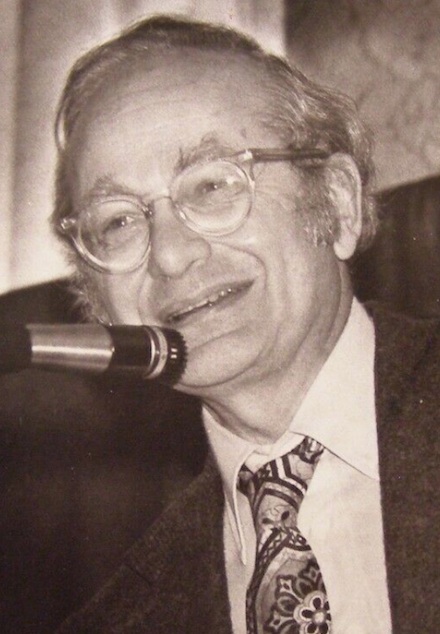
David Marr publishes 'Vision', proposing a computational framework for visual perception. His hierarchical approach influences computer vision research. #computervision #neuroscience )
1980 CE
Fukushima's Neocognitron
Kunihiko Fukushima introduces the Neocognitron, a neural network model for pattern recognition inspired by the visual cortex. It is a precursor to convolutional neural networks. #deeplearning #computervision
1981 CE
Nobel Prize for Hubel and Wiesel
David Hubel and Torsten Wiesel receive the Nobel Prize for their discoveries on information processing in the visual system. Their work continues to inspire computer vision architectures. #neuroscience #vision
1987 CE
JPEG Standard Introduced
The Joint Photographic Experts Group (JPEG) standard is introduced for image compression, using discrete cosine transform. It becomes the most widely used image format. #imageprocessing #technology
JPEG Standard Introduced By AzaToth - File:Felis_silvestris_silvestris_small_gradual_decrease_of_quality.png, CC BY 3.0, https://commons.wikimedia.org/w/index.php?curid=43107801
1989 CE
Yann LeCun Proposes Convolutional Neural Networks
Yann LeCun publishes a paper on convolutional neural networks (CNNs) for handwritten digit recognition, laying the foundation for modern deep learning in vision. #deeplearning #computervision
1998 CE
LeNet-5 Recognizes Handwritten Digits
Yann LeCun et al. develop LeNet-5, a CNN that achieves high accuracy on MNIST handwritten digit recognition. It demonstrates the power of CNNs for image classification. #deeplearning #computervision
LeNet-5 Recognizes Handwritten Digits By Zhang, Aston and Lipton, Zachary C. and Li, Mu and Smola, Alexander J. - https://github.com/d2l-ai/d2l-en, CC BY-SA 4.0, https://commons.wikimedia.org/w/index.php?curid=152265656
1999 CE
SIFT Feature Descriptor Introduced
David Lowe introduces the Scale-Invariant Feature Transform (SIFT), a robust local feature descriptor for object recognition. SIFT becomes a cornerstone of feature-based computer vision. #computervision #imageprocessing
2001 CE
Viola-Jones Face Detection Algorithm
Paul Viola and Michael Jones develop a real-time face detection algorithm using Haar-like features and AdaBoost. It enables efficient face detection in images and video. #computervision #facedetection
2004 CE
HOG Descriptor for Pedestrian Detection
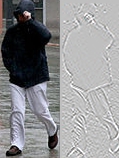
Navneet Dalal and Bill Triggs introduce Histogram of Oriented Gradients (HOG) for pedestrian detection. HOG features become widely used in object detection. #computervision #objectdetection
HOG Descriptor for Pedestrian Detection By Milwaukee_(WIS)_N_5th_St_"_Tree,_Rain,_Wind_"_Pedestrian_1.jpg: vincent desjardins derivative work: Sylenius (talk) - Milwaukee_(WIS)_N_5th_St_"_Tree,_Rain,_Wind_"_Pedestrian_1.jpg, CC BY 2.0, https://commons.wikimedia.org/w/index.php?curid=11948912
2006 CE
ImageNet Dataset Conception
Fei-Fei Li initiates the ImageNet project, a large-scale dataset of labeled images. ImageNet becomes a benchmark for image classification and drives deep learning advances. #computervision #dataset
2009 CE
ImageNet Released
The ImageNet dataset is publicly released, containing over 14 million labeled images across 20,000 categories. It catalyzes competition and progress in computer vision. #computervision #dataset
Sep 30, 2012 CE
AlexNet Wins ImageNet Challenge
Alex Krizhevsky, Ilya Sutskever, and Geoffrey Hinton's AlexNet achieves a top-5 error rate of 15.3% in the ImageNet Large Scale Visual Recognition Challenge, significantly outperforming traditional methods. This breakthrough popularizes deep CNNs. #deeplearning #computervision
AlexNet Wins ImageNet Challenge By Zhang, Aston and Lipton, Zachary C. and Li, Mu and Smola, Alexander J. - https://github.com/d2l-ai/d2l-en, CC BY-SA 4.0, https://commons.wikimedia.org/w/index.php?curid=152265712
2013 CE
OverFeat: Integrated Detection and Classification
OverFeat introduces a multi-scale CNN for object detection and classification, demonstrating the power of sliding-window approaches. It influences later detection models. #computervision #objectdetection
2014 CE
Generative Adversarial Networks (GANs) Introduced
Ian Goodfellow proposes GANs, where a generator and discriminator compete to produce realistic images. GANs revolutionize image generation and manipulation. #deeplearning #imagegeneration
Generative Adversarial Networks (GANs) Introduced By Zhang, Aston and Lipton, Zachary C. and Li, Mu and Smola, Alexander J. - https://github.com/d2l-ai/d2l-en, CC BY-SA 4.0, https://commons.wikimedia.org/w/index.php?curid=152265649
2014 CE
VGGNet and GoogLeNet (Inception) Emerge
VGGNet shows the importance of depth with small filters, while GoogLeNet introduces the Inception module for efficient computation. Both achieve top results in ImageNet. #deeplearning #computervision
VGGNet and GoogLeNet (Inception) Emerge By Zhang, Aston and Lipton, Zachary C. and Li, Mu and Smola, Alexander J. - https://github.com/d2l-ai/d2l-en, CC BY-SA 4.0, https://commons.wikimedia.org/w/index.php?curid=152265699
2015 CE
U-Net for Biomedical Image Segmentation
Olaf Ronneberger et al. propose U-Net, a CNN architecture for biomedical image segmentation with skip connections. It becomes widely adopted in medical imaging. #computervision #segmentation
2015 CE
ResNet Solves Vanishing Gradient Problem
Kaiming He et al. introduce Residual Networks (ResNet) with skip connections, enabling training of very deep networks (152 layers). ResNet wins ImageNet and becomes a foundational architecture. #deeplearning #computervision
ResNet Solves Vanishing Gradient Problem By LunarLullaby - Own work, CC BY-SA 4.0, https://commons.wikimedia.org/w/index.php?curid=131458370
2015 CE
YOLO: Real-Time Object Detection
Joseph Redmon et al. introduce You Only Look Once (YOLO), a single-shot object detection system that predicts bounding boxes and class probabilities in one pass. YOLO achieves real-time performance. #computervision #objectdetection )
YOLO: Real-Time Object Detection By (MTheiler) - Own work, CC BY-SA 4.0, https://commons.wikimedia.org/w/index.php?curid=75843378
2016 CE
AlphaGo Defeats Lee Sedol
DeepMind's AlphaGo beats world champion Lee Sedol at Go, using deep reinforcement learning and computer vision techniques. It demonstrates AI's ability to master complex visual tasks. #AI #deeplearning
2017 CE
Transformer Architecture Introduced
Vaswani et al. propose the Transformer model for sequence tasks, using self-attention. It later inspires Vision Transformers (ViT) for image classification. #deeplearning #AI )
Transformer Architecture Introduced By dvgodoy - https://github.com/dvgodoy/dl-visuals/?tab=readme-ov-file, CC BY 4.0, https://commons.wikimedia.org/w/index.php?curid=151216016
2017 CE
Mask R-CNN for Instance Segmentation
Kaiming He et al. introduce Mask R-CNN, extending Faster R-CNN with a mask branch for pixel-level instance segmentation. It sets new standards in segmentation. #computervision #segmentation
2018 CE
BigGAN Generates High-Resolution Images
DeepMind's BigGAN achieves state-of-the-art image generation on ImageNet, producing high-resolution and diverse images. It advances generative models. #imagegeneration #deeplearning
2018 CE
BERT for Natural Language Processing
Google AI releases BERT, a transformer-based model for NLP. While not vision-specific, BERT's self-supervised learning influences vision-language models. #NLP #deeplearning )
2020 CE
Vision Transformer (ViT) Outperforms CNNs
Dosovitskiy et al. show that a pure transformer applied directly to image patches can outperform CNNs on image classification. ViT becomes a popular alternative to CNNs. #computervision #deeplearning
Vision Transformer (ViT) Outperforms CNNs By Daniel Voigt Godoy - https://github.com/dvgodoy/dl-visuals/, CC BY 4.0, https://commons.wikimedia.org/w/index.php?curid=150820920
2021 CE
DALL-E Generates Images from Text
OpenAI releases DALL-E, a transformer model that generates images from textual descriptions. It demonstrates the power of multimodal AI. #AI #imagegeneration
DALL-E Generates Images from Text By DALL·E 2 - https://cdn.openai.com/dall-e-2/demos/text2im/teddy_bears/ai_research/underwater/4.jpg, Public domain, https://commons.wikimedia.org/w/index.php?curid=120317263
2022 CE
Stable Diffusion Open-Sourced
Stability AI releases Stable Diffusion, an open-source text-to-image model using latent diffusion. It democratizes AI image generation and spurs creative applications. #AI #imagegeneration
Stable Diffusion Open-Sourced By VulcanSphere - Generated in HuggingFace Space with Stable Diffusion 3.5 Large (https://huggingface.co/spaces/stabilityai/stable-diffusion-3.5-large), archived at https://archive.org/details/vulcansphere-ai-art-raw, Public domain, https://commons.wikimedia.org/w/index.php?curid=154192857
Apr 5, 2023 CE
Segment Anything Model (SAM) Released
Meta AI releases the Segment Anything Model (SAM), a promptable segmentation system trained on a massive dataset (SA-1B). SAM enables zero-shot segmentation of any object. #computervision #segmentation
2023 CE
GPT-4V with Vision Capabilities
OpenAI's GPT-4V (Vision) extends GPT-4 to accept image inputs, enabling multimodal reasoning. It marks a step toward general visual understanding. #AI #multimodal
2024 CE
Sora Generates Realistic Video from Text
OpenAI unveils Sora, a diffusion model that generates realistic videos from text prompts. It pushes the boundaries of video generation and understanding. #AI #videogeneration )