Computer Graphics & Gaming: Sutherland Sketchpad to Ray Tracing & Real-Time Engines
Encyclopedia/2. Technology & The Built World/1. Computing, AI & Information Technology/05. Computer Graphics & Gaming Systems • Curated by Admin Timeline.sg
The visual computing revolution from Ivan Sutherland's Sketchpad to real-time ray tracing engines, covering key hardware, software, and algorithmic milestones in computer graphics and gaming from 1963 to the present.
Chronological Storyline (44 Milestones)
1963 CE
Ivan Sutherland's Sketchpad
Ivan Sutherland develops Sketchpad, the first interactive computer graphics program, demonstrating the potential of human-computer interaction and laying the foundation for modern computer graphics. #computer-graphics #history
1968 CE
Evans & Sutherland Founded
#computer-graphics #hardware
1971 CE
Gouraud Shading Introduced
Henri Gouraud publishes 'Continuous Shading of Curved Surfaces,' introducing interpolation of vertex colors to smooth shading, a foundational technique in 3D graphics. #computer-graphics #algorithm
Gouraud Shading Introduced By Maarten Everts - Rendered with OpenGL, Public domain, https://commons.wikimedia.org/w/index.php?curid=3672192
1972 CE
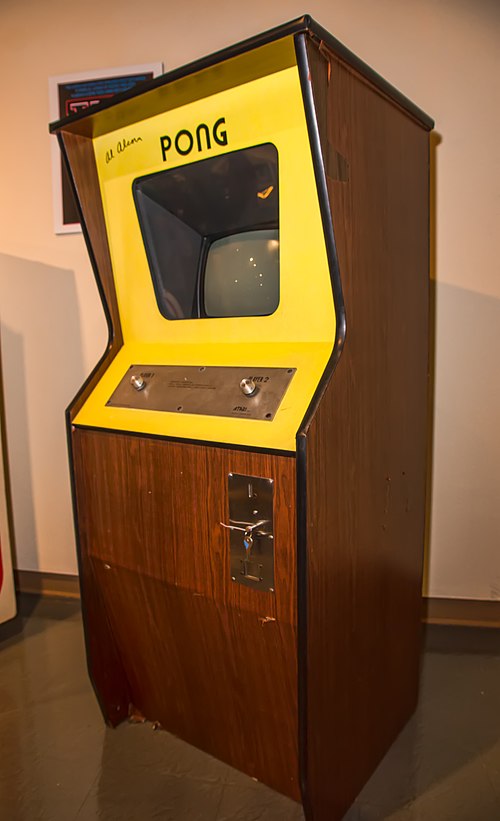
Atari Pong Released
Atari releases Pong, the first commercially successful arcade video game, popularizing electronic gaming and spurring the home console market. #gaming #history
Atari Pong Released By Chris Rand - Own work, CC BY-SA 3.0, https://commons.wikimedia.org/w/index.php?curid=28364913
1974 CE
Z-Buffer Algorithm Developed
Wolfgang Straßer describes the z-buffer algorithm for hidden surface removal, a key component in modern real-time 3D rendering. #computer-graphics #algorithm
Z-Buffer Algorithm Developed By -Zeus- - Own work, CC BY-SA 3.0, https://commons.wikimedia.org/w/index.php?curid=7355760
1975 CE
Utah Teapot Created
Martin Newell creates the Utah Teapot, a standard 3D test model used extensively in computer graphics research, becoming a cultural icon of the field. #computer-graphics #history
Utah Teapot Created By zzubnik (Nik Clark, Norwich, UK) - https://www.thingiverse.com/thing:852078, CC0, https://commons.wikimedia.org/w/index.php?curid=67029126
1977 CE
Phong Shading Published
Bui Tuong Phong publishes the Phong reflection model and Phong shading, providing realistic highlights and smoother surfaces in 3D rendering. #computer-graphics #algorithm
Phong Shading Published By Hipocrite at English Wikipedia - Transferred from en.wikipedia to Commons., Public domain, https://commons.wikimedia.org/w/index.php?curid=2098302
1978 CE
Blinn-Phong Shading Model
James Blinn modifies the Phong model to improve performance, widely adopted in real-time graphics. #computer-graphics #algorithm
1981 CE
First Significant CG in Film: 'Looker'
The film 'Looker' features the first use of 3D computer-generated imagery (CGI) in a feature film, created by Information International, Inc. #computer-graphics #film )
1982 CE
Tron Released
Disney's Tron is a landmark film in computer animation, using extensive 2D and 3D CGI sequences. #computer-graphics #film
1984 CE
Lucasfilm Graphics Group Founded
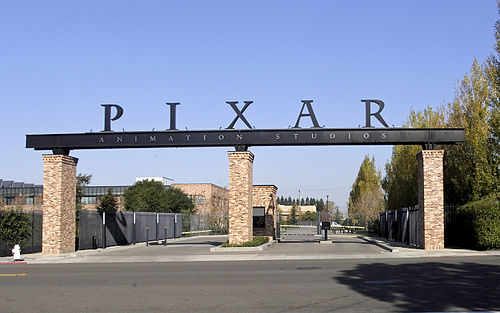
The precursor to Pixar is founded at Lucasfilm, later producing pioneering computer-animated shorts like 'The Adventures of André & Wally B.' #computer-graphics #animation
Lucasfilm Graphics Group Founded By Coolcaesar - Picture at Wikipedia, CC BY-SA 3.0, https://commons.wikimedia.org/w/index.php?curid=2220718
1986 CE
Pixar Founded as Independent Company
Steve Jobs buys the Lucasfilm graphics group, founding Pixar, which becomes a leader in computer animation and later develops RenderMan. #computer-graphics #animation
1987 CE
Commodore Amiga 500 Released
The Amiga 500 brings advanced graphics and sound capabilities to home users, influencing game development and multimedia production. #computer-graphics #hardware
Commodore Amiga 500 Released By Bill Bertram - Own work, CC BY-SA 2.5, https://commons.wikimedia.org/w/index.php?curid=350965
1988 CE
Pixar RenderMan Interface Standard
Pixar introduces the RenderMan Interface, a standard API for describing 3D scenes for photorealistic rendering, widely used in film visual effects. #computer-graphics #rendering )
1991 CE
Super Nintendo Mode 7
Nintendo's Super NES introduces Mode 7, a hardware-based affine transformation layer enabling pseudo-3D effects in 2D games. #gaming #hardware
Super Nintendo Mode 7 By Anomie - Own work, CC BY-SA 3.0, https://commons.wikimedia.org/w/index.php?curid=2064050
1992 CE
Virtua Racing Arcade
Sega releases Virtua Racing, one of the first 3D polygon-based arcade games, using real-time 3D graphics. #gaming #3d
1993 CE
Doom Released
id Software's Doom popularizes first-person shooters and uses a raycasting engine for real-time 3D rendering, influencing game design. #gaming #engine )
1994 CE
Sony PlayStation Launches in Japan
Sony's PlayStation uses a dedicated 3D graphics processor, bringing advanced 3D gaming to consoles and shifting the market toward polygon-based graphics. #gaming #console #3d )
Sony PlayStation Launches in Japan By Sony - Manabu Sakamoto - Sony, Public domain, https://commons.wikimedia.org/w/index.php?curid=38937139
1995 CE
Toy Story Released
Pixar's Toy Story is the first fully computer-animated feature film, rendered with RenderMan, demonstrating the potential of CGI in cinema. #computer-graphics #animation
1996 CE
Quake's Full 3D Engine
id Software's Quake uses a fully 3D engine with polygonal rendering, advanced lighting, and network multiplayer, setting new standards for real-time graphics. #gaming #engine )
1996 CE
3dfx Voodoo Graphics Accelerator
3dfx Interactive releases the Voodoo Graphics chip, the first dedicated 3D accelerator for consumer PCs, revolutionizing PC gaming graphics. #computer-graphics #hardware #gaming
3dfx Voodoo Graphics Accelerator By 3dfx Interactive, Inc. - https://web.archive.org/web/20000831020755/http://www.3dfx.com:80/comp/invest/2000annualreport.pdf, Public domain, https://commons.wikimedia.org/w/index.php?curid=48473385
1998 CE
Unreal Engine 1 Released
Epic Games releases Unreal Engine 1, used in the game Unreal, featuring a powerful renderer, level editor, and script system, becoming a widely licensed game engine. #gaming #engine
Unreal Engine 1 Released By Epic Games - unrealengine.com/en-US/branding (epicgames.ent.box.com/s/c2m8idcyejqvg5mjf4e2q73b7jbaghft/file/1537326414851), Public domain, https://commons.wikimedia.org/w/index.php?curid=152348877
1999 CE
Nvidia GeForce 256 GPU
Nvidia introduces the GeForce 256, marketed as the first 'Graphics Processing Unit' (GPU), with hardware transform and lighting, accelerating 3D graphics. #computer-graphics #hardware
Nvidia GeForce 256 GPU By Hyins - Own work, Public domain, https://commons.wikimedia.org/w/index.php?curid=11968119
2000 CE
PlayStation 2 Released
Sony's PlayStation 2 features the Emotion Engine and Graphics Synthesizer, providing powerful 3D graphics for its time, becoming the best-selling console. #gaming #console #3d
PlayStation 2 Released By Evan-Amos - Own work, Public domain, https://commons.wikimedia.org/w/index.php?curid=12821910
2001 CE
Microsoft Xbox Launches
The Xbox uses a custom Nvidia GPU and DirectX, bringing PC-style graphics to consoles and popularizing online gaming via Xbox Live. #gaming #console )
Microsoft Xbox Launches By Remove white background. Original by Evan-Amos. - Media:Xbox-Console-wDuke-L.jpg, Public domain, https://commons.wikimedia.org/w/index.php?curid=37808747
2004 CE
Half-Life 2 and Source Engine
Valve releases Half-Life 2 with the Source engine, featuring realistic physics (Havok), advanced shading, and facial animation, setting new bars for game graphics and immersion. #gaming #engine
2005 CE
Xbox 360 Unified Shader Architecture
Microsoft's Xbox 360 introduces a unified shader architecture, allowing flexible use of pixel and vertex shaders, later adopted by GPUs. #hardware #computer-graphics
2006 CE
Nvidia GeForce 8 Series (CUDA)
Nvidia's GeForce 8 series introduces CUDA, a parallel computing platform that leverages GPUs for general-purpose computation, expanding graphics hardware use. #computer-graphics #GPGPU
Nvidia GeForce 8 Series (CUDA) By Hyins - Own work, Public domain, https://commons.wikimedia.org/w/index.php?curid=11176214
2007 CE
Crysis: High-End Graphics Benchmark
Crysis from Crytek pushes PC graphics to new heights with advanced lighting, physics, and destructible environments, becoming a benchmark for years. #gaming #graphics )
2008 CE
iPhone 3G: Mobile Gaming Revolution
Apple's iPhone 3G and App Store launch, establishing mobile as a new gaming platform with touchscreen graphics, later evolving into powerful GPUs. #gaming #mobile
iPhone 3G: Mobile Gaming Revolution By JoBot164 - Own work, CC0, https://commons.wikimedia.org/w/index.php?curid=161073561
2009 CE
Avatar: Stereoscopic 3D and VFX
James Cameron's Avatar uses cutting-edge 3D stereoscopic filming and massive CGI scenes rendered with tools like RenderMan, reviving interest in 3D film. #computer-graphics #film )
2010 CE
DirectX 11 Released
Microsoft releases DirectX 11, introducing tessellation, compute shaders, and improved multi-threading, enhancing game visuals. #computer-graphics #api
DirectX 11 Released By Microsoft - Own work, Public domain, https://commons.wikimedia.org/w/index.php?curid=12503197
Sony and Microsoft release eighth-generation consoles with x86 architecture, 8GB RAM, and GPUs based on AMD GCN, enabling high-fidelity 1080p/4K gaming. #gaming #console
PlayStation 4 and Xbox One Launch By JoeJohnson2 (complied cropped adjusted) - Own work created from two existing images by Evan-Amos and one by EEIM, CC BY 4.0, https://commons.wikimedia.org/w/index.php?curid=195796042
2014 CE
Oculus Rift DK1: VR Graphics Revived
Oculus Rift developer kit sparks modern virtual reality, requiring high-fps, low-latency graphics, driving innovations in rendering and GPU design. #VR #computer-graphics
Oculus Rift DK1: VR Graphics Revived By Evan-Amos - Own work, Public domain, https://commons.wikimedia.org/w/index.php?curid=62084228
2016 CE
Nvidia Pascal Architecture (GTX 10 Series)
Nvidia's Pascal architecture brings significant performance and efficiency gains, with support for simultaneous multi-projection and improved VR gaming. #hardware #computer-graphics
Nvidia Pascal Architecture (GTX 10 Series) By Kaptainvet - Own work, CC BY-SA 4.0, https://commons.wikimedia.org/w/index.php?curid=99228901
2017 CE
Nintendo Switch: Hybrid Console
Nintendo Switch uses a custom Nvidia Tegra X1 chip, blending home console and portable gaming, with games like The Legend of Zelda: Breath of the Wild pushing mobile graphics. #gaming #console
Nintendo Switch: Hybrid Console By Nintendo - https://www.nintendo.co.jp/common/v2/img/ncommon/_common/logo/switch.svg, Public domain, https://commons.wikimedia.org/w/index.php?curid=55059979
2018 CE
Nvidia RTX 20 Series: Real-Time Ray Tracing
Nvidia launches GeForce RTX 20 series with dedicated RT cores for real-time ray tracing, marking a major leap in lighting realism, supported by tech like DLSS. #computer-graphics #raytracing
Nvidia RTX 20 Series: Real-Time Ray Tracing By 极客湾Geekerwan - YouTube: 售价2万卡皇TITAN RTX评测:史上最烂?失望透顶! – View/save archived versions on archive.org Archive link: https://web.archive.org/web/20240406183017/https://www.youtube.com/watch?v=zBjSJxoTEzw, CC BY 3.0, https://commons.wikimedia.org/w/index.php?curid=147142288
2019 CE
Unreal Engine 5 Revealed
Epic Games unveils Unreal Engine 5 with Nanite virtualized geometry and Lumen dynamic global illumination, promising film-quality real-time graphics. #gaming #engine
2020 CE
PlayStation 5 and Xbox Series X/S Launch
Ninth-generation consoles feature SSDs, ray-tracing support, and powerful AMD RDNA 2 GPUs, enabling faster loading and advanced graphics at 4K/120fps. #gaming #console #raytracing
PlayStation 5 and Xbox Series X/S Launch By Howardcorn33 - Own work, CC0, https://commons.wikimedia.org/w/index.php?curid=133893528
2021 CE
Nvidia Omniverse Platform
Nvidia Omniverse enables collaborative 3D simulations, using RTX and AI, expanding real-time ray tracing to industrial design and film. #computer-graphics #raytracing
2022 CE
AMD FSR 2.0 and Nvidia DLSS 3
Upscaling technologies become mainstream: AMD FSR 2.0 (open source) and Nvidia DLSS 3 (AI frame generation) improve performance while maintaining image quality. #computer-graphics #gaming
2023 CE
Real-Time Path Tracing Demos
Games like Cyberpunk 2077 and Portal RTX show full path tracing in real-time, powered by RTX 40 series, approaching cinematic quality in interactive media. #computer-graphics #raytracing
Real-Time Path Tracing Demos By Qutorial - Own work, CC BY-SA 4.0, https://commons.wikimedia.org/w/index.php?curid=49847721
2024 CE
Apple Vision Pro: Spatial Computing
Apple's Vision Pro headset uses dual-chip design (M2+R1) and micro-OLED displays, pushing graphics for mixed reality with eye-tracking and foveated rendering. #VR #AR #computer-graphics
Apple Vision Pro: Spatial Computing By BobSmith810 - Own work, CC BY 4.0, https://commons.wikimedia.org/w/index.php?curid=175264460