Encyclopedia/1. The Cosmos & The Natural World/1. Mathematics & Formal Systems/03. Calculus & Mathematical Analysis • Curated by Admin Timeline.sg
Complex analysis, the study of functions of a complex variable, and Riemann surfaces, which provide a geometric framework for multivalued functions, have evolved from early work on imaginary numbers in the 16th century to a rich modern field with connections to geometry, physics, and dynamics. This timeline covers key milestones from ancient foundations to contemporary developments, including contributions from diverse cultures such as the Islamic Golden Age, India, Japan, and China.
Chronological Storyline (45 Milestones)
628 CE
Brahmagupta's Rules for Negative Numbers and Zero
Indian mathematician Brahmagupta in Brāhmasphuṭasiddhānta establishes rules for arithmetic with negative numbers and zero, indirectly supporting later development of complex numbers. #mathematics #India
830 CE
Al-Khwarizmi's Algebra and Quadratic Equations
Al-Khwarizmi's Al-Kitab al-Mukhtasar fi Hisab al-Jabr wal-Muqabala develops algebra, including solutions of quadratic equations, which later necessitate complex numbers. #mathematics #Islam
Al-Khwarizmi's Algebra and Quadratic Equations By Zarateman - Own work, CC0, https://commons.wikimedia.org/w/index.php?curid=162213187
1427 CE
Al-Kashi's Decimal Fractions and Approximation
Persian mathematician Ghiyath al-Din al-Kashi approximates π and uses decimal fractions, contributing to numerical methods later used in complex analysis. #mathematics #Islam
Al-Kashi's Decimal Fractions and Approximation By Christies.com - https://www.christies.com/lot/lot-6162908, Public domain, https://commons.wikimedia.org/w/index.php?curid=115212624
1545 CE
Cardano's Ars Magna Mentions Complex Numbers
Gerolamo Cardano publishes Ars Magna, solving cubic equations and grappling with square roots of negative numbers, laying early groundwork for complex numbers. #mathematics #history )
1572 CE
Bombelli Formalizes Complex Number Rules
Rafael Bombelli's Algebra introduces systematic rules for manipulating complex numbers, including addition, multiplication, and notation, a crucial step in legitimizing imaginary numbers. #mathematics #algebra
Bombelli Formalizes Complex Number Rules By Unknown author - Book printed by editor Giovanni Rossi, Public domain, https://commons.wikimedia.org/w/index.php?curid=1591687
1637 CE
Descartes Coins 'Imaginary'
René Descartes in La Géométrie first uses the term 'imaginary' for complex numbers, distinguishing them from real numbers, though still with a pejorative connotation. #mathematics #philosophy
Descartes Coins 'Imaginary' By Original uploader was User:Caton at [1] - Originally from fr.wikipedia; description page is/was here., Public domain, https://commons.wikimedia.org/w/index.php?curid=1379032
1673 CE
Wallis Develops Early Geometric Representation
John Wallis in his Treatise of Algebra suggests representing complex numbers as points on a line, an early precursor to the complex plane. #mathematics #geometry
Wallis Develops Early Geometric Representation By After Godfrey Kneller - one or more third parties have made copyright claims against Wikimedia Commons in relation to the work from which this is sourced or a purely mechanical reproduction thereof. This may be due to recognition of the "sweat of the brow" doctrine, allowing works to be eligible for protection through skill and labour, and not purely by originality as is the case in the United States (where this website is hosted). These claims may or may not be valid in all jurisdictions. As such, use of this image in the jurisdiction of the claimant or other countries may be regarded as copyright infringement. Please see Commons:When to use the PD-Art tag for more information., Public domain, https://commons.wikimedia.org/w/index.php?curid=6365975
1696 CE
L'Hôpital's Work on Infinitesimal Calculus
Guillaume de l'Hôpital publishes Analyse des Infiniment Petits, the first textbook on differential calculus, later used in complex analysis. #mathematics #calculus
1730 CE
De Moivre's Formula Published
Abraham de Moivre publishes De Moivre's formula, connecting complex numbers to trigonometry: (cos x + i sin x)^n = cos(nx) + i sin(nx). #mathematics #trigonometry
1748 CE
Euler's Formula e^(ix) = cos x + i sin x
Leonhard Euler publishes Introductio in analysin infinitorum, introducing Euler's formula, a cornerstone of complex analysis linking exponential and trigonometric functions. #mathematics #analysis
Euler's Formula e^(ix) = cos x + i sin x By Original: GuntherDerivative work: Wereon - This file was derived from: Euler's formula.png:, CC BY-SA 3.0, https://commons.wikimedia.org/w/index.php?curid=821342
1777 CE
Euler Introduces i for Imaginary Unit
Leonhard Euler first uses the symbol i to denote √(-1), standardizing notation for the imaginary unit in his work on complex numbers. #mathematics #notation
Euler Introduces i for Imaginary Unit By Loadmaster (David R. Tribble) This image was made by Loadmaster (David R. Tribble). Email the author: David R. Tribble Also see my personal gallery at Google Photos - Own work, CC BY-SA 3.0, https://commons.wikimedia.org/w/index.php?curid=9696627
1799 CE
Gauss Proves Fundamental Theorem of Algebra
Carl Friedrich Gauss presents the first rigorous proof of the Fundamental Theorem of Algebra, demonstrating that every polynomial equation has a complex root, solidifying the importance of complex numbers. #mathematics #algebra
1806 CE
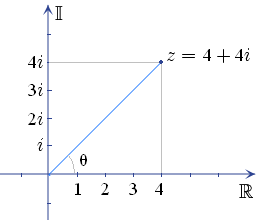
Argand Diagram Published
Jean-Robert Argand publishes a geometric interpretation of complex numbers as points in the plane, now known as the Argand diagram, independently conceived by Caspar Wessel in 1799. #mathematics #geometry
Argand Diagram Published By Unknown author, CC BY-SA 3.0, https://commons.wikimedia.org/w/index.php?curid=1616112
1814 CE
Cauchy Lays Foundations of Complex Analysis
Augustin-Louis Cauchy publishes his memoir on definite integrals, establishing the Cauchy–Riemann equations and laying the rigorous foundation for complex analysis. #mathematics #analysis
Cauchy Lays Foundations of Complex Analysis By Cauchy-Riemann.png: Keenan Crane vector version: VectorVoyager - This file was derived from: Cauchy-Riemann.png:, CC BY-SA 4.0, https://commons.wikimedia.org/w/index.php?curid=127954258
1825 CE
Cauchy Integral Theorem Formulated
Augustin-Louis Cauchy proves the integral theorem stating that the integral of a complex analytic function over a closed contour is zero, a central result in complex analysis. #mathematics #calculus
Cauchy Integral Theorem Formulated By Geek3 - Own work, CC BY-SA 3.0, https://commons.wikimedia.org/w/index.php?curid=5156881
1831 CE
Gauss Formalizes Complex Numbers as Points
Carl Friedrich Gauss in his work on biquadratic residues explicitly represents complex numbers as points in a plane and introduces the term 'complex number'. #mathematics #numbertheory
Gauss Formalizes Complex Numbers as Points By IkamusumeFan - Own work, CC BY-SA 4.0, https://commons.wikimedia.org/w/index.php?curid=42024951
1842 CE
Weierstrass Develops Analytic Continuation and Power Series
Karl Weierstrass establishes the theory of analytic functions via power series, defining analytic continuation and introducing the concept of function elements. #mathematics #analysis
1846 CE
Cauchy's Residue Theorem Introduced
Cauchy develops the residue theorem, enabling evaluation of complex integrals via residues and powering applications in number theory, physics, and engineering. #mathematics #analysis
1851 CE
Riemann's Doctoral Thesis on Riemann Surfaces
Bernhard Riemann's thesis Grundlagen für eine allgemeine Theorie der Functionen einer veränderlichen complexen Grösse introduces Riemann surfaces, revolutionizing the geometric understanding of multivalued functions. #mathematics #geometry
Riemann's Doctoral Thesis on Riemann Surfaces By Unknown author, CC BY-SA 4.0, https://commons.wikimedia.org/w/index.php?curid=152158193
1857 CE
Riemann Mapping Theorem Published
Riemann states the Riemann mapping theorem, asserting that any simply connected proper open subset of the complex plane is conformally equivalent to the unit disk. #mathematics #conformal
1858 CE
Riemann's Work on Hypergeometric Functions
Riemann publishes a seminal paper on hypergeometric functions, connecting them to monodromy and Riemann surfaces, advancing the theory of special functions. #mathematics #functions
Riemann's Work on Hypergeometric Functions By WalkingRadiance - Own work, CC BY-SA 4.0, https://commons.wikimedia.org/w/index.php?curid=122403556
1876 CE
Weierstrass's Theory of Elliptic Functions
Weierstrass publishes his theory of elliptic functions based on the Weierstrass ℘-function, providing a rigorous foundation for doubly periodic functions in complex analysis. #mathematics #functions
Weierstrass's Theory of Elliptic Functions By Oliver Zauzig - universitaetssammlungen.de, CC BY-SA 3.0, https://commons.wikimedia.org/w/index.php?curid=21552778
1879 CE
Picard's Little Theorem
Émile Picard proves his little theorem: every non-constant entire function takes every complex value except possibly one, a deep result on the range of analytic functions. #mathematics #analysis
1881 CE
Poincaré's Work on Fuchsian Functions
Henri Poincaré discovers automorphic functions (Fuchsian functions) using non-Euclidean geometry and complex analysis, unifying several areas of mathematics. #mathematics #geometry
Poincaré's Work on Fuchsian Functions By Januszkaja - Own work, CC BY-SA 3.0, https://commons.wikimedia.org/w/index.php?curid=18176441
1884 CE
Mittag-Leffler Theorem on Meromorphic Functions
Gösta Mittag-Leffler proves the Mittag-Leffler theorem, describing the existence of meromorphic functions with prescribed poles, a key tool in complex analysis. #mathematics #analysis
Mittag-Leffler Theorem on Meromorphic Functions By Brauer - Vetenskapsakademiens porträttsamling, Public domain, https://commons.wikimedia.org/w/index.php?curid=91564659
1892 CE
Hadamard's Theory of Entire Functions
Jacques Hadamard publishes his factorization theorem for entire functions of finite order, linking zeros and growth, fundamental for complex analysis and number theory. #mathematics #functions
1897 CE
Painlevé's Classification of Differential Equations
Paul Painlevé classifies second-order ODEs whose solutions have no movable critical points (Painlevé transcendents), now linked to complex analysis and integrable systems. #mathematics #equations
1907 CE
Koebe's Distortion Theorems for Univalent Functions
Paul Koebe proves distortion theorems for univalent functions, advancing geometric function theory and the study of conformal mappings. #mathematics #geometry
1912 CE
Carathéodory's Convergence Theorem
Constantin Carathéodory establishes the Carathéodory convergence theorem for simply connected domains, a key result in the theory of conformal mapping. #mathematics #conformal )
1916 CE
Bieberbach Conjecture Proposed
Ludwig Bieberbach conjectures that the coefficients of univalent functions satisfy |a_n| ≤ n, later proven by Louis de Branges in 1984, a landmark in geometric function theory. #mathematics #conjecture
1925 CE
Nevanlinna Theory Founded
Rolf Nevanlinna develops Nevanlinna theory, a deep approach to meromorphic functions based on the growth and value distribution, now a central pillar of complex analysis. #mathematics #analysis
1935 CE
Ahlfors Develops Covering Surface Theory
Lars Ahlfors introduces covering surfaces and uses them to prove the Denjoy conjecture, pioneering a geometric approach to complex analysis and earning a Fields Medal. #mathematics #geometry
Ahlfors Develops Covering Surface Theory By Konrad Jacobs, Erlangen - Mathematisches Institut Oberwolfach (MFO), https://opc.mfo.de/detail?photoID=20, CC BY-SA 2.0 de, https://commons.wikimedia.org/w/index.php?curid=3900645
1936 CE
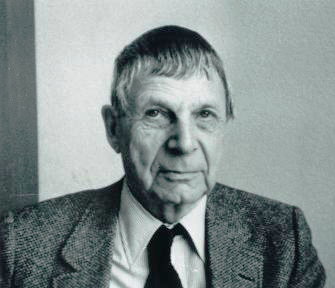
Oka Coherence Theorem for Several Complex Variables
Kiyoshi Oka proves the Oka coherence theorem, a fundamental result in several complex variables that opened the way to modern complex geometry. #mathematics #Japan
Oka Coherence Theorem for Several Complex Variables By Konrad Jacobs, Erlangen, Copyright is MFO - Mathematisches Forschungsinstitut Oberwolfach,https://opc.mfo.de/detail?photo_id=3147, CC BY-SA 2.0 de, https://commons.wikimedia.org/w/index.php?curid=12349202
1939 CE
Teichmüller Theory Initiated
Oswald Teichmüller introduces Teichmüller spaces, a deformation theory of Riemann surfaces that later becomes a crucial link between complex analysis, geometry, and topology. #mathematics #geometry
1948 CE
H. Cartan's Theorems A and B
Henri Cartan proves Theorems A and B for Stein manifolds, fundamental results in several complex variables and algebraic geometry. #mathematics #algebra
1950 CE
Hua Luogeng's Contributions to Several Complex Variables
Chinese mathematician Hua Luogeng publishes foundational work on harmonic analysis and several complex variables, advancing the theory in China and globally. #mathematics #China
Hua Luogeng's Contributions to Several Complex Variables By 牛畏予 - http://baike.baidu.com/albums/6351/6351.html#0$e78c65898b37b4d30e244463, Public domain, https://commons.wikimedia.org/w/index.php?curid=17315495
1965 CE
Bers and Ahlfors Extend Teichmüller Theory
Lipman Bers and Lars Ahlfors develop the theory of Teichmüller spaces and modular groups, enriching the interface between complex analysis and geometry. #mathematics #geometry
1978 CE
Newlander–Nirenberg Theorem on Complex Structures
The Newlander–Nirenberg theorem characterizes integrable almost complex structures, linking complex analysis to differential geometry and integrable systems. #mathematics #geometry
1982 CE
Mandelbrot Set and Complex Dynamics
Adrien Douady and John Hubbard publish their seminal work on the Mandelbrot set, catalyzing modern complex dynamics and stunning visual representations. #mathematics #dynamics
Mandelbrot Set and Complex Dynamics By Created by Wolfgang Beyer with the program Ultra Fractal 3. - Own work, CC BY-SA 3.0, https://commons.wikimedia.org/w/index.php?curid=321973
1984 CE
De Branges Proves Bieberbach Conjecture
Louis de Branges constructs a 384-page proof of the Bieberbach conjecture, a tour de force using complex analysis and hypergeometric functions. #mathematics #proof
1986 CE
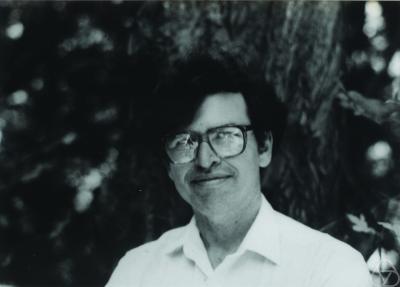
Thurston on Complex Analysis in 3D
William Thurston publishes his theory of complex analysis on surfaces and 3-manifolds, revealing deep connections between complex analysis, hyperbolic geometry, and knot theory. #mathematics #geometry
Thurston on Complex Analysis in 3D By George Bergman - https://opc.mfo.de/detail?photo_id=6119, GFDL 1.2, https://commons.wikimedia.org/w/index.php?curid=6090942
1991 CE
Kontsevich's Work on Complex Moduli Spaces
Maxim Kontsevich introduces stable maps and Gromov-Witten invariants, profoundly connecting complex geometry, algebraic geometry, and theoretical physics. #mathematics #physics
1998 CE
Perelman's Work on Ricci Flow and Complex Structures
Grigori Perelman's proof of the Poincaré conjecture uses Ricci flow, a tool that interacts with complex analysis and Riemann surfaces, influencing the study of moduli spaces. #mathematics #topology
2004 CE
Complex Analysis in String Theory (Mirror Symmetry)
The Strominger-Yau-Zaslow conjecture relates mirror symmetry to special Lagrangian submanifolds, deepening the role of complex geometry and Riemann surfaces in string theory. #physics #mathematics )
2006 CE
Nahm's Transform and Complex Analysis
Werner Nahm's work on monopoles and the Nahm transform uses complex analysis on Riemann surfaces, influencing gauge theory and mathematical physics. #physics #mathematics