300 BCE
Euclid's Combinatorial Lemma
Euclid's Elements includes combinatorial results like the number of ways to choose k objects from n, laying early foundations for combinatorics. #combinatorics #mathematics
This timeline traces the seminal contributions and legacies of leading figures in Combinatorics & Graph Theory, from ancient combinatorial puzzles to modern network theory, highlighting key milestones such as Euler's Seven Bridges, the Four Color Theorem, and Ramsey numbers.
Euclid's Elements includes combinatorial results like the number of ways to choose k objects from n, laying early foundations for combinatorics. #combinatorics #mathematics
Al-Khalil al-Farahidi's work on Arabic poetry includes systematic enumeration of possible word patterns, an early combinatorial method. #combinatorics #islamicgoldenage

Fibonacci introduces the Fibonacci sequence and combinatorial problems like rabbit breeding, influencing later combinatorial thinking. #combinatorics #mathematics

Gottfried Wilhelm Leibniz publishes a dissertation on combinatorial art, aiming to create a universal language of reasoning. #combinatorics #philosophy
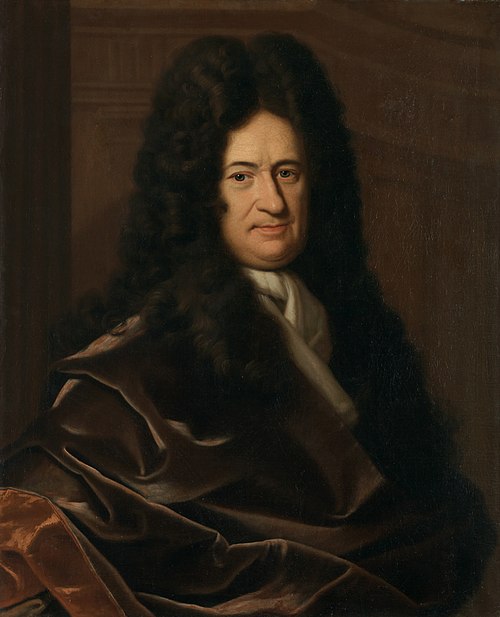
Leonhard Euler solves the Seven Bridges of Königsberg problem, founding graph theory. #graphtheory #combinatorics

Euler discovers V - E + F = 2 for convex polyhedra, a foundational result in graph theory and topology. #graphtheory #topology
Gauss's work includes combinatorial topics like quadratic residues and permutations, influencing number theory and combinatorics. #combinatorics #numbertheory

Eugène Catalan studies the sequence now named after him, counting parenthesizations and lattice paths. #combinatorics

Gustav Kirchhoff uses graph theory to analyze electrical circuits, introducing concepts like spanning trees. #graphtheory #physics
Francis Guthrie conjectures that four colors suffice to color any map, sparking a century-long quest. #graphtheory #coloring

Arthur Cayley enumerates trees, founding enumerative combinatorics and chemical graph theory. #combinatorics #graphtheory

James Joseph Sylvester coins the term 'graph' in a paper on algebraic invariants. #graphtheory #terminology
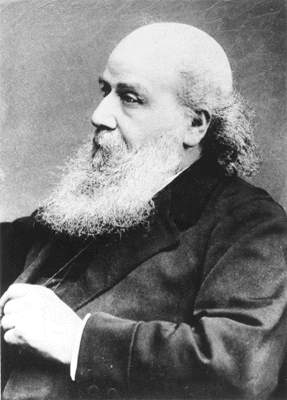
Frank Plumpton Ramsey's work on combinatorial logic later leads to Ramsey theory, though his seminal paper appears in 1930. #combinatorics #ramsey
Percy Heawood proves the five color theorem and poses the Heawood conjecture for map coloring on surfaces. #graphtheory #coloring

Julius Petersen introduces the Petersen graph, a key counterexample in graph theory. #graphtheory

William Burnside's lemma counts orbits under group actions, fundamental in combinatorial enumeration. #combinatorics #grouptheory
Kazimierz Kuratowski characterizes planar graphs, forbidding K5 and K3,3 subdivisions. #graphtheory #planarity

Frank Ramsey proves Ramsey's theorem, founding Ramsey theory: complete disorder is impossible. #combinatorics #ramsey
Hassler Whitney introduces matroids, abstracting linear independence and graph theory. #combinatorics #graphtheory
Dénes Kőnig publishes the first textbook on graph theory, 'Theorie der endlichen und unendlichen Graphen'. #graphtheory #textbook

R. Leonard Brooks proves Brooks' theorem, bounding chromatic number by maximum degree. #graphtheory #coloring

Pál Turán proves Turán's theorem, maximizing edges in a graph without a complete subgraph. #graphtheory #extremal
Paul Erdős and George Szekeres prove the Happy Ending problem, a Ramsey-type result in combinatorial geometry. #combinatorics #geometry

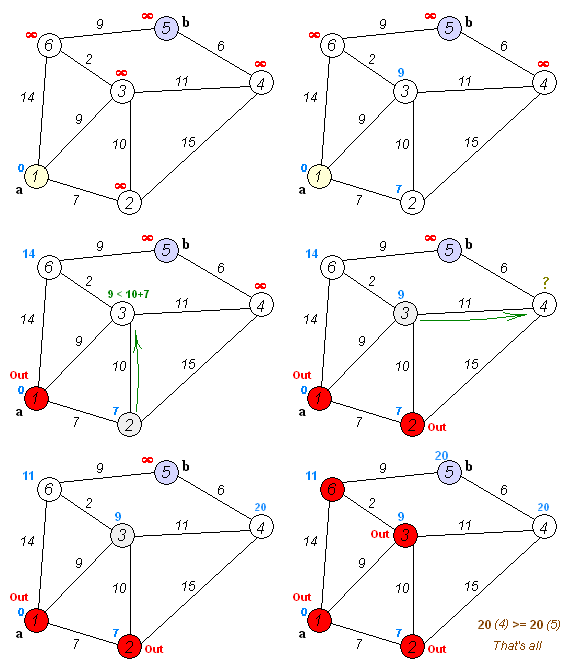
Edsger Dijkstra invents Dijkstra's algorithm for shortest paths in graphs, fundamental in network theory. #graphtheory #algorithms
Joseph Kruskal publishes Kruskal's algorithm for minimum spanning trees. #graphtheory #algorithms

George Pólya's enumeration theorem counts colorings under symmetry, a powerful combinatorial tool. #combinatorics #enumeration
Paul Erdős and Alfréd Rényi introduce the random graph model, founding probabilistic combinatorics. #graphtheory #randomgraphs

László Lovász proves the Lovász local lemma, a probabilistic method for avoiding bad events. #combinatorics #probability
Kenneth Appel and Wolfgang Haken prove the Four Color Theorem using computer assistance, a landmark in graph theory. #graphtheory #coloring
Donald Knuth's volume covers combinatorial algorithms, sorting, and searching, influencing computer science. #combinatorics #algorithms

Endre Szemerédi proves that any set of integers with positive density contains arbitrarily long arithmetic progressions, a milestone in additive combinatorics. #combinatorics #additive
Neil Robertson and Paul Seymour begin their series proving the Graph Minor Theorem, a deep structural result. #graphtheory #minors
Ronald Graham and Bruce Rothschild develop parameter sets in Ramsey theory, extending the field. #combinatorics #ramsey
László Babai develops a quasipolynomial-time algorithm for graph isomorphism, a major breakthrough. #graphtheory #algorithms

Avi Wigderson gives a polynomial-time algorithm for coloring 3-colorable graphs, advancing graph coloring. #graphtheory #coloring

Ben Green and Terence Tao prove that primes contain arbitrarily long arithmetic progressions, a stunning combinatorial number theory result. #combinatorics #numbertheory
Manindra Agrawal, Neeraj Kayal, and Nitin Saxena discover a deterministic polynomial-time primality test, using combinatorial number theory. #combinatorics #algorithms
Alfred Hales and Robert Jewett prove a multidimensional Ramsey theorem, foundational in combinatorial game theory. #combinatorics #ramsey
Various extensions of the Erdős–Ko–Rado theorem on intersecting families are proven, advancing extremal set theory. #combinatorics #extremal

Jean Bourgain proves a sum-product theorem in finite fields, with applications in combinatorics and number theory. #combinatorics #additive
Ehud Hrushovski applies model theory to combinatorics, proving new results in additive combinatorics. #combinatorics #modeltheory

The Kahn–Kalai conjecture on thresholds in random graphs is proved by Park and Pham, a breakthrough in probabilistic combinatorics. #combinatorics #randomgraphs
Maria Chudnovsky and colleagues prove the Erdős–Hajnal conjecture for certain graph classes, a major advance in graph theory. #graphtheory #ramsey

Hao Huang proves the sensitivity conjecture using combinatorial methods, solving a long-standing problem in Boolean function analysis. #combinatorics #computerscience