Classical Epic Poets & Ancient Authors (Homer to Shakespeare)
Encyclopedia/4. Arts & Literature/1. Literature, Mythology & Folklore/05. Literary Biographies • Curated by Admin Timeline.sg
This timeline traces the milestones of foundational epic poets and classical authors from ancient Greece, Rome, India, and Renaissance Europe, including Homer, Vyasa, Valmiki, Kalidasa, Virgil, Ovid, Dante, Chaucer, Shakespeare, and Milton.
Chronological Storyline (11 Milestones)
800 BCE
Homer Composes the Iliad and Odyssey
Homer, the legendary Greek poet, is believed to have composed the Iliad and Odyssey around the 8th century BCE. These epic poems, foundational to Western literature, recount the Trojan War and Odysseus's journey home, influencing countless later works. #epicpoetry #classics #literature
Homer Composes the Iliad and Odyssey By Photograph by Mike Peel (www.mikepeel.net). - Own work, CC BY-SA 4.0, https://commons.wikimedia.org/w/index.php?curid=193130675
700 BCE
Hesiod Writes Theogony and Works and Days
Hesiod, a contemporary of Homer, composed Theogony, detailing the genealogy of the gods, and Works and Days, a didactic poem on farming and morality. His works provide crucial insights into early Greek mythology and daily life. #epicpoetry #mythology #classics
Hesiod Writes Theogony and Works and Days By Yair Haklai - Own work, CC BY-SA 4.0, https://commons.wikimedia.org/w/index.php?curid=93437400
500 BCE
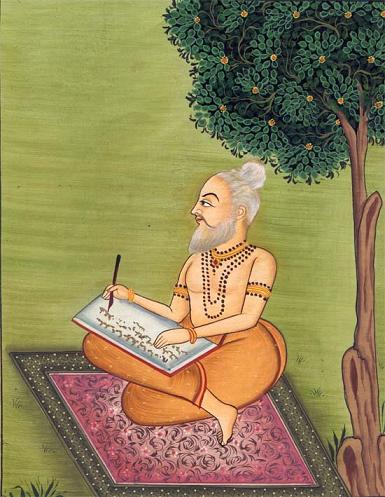
Valmiki Composes the Ramayana
Valmiki, the ancient Indian sage, is traditionally credited with composing the Ramayana, one of the two major Sanskrit epics. The poem narrates Prince Rama's quest to rescue his wife Sita from the demon king Ravana, embodying dharma and devotion. #epicpoetry #indianliterature #mythology
Valmiki Composes the Ramayana By Unknown author, Public domain, https://commons.wikimedia.org/w/index.php?curid=1058109
400 BCE
Vyasa Compiles the Mahabharata
Vyasa, the legendary sage, is traditionally considered the compiler of the Mahabharata, the longest epic poem in world literature. It narrates the Kurukshetra War and includes the Bhagavad Gita, a key Hindu scripture. #epicpoetry #indianliterature #mythology
Vyasa Compiles the Mahabharata By Yogesa - Own work, CC BY-SA 3.0, https://commons.wikimedia.org/w/index.php?curid=165234165
300 BCE
Kalidasa Flourishes in Classical India
Kalidasa, the greatest Sanskrit poet and dramatist, is believed to have lived around the 4th-5th century CE. His works, including Abhijnanashakuntalam (The Recognition of Shakuntala), are masterpieces of Indian literature, blending romance and mythology. #epicpoetry #indianliterature #drama
Kalidasa Flourishes in Classical India By William Douglas Almond - Internet Archive identifier: hutchinsonsstory00londuoft p.144, Public domain, https://commons.wikimedia.org/w/index.php?curid=39272105
19 BCE
Virgil Publishes the Aeneid
Virgil, the Roman poet, completed the Aeneid, an epic poem that tells the story of Aeneas, a Trojan hero who founded Rome. Commissioned by Emperor Augustus, it became a national epic and a cornerstone of Latin literature. #epicpoetry #romanliterature #classics
Virgil Publishes the Aeneid By Boyd Dwyer - IMG_4632, Public domain, https://commons.wikimedia.org/w/index.php?curid=39115301
8 CE
Ovid Completes Metamorphoses
Ovid, the Roman poet, finished Metamorphoses, a narrative poem that collects myths of transformation from creation to Julius Caesar's deification. It profoundly influenced later Western art and literature. #epicpoetry #mythology #classics
Ovid Completes Metamorphoses By Lucasaw - Own work, CC BY-SA 4.0, https://commons.wikimedia.org/w/index.php?curid=93178865
1320 CE
Dante Completes the Divine Comedy
Dante Alighieri finished the Divine Comedy, an epic poem describing his journey through Hell, Purgatory, and Paradise. Written in Italian vernacular, it established Tuscan dialect as the standard and shaped Western literature. #epicpoetry #italianliterature #renaissance
Dante Completes the Divine Comedy By Wolfgang Sauber - Own work, CC BY-SA 3.0, https://commons.wikimedia.org/w/index.php?curid=20888556
1387 CE
Chaucer Begins The Canterbury Tales
Geoffrey Chaucer started writing The Canterbury Tales, a collection of stories told by pilgrims on a journey. Written in Middle English, it is a masterpiece of English literature and a vivid portrait of medieval society. #epicpoetry #englishliterature #medieval
Chaucer Begins The Canterbury Tales By Unknown author - http://www.courses.fas.harvard.edu/~chaucer/canttales/sirthop/hoccport.htm, Public domain, https://commons.wikimedia.org/w/index.php?curid=47359536
1623 CE
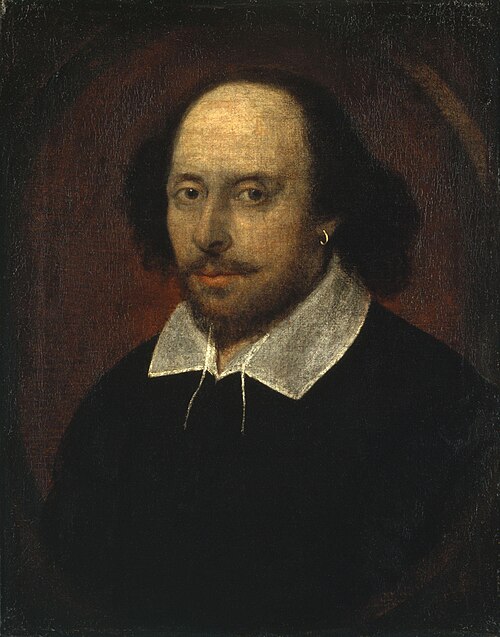
First Folio of Shakespeare's Plays Published
The First Folio, a collection of 36 of William Shakespeare's plays, was published seven years after his death. It preserved many of his works, including Macbeth and The Tempest, and is one of the most influential books in English literature. #drama #englishliterature #renaissance
First Folio of Shakespeare's Plays Published By Attributed to John Taylor - one or more third parties have made copyright claims against Wikimedia Commons in relation to the work from which this is sourced or a purely mechanical reproduction thereof. This may be due to recognition of the "sweat of the brow" doctrine, allowing works to be eligible for protection through skill and labour, and not purely by originality as is the case in the United States (where this website is hosted). These claims may or may not be valid in all jurisdictions. As such, use of this image in the jurisdiction of the claimant or other countries may be regarded as copyright infringement. Please see Commons:When to use the PD-Art tag for more information., Public domain, https://commons.wikimedia.org/w/index.php?curid=147141653
1667 CE
Milton Publishes Paradise Lost
John Milton published Paradise Lost, an epic poem in blank verse that recounts the Fall of Man. It is considered one of the greatest works of English literature, exploring themes of free will, temptation, and redemption. #epicpoetry #englishliterature #renaissance
Milton Publishes Paradise Lost By Mary Beale or Peter Lely - Digitised image, Christ's College, Cambridge, Public domain, https://commons.wikimedia.org/w/index.php?curid=49687759