Encyclopedia/4. Arts & Literature/1. Literature, Mythology & Folklore/05. Literary Biographies • Curated by Admin Timeline.sg
Classical Chinese poetry reached its zenith during the Tang dynasty with Li Bai's Daoist lyricism and Du Fu's historical realism, later evolving into Song Ci. This timeline traces key milestones from the Shijing to modern scholarship.
Chronological Storyline (45 Milestones)
600 BCE
Compilation of the Shijing (Classic of Poetry)
The Shijing, China's earliest anthology of poetry, is compiled with 305 poems reflecting folk songs, courtly hymns, and ritual odes. It establishes the foundation of Chinese poetic tradition. #poetry #history
Compilation of the Shijing (Classic of Poetry) By Aethelwolf Emsworth. - Own reproduction of a drawing made by Picnic11219 for Chinese Wikipedia., Public domain, https://commons.wikimedia.org/w/index.php?curid=65689742
300 BCE
Qu Yuan and the Chu Ci
Qu Yuan, a poet of the Warring States period, writes the 'Li Sao' (Encountering Sorrow), a seminal work of the Chu Ci anthology. His lyrical style influences later poets like Li Bai. #poetry #china
Qu Yuan and the Chu Ci By Chen Hongshou - File:Qu Yuan Chen Hongshou.jpg, Public domain, https://commons.wikimedia.org/w/index.php?curid=17833038
196 CE
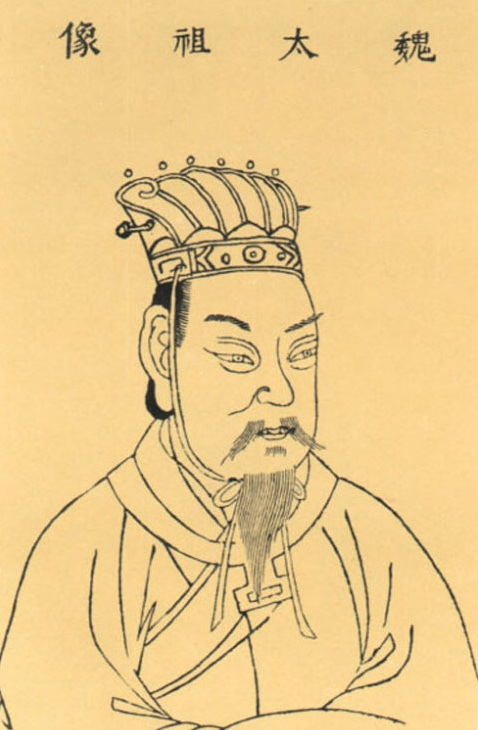
Cao Cao and Jian'an Poetry
Cao Cao, a warlord and poet, leads the Jian'an school, known for its vigorous style and social concern. His son Cao Zhi becomes a renowned poet. #poetry #china
Cao Cao and Jian'an Poetry By Wang Qi - A copy of w:Sancai Tuhui, Public domain, https://commons.wikimedia.org/w/index.php?curid=10217506
265 CE
Tao Yuanming and Pastoral Poetry
Tao Yuanming, a poet of the Six Dynasties, creates the pastoral poetry genre with works like 'Returning to Live in the Country'. His simple style influences later poets. #poetry #china
Tao Yuanming and Pastoral Poetry By Chen Hongshou - The Yorck Project (2002) 10.000 Meisterwerke der Malerei (DVD-ROM), distributed by DIRECTMEDIA Publishing GmbH. ISBN: 3936122202., Public domain, https://commons.wikimedia.org/w/index.php?curid=149194
502 CE
Xie Lingyun and Landscape Poetry
Xie Lingyun pioneers landscape poetry (shanshui), blending Buddhist philosophy with vivid natural descriptions. His work influences Wang Wei. #poetry #china
Xie Lingyun and Landscape Poetry By Kanō Tsunenobu (1636-1713) - http://www.360doc.com/content/15/0302/21/2369606_452072774.shtml, Public domain, https://commons.wikimedia.org/w/index.php?curid=68569256
618 CE
Tang Dynasty Begins: Golden Age of Poetry
The Tang dynasty is founded, ushering in a golden age of Chinese poetry. The civil service examination system emphasizes poetic skill, fostering a culture of verse. #poetry #history
Tang Dynasty Begins: Golden Age of Poetry By Kanguole - Own work Boundaries from Twitchett, Denis and Wechsler, Howard J. (1979), "Kao-tsung (reign 649–83) and the Empress Wu: The Inheritor and the Usurper", in Denis Twitchett and John Fairbank (eds.), The Cambridge History of China, Volume 3: Sui and T'ang China, 589–906, Part I, Cambridge University Press, ISBN 978-0-521-21446-9, (Map 8 p.281) and map 9 (p. 283). Blunden, Caroline and Elvin, Mark (1983), Cultural Atlas of China, Oxford: Phaidon Press, ISBN 0-7148-2309-0, pp. 26, 92–93. Shin, Michael D., ed. (2014) Korean History in Maps, Cambridge University Press, pp. 39, 47 ISBN: 978-1-107-09846-6. (pre-conquest extent of Baekje, approximating the extent of the Ungjin Commandery) Coastline and lakes from Natural Earth 1:50m Physical Vectors Conversion to SVG using svgis, CC BY-SA 4.0, https://commons.wikimedia.org/w/index.php?curid=131635251
701 CE
Birth of Wang Wei
Wang Wei, a poet, painter, and musician, is born. He becomes a master of landscape poetry and a leading figure of the Tang. #poetry #china )
Birth of Wang Wei By Unknown author, Public domain, https://commons.wikimedia.org/w/index.php?curid=1169187
701 CE
Birth of Li Bai (Li Po)
Li Bai, later known as the 'Poet Immortal', is born in Central Asia (modern-day Kyrgyzstan). His romantic, Daoist-inspired poetry becomes iconic. #poetry #china
Birth of Li Bai (Li Po) By Liang Kai - Cropped from original file located at: E0008311 李白吟行図 - 東京国立博物館 画像検索. Tokyo National Museum., Public domain, https://commons.wikimedia.org/w/index.php?curid=35134
712 CE
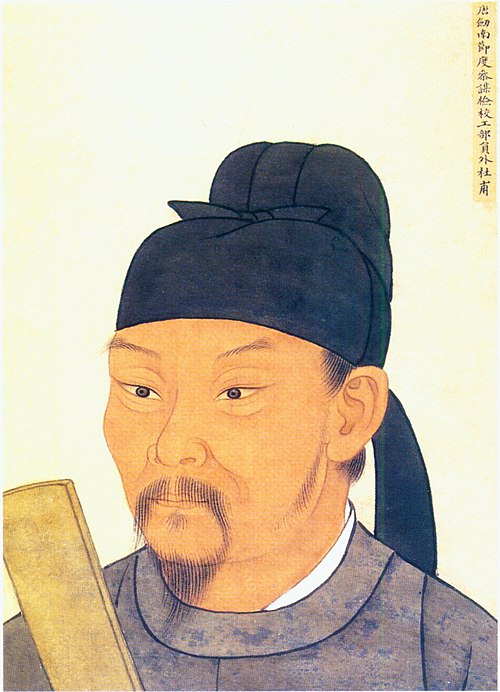
Birth of Du Fu
Du Fu, later called the 'Poet Sage', is born in Gongyi, Henan. His poetry reflects the turmoil of the An Lushan Rebellion and social injustice. #poetry #china
Birth of Du Fu By Unknown author - http://202.121.7.7/person/dzzgx/030124dufu2.jpg, Public domain, https://commons.wikimedia.org/w/index.php?curid=111730
744 CE
Li Bai and Du Fu Meet
Li Bai and Du Fu meet for the first time in Luoyang, forming a legendary friendship. Their exchange influences both poets' works. #poetry #china
755 CE
An Lushan Rebellion Begins
The An Lushan Rebellion devastates the Tang empire. Du Fu's poetry, such as 'Spring View', captures the suffering and becomes a historical record. #poetry #history
An Lushan Rebellion Begins By SY - Own work, CC BY-SA 4.0, https://commons.wikimedia.org/w/index.php?curid=60785139
761 CE
Death of Wang Wei
Wang Wei dies in Chang'an. His nature poetry and Chan Buddhist themes leave a lasting impact on Chinese verse. #poetry #china )
762 CE
Death of Li Bai
Li Bai dies in Dangtu, Anhui, reportedly from drowning while trying to embrace the moon's reflection. His legacy as the 'Poet Immortal' endures. #poetry #china
770 CE
Death of Du Fu
Du Fu dies in Tanzhou (modern Changsha) on a boat, impoverished. His poetry later earns him the title 'Poet Sage' and profound influence. #poetry #china
772 CE
Birth of Bai Juyi
Bai Juyi, a Tang poet known for his accessible style and social criticism, is born. His 'Song of Everlasting Sorrow' is a masterpiece. #poetry #china
Birth of Bai Juyi By Unknown author - 清宮殿藏本, Public domain, https://commons.wikimedia.org/w/index.php?curid=151753840
813 CE
Birth of Li He
Li He, a Tang poet known for his fantastical and melancholic style, is born. His work influences later poets. #poetry #china
Birth of Li He By Unknown author, Public domain, https://commons.wikimedia.org/w/index.php?curid=1165703
960 CE
Song Dynasty Begins: Rise of Ci Poetry
The Song dynasty is founded, and the ci (lyric) form flourishes. Poets like Su Shi and Li Qingzhao innovate within this genre. #poetry #history
Song Dynasty Begins: Rise of Ci Poetry By China - Song Dynasty - cs.svg: User:Mozzan derivative work: Kanguole - China 11a.jpg: User:LiDaobing based on Tan Qixiang (ed.), Zhongguo lishi ditu (中国历史地图集; 1982) China - Song Dynasty - cs.svg: User:Mozzan, CC BY-SA 3.0, https://commons.wikimedia.org/w/index.php?curid=39938105
1037 CE
Birth of Su Shi (Su Dongpo)
Su Shi, a prolific poet, essayist, and calligrapher of the Song dynasty, is born. He masters the ci form and writes iconic works like 'Prelude to Water Melody'. #poetry #china
Birth of Su Shi (Su Dongpo) By Zhao Mengfu - Not stated by uploader, Public domain, https://commons.wikimedia.org/w/index.php?curid=708061
1084 CE
Birth of Li Qingzhao
Li Qingzhao, the most famous female poet in Chinese history, is born. Her ci poetry captures personal emotion and later national tragedy. #poetry #china
Birth of Li Qingzhao By Vitsuha - Own work, CC0, https://commons.wikimedia.org/w/index.php?curid=159715792
1101 CE
Death of Su Shi
Su Shi dies in Changzhou. His legacy as a versatile genius and his contributions to ci poetry are immense. #poetry #china
1127 CE
Jin-Song Wars and Li Qingzhao's Flight
The Jurchen Jin dynasty invades northern China, forcing Li Qingzhao to flee south. Her later poetry reflects loss and longing. #poetry #history
1140 CE
Birth of Xin Qiji
Xin Qiji, a Song poet and military leader, is born. His ci poetry combines heroic themes with lyrical beauty. #poetry #china
Birth of Xin Qiji By Huangdan2060 - Own work, CC BY 3.0, https://commons.wikimedia.org/w/index.php?curid=35548649
1155 CE
Death of Li Qingzhao
Li Qingzhao dies in obscurity. Her surviving poems become celebrated for their emotional depth and technical mastery. #poetry #china
1207 CE
Death of Xin Qiji
Xin Qiji dies, leaving a legacy of patriotic ci poetry that influences later generations. #poetry #china
1279 CE
Fall of Song Dynasty: End of Classical Ci Era
The Mongol conquest ends the Song dynasty. The ci form declines but remains influential in later literature. #poetry #history
1330 CE
Compilation of 'Three Hundred Tang Poems'
The anthology 'Three Hundred Tang Poems' is compiled by Sun Zhu, becoming the most influential collection of Tang poetry. It preserves works of Li Bai, Du Fu, and others. #poetry #china
Compilation of 'Three Hundred Tang Poems' By First compiled around 1763 by Sun Zhu (1722-1778), the Qing Dynasty scholar, also known as Hengtang Tuishi Published in 1932 民国二十年上海扫叶山房石印本。 - Three Hundred Tang Poems, with citations., Public domain, https://commons.wikimedia.org/w/index.php?curid=69950120
1644 CE
Ming-Qing Transition: Poetry of Loyalism
The fall of the Ming dynasty inspires loyalist poets like Gu Yanwu and Wang Fuzhi, who express grief and resistance in verse. #poetry #history
Ming-Qing Transition: Poetry of Loyalism By Albert Herrmann Creator:Q1509115 & Georg Westermann - Historical and Commercial Atlas of China, Public domain, https://commons.wikimedia.org/w/index.php?curid=158240988
1711 CE
Birth of Yuan Mei
Yuan Mei, a Qing poet and critic, is born. He advocates for individual expression and writes poetry on everyday life. #poetry #china
Birth of Yuan Mei By Luo Ping - Univerſity of Zurich, Inſtitute of Art Hiſtory, Public domain, https://commons.wikimedia.org/w/index.php?curid=58539845
1792 CE
Birth of Gong Zizhen
Gong Zizhen, a Qing poet and reformer, is born. His poetry critiques society and calls for change. #poetry #china
Birth of Gong Zizhen By 清人绘 - http://diglweb.zjlib.cn:8081/zjtsg/mingren/cypicxl.jsp?channelid=91693&record=895, Public domain, https://commons.wikimedia.org/w/index.php?curid=58054876
1841 CE
Death of Gong Zizhen
Gong Zizhen dies, leaving a legacy of socially engaged poetry that influences modern Chinese literature. #poetry #china
1898 CE
Huang Zunxian and Poetry Reform
Huang Zunxian, a diplomat and poet, advocates for 'poetic revolution' to incorporate modern themes and vernacular language. #poetry #china
Huang Zunxian and Poetry Reform By Unknown author - 黃遵憲:近代中國走向世界第一人, Public domain, https://commons.wikimedia.org/w/index.php?curid=15301049
1919 CE
May Fourth Movement: Vernacular Poetry
The May Fourth Movement promotes vernacular Chinese (baihua) in literature. Poets like Hu Shi and Xu Zhimo pioneer new poetry forms. #poetry #history
May Fourth Movement: Vernacular Poetry By Unknown author - Hong Kong Central Library (zh:香港中央圖書館) exhibition in April 2019 for the celebration of the 100th anniversary of May Fourth Movement. Taken from April 2019 SSG 17.jpg., Public domain, https://commons.wikimedia.org/w/index.php?curid=437318
1920 CE
Hu Shi Publishes 'Experiments'
Hu Shi publishes 'Experiments', the first collection of vernacular Chinese poetry, marking the birth of modern Chinese poetry. #poetry #china
Hu Shi Publishes 'Experiments' By Unknown author - http://localsev.lib.pku.edu.cn/bdms/bdms_portal/photos.asp?id=6, Public domain, https://commons.wikimedia.org/w/index.php?curid=190906320
1923 CE
Xu Zhimo and the Crescent Moon Society
Xu Zhimo co-founds the Crescent Moon Society, promoting romantic and Western-influenced poetry. His poem 'Saying Goodbye to Cambridge' becomes iconic. #poetry #china
Xu Zhimo and the Crescent Moon Society By Unknown author - http://www.dg163.cn/Files/File/2009-9/14/I7JF4K7G5E203339F8.jpg, Public domain, https://commons.wikimedia.org/w/index.php?curid=17163608
1931 CE
Death of Xu Zhimo
Xu Zhimo dies in a plane crash. His romantic poetry continues to be widely read. #poetry #china
1949 CE
Founding of PRC: Socialist Poetry
The People's Republic of China is founded. Poetry becomes a tool for socialist propaganda, with poets like Guo Moruo and Ai Qing adapting to new themes. #poetry #history
Founding of PRC: Socialist Poetry By Zeng Liansong - Standard version of national flag image for online usage is released on the website of the National People's Congress and the Government of China. (网络使用的国旗图案标准版本在中国人大网和中国政府网上发布。), Public domain, https://commons.wikimedia.org/w/index.php?curid=436175
1958 CE
Great Leap Forward and Folk Poetry Campaign
Mao Zedong launches the 'New Folk Poetry' campaign, encouraging mass poetry writing. Millions of poems are produced, but quality varies. #poetry #history
1966 CE
Cultural Revolution: Poetry Suppression
The Cultural Revolution suppresses traditional and modern poetry. Many poets are persecuted, and classical works are banned. #poetry #history
1976 CE
Tiananmen Poetry Incident
During the Tiananmen Incident, poems mourning Zhou Enlai are posted at the monument. This sparks the 'April Fifth Movement' and a resurgence of protest poetry. #poetry #history
1978 CE
Reform and Opening: Misty Poetry
The 'Misty Poetry' movement emerges, with poets like Bei Dao, Gu Cheng, and Shu Ting using obscure imagery to express individuality. #poetry #china
1989 CE
Death of Hai Zi
Hai Zi, a prominent post-Misty poet, commits suicide. His poem 'Facing the Sea, with Spring Blossoms' becomes widely known. #poetry #china
1993 CE
Nobel Prize in Literature: Gao Xingjian
Gao Xingjian, a Chinese-French novelist and playwright, wins the Nobel Prize in Literature. His works include poetry and drama. #poetry #literature
Nobel Prize in Literature: Gao Xingjian By Jwh - Own work, CC BY-SA 3.0 lu, https://commons.wikimedia.org/w/index.php?curid=65200522
2000 CE
Nobel Prize in Literature: Gao Xingjian (repeated)
Gao Xingjian receives the Nobel Prize in Literature for his oeuvre, including poetry. #poetry #literature
2012 CE
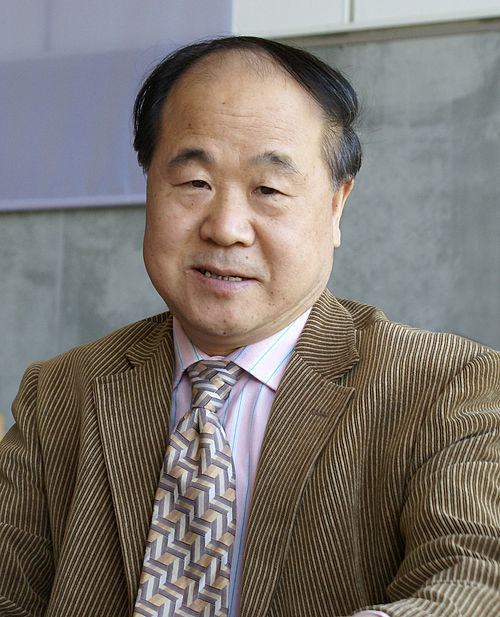
Mo Yan Wins Nobel Prize
Mo Yan, a Chinese novelist, wins the Nobel Prize in Literature. His works incorporate folk traditions and historical narratives. #literature #china
Mo Yan Wins Nobel Prize By Johannes Kolfhaus, Gymn. Marienthal - [1], CC BY-SA 3.0, https://commons.wikimedia.org/w/index.php?curid=4827061
2015 CE
Digital Revival of Classical Poetry
Apps and social media platforms popularize classical Chinese poetry among youth. TV shows like 'Chinese Poetry Competition' boost interest. #poetry #china