Calculus & Infinite Series: From Kerala School to Newton & Leibniz
Encyclopedia/1. The Cosmos & The Natural World/1. Mathematics & Formal Systems/03. Calculus & Mathematical Analysis • Curated by Admin Timeline.sg
The development of calculus and infinite series spans from the Kerala School's trigonometric series in the 14th century to the rigorous foundations laid by Cauchy and Weierstrass in the 19th century. Key figures include Madhava, Newton, Leibniz, Euler, and Cauchy, whose work transformed mathematics and enabled modern science.
Chronological Storyline (47 Milestones)
1350 CE
Madhava of Sangamagrama discovers infinite series for sine and cosine
Madhava, founder of the Kerala School of astronomy and mathematics, develops infinite series expansions for trigonometric functions, including the sine and cosine series. These are among the earliest known infinite series in mathematics, predating European developments by centuries. #mathematics #calculus #series
1400 CE
Madhava discovers the Leibniz series for π
Madhava discovers the infinite series π/4 = 1 - 1/3 + 1/5 - 1/7 + ..., later known as the Leibniz series. He also provides a correction term for faster convergence, demonstrating advanced understanding of series. #mathematics #pi #series
1440 CE
Parameshvara writes commentaries on Madhava's work
Parameshvara, a student of Madhava, writes commentaries that preserve and expand upon Madhava's series expansions. His works help transmit the Kerala School's mathematical discoveries to later generations. #mathematics #history
1500 CE
Nilakantha Somayaji writes Tantrasangraha
Nilakantha Somayaji compiles the Tantrasangraha, which includes series expansions for trigonometric functions and the arctangent series. This work represents a high point of the Kerala School's mathematical achievements. #mathematics #astronomy
1550 CE
Jyeshthadeva writes Yuktibhāṣā
Jyeshthadeva writes the Yuktibhāṣā, a comprehensive treatise on the mathematics of the Kerala School. It provides proofs and derivations for infinite series, including the sine and cosine series, and is considered one of the first calculus texts. #mathematics #calculus
Jyeshthadeva writes Yuktibhāṣā By Jyesthadeva (author) J. L. Whish (collector) - https://archive.org/details/raswhishNA-124/page/n83/mode/1up?view=theater, Public domain, https://commons.wikimedia.org/w/index.php?curid=132643908
1588 CE
Simon Stevin publishes tables of trigonometric functions
Simon Stevin publishes tables of trigonometric functions, contributing to the practical use of trigonometry. His work influences later mathematicians in the development of calculus. #mathematics #trigonometry
Simon Stevin publishes tables of trigonometric functions By Unknown author - Digitool Leiden University Library, http://digitalcollections.universiteitleiden.nl, Public domain, https://commons.wikimedia.org/w/index.php?curid=72690
1614 CE
John Napier introduces logarithms
John Napier publishes Mirifici Logarithmorum Canonis Descriptio, introducing logarithms as a computational aid. Logarithms simplify multiplication and division, and later become integral to calculus. #mathematics #logarithms
John Napier introduces logarithms By Unknown author - https://www.nationalgalleries.org/art-and-artists/3383, Public domain, https://commons.wikimedia.org/w/index.php?curid=154916365
1629 CE
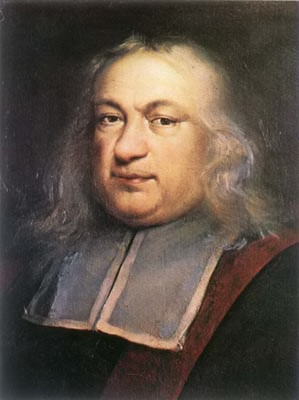
Pierre de Fermat develops method of finding maxima and minima
Fermat develops a method for finding maxima and minima using infinitesimals, a precursor to differential calculus. He also works on tangents and quadrature, laying groundwork for Newton and Leibniz. #mathematics #calculus
Pierre de Fermat develops method of finding maxima and minima By Unknown author - https://web.archive.org/web/20191028044928/http://www-groups.dcs.st-and.ac.uk/~history/PictDisplay/Fermat.html, Public domain, https://commons.wikimedia.org/w/index.php?curid=36804
Cavalieri introduces the method of indivisibles, a precursor to integral calculus. His work allows calculation of areas and volumes by summing infinitely many indivisible elements. #mathematics #calculus
Bonaventura Cavalieri publishes Geometria Indivisibilibus By Unknown author - Trattato della sfera e prattiche per vso di essa, Roma, 1682, Public domain, https://commons.wikimedia.org/w/index.php?curid=8546341
1637 CE
René Descartes publishes La Géométrie
Descartes' La Géométrie introduces analytic geometry, linking algebra and geometry. This provides a foundation for calculus by allowing curves to be represented by equations. #mathematics #geometry
René Descartes publishes La Géométrie By Original uploader was User:Caton at [1] - Originally from fr.wikipedia; description page is/was here., Public domain, https://commons.wikimedia.org/w/index.php?curid=1379032
1655 CE
John Wallis publishes Arithmetica Infinitorum
Wallis introduces the concept of infinite series and the symbol ∞ for infinity. He also develops the Wallis product for π, influencing Newton's work on series. #mathematics #series
John Wallis publishes Arithmetica Infinitorum By After Godfrey Kneller - one or more third parties have made copyright claims against Wikimedia Commons in relation to the work from which this is sourced or a purely mechanical reproduction thereof. This may be due to recognition of the "sweat of the brow" doctrine, allowing works to be eligible for protection through skill and labour, and not purely by originality as is the case in the United States (where this website is hosted). These claims may or may not be valid in all jurisdictions. As such, use of this image in the jurisdiction of the claimant or other countries may be regarded as copyright infringement. Please see Commons:When to use the PD-Art tag for more information., Public domain, https://commons.wikimedia.org/w/index.php?curid=6365975
1665 CE
Isaac Newton develops method of fluxions
During the plague years, Newton develops his method of fluxions, a form of differential calculus. He applies it to find tangents, areas, and solve problems in physics, but does not publish immediately. #mathematics #calculus
Isaac Newton develops method of fluxions By Godfrey Kneller - File:Portrait of Sir Isaac Newton, 1689.jpg from https://exhibitions.lib.cam.ac.uk/linesofthought/artifacts, Public domain, https://commons.wikimedia.org/w/index.php?curid=132521185
1666 CE
Newton writes De Analysi per Aequationes Numero Terminorum Infinitas
Newton writes a manuscript on infinite series and fluxions, circulating it among colleagues. This work contains the binomial theorem for fractional exponents and methods for solving differential equations. #mathematics #series
1668 CE
James Gregory discovers the Gregory series for arctangent
James Gregory independently discovers the arctangent series, later known as the Gregory series. He also works on the fundamental theorem of calculus, linking differentiation and integration. #mathematics #series
James Gregory discovers the Gregory series for arctangent By John Scougal - https://artuk.org/discover/artworks/james-gregory-16381675-ma-frs-196636, Public domain, https://commons.wikimedia.org/w/index.php?curid=168216215
1670 CE
Isaac Barrow publishes Lectiones Geometricae
Barrow's lectures contain methods for finding tangents and areas, and he recognizes the inverse relationship between them. His work influences Newton's development of calculus. #mathematics #calculus
Isaac Barrow publishes Lectiones Geometricae By Mary Beale - https://artuk.org/discover/artworks/isaac-barrow-16301677-master-16731677-mathematician-and-theologian-134861, Public domain, https://commons.wikimedia.org/w/index.php?curid=60043167
1671 CE
Newton writes De Methodis Serierum et Fluxionum
Newton completes a treatise on fluxions and series, but it remains unpublished until 1736. The work systematizes his calculus methods and includes applications to geometry and physics. #mathematics #calculus
Newton writes De Methodis Serierum et Fluxionum By Isaac Newton - File:The method of fluxions and infinite series.djvu, Public domain, https://commons.wikimedia.org/w/index.php?curid=54955387
1673 CE
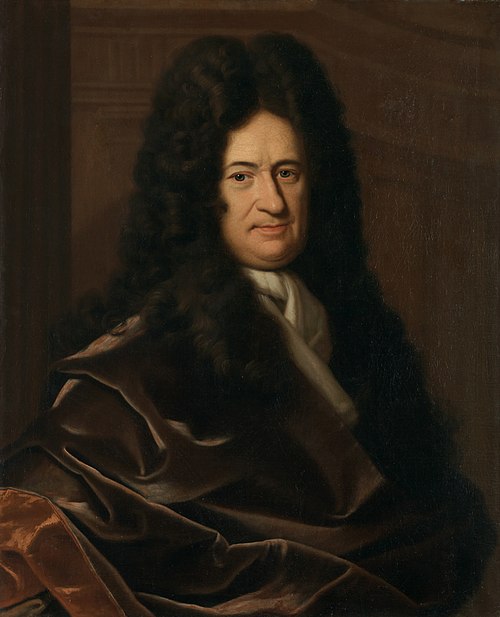
Leibniz develops differential calculus
Gottfried Wilhelm Leibniz independently develops differential calculus, introducing the notation dx and dy. He also discovers the product rule and chain rule, and begins corresponding with other mathematicians. #mathematics #calculus
Leibniz develops differential calculus By Christoph Bernhard Francke - Herzog Anton Ulrich-Museum, online, Public domain, https://commons.wikimedia.org/w/index.php?curid=53159699
1675 CE
Leibniz introduces integral sign ∫
Leibniz introduces the integral sign ∫ as an elongated S for summa, and develops notation for integration. His notation becomes standard due to its convenience. #mathematics #notation
1684 CE
Leibniz publishes Nova Methodus pro Maximis et Minimis
Leibniz publishes the first paper on differential calculus, detailing his method for finding maxima, minima, and tangents. This marks the first public presentation of calculus. #mathematics #calculus
Leibniz publishes Nova Methodus pro Maximis et Minimis By G. W. Leibniz - https://archive.org/details/s1id13206500/page/467/mode/1up, Public domain, https://commons.wikimedia.org/w/index.php?curid=140197496
1686 CE
Leibniz publishes De Geometria Recondita
Leibniz publishes a paper on integral calculus, introducing the integral sign and discussing the fundamental theorem. He also begins the notation for higher differentials. #mathematics #calculus
1687 CE
Newton publishes Philosophiæ Naturalis Principia Mathematica
Newton's Principia uses geometric methods with infinitesimals to derive laws of motion and universal gravitation. Although not using his fluxional notation, it demonstrates the power of calculus in physics. #physics #calculus
Newton publishes Philosophiæ Naturalis Principia Mathematica By The original uploader was Zhaladshar at English Wikisource. - Transferred from en.wikisource to Commons. (previous image from another copy) Internet Archive (current image from the Bern Dibner copy), Public domain, https://commons.wikimedia.org/w/index.php?curid=2681838
1691 CE
Michel Rolle criticizes calculus with Rolle's theorem
Rolle publishes a critique of calculus, but his name becomes associated with Rolle's theorem, a fundamental result in calculus. The theorem states that a differentiable function has a stationary point between two equal values. #mathematics #calculus
Michel Rolle criticizes calculus with Rolle's theorem By the.ever.kid - Own work, CC BY-SA 3.0, https://commons.wikimedia.org/w/index.php?curid=20056237
1696 CE
Guillaume de l'Hôpital publishes Analyse des Infiniment Petits
L'Hôpital publishes the first textbook on differential calculus, which includes the rule for evaluating limits of indeterminate forms (L'Hôpital's rule). The rule was actually discovered by Johann Bernoulli. #mathematics #calculus
1704 CE
Newton publishes Opticks with quadrature appendix
Newton's Opticks includes an appendix on quadrature (integration) and fluxions, providing more details on his calculus. This helps disseminate his methods. #physics #calculus
Newton publishes Opticks with quadrature appendix By Unknown author, Public domain, https://commons.wikimedia.org/w/index.php?curid=510265
1715 CE
Brook Taylor publishes Methodus Incrementorum Directa et Inversa
Taylor introduces the Taylor series, which represents functions as infinite sums of their derivatives. This becomes a fundamental tool in analysis and approximation theory. #mathematics #series
Brook Taylor publishes Methodus Incrementorum Directa et Inversa By Hans Hysing - Art UK, Public domain, https://commons.wikimedia.org/w/index.php?curid=164681398
1734 CE
George Berkeley publishes The Analyst
Berkeley criticizes the foundations of calculus, questioning the logic of infinitesimals. His critique spurs efforts to put calculus on a rigorous basis, leading to the development of limits. #philosophy #calculus
George Berkeley publishes The Analyst By George Berkeley - https://archive.org/details/theanalystoradis00berkuoft/page/n3/mode/2up, Public domain, https://commons.wikimedia.org/w/index.php?curid=181022569
1735 CE
Leonhard Euler solves the Basel problem
Euler proves that the sum of the reciprocals of squares equals π²/6, establishing his reputation. He uses infinite series and introduces the Euler–Mascheroni constant. #mathematics #series
Leonhard Euler solves the Basel problem By Cmglee - Own work, CC BY-SA 4.0, https://commons.wikimedia.org/w/index.php?curid=168287114
1744 CE
Euler publishes Methodus Inveniendi Lineas Curvas
Euler's work on the calculus of variations lays the foundation for this field. He derives the Euler–Lagrange equation, essential for optimization problems in physics and engineering. #mathematics #calculus
1748 CE
Euler publishes Introductio in Analysin Infinitorum
Euler's textbook systematizes analysis, covering functions, infinite series, and the exponential function. It introduces many notations still used today, such as f(x) for functions. #mathematics #analysis
Euler's comprehensive textbook on differential calculus formalizes the subject. He treats differentials as zeros and develops the calculus of finite differences. #mathematics #calculus
1768 CE
Euler publishes Institutiones Calculi Integralis
Euler's three-volume work on integral calculus covers methods of integration, differential equations, and applications. It becomes a standard reference for generations. #mathematics #calculus
Lagrange reformulates mechanics using calculus of variations, introducing Lagrangian mechanics. His work emphasizes analytical methods over geometric ones, advancing mathematical physics. #physics #calculus
Joseph-Louis Lagrange publishes Mécanique Analytique By Joseph-Louis Lagrange - https://libserv.aip.org/ipac20/ipac.jsp?session=IR67574T35919.44001&profile=rev-nbl&source=~!horizon&view=subscriptionsummary&uri=full=3100006~!44233~!15&ri=5&aspect=power&menu=search&ipp=20&spp=20&staffonly=&term=M?anique+Analytique&index=.GW&uindex=&aspect=power&menu=search&ri=5, Public domain, https://commons.wikimedia.org/w/index.php?curid=125029899
1797 CE
Lagrange publishes Théorie des Fonctions Analytiques
Lagrange attempts to base calculus on algebraic series, avoiding infinitesimals. He introduces the notion of derived functions and the Lagrange remainder for Taylor series. #mathematics #analysis
1801 CE
Carl Friedrich Gauss publishes Disquisitiones Arithmeticae
Gauss's work on number theory includes contributions to analysis, such as the hypergeometric series. His rigorous approach influences the development of real analysis. #mathematics #number theory
Carl Friedrich Gauss publishes Disquisitiones Arithmeticae By Unknown author, Public domain, https://commons.wikimedia.org/w/index.php?curid=641724
1812 CE
Gauss publishes on the hypergeometric series
Gauss's memoir on the hypergeometric series provides convergence criteria and establishes the series as a unifying concept in analysis. It influences later work by Riemann and others. #mathematics #series
Gauss publishes on the hypergeometric series By WalkingRadiance - Own work, CC BY-SA 4.0, https://commons.wikimedia.org/w/index.php?curid=122403556
1821 CE
Augustin-Louis Cauchy publishes Cours d'Analyse
Cauchy's textbook rigorously defines limits, continuity, and derivatives, putting calculus on a solid foundation. He introduces the epsilon-delta definition of limit, ending reliance on infinitesimals. #mathematics #analysis
Augustin-Louis Cauchy publishes Cours d'Analyse By Augustin Louis Cauchy - screenshot of https://archive.org/details/bub_gb_OlxT3B6EjykC/page/n5/mode/2up, CC0, https://commons.wikimedia.org/w/index.php?curid=94855343
1823 CE
Cauchy publishes Résumé des Leçons sur le Calcul Infinitésimal
Cauchy further develops integral calculus, defining the definite integral as a limit of sums. He also proves the fundamental theorem of calculus using his rigorous approach. #mathematics #calculus
Cauchy publishes Résumé des Leçons sur le Calcul Infinitésimal By Public domain - Library of Congress Prints and Photographs Division. From an illustration in: Das neunzehnte Jahrhundert in Bildnissen / Karl Werckmeister, ed. Berlin : Kunstverlag der photographische gesellschaft, 1840, vol. V, no. 581., Public domain, https://commons.wikimedia.org/w/index.php?curid=7059486
1829 CE
Niels Henrik Abel proves impossibility of solving quintic by radicals
Abel's work on algebraic equations also includes contributions to analysis, such as the Abel–Ruffini theorem. His work on elliptic functions influences later developments in complex analysis. #mathematics #algebra
Niels Henrik Abel proves impossibility of solving quintic by radicals By Johan Gørbitz - Originally uploaded to English wikipedia by en:User:Pladask, http://www.math.uio.no/div/abelkonkurransen/, Public domain, https://commons.wikimedia.org/w/index.php?curid=90392
1837 CE
Bernhard Riemann publishes his habilitation on Fourier series
Riemann's work on Fourier series introduces the Riemann integral and conditions for integrability. His ideas lay the groundwork for modern real analysis and the theory of integration. #mathematics #analysis
Bernhard Riemann publishes his habilitation on Fourier series By Brad219 - Own work created using Inkscape 1.3. Redrawn from original PNG source authored by KSmrq, CC0, https://commons.wikimedia.org/w/index.php?curid=150414772
1854 CE
Riemann publishes On the Hypotheses which lie at the Bases of Geometry
Riemann's lecture introduces Riemannian geometry, which uses calculus on manifolds. This work profoundly influences general relativity and modern differential geometry. #mathematics #geometry
1859 CE
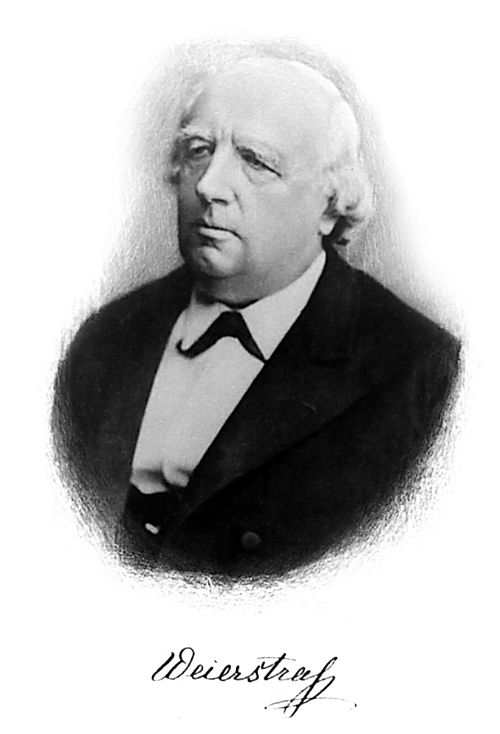
Karl Weierstrass gives rigorous definition of limit and continuity
Weierstrass develops the epsilon-delta definition of limit and continuity, eliminating infinitesimals entirely. He also introduces the concept of uniform convergence, crucial for analysis. #mathematics #analysis
Karl Weierstrass gives rigorous definition of limit and continuity By Unknown author, Public domain, https://commons.wikimedia.org/w/index.php?curid=324146
1861 CE
Weierstrass presents example of a nowhere differentiable continuous function
Weierstrass shocks the mathematical community by constructing a function that is continuous everywhere but differentiable nowhere. This example highlights the need for rigorous analysis. #mathematics #analysis
Weierstrass presents example of a nowhere differentiable continuous function By Eeyore22 - Own work, Public domain, https://commons.wikimedia.org/w/index.php?curid=5075959
1872 CE
Richard Dedekind publishes Stetigkeit und irrationale Zahlen
Dedekind introduces Dedekind cuts to define real numbers rigorously, providing a foundation for analysis. His work clarifies the concept of continuity and the real number line. #mathematics #analysis
Richard Dedekind publishes Stetigkeit und irrationale Zahlen By Melikamp - Own work, CC BY-SA 4.0, https://commons.wikimedia.org/w/index.php?curid=147735710
1882 CE
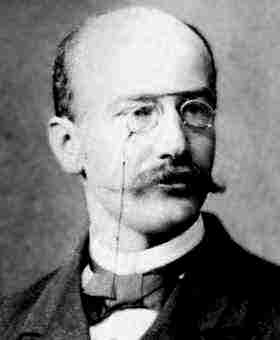
Ferdinand von Lindemann proves π is transcendental
Lindemann proves that π is transcendental, using calculus and the properties of the exponential function. This result settles the ancient problem of squaring the circle. #mathematics #number theory
Ferdinand von Lindemann proves π is transcendental By Unknown author - http://www.math.uha.fr/Pi/trans.html, Public domain, https://commons.wikimedia.org/w/index.php?curid=1060849
1887 CE
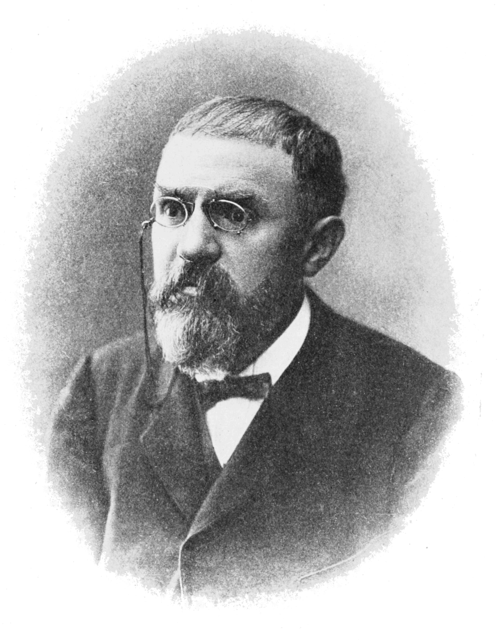
Henri Poincaré publishes on the three-body problem
Poincaré's work on celestial mechanics uses calculus and dynamical systems theory. He discovers chaos and develops qualitative methods for differential equations. #mathematics #physics
Henri Poincaré publishes on the three-body problem By Unknown author - Popular Science Monthly Volume 82, Public domain, https://commons.wikimedia.org/w/index.php?curid=20644432
1892 CE
Weierstrass publishes his lectures on the theory of functions
Weierstrass's collected lectures on complex analysis and real analysis solidify the rigorous foundations of calculus. His work influences the next generation of mathematicians. #mathematics #analysis
1900 CE
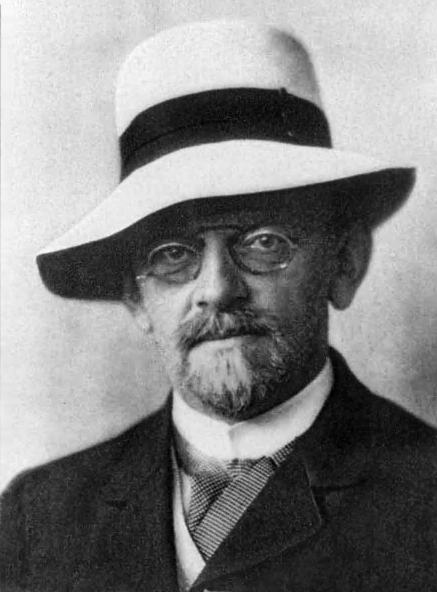
David Hilbert poses 23 problems including continuum hypothesis
Hilbert's problems include foundational issues in analysis, such as the continuum hypothesis and the axiomatization of real numbers. These problems guide mathematical research in the 20th century. #mathematics #foundations
David Hilbert poses 23 problems including continuum hypothesis By Unknown author - Possibly Reid, Constance (1970) Hilbert, Berlin, Heidelberg: Springer Berlin Heidelberg Imprint Springer, p. 230 ISBN: 978-3-662-27132-2., Public domain, https://commons.wikimedia.org/w/index.php?curid=36302