Encyclopedia/1. The Cosmos & The Natural World/5. Life Sciences • Curated by Admin Timeline.sg
A comprehensive timeline of botany and plant physiology, tracing key discoveries from ancient plant classification and herbal medicine to modern molecular biology and genetic engineering, including global contributions.
Chronological Storyline (38 Milestones)
350 BCE
Theophrastus Writes Historia Plantarum
Theophrastus, a student of Aristotle, produces 'Historia Plantarum', a systematic classification of plants based on form and habitat, often considered the foundational text of Western botany. #botany #history
Theophrastus Writes Historia Plantarum By Teofrasto_Orto_botanico_PA.jpg: tato grasso derivative work: Singinglemon (talk) - Teofrasto_Orto_botanico_PA.jpg, CC BY-SA 2.5, https://commons.wikimedia.org/w/index.php?curid=5927179
77 CE
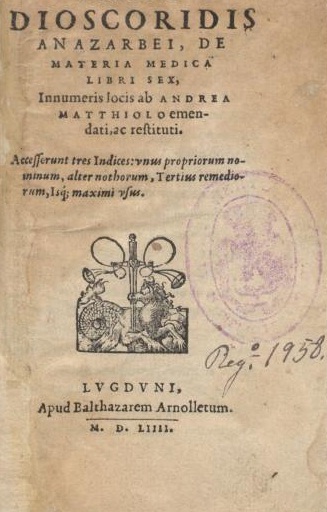
Dioscorides Publishes De Materia Medica
Pedanius Dioscorides writes 'De Materia Medica', an encyclopedia of medicinal plants that remained a primary pharmacological reference for over 1,500 years, influencing both Eastern and Western herbal traditions. #pharmacology #botany
Dioscorides Publishes De Materia Medica By Pedanius Dioscorides / Pietro Andrea Mattioli - Self-photographed (Original text: Photo I took from the archives of the History Library of Madrid. 2010. I release the file to public domain.), Public domain, https://commons.wikimedia.org/w/index.php?curid=20202030
200 CE
Shennong Bencao Jing Compiled
The 'Shennong Bencao Jing', the earliest known Chinese pharmacopoeia, catalogs 365 medicinal plants and minerals, laying the groundwork for Chinese herbal medicine. #botany #china
895 CE
Al-Dinawari's Kitab al-Nabat
Abu Hanifa Dinawari writes 'Kitab al-Nabat' (The Book of Plants), a seminal work in Islamic botany describing over 600 plant species and their uses, reflecting the agricultural and medicinal knowledge of the Islamic Golden Age. #botany #islamicgoldenage
1240 CE
Ibn al-Baytar's Comprehensive Botanical Work
Ibn al-Baytar publishes the most extensive botanical and pharmacological compendium of the medieval period, describing over 1,400 plants and their medicinal properties, integrating knowledge from Greek, Roman, and Islamic sources. #botany #pharmacology
Ibn al-Baytar's Comprehensive Botanical Work By Keke999 - Own work, CC BY-SA 4.0, https://commons.wikimedia.org/w/index.php?curid=4933140
1492 CE
Columbian Exchange Introduces Maize to Europe
Christopher Columbus's voyages bring maize (corn) to Europe, beginning the global exchange of crops and plants, which profoundly transformed agriculture and diets worldwide. #botany #columbianexchange
Columbian Exchange Introduces Maize to Europe By Unknown author, Public domain, https://commons.wikimedia.org/w/index.php?curid=153505656
1530 CE
Otto Brunfels Publishes Herbarum Vivae Eicones
Otto Brunfels publishes one of the first accurate botanical herbals with realistic woodcut illustrations, setting a new standard for plant identification and botanical illustration in Renaissance Europe. #botany #illustration
Otto Brunfels Publishes Herbarum Vivae Eicones By Hans Baldung Grien - Annotationes in quatuor Evangelia et Acta Apostolorum, Public domain, https://commons.wikimedia.org/w/index.php?curid=37103895
1542 CE
Leonhart Fuchs Publishes De Historia Stirpium
Leonhart Fuchs produces 'De Historia Stirpium', a landmark herbal containing over 500 plants with vivid woodcuts, contributing to the revival of botany in the Renaissance. #botany #renaissance
Leonhart Fuchs Publishes De Historia Stirpium By Heinrich Füllmaurer - Die Renaissance im deutschen Südwesten zwischen Reformation und Dreißigjährigem Krieg. Eine Ausstellung des Landes Baden-Württemberg, Heidelberger Schloss, 21. Juni - 19 Oktober 1986 (Württembergisches Landesmuseum, Stuttgart), Public domain, https://commons.wikimedia.org/w/index.php?curid=3023898
1568 CE
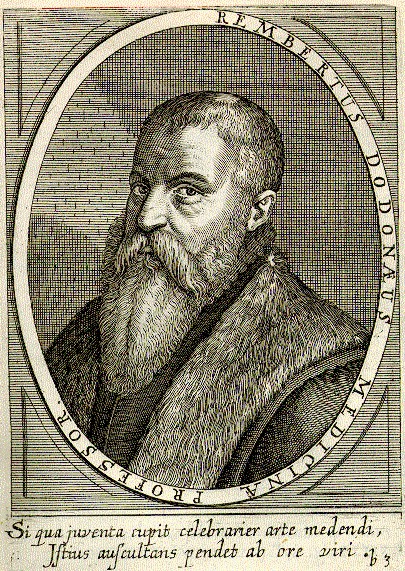
Rembert Dodoens Publishes Cruydeboeck
Rembert Dodoens writes 'Cruydeboeck', a comprehensive herbal that becomes widely translated and used across Europe, emphasizing local plants and their medicinal uses. #botany #herbal
Rembert Dodoens Publishes Cruydeboeck By Theodor de Bry - University of Mannheim: https://www2.uni-mannheim.de/mateo/desbillons/aport/seite256.html, Public domain, https://commons.wikimedia.org/w/index.php?curid=3430944
1623 CE
Gaspard Bauhin's Pinax Theatri Botanici
Gaspard Bauhin publishes 'Pinax Theatri Botanici', an important early attempt to systematically catalogue all known plant species, influencing later classification systems. #botany #classification
Gaspard Bauhin's Pinax Theatri Botanici By Unknown author - Caspar Bauhin. Porträt in der Rektoratsmatrikel, Public domain, https://commons.wikimedia.org/w/index.php?curid=155075912
1682 CE
Nehemiah Grew Publishes Anatomy of Plants
Nehemiah Grew's 'The Anatomy of Plants' provides the first detailed microscopic descriptions of plant tissues, including roots, stems, and leaves, founding the field of plant anatomy. #botany #microscopy
Nehemiah Grew Publishes Anatomy of Plants By "R. White" - Makers of British Botany, Plate 4; this scan obtained from https://archive.org/details/makersofbritishb00oliv, Public domain, https://commons.wikimedia.org/w/index.php?curid=8140330
1694 CE
Rudolf Camerarius Demonstrates Plant Sexuality
Rudolf Camerarius publishes letters establishing that plants have sexual reproduction, identifying stamens as male and pistils as female, a fundamental breakthrough in plant physiology. #botany #plantreproduction
Rudolf Camerarius Demonstrates Plant Sexuality By Unknown author, Public domain, https://commons.wikimedia.org/w/index.php?curid=366327
1735 CE
Linnaeus Publishes Systema Naturae
Carl Linnaeus publishes the first edition of 'Systema Naturae', introducing a hierarchical classification system for plants and animals, though the botanical focus is on flower morphology. #botany #taxonomy
Linnaeus Publishes Systema Naturae By Carl Linnaeus - Sourced from https://resolver.sub.uni-goettingen.de/purl?PPN362053006, Public domain, https://commons.wikimedia.org/w/index.php?curid=11136563
1753 CE
Linnaeus Publishes Species Plantarum
Linnaeus's 'Species Plantarum' establishes binomial nomenclature for plants, providing each species with a two-part Latin name, the universal standard still used in botany today. #botany #nomenclature
Linnaeus Publishes Species Plantarum By Carl Linnaeus - bibbild.abo.fi, Public domain, https://commons.wikimedia.org/w/index.php?curid=744585
1771 CE
Joseph Priestley Discovers Oxygen from Plants
Joseph Priestley performs experiments showing that plants release oxygen, demonstrating the photosynthetic production of gas essential for animal life, a key step in understanding photosynthesis. #photosynthesis #science
Joseph Priestley Discovers Oxygen from Plants By James Sharples - https://npg.si.edu/object/npg_NPG.77.160?destination=node/63231%3Fedan_local%3D1%26edan_q%3DJoseph, Public domain, https://commons.wikimedia.org/w/index.php?curid=193629762
1779 CE
Jan Ingenhousz Identifies Light Requirement for Photosynthesis
Jan Ingenhousz confirms that plants need sunlight to produce oxygen, and that only the green parts of plants perform this function, advancing the understanding of photosynthesis. #photosynthesis #plantphysiology
Jan Ingenhousz Identifies Light Requirement for Photosynthesis By Unknnown - http://www.britannica.com/eb/art-11958/Ingenhousz-detail-of-an-engraving?articleTypeId=1, Public domain, https://commons.wikimedia.org/w/index.php?curid=2757163
1790 CE
Goethe Publishes Metamorphosis of Plants
Johann Wolfgang von Goethe writes 'The Metamorphosis of Plants', proposing that all plant organs are modified leaves, influencing morphological thinking in botany. #botany #morphology
1804 CE
Nicolas-Théodore de Saussure Quantifies Photosynthesis
Nicolas-Théodore de Saussure demonstrates that plants absorb water and carbon dioxide to produce organic matter, clarifying the role of these inputs in photosynthesis. #photosynthesis #botany
Nicolas-Théodore de Saussure Quantifies Photosynthesis By Unknown author - http://ihm.nlm.nih.gov/images/B23357, Public domain, https://commons.wikimedia.org/w/index.php?curid=19210765
1817 CE
Chlorophyll Isolated by Pelletier and Caventou
Joseph Bienaimé Caventou and Pierre Joseph Pelletier isolate chlorophyll, the green pigment essential for photosynthesis, naming it from Greek 'chloros' (green) and 'phyllon' (leaf). #photosynthesis #chemistry
Chlorophyll Isolated by Pelletier and Caventou By JLPC - Own work, CC BY-SA 3.0, https://commons.wikimedia.org/w/index.php?curid=30077919
1827 CE
Robert Brown Describes Brownian Motion and Cell Nucleus
Robert Brown observes and describes Brownian motion while studying pollen grains, and later identifies the cell nucleus, a fundamental component in plant cells. #botany #cellbiology )
1838 CE
Matthias Schleiden Proposes Plant Cell Theory
Matthias Schleiden asserts that all plants are composed of cells, and that the cell is the basic unit of plant structure, co-founding cell theory. #celltheory #botany
Matthias Schleiden Proposes Plant Cell Theory By Unknown author - Popular Science Monthly Volume 22, Public domain, https://commons.wikimedia.org/w/index.php?curid=11322826
1849 CE
Wilhelm Hofmeister Elucidates Alternation of Generations
Wilhelm Hofmeister describes the alternation of generations in plants, revealing the life cycle involving haploid gametophyte and diploid sporophyte stages, unifying plant reproduction across mosses, ferns, and seed plants. #botany #plantreproduction
Wilhelm Hofmeister Elucidates Alternation of Generations By Unknown - HeidICON via Prometheus, CC BY-SA 4.0, https://commons.wikimedia.org/w/index.php?curid=71111381
1862 CE
Julius von Sachs Discovers Starch in Chloroplasts
Julius von Sachs demonstrates that chlorophyll is located in chloroplasts and that these organelles produce starch during photosynthesis, advancing plant physiology. #photosynthesis #plantphysiology
Julius von Sachs Discovers Starch in Chloroplasts By Unknown author - Uploaded by de:User:Sixat on de:WP at 00:13, 28. Apr 2004, CC BY-SA 3.0, https://commons.wikimedia.org/w/index.php?curid=401267
1865 CE
Gregor Mendel Publishes Plant Hybridization Experiments
Gregor Mendel presents his work on pea plants, establishing the laws of inheritance (segregation and independent assortment), though his work was largely ignored until 1900. #genetics #botany
Gregor Mendel Publishes Plant Hybridization Experiments By Unknown author - http://0.tqn.com/d/biology/1/0/l/e/3244238.jpg, Public domain, https://commons.wikimedia.org/w/index.php?curid=33347279
1880 CE
Charles Darwin Publishes The Power of Movement in Plants
Charles Darwin and his son Francis show that plant shoots bend toward light (phototropism) and roots sense gravity, revealing plant responses to environmental stimuli. #botany #tropisms
Charles Darwin Publishes The Power of Movement in Plants By Charles Darwin, LL.D., F.R.S. assisted by Francis Darwin - Self-scanned, Public domain, https://commons.wikimedia.org/w/index.php?curid=3524773
1882 CE
Julius von Sachs Publishes Textbook of Plant Physiology
Julius von Sachs writes 'Lehrbuch der Botanik', a comprehensive textbook that systematizes plant physiology, covering nutrition, growth, and movement, and becomes a standard reference. #plantphysiology #textbook
1900 CE
Rediscovery of Mendel's Laws by De Vries, Correns, and Tschermak
Hugo de Vries, Carl Correns, and Erich von Tschermak independently rediscover Mendel's laws of heredity, sparking the modern science of genetics using plant models. #genetics #botany
Rediscovery of Mendel's Laws by De Vries, Correns, and Tschermak By Unknown author, Public domain, https://commons.wikimedia.org/w/index.php?curid=1657230
1920 CE
Garner and Allard Discover Photoperiodism
Wightman Garner and Harry Allard show that flowering in plants is controlled by day length, introducing the concept of photoperiodism and its role in plant development. #plantphysiology #photoperiodism
1926 CE
Frits Warmolt Went Discovers Auxin
Frits Warmolt Went demonstrates the existence of auxin, a plant hormone that controls phototropism and growth, by using agar blocks to collect the signal from oat coleoptiles. #plantphysiology #hormones
Melvin Calvin initiates experiments using the radioactive isotope carbon-14 to trace the carbon fixation pathway in photosynthesis, later known as the Calvin cycle. #photosynthesis #biochemistry
Melvin Calvin Begins Elucidating Photosynthesis Pathway By Unknown (Mondadori Publishers) - http://www.gettyimages.co.uk/detail/news-photo/portrait-of-the-american-chemist-melvin-calvin-expert-of-news-photo/141551124, Public domain, https://commons.wikimedia.org/w/index.php?curid=41222724
1955 CE
Discovery of Cytokinins
Folke Skoog and co-workers discover cytokinins, a class of plant hormones that promote cell division and shoot formation, influencing plant growth and development. #plantphysiology #hormones
Discovery of Cytokinins By MeEdgar181 - Own work, Public domain, https://commons.wikimedia.org/w/index.php?curid=2995833
1966 CE
Hatch and Slack Describe C4 Photosynthesis
Marshall Hatch and Charles Slack elucidate the C4 photosynthetic pathway, an adaptation in some plants that concentrates carbon dioxide to increase photosynthetic efficiency in hot and dry environments. #photosynthesis #plantphysiology
Hatch and Slack Describe C4 Photosynthesis By Adam Schwendt - Own work, CC BY-SA 4.0, https://commons.wikimedia.org/w/index.php?curid=49029028
1967 CE
Phytochrome Discovery and Characterization
Researchers identify phytochrome, a photoreceptor protein that mediates plant responses to light, including germination, flowering, and shade avoidance, revolutionizing plant photobiology. #plantphysiology #photobiology
Phytochrome Discovery and Characterization By Jmol Development Team - Jmol, GPL, https://commons.wikimedia.org/w/index.php?curid=14895406
1983 CE
First Transgenic Plant Created
Scientists produce the first genetically engineered plant (tobacco) using Agrobacterium tumefaciens to introduce antibiotic resistance, marking the beginning of plant genetic engineering. #biotechnology #plants
First Transgenic Plant Created By Ciencias Españolas KoS - File:ADN_2.png File:Pince_a_épiler.png, CC BY-SA 3.0, https://commons.wikimedia.org/w/index.php?curid=75624775
1996 CE
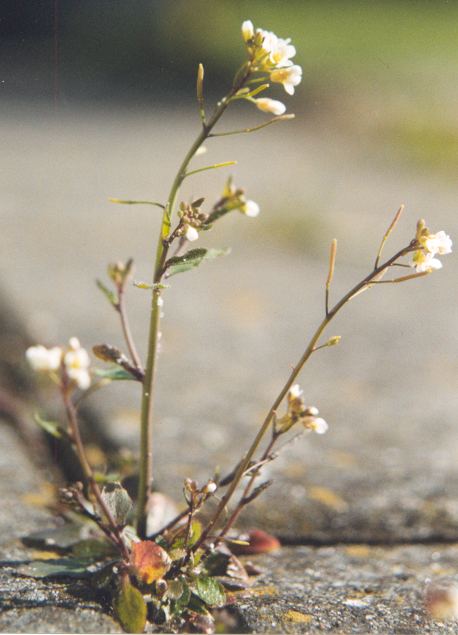
Arabidopsis Genome Sequencing Initiated
The Arabidopsis Genome Initiative launches to sequence the genome of Arabidopsis thaliana, a small flowering plant used as a model organism, aiming to understand plant biology at the molecular level. #genomics #botany
2000 CE
Arabidopsis Thaliana Genome Sequenced
The complete genome sequence of Arabidopsis thaliana is published, becoming the first plant genome fully sequenced, providing insights into plant evolution, development, and metabolism. #genomics #botany
Arabidopsis Thaliana Genome Sequenced By Original uploader was Brona at en.wikipedia. User:Roepers at nl.wikipedia - Transferred from en.wikipedia to Commons by Million_Moments., CC BY-SA 3.0, https://commons.wikimedia.org/w/index.php?curid=3668208
2005 CE
Rice Genome Sequenced
The genome of rice (Oryza sativa) is sequenced, a crucial crop that feeds half the world, enabling advances in understanding grain development and improving crop yields. #genomics #agriculture
2012 CE
CRISPR-Cas9 Applied to Plants
Researchers demonstrate the use of CRISPR-Cas9 genome editing in plants, offering a precise and revolutionary tool for crop improvement and fundamental plant biology research. #biotech #genomeediting
CRISPR-Cas9 Applied to Plants By Deposition authors: Nishimasu, H., Ishitani, R., Nureki, O.; Visualization author: Synpath - Atom coordinates: https://www.rcsb.org/structure/4OO8; Visualization: Own work, CC0, https://commons.wikimedia.org/w/index.php?curid=133423568