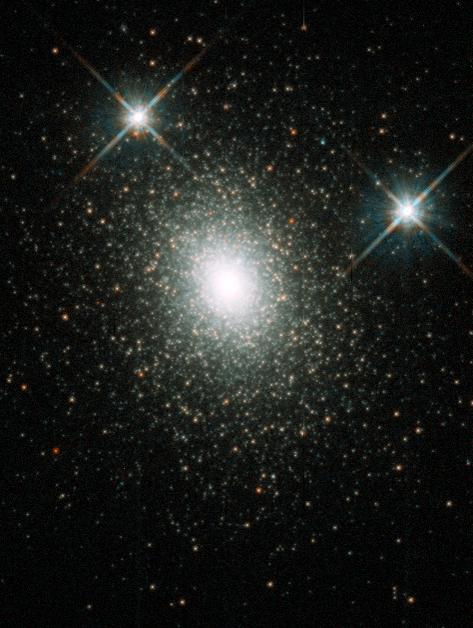
1783 CE
John Michell Proposes Dark Stars
English clergyman John Michell posits the existence of 'dark stars' whose gravity is so strong that light cannot escape, anticipating the modern black hole concept. #physics #astronomy
This timeline traces the evolution of black hole physics from early theoretical speculations to modern observational confirmations, spanning key conceptual breakthroughs and landmark discoveries.
English clergyman John Michell posits the existence of 'dark stars' whose gravity is so strong that light cannot escape, anticipating the modern black hole concept. #physics #astronomy
Pierre-Simon Laplace independently calculates the critical radius for a star to trap light, later known as the Schwarzschild radius, in his book 'Exposition du Système du Monde'. #physics #astronomy

Albert Einstein presents the final field equations of general relativity, providing the theoretical framework for black holes as solutions to his equations. #physics #relativity

Karl Schwarzschild finds the first exact solution to Einstein's field equations, describing a non-rotating black hole and defining the event horizon and singularity. #physics #blackholes
Hans Reissner and later Gunnar Nordström independently derive the solution for a charged, non-rotating black hole, extending Schwarzschild's work. #physics #blackholes
Subrahmanyan Chandrasekhar calculates the maximum mass for a white dwarf (~1.4 solar masses), implying that more massive stars can collapse further, leading to neutron stars or black holes. #astrophysics #chandrasekhar
J. Robert Oppenheimer and Hartland Snyder show that a sufficiently massive star can undergo gravitational collapse to form a 'frozen star', a precursor to the black hole concept. #physics #blackholes
Roy Kerr finds the exact solution for a rotating black hole, a crucial step for realistic astrophysical black holes. #physics #blackholes
Astronomers identify quasi-stellar objects (quasars) as extremely luminous active galactic nuclei, later understood to be powered by supermassive black holes. #astronomy #quasars

Jocelyn Bell Burnell and Antony Hewish detect the first pulsar, providing evidence for neutron stars and indirectly supporting black hole physics. #astronomy #pulsars

Roger Penrose proposes a mechanism to extract rotational energy from a Kerr black hole, important for powering jets. #physics #blackholes

The X-ray source Cygnus X-1 is discovered, becoming the first widely accepted stellar-mass black hole candidate through its binary system with a massive star. #astronomy #blackholes

Jacob Bekenstein proposes that black holes have entropy proportional to their event horizon area, leading to the laws of black hole thermodynamics. #physics #blackholes

Stephen Hawking theoretically shows that black holes emit thermal radiation due to quantum effects near the event horizon, leading to gradual evaporation. #physics #hawkingradiation
Further observations solidify Cygnus X-1 as a black hole, with mass exceeding 14 solar masses, making it the first confirmed stellar-mass black hole. #astronomy #xrays
Stephen Hawking and James Bardeen improve the theory of black hole evaporation, showing that primordial black holes might explode today. #physics #cosmology

Leonard Susskind, 't Hooft, and others propose black hole complementarity to resolve the information paradox, suggesting no contradiction in quantum mechanics and general relativity. #physics #quantumgravity
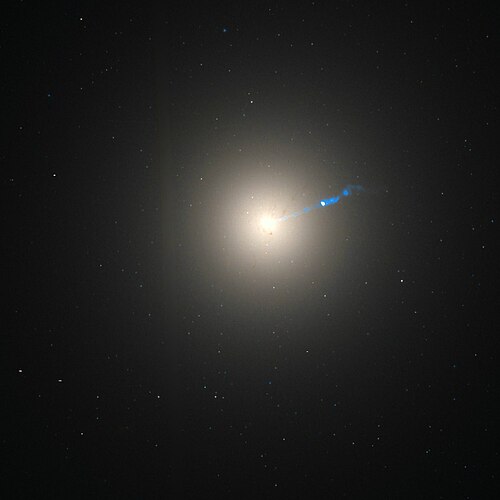
The Hubble Space Telescope provides strong evidence for a supermassive black hole at the center of galaxy M87 by observing a rotating disk of material. #astronomy #supermassiveblackhole
X-ray observations of binary systems reveal the first direct signatures of accretion disks around black holes, such as iron K-alpha lines. #astronomy #accretion

Using the New Technology Telescope, astronomers find compelling evidence for a supermassive black hole at the Galactic Center by tracking stellar motions. #astronomy #galacticcenter
Observations of star orbits near the Galactic Center confirm Sagittarius A* as a supermassive black hole, earning a Nobel Prize for Reinhard Genzel and Andrea Ghez in 2020. #astronomy #galacticcenter
The Kerr metric, describing rotating black holes, becomes essential for modeling astrophysical black holes, as virtually all black holes spin. #physics #blackholes

Very Long Baseline Interferometry reveals detailed structures of relativistic jets from supermassive black holes, advancing understanding of jet formation. #astronomy #jets

High-resolution computer simulations show how magnetic fields can launch relativistic jets from black hole accretion disks, confirming the Blandford-Znajek process. #physics #jets

While not directly about black holes, the discovery of dark energy influences black hole cosmology, and Saul Perlmutter, Brian Schmidt, and Adam Riess win the Nobel. #physics #cosmology

The discovery of the Higgs boson at CERN provides new constraints on vacuum stability, which affects predictions of black hole formation in high-energy particle collisions. #physics #higgs

LIGO detects gravitational waves from a binary black hole merger (GW150914), confirming a direct prediction of general relativity and opening a new observational window. #physics #gravitationalwaves

LIGO announces the detection of GW151226, a binary black hole merger with masses of about 14 and 8 solar masses, further confirming the population of stellar-mass black holes. #physics #ligo

The first gravitational wave detection with three observatories (LIGO-Hanford, LIGO-Livingston, Virgo) provides much better sky localization for a binary black hole merger. #physics #gravitationalwaves

The first detection of a binary neutron star merger (with a black hole? actually neutron star) also provides insights into gamma-ray bursts and heavy element formation, with possible black hole remnant. #astronomy #gravitationalwaves

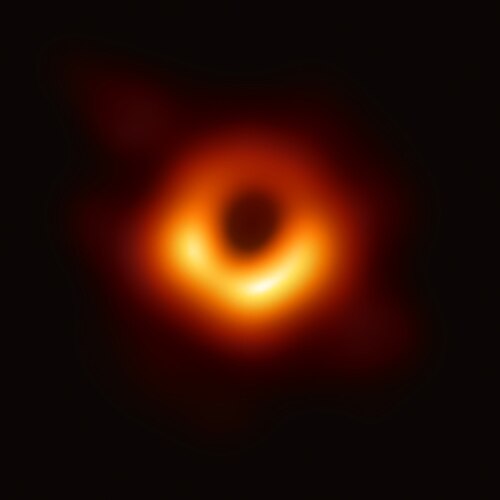
The Event Horizon Telescope releases the first ever direct image of a black hole's shadow, captured at the center of galaxy M87. #astronomy #eventhorizontelescope

GW190412 is the first strong evidence of a black hole merger with unequal masses, providing insights into formation channels. #physics #gravitationalwaves
Astronomers discover a system with a black hole and two companion stars, challenging theories of black hole formation and evolution. #astronomy #blackholes

GW190521 is a merger of two black holes with masses 85 and 66 solar masses, forming a ~142 solar mass black hole, the first direct detection of an intermediate-mass black hole. #physics #gravitationalwaves
Gravitational wave detection GW190814 reveals a compact object of 2.6 solar masses, lying in the gap between neutron stars and black holes, possibly a light black hole. #physics #gravitationalwaves

Roger Penrose wins half the Nobel Prize in Physics for showing black hole formation is a prediction of general relativity; Genzel and Ghez share the other half for Sagittarius A*. #physics #nobel
The 'island formula' and Page curve calculations in quantum gravity suggest that Hawking radiation does preserve information, resolving a decades-old paradox. #physics #quantumgravity
LIGO and Virgo detect GW190521, the first black hole merger within the pair-instability mass gap, challenging stellar evolution models. #physics #gravitationalwaves

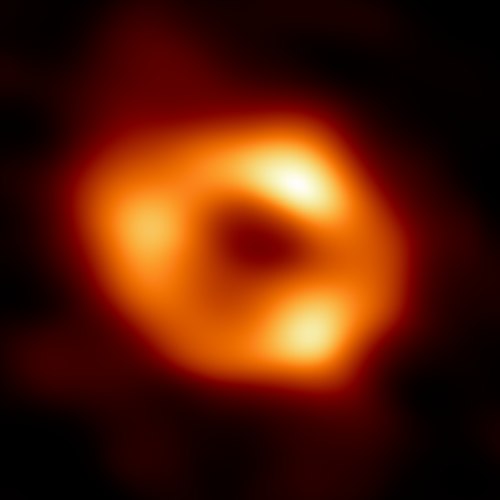
The Event Horizon Telescope reveals the first image of Sagittarius A*, the supermassive black hole at the center of the Milky Way. #astronomy #sgra
The James Webb Space Telescope discovers supermassive black holes in the early universe, some over 10 billion solar masses, challenging models of black hole growth. #astronomy #jwst

Scientists measure the spin of a supermassive black hole in galaxy M87 by analyzing the precession of its jet, using years of radio observations. #astronomy #blackholes
New analysis of S-star orbits indicates Sagittarius A* spins at about 87% of the maximum allowed by general relativity. #astronomy #sgra
Pierre Agostini, Ferenc Krausz, and Anne L'Huillier win Nobel for attosecond physics, which has implications for ultrafast processes near black holes, but not directly. #physics #nobel
While not directly observed, laboratory analogues and theoretical advances continue to explore Hawking radiation, with no definitive astrophysical detection yet. #physics #hawkingradiation
The Laser Interferometer Space Antenna (LISA) is formally adopted by the European Space Agency to detect gravitational waves from supermassive black hole mergers in space. #physics #gravitationalwaves

Hubble Space Telescope observations confirm a wandering intermediate-mass black hole in the Milky Way, ejected from a dwarf galaxy. #astronomy #blackholes