Biochemistry & Enzymatic Catalysis: Major Case Studies & Paradigm Shifts
Encyclopedia/1. The Cosmos & The Natural World/2. Physics & Chemistry/03. Chemistry & Periodic Table of Elements • Curated by Admin Timeline.sg
This timeline traces the evolution of biochemistry and enzymatic catalysis from the early discovery of enzymes to modern breakthroughs like CRISPR and directed evolution, highlighting key experimental findings and paradigm shifts that shaped our understanding of biological catalysts.
Chronological Storyline (40 Milestones)
1833 CE
Discovery of Diastase, the First Enzyme
Anselme Payen and Jean-François Persoz isolate diastase from malt, the first known enzyme, demonstrating that a chemical substance can catalyze the breakdown of starch. This marks the birth of enzymology. #biochemistry #history
1856 CE
Pasteur's Fermentation Experiments
Louis Pasteur demonstrates that fermentation is caused by living microorganisms, laying the foundation for understanding biological catalysis and later linking enzymes to cellular processes. #biochemistry #microbiology
Pasteur's Fermentation Experiments By Paul Nadar - File:Louis Pasteur, foto av Paul Nadar.jpg, Public domain, https://commons.wikimedia.org/w/index.php?curid=28039885
1897 CE
Buchner's Cell-Free Fermentation
Eduard Buchner shows that yeast extract can ferment sugar without living cells, proving that enzymes are responsible for fermentation and earning the Nobel Prize in Chemistry in 1907. #biochemistry #enzymes
Buchner's Cell-Free Fermentation By Unknown author - http://www.nobelprize.org/nobel_prizes/chemistry/laureates/1907/buchner.html, Public domain, https://commons.wikimedia.org/w/index.php?curid=18253176
1913 CE
Michaelis-Menten Kinetics
Leonor Michaelis and Maud Menten publish their model of enzyme kinetics, introducing the Michaelis constant (Km) and revolutionizing the quantitative study of enzyme catalysis. #biochemistry #kinetics
Michaelis-Menten Kinetics By Athel cb - Own work, CC BY-SA 4.0, https://commons.wikimedia.org/w/index.php?curid=130422583
1926 CE
Sumner Crystallizes Urease
James B. Sumner crystallizes urease, providing the first direct evidence that enzymes are proteins (Nobel Prize in Chemistry, 1946). This landmark experiment settles the debate about the chemical nature of enzymes. #biochemistry #enzymes
Sumner Crystallizes Urease By Unknown author - http://www.nobelprize.org/nobel_prizes/chemistry/laureates/1946/sumner.html, Public domain, https://commons.wikimedia.org/w/index.php?curid=18260359
1930 CE
Northrop and Stanley Crystallize Pepsin and Trypsin
John H. Northrop and Wendell M. Stanley crystallize pepsin and trypsin, further confirming the protein nature of enzymes and earning the Nobel Prize in Chemistry in 1946 alongside Sumner. #biochemistry #enzymes
Northrop and Stanley Crystallize Pepsin and Trypsin By Unknown author - http://www.nobelprize.org/nobel_prizes/chemistry/laureates/1946/northrop.html, Public domain, https://commons.wikimedia.org/w/index.php?curid=18260391
1937 CE
Krebs Cycle Elucidated
Hans Krebs describes the citric acid cycle (Krebs cycle), the central metabolic pathway for aerobic respiration, a paradigm shift in understanding cellular energy metabolism. #biochemistry #metabolism
Krebs Cycle Elucidated By Narayanese, WikiUserPedia, YassineMrabet, TotoBaggins - http://biocyc.org/META/NEW-IMAGE?type=PATHWAY&object=TCA. Image adapted from Image:Citric acid cycle noi.svg, CC BY-SA 3.0, https://commons.wikimedia.org/w/index.php?curid=6217701
1941 CE
Discovery of Coenzyme A
Fritz Lipmann discovers coenzyme A (CoA), a crucial cofactor in acyl group transfer reactions, and receives the Nobel Prize in Physiology or Medicine in 1953. #biochemistry #coenzymes
Discovery of Coenzyme A By NEUROtiker - Own work, Public domain, https://commons.wikimedia.org/w/index.php?curid=1555660
1951 CE
Pauling Proposes Alpha-Helix Structure
Linus Pauling publishes the alpha-helix and beta-sheet models of protein secondary structure, based on X-ray crystallography and theoretical reasoning, revolutionizing structural biology. #biochemistry #structuralbiology
Pauling Proposes Alpha-Helix Structure By Theislikerice - Own work, CC BY-SA 4.0, https://commons.wikimedia.org/w/index.php?curid=81729199
1951 CE
Sanger Sequences Insulin
Frederick Sanger determines the complete amino acid sequence of bovine insulin, providing the first primary structure of a protein and winning the Nobel Prize in Chemistry in 1958. #biochemistry #proteomics
Sanger Sequences Insulin By User:AtikaAtikawa - Own work, CC BY-SA 4.0, https://commons.wikimedia.org/w/index.php?curid=107840330
1953 CE
Watson and Crick Discover DNA Structure
James Watson and Francis Crick propose the double helix structure of DNA, a foundational event for molecular biology and biochemistry, explaining genetic replication and information storage. #biochemistry #genetics
Watson and Crick Discover DNA Structure By 84user adapting file originally uploaded by Richard Wheeler (Zephyris) at en.wikipedia - Derived from File:DNA orbit animated.gif originally from here., CC BY-SA 3.0, https://commons.wikimedia.org/w/index.php?curid=6285050
1956 CE
Anfinsen's Dogma of Protein Folding
Christian Anfinsen demonstrates that ribonuclease can refold spontaneously in vitro, leading to the thermodynamic hypothesis that the native structure is determined by the amino acid sequence (Nobel Prize in Chemistry, 1972). #biochemistry #proteinfolding
Anfinsen's Dogma of Protein Folding By Dcrjsr - Own work, CC BY 3.0, https://commons.wikimedia.org/w/index.php?curid=18719297
1957 CE
Jacob and Monod Propose the Operon Model
François Jacob and Jacques Monod introduce the operon concept to explain gene regulation in bacteria, highlighting the role of repressor proteins and allostery (Nobel Prize in Physiology or Medicine, 1965). #biochemistry #generegulation
1960 CE
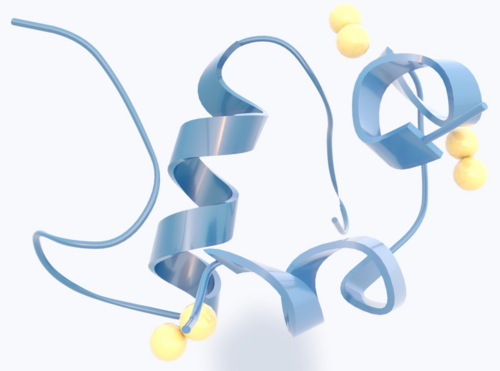
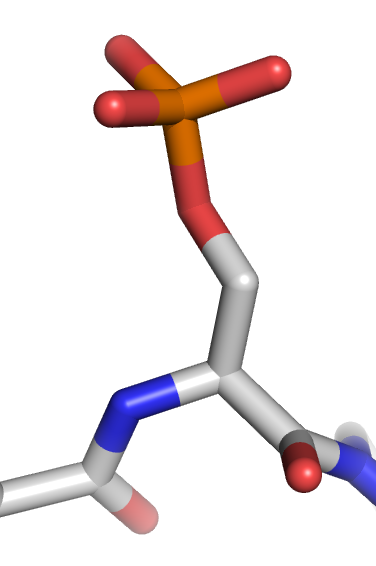
Reversible Protein Phosphorylation Discovered
Edmond Fischer and Edwin Krebs discover that reversible phosphorylation of proteins regulates enzyme activity, a paradigm-shifting finding in signal transduction (Nobel Prize in Physiology or Medicine, 1992). #biochemistry #signaling
Reversible Protein Phosphorylation Discovered By Thomas Splettstoesser - from PDB is 1T29, rendered with open source program PyMol (www.pymol.org), CC BY-SA 2.5, https://commons.wikimedia.org/w/index.php?curid=1348311
1961 CE
Allosteric Regulation Articulated
Jacques Monod, Jean-Pierre Changeux, and François Jacob formalize the theory of allosteric regulation, explaining how enzymatic activity can be modulated by effectors binding at sites distinct from the active site. #biochemistry #enzymes
Allosteric Regulation Articulated By Tenthkrige (talk). Tenthkrige - Own work (Original text: I (Tenthkrige (talk)) created this work entirely by myself.), CC0, https://commons.wikimedia.org/w/index.php?curid=85816837
1965 CE
First Chemical Synthesis of Insulin (China)
A team of Chinese scientists at Nankai University successfully synthesizes bovine insulin, the first complete synthesis of a protein, demonstrating the power of organic chemistry in biochemistry. #biochemistry #synthesis
1969 CE
Solid-Phase Peptide Synthesis Developed
Bruce Merrifield invents solid-phase peptide synthesis, enabling automated production of peptides and small proteins (Nobel Prize in Chemistry, 1984). This technique accelerates biochemical research and drug development. #biochemistry #synthesis
Solid-Phase Peptide Synthesis Developed By Algertzars (talk) - Own work, Public domain, https://commons.wikimedia.org/w/index.php?curid=65305772
1970 CE
Restriction Enzymes Discovered
Werner Arber, Daniel Nathans, and Hamilton Smith discover restriction endonucleases, which cut DNA at specific sequences, enabling recombinant DNA technology (Nobel Prize in Physiology or Medicine, 1978). #biochemistry #genetics
1972 CE
Anfinsen Wins Nobel for Protein Folding
Christian Anfinsen receives the Nobel Prize in Chemistry for his work on ribonuclease folding, establishing that the amino acid sequence dictates three-dimensional structure (the thermodynamic hypothesis). #biochemistry #proteinfolding
Anfinsen Wins Nobel for Protein Folding By Hubbard, Edward A.; National Institutes of Health - http://profiles.nlm.nih.gov/KK/B/B/B/G/, Public domain, https://commons.wikimedia.org/w/index.php?curid=2949195
1975 CE
Hybridoma Technology for Monoclonal Antibodies
Georges Köhler and César Milstein develop hybridoma technology to produce monoclonal antibodies, revolutionizing immunology and diagnostics (Nobel Prize in Physiology or Medicine, 1984). #biochemistry #immunology
Hybridoma Technology for Monoclonal Antibodies By Adenosine - Own work, CC BY-SA 3.0, https://commons.wikimedia.org/w/index.php?curid=9659630
1981 CE
Catalytic RNA (Ribozymes) Discovered
Thomas Cech and Sidney Altman independently discover that RNA can catalyze chemical reactions, challenging the dogma that all enzymes are proteins (Nobel Prize in Chemistry, 1989). #biochemistry #rna
Catalytic RNA (Ribozymes) Discovered By William G. Scott - Own work, CC BY-SA 3.0, https://commons.wikimedia.org/w/index.php?curid=2257831
1985 CE
Polymerase Chain Reaction (PCR) Invented
Kary Mullis develops the polymerase chain reaction (PCR), a rapid method to amplify DNA segments, transforming molecular biology and diagnostics (Nobel Prize in Chemistry, 1993). #biochemistry #molecularbiology
Polymerase Chain Reaction (PCR) Invented By Madprime - Own work, CC0, https://commons.wikimedia.org/w/index.php?curid=2104468
1987 CE
Directed Evolution of Enzymes
Frances Arnold pioneers directed evolution, a method to engineer enzymes with improved or novel functions through iterative mutation and selection, ushering in a new era of protein engineering (Nobel Prize in Chemistry, 2018). #biochemistry #proteinengineering
Directed Evolution of Enzymes By Thomas Shafee - Thomas, Shafee, (2014). "Evolvability of a viral protease: experimental evolution of catalysis, robustness and specificity". PhD Thesis. University of Cambridge., CC BY 4.0, https://commons.wikimedia.org/w/index.php?curid=37193303
1990 CE
Structure of Bacteriorhodopsin Resolved
Richard Henderson and Nigel Unwin use electron crystallography to determine the structure of bacteriorhodopsin at 3.5 Å, a milestone in membrane protein structural biology. #biochemistry #structuralbiology
Structure of Bacteriorhodopsin Resolved By Deposition authors: Weinert, T., Skopintsev, P., James, D., Kekilli, D., Furrer, A., Bruenle, S., Mous, S., Nogly, P., Standfuss, J.; Visualization author: Synpath - Atom coordinates: https://www.rcsb.org/structure/6RQP; Visualization: Own work, CC0, https://commons.wikimedia.org/w/index.php?curid=132775070
1992 CE
Structure of Protein Kinase A Solved
Susan Taylor and colleagues determine the three-dimensional structure of protein kinase A, providing the first atomic view of a protein kinase and insights into phosphorylation regulation. #biochemistry #signaling
Structure of Protein Kinase A Solved By Deposition authors: Zheng, J., Knighton, D.R., Xuong, N.-H., Taylor, S.S., Sowadski, J.M., Ten Eyck, L.F.; visualization author: User:Astrojan - https://www.rcsb.org/structure/1cmk, CC BY-SA 4.0, https://commons.wikimedia.org/w/index.php?curid=111774827
1994 CE
Green Fluorescent Protein (GFP) Cloned
Martin Chalfie clones the gene for green fluorescent protein (GFP) from the jellyfish Aequorea victoria, enabling its use as a fluorescent marker in live cells (Nobel Prize in Chemistry, 2008). #biochemistry #imaging
Green Fluorescent Protein (GFP) Cloned By Jawahar Swaminathan and MSD staff at the European Bioinformatics Institute - https://www.ebi.ac.uk/pdbe/static/entry/1ema_deposited_chain_front_image-800x800.png, displayed on https://www.ebi.ac.uk/pdbe/entry/pdb/1ema, Public domain, https://commons.wikimedia.org/w/index.php?curid=6307286
1995 CE
First Complete Bacterial Genome Sequenced
The genome of Haemophilus influenzae is the first to be fully sequenced, marking the beginning of genomics and enabling systems-level biochemistry. #biochemistry #genomics
First Complete Bacterial Genome Sequenced By Stefan Walkowski - Own work, CC BY-SA 4.0, https://commons.wikimedia.org/w/index.php?curid=41492226
1998 CE
RNA Interference Discovered
Andrew Fire and Craig Mello discover RNA interference (RNAi), a gene-silencing mechanism mediated by double-stranded RNA (Nobel Prize in Physiology or Medicine, 2006). #biochemistry #generegulation
RNA Interference Discovered By Dan Cojocari ✉·✍· - Own, This W3C-unspecified vector image was created with Adobe Illustrator., CC BY-SA 3.0, https://commons.wikimedia.org/w/index.php?curid=8697221
2001 CE
Imatinib Approved as Targeted Cancer Therapy
Imatinib (Gleevec), a tyrosine kinase inhibitor targeting Bcr-Abl, receives FDA approval, demonstrating the power of rational drug design based on biochemical knowledge. #biochemistry #pharmacology
Imatinib Approved as Targeted Cancer Therapy By Fuse809 - Own work, Public domain, https://commons.wikimedia.org/w/index.php?curid=30346575
2003 CE
Human Genome Project Completed
The Human Genome Project publishes the complete sequence of the human genome, providing a blueprint for biomedical research and catalyzing advances in genomics biochemistry. #biochemistry #genomics
Human Genome Project Completed By U.S. Department of Energy, Human Genome Project - http://www.ornl.gov/hgmis, Public domain, https://commons.wikimedia.org/w/index.php?curid=2485616
2005 CE
SHAPE Method for RNA Structure Probing
The SHAPE (Selective 2'-Hydroxyl Acylation Analyzed by Primer Extension) method is developed to probe RNA secondary structure at nucleotide resolution, advancing RNA biochemistry. #biochemistry #rna )
2006 CE
Induced Pluripotent Stem Cells (iPS Cells)
Shinya Yamanaka discovers that differentiated cells can be reprogrammed into pluripotent stem cells by expressing specific transcription factors, opening new avenues in regenerative medicine (Nobel Prize 2012). #biochemistry #stemcells
Induced Pluripotent Stem Cells (iPS Cells) By NIH Image Gallery from Bethesda, Maryland, USA - Human induced pluripotent stem cell colony, Public domain, https://commons.wikimedia.org/w/index.php?curid=114900547
2008 CE
Next-Generation Sequencing Revolution
Next-generation sequencing (NGS) technologies emerge, enabling rapid, low-cost genome sequencing and transforming systems biochemistry, personalized medicine, and metagenomics. #biochemistry #genomics
2012 CE
CRISPR-Cas9 Genome Editing
Emmanuelle Charpentier and Jennifer Doudna repurpose the CRISPR-Cas9 bacterial immune system for programmable genome editing, a revolutionary tool for biochemistry and genetics (Nobel Prize in Chemistry, 2020). #biochemistry #genetics
CRISPR-Cas9 Genome Editing By Boghog - Own work, CC BY-SA 4.0, https://commons.wikimedia.org/w/index.php?curid=68597347
Advances in cryo-EM enable near-atomic resolution for macromolecular structures, a breakthrough that wins the Nobel Prize in Chemistry in 2017 (Jacques Dubochet, Joachim Frank, Richard Henderson). #biochemistry #structuralbiology
Cryo-Electron Microscopy Achieves Atomic Resolution By Hiramano92 - Own work, CC BY-SA 4.0, https://commons.wikimedia.org/w/index.php?curid=121225443
2015 CE
Nobel for DNA Repair Mechanisms
Tomas Lindahl, Paul Modrich, and Aziz Sancar receive the Nobel Prize in Chemistry for mapping how cells repair damaged DNA, elucidating fundamental biochemical pathways. #biochemistry #dna
Nobel for DNA Repair Mechanisms By Unknown author, CC BY-SA 3.0, https://commons.wikimedia.org/w/index.php?curid=449797
2016 CE
Directed Evolution of Enzymes Wins Nobel
Frances Arnold is awarded the Nobel Prize in Chemistry for directed evolution of enzymes, along with George Smith and Gregory Winter for phage display, revolutionizing protein engineering. #biochemistry #proteinengineering
2018 CE
First Crystal Structure of Ribosome Solved
Venkatraman Ramakrishnan, Thomas Steitz, and Ada Yonath win the Nobel Prize in Chemistry for determining the structure of the ribosome, the protein synthesis machinery. #biochemistry #structuralbiology
First Crystal Structure of Ribosome Solved By Vossman - Own work, CC BY-SA 3.0, https://commons.wikimedia.org/w/index.php?curid=6865434
2020 CE
mRNA Vaccines for COVID-19
The rapid development of mRNA vaccines (Pfizer/BioNTech and Moderna) against SARS-CoV-2 relies on lipid nanoparticle delivery of modified mRNA, a triumph of biochemistry and nanotechnology. #biochemistry #vaccines
mRNA Vaccines for COVID-19 By Shuqin Xu, Kunpeng Yang, Rose Li, and Lu Zhang - Xu, S.; Yang, K.; Li, R.; Zhang, L. mRNA Vaccine Era—Mechanisms, Drug Platform and Clinical Prospection. Int. J. Mol. Sci. 2020, 21, 6582. https://doi.org/10.3390/ijms21186582, CC BY 4.0, https://commons.wikimedia.org/w/index.php?curid=106937729
2021 CE
AlphaFold Predicts Protein Structures
DeepMind's AlphaFold2 achieves remarkable accuracy in predicting protein three-dimensional structures from amino acid sequences, revolutionizing structural biochemistry and drug discovery. #biochemistry #AI
AlphaFold Predicts Protein Structures By Kathryn Tunyasuvunakool, Jonas Adler, Zachary Wu, Tim Green, Michal Zielinski, Augustin Žídek, Alex Bridgland, Andrew Cowie, Clemens Meyer, Agata Laydon, Sameer Velanka *, Gerard J Kleywegt *, Alex Bateman *, Richard Evans, Alexander Pritzel, Michael Figurnov, Olaf Ronneberger, Russ Bates, Simon A. A. Kohl, Anna Potapenko, Andrew J Ballard, Bernardino Romera-Paredes, Stanislav Nikolov, Rishub Jain, Ellen Clancy, David Reiman, Stig Petersen, Andrew Senior, Koray Kavukcuoglu, Ewan Birney *, Pushmeet Kohli, John Jumper, Demis Hassabis - https://deepmind.google/blog/enabling-high-accuracy-protein-structure-prediction-at-the-proteome-scale/, CC BY 4.0, https://commons.wikimedia.org/w/index.php?curid=188769148