← Open Interactive Timeline Board

Biochemistry & Enzymatic Catalysis: Global Cross-Cultural Perspectives

Encyclopedia/1. The Cosmos & The Natural World/2. Physics & Chemistry/03. Chemistry & Periodic Table of Elements  •  Curated by Admin Timeline.sg

This timeline traces the global history of biochemistry and enzymatic catalysis, from ancient fermentation practices in Neolithic China and Sumer to modern breakthroughs such as CRISPR-Cas9 and directed evolution. It highlights contributions from diverse civilizations including Chinese, Indian, Islamic, Japanese, and African traditions alongside European and American advances.

Chronological Storyline (33 Milestones)

8000 BCE

Neolithic Chinese Fermentation

Earliest evidence of rice wine and fermented beverages in Jiahu, China, indicating early use of enzymatic catalysis by molds and yeasts. #biochemistry #history

3000 BCE

Sumerian Beer Brewing

Sumerian cuneiform tablets describe beer brewing using malted barley, a process driven by amylases and other enzymes. #biochemistry #history

1550 BCE

Egyptian Ebers Papyrus on Fermentation

The Ebers Papyrus describes medicinal preparations using fermented grains and fruits, referencing early knowledge of enzymatic processes. #biochemistry #history

Egyptian Ebers Papyrus on Fermentation
By PEbers_c41.jpg: Einsamer Schütze derivative work: Photohound (talk) - This file was derived from: PEbers c41.jpg:, CC BY-SA 3.0, https://commons.wikimedia.org/w/index.php?curid=18511551
500 BCE

Chinese Use of Qu (Mold) for Fermentation

Chinese texts from the Zhou dynasty mention the use of qu, a mixed culture of molds and yeasts, to ferment grains for alcoholic beverages and vinegar. #biochemistry #history )

300 BCE

Theophrastus on Plant Fermentation

Greek philosopher Theophrastus describes the fermentation of plant juices, recognizing the transformation of substances through natural agents. #biochemistry #history

Theophrastus on Plant Fermentation
By Teofrasto_Orto_botanico_PA.jpg: tato grasso derivative work: Singinglemon (talk) - Teofrasto_Orto_botanico_PA.jpg, CC BY-SA 2.5, https://commons.wikimedia.org/w/index.php?curid=5927179
800 CE

Jabir ibn Hayyan's Distillation and Fermentation

Islamic alchemist Jabir ibn Hayyan extensively described distillation and fermentation processes, laying groundwork for later enzyme studies. #biochemistry #history

Jabir ibn Hayyan's Distillation and Fermentation
By Unknown author - https://cdn.britannica.com/10/132710-050-CECF006B/illustration-manuscript-Abu-Musa-Jabir-ibn-Hayyan.jpg, Public domain, https://commons.wikimedia.org/w/index.php?curid=166835469
1200 CE

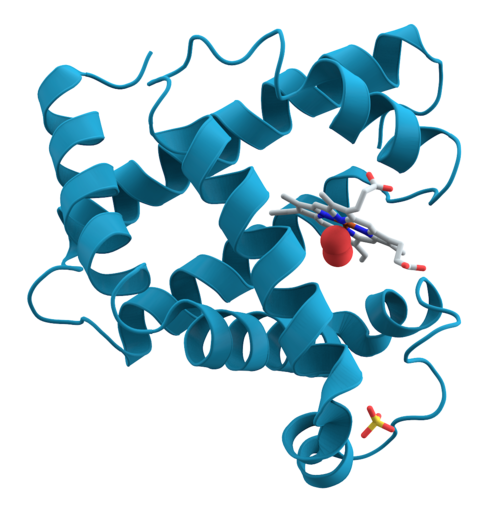
Chinese Medical Use of Enzymes

Traditional Chinese medicine texts, such as the works of Li Shizhen, document the use of fermented medicines and digestive aids that unknowingly rely on enzymes. #biochemistry #history
Chinese Medical Use of Enzymes
By →AzaToth - self made based on PDB entry, Public domain, https://commons.wikimedia.org/w/index.php?curid=68596
1833 CE

Anselme Payen Discovers Diastase

French chemist Anselme Payen isolates diastase (amylase) from malt, the first recognition of an enzyme. #biochemistry #enzymes

Anselme Payen Discovers Diastase
By Jean Baptiste Adolphe Lafosse - [1], Public domain, https://commons.wikimedia.org/w/index.php?curid=2573381
1857 CE

Pasteur Shows Fermentation is Microbial

Louis Pasteur demonstrates that fermentation is caused by living microorganisms, linking biology to biochemistry. #biochemistry #enzymes

Pasteur Shows Fermentation is Microbial
By Paul Nadar - File:Louis Pasteur, foto av Paul Nadar.jpg, Public domain, https://commons.wikimedia.org/w/index.php?curid=28039885
1878 CE

Wilhelm Kühne Coins 'Enzyme'

German physiologist Wilhelm Kühne introduces the term 'enzyme' (from Greek 'enzymos' meaning leavened). #biochemistry #enzymes

Wilhelm Kühne Coins 'Enzyme'
By Carl Lange Heidelberg - HeidICON via Prometheus, CC BY-SA 4.0, https://commons.wikimedia.org/w/index.php?curid=64103923
1894 CE

Emil Fischer Proposes Lock-and-Key Model

German chemist Emil Fischer suggests the lock-and-key model for enzyme-substrate specificity. #biochemistry #enzymes

Emil Fischer Proposes Lock-and-Key Model
By Unknown author - https://wellcomeimages.org/indexplus/obf_images/29/85/3104172da6b66ab0d72a53a71f82.jpg Gallery: https://wellcomeimages.org/indexplus/image/V0027668.html Wellcome Collection gallery (2018-03-23): https://wellcomecollection.org/works/pbekk7qp CC-BY-4.0, CC BY 4.0, https://commons.wikimedia.org/w/index.php?curid=180238528
1897 CE

Eduard Buchner Demonstrates Cell-Free Fermentation

Eduard Buchner shows that yeast extract can ferment sugar without living cells, proving enzymes are responsible. He wins the 1907 Nobel Prize. #biochemistry #enzymes

Eduard Buchner Demonstrates Cell-Free Fermentation
By Unknown author - http://www.nobelprize.org/nobel_prizes/chemistry/laureates/1907/buchner.html, Public domain, https://commons.wikimedia.org/w/index.php?curid=18253176
1901 CE

Takamine Isolates Adrenaline from Microbial Fermentation

Japanese chemist Jokichi Takamine isolates adrenaline (epinephrine) using microbial fermentation processes, a milestone in biochemical extraction. #biochemistry #japan

Takamine Isolates Adrenaline from Microbial Fermentation
By AnonymousUnknown author - Science history Institute [1], Public domain, https://commons.wikimedia.org/w/index.php?curid=8462606
1909 CE

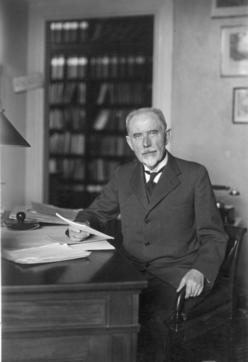
Soren Sorensen Invents pH Scale

Danish chemist Soren Sorensen develops the pH scale, essential for studying enzyme activity and protein chemistry. #biochemistry #enzymes
Soren Sorensen Invents pH Scale
By Unknown author - Polytech Photos. Scientific photodatabase, Public domain, https://commons.wikimedia.org/w/index.php?curid=5975361
1926 CE

Sumner Crystallizes Urease

American chemist James B. Sumner crystallizes urease, proving that enzymes are proteins. He shares the 1946 Nobel Prize. #biochemistry #enzymes

Sumner Crystallizes Urease
By Unknown author - http://www.nobelprize.org/nobel_prizes/chemistry/laureates/1946/sumner.html, Public domain, https://commons.wikimedia.org/w/index.php?curid=18260359
1928 CE

Fleming Discovers Lysozyme

Alexander Fleming discovers lysozyme, an enzyme found in tears and mucus that has antibacterial properties. #biochemistry #enzymes

Fleming Discovers Lysozyme
By Yikrazuul - Own work, CC BY-SA 3.0, https://commons.wikimedia.org/w/index.php?curid=204021
1930 CE

Northrop and Kunitz Crystallize Pepsin and Trypsin

John H. Northrop and Moses Kunitz crystallize digestive enzymes pepsin and trypsin, further establishing the protein nature of enzymes. #biochemistry #enzymes

Northrop and Kunitz Crystallize Pepsin and Trypsin
By Unknown author - http://www.nobelprize.org/nobel_prizes/chemistry/laureates/1946/northrop.html, Public domain, https://commons.wikimedia.org/w/index.php?curid=18260391
1955 CE

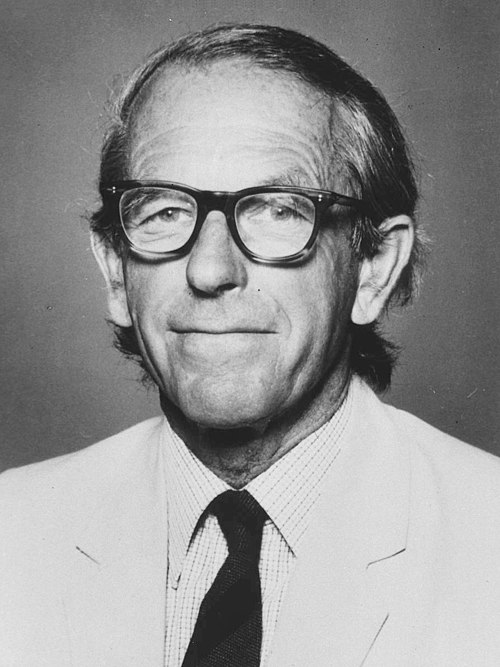
Sanger Determines Insulin Sequence

Frederick Sanger determines the amino acid sequence of insulin, the first protein sequenced, enabling studies of enzyme structure-function. #biochemistry #enzymes
Sanger Determines Insulin Sequence
By Unknown author, Public domain, https://commons.wikimedia.org/w/index.php?curid=1249932
1958 CE

Kendrew Solves Myoglobin Structure

John Kendrew determines the first three-dimensional structure of myoglobin, an oxygen-binding protein, using X-ray crystallography. #biochemistry #enzymes

Kendrew Solves Myoglobin Structure
By Unknown author - http://www.nobelprize.org/nobel_prizes/chemistry/laureates/1962/, Public domain, https://commons.wikimedia.org/w/index.php?curid=18334629
1961 CE

Monod, Jacob, Changeux Propose Allosteric Regulation

Jacques Monod, François Jacob, and Jean-Pierre Changeux introduce the concept of allosteric regulation of enzymes, a key mechanism in metabolic control. #biochemistry #enzymes

Monod, Jacob, Changeux Propose Allosteric Regulation
By Tenthkrige (talk). Tenthkrige - Own work (Original text: I (Tenthkrige (talk)) created this work entirely by myself.), CC0, https://commons.wikimedia.org/w/index.php?curid=85816837
1963 CE

Ramachandran Proposes Protein Folding Model

Indian biophysicist G.N. Ramachandran develops the Ramachandran plot, a foundational tool for understanding protein and enzyme structure. #biochemistry #india

1965 CE

Williams Proposes Drug Metabolism Phases

British biochemist R. Teclin Williams outlines Phase I and Phase II drug metabolism mediated by enzymes like cytochrome P450. #biochemistry #enzymes

1972 CE

Berg Creates First Recombinant DNA with Restriction Enzymes

Paul Berg constructs the first recombinant DNA molecule using restriction enzymes and DNA ligase, launching genetic engineering. #biochemistry #enzymes

Berg Creates First Recombinant DNA with Restriction Enzymes
By Unknown author - http://profiles.nlm.nih.gov/CD/B/B/L/L/, Public domain, https://commons.wikimedia.org/w/index.php?curid=3702286
1978 CE

Restriction Enzymes Discovered

Werner Arber, Hamilton Smith, and Daniel Nathans discover restriction enzymes, earning the Nobel Prize. These enzymes cut DNA at specific sequences. #biochemistry #enzymes

1982 CE

Cech Discovers Ribozymes

Thomas Cech discovers that RNA can act as a catalyst (ribozyme), challenging the dogma that only proteins are enzymes. He shares the 1989 Nobel Prize. #biochemistry #enzymes

Cech Discovers Ribozymes
By William G. Scott - Own work, CC BY-SA 3.0, https://commons.wikimedia.org/w/index.php?curid=2257831
1987 CE

Mullis Invents PCR Using Taq Polymerase

Kary Mullis develops the polymerase chain reaction (PCR) using a heat-stable DNA polymerase (Taq), revolutionizing molecular biology. #biochemistry #enzymes

Mullis Invents PCR Using Taq Polymerase
By Madprime - Own work, CC0, https://commons.wikimedia.org/w/index.php?curid=2104468
1990 CE

First Human Gene Therapy Trial Using Viral Enzymes

The first approved human gene therapy trial uses retroviral vectors to treat adenosine deaminase deficiency, an enzyme deficiency disorder. #biochemistry #enzymes

First Human Gene Therapy Trial Using Viral Enzymes
By Ciencias Españolas KoS - File:ADN_2.png File:Pince_a_épiler.png, CC BY-SA 3.0, https://commons.wikimedia.org/w/index.php?curid=75624775
1994 CE

Protein Data Bank Established

The Protein Data Bank (PDB) is established as a global repository for 3D structures of biological macromolecules, including enzymes. #biochemistry #enzymes

2000 CE

Human Genome Project Draft

The first draft of the human genome is published, identifying thousands of genes encoding enzymes and enabling systems biochemistry. #biochemistry #enzymes

Human Genome Project Draft
By U.S. Department of Energy, Human Genome Project - http://www.ornl.gov/hgmis, Public domain, https://commons.wikimedia.org/w/index.php?curid=2485616
2002 CE

Directed Evolution of Enzymes (Frances Arnold)

Frances Arnold pioneers directed evolution of enzymes, creating novel catalysts with industrial applications. She wins the 2018 Nobel Prize. #biochemistry #enzymes

Directed Evolution of Enzymes (Frances Arnold)
By Thomas Shafee - Thomas, Shafee, (2014). "Evolvability of a viral protease: experimental evolution of catalysis, robustness and specificity". PhD Thesis. University of Cambridge., CC BY 4.0, https://commons.wikimedia.org/w/index.php?curid=37193303
2009 CE

CRISPR-Cas9 Discovered as Bacterial Immune System

The CRISPR-Cas9 system, an RNA-guided DNA endonuclease, is characterized as a bacterial adaptive immune system by scientists including Emmanuelle Charpentier and Jennifer Doudna. #biochemistry #enzymes

CRISPR-Cas9 Discovered as Bacterial Immune System
By Boghog - Own work, CC BY-SA 4.0, https://commons.wikimedia.org/w/index.php?curid=68597347
2018 CE

Arnold Wins Nobel for Enzyme Evolution

Frances Arnold receives the Nobel Prize in Chemistry for the directed evolution of enzymes, alongside George Smith and Gregory Winter for phage display of antibodies. #biochemistry #enzymes

Arnold Wins Nobel for Enzyme Evolution
By Christopher Michel - Own work, CC BY-SA 4.0, https://commons.wikimedia.org/w/index.php?curid=114693578
2020 CE

AlphaFold Revolutionizes Protein Structure Prediction

DeepMind's AlphaFold uses deep learning to predict protein structures with high accuracy, dramatically impacting enzyme design and drug discovery. #biochemistry #enzymes

AlphaFold Revolutionizes Protein Structure Prediction
By Kathryn Tunyasuvunakool, Jonas Adler, Zachary Wu, Tim Green, Michal Zielinski, Augustin Žídek, Alex Bridgland, Andrew Cowie, Clemens Meyer, Agata Laydon, Sameer Velanka *, Gerard J Kleywegt *, Alex Bateman *, Richard Evans, Alexander Pritzel, Michael Figurnov, Olaf Ronneberger, Russ Bates, Simon A. A. Kohl, Anna Potapenko, Andrew J Ballard, Bernardino Romera-Paredes, Stanislav Nikolov, Rishub Jain, Ellen Clancy, David Reiman, Stig Petersen, Andrew Senior, Koray Kavukcuoglu, Ewan Birney *, Pushmeet Kohli, John Jumper, Demis Hassabis - https://deepmind.google/blog/enabling-high-accuracy-protein-structure-prediction-at-the-proteome-scale/, CC BY 4.0, https://commons.wikimedia.org/w/index.php?curid=188769148