WW2/Battles of WW2/Hour-by-Hour • Curated by Admin Timeline.sg
Hour-by-hour account of the first naval battle fought entirely by carrier aircraft — a tactical draw that stopped the Japanese invasion of Port Moresby. (4–8 May 1942)
Chronological Storyline (30 Milestones)
May 4, 1942 CE
Yorktown strikes Tulagi
USS Yorktown launched air strikes against Japanese transports and destroyers at Tulagi, destroying several seaplanes and a destroyer, opening the Battle of the Coral Sea. · Wikipedia: https://en.wikipedia.org/wiki/Battle_of_the_Coral_Sea
A mushroom cloud rises after a heavy explosion on board the U.S. Navy aircraft carrier USS Lexington (CV-2), 8 May 1942. This is probably the great explosion from the detonation of torpedo warheads stowed in the starboard side of the hangar, aft, that followed an explosion amidships at 1727 hrs. Note USS Yorktown (CV-5) on the horizon in the left center, and destroyer USS Hammann (DD-412) at the extreme left. By Unknown author - U.S. Navy photo 80-G-16651, Public domain, https://commons.wikimedia.org/w/index.php?curid=2900677Battle of the Coral Sea - Pacific War #24 DOCUMENTARY
May 4, 1942 CE
Japanese respond to Tulagi raid
Japanese forces at Tulagi sent reports of the American carrier strike northward, but Vice Admiral Shigeyoshi Inoue's staff did not immediately connect it to a major fleet presence. · Wikipedia: https://en.wikipedia.org/wiki/Battle_of_the_Coral_Sea
A mushroom cloud rises after a heavy explosion on board the U.S. Navy aircraft carrier USS Lexington (CV-2), 8 May 1942. This is probably the great explosion from the detonation of torpedo warheads stowed in the starboard side of the hangar, aft, that followed an explosion amidships at 1727 hrs. Note USS Yorktown (CV-5) on the horizon in the left center, and destroyer USS Hammann (DD-412) at the extreme left. By Unknown author - U.S. Navy photo 80-G-16651, Public domain, https://commons.wikimedia.org/w/index.php?curid=2900677
May 5, 1942 CE
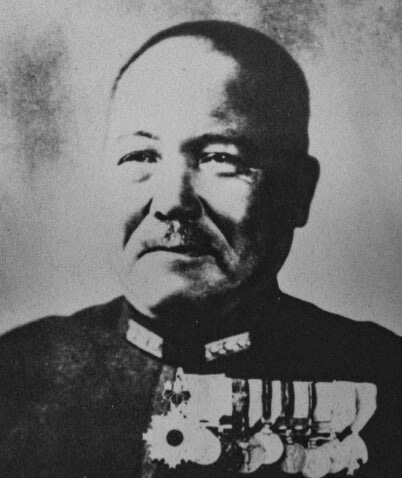
Inoue delays Port Moresby operation
Vice Admiral Inoue postponed the Port Moresby invasion by one day to May 10, citing the need to neutralize American carrier threats detected in the Coral Sea area. · Wikipedia: https://en.wikipedia.org/wiki/Shigeyoshi_Inoue
Japanese Admiral Shigeyoshi Inoue (Inouye), World War II Imperial Japanese Navy commander By Unknown author - Scanned from: Dull, Paul S. (1978) A Battle History of the Imperial Japanese Navy, 1941-1945, Naval Institute Press, pp. p. 119 ISBN 0-87021-097-1, Public domain, https://commons.wikimedia.org/w/index.php?curid=1418370
May 6, 1942 CE
Japanese reconnaissance spots U.S. ships
A Japanese land-based reconnaissance aircraft reported sighting an American carrier and cruiser near the southern Solomons, but the report was vague and delayed. · Wikipedia: https://en.wikipedia.org/wiki/Battle_of_the_Coral_Sea
A mushroom cloud rises after a heavy explosion on board the U.S. Navy aircraft carrier USS Lexington (CV-2), 8 May 1942. This is probably the great explosion from the detonation of torpedo warheads stowed in the starboard side of the hangar, aft, that followed an explosion amidships at 1727 hrs. Note USS Yorktown (CV-5) on the horizon in the left center, and destroyer USS Hammann (DD-412) at the extreme left. By Unknown author - U.S. Navy photo 80-G-16651, Public domain, https://commons.wikimedia.org/w/index.php?curid=2900677
May 6, 1942 CE
U.S. codebreakers guide Fletcher
Intelligence derived from decrypted Japanese messages confirmed the Japanese carrier force was heading south, allowing Fletcher to position his fleet for interception. · Wikipedia: https://en.wikipedia.org/wiki/Battle_of_the_Coral_Sea
A mushroom cloud rises after a heavy explosion on board the U.S. Navy aircraft carrier USS Lexington (CV-2), 8 May 1942. This is probably the great explosion from the detonation of torpedo warheads stowed in the starboard side of the hangar, aft, that followed an explosion amidships at 1727 hrs. Note USS Yorktown (CV-5) on the horizon in the left center, and destroyer USS Hammann (DD-412) at the extreme left. By Unknown author - U.S. Navy photo 80-G-16651, Public domain, https://commons.wikimedia.org/w/index.php?curid=2900677
May 6, 1942 CE
Fletcher consolidates Task Force 17
Rear Admiral Frank Jack Fletcher united Task Force 17 with the Australian-American cruiser force under Rear Admiral John Crace, creating a combined fleet to intercept the Japanese. · Wikipedia: https://en.wikipedia.org/wiki/Frank_Jack_Fletcher
Admiral Frank Jack Fletcher in September 1942 By U.S. Naval Historical Center Photograph - http://www.history.navy.mil/photos/pers-us/uspers-f/fj-fltr.htm, Public domain, https://commons.wikimedia.org/w/index.php?curid=7369676
May 7, 1942 CE
Lost Japanese pilots land on U.S. carriers
Several disoriented Japanese pilots from the failed dusk strike attempted to land on American carriers, mistaking them for their own; most were shot down by alert gunners. · Wikipedia: https://en.wikipedia.org/wiki/Battle_of_the_Coral_Sea
A mushroom cloud rises after a heavy explosion on board the U.S. Navy aircraft carrier USS Lexington (CV-2), 8 May 1942. This is probably the great explosion from the detonation of torpedo warheads stowed in the starboard side of the hangar, aft, that followed an explosion amidships at 1727 hrs. Note USS Yorktown (CV-5) on the horizon in the left center, and destroyer USS Hammann (DD-412) at the extreme left. By Unknown author - U.S. Navy photo 80-G-16651, Public domain, https://commons.wikimedia.org/w/index.php?curid=2900677
May 7, 1942 CE
Shōhō sunk by U.S. dive bombers
American SBD Dauntless dive bombers and TBD Devastator torpedo planes overwhelmed the Shōhō, hitting it with 13 bombs and 7 torpedoes, sending it to the bottom with heavy loss of life. · Wikipedia: https://en.wikipedia.org/wiki/Japanese_aircraft_carrier_Sh%C5%8Dh%C5%8D
日本海軍航空母艦祥鳳型「祥鳳」横須賀軍港内にて撮影されたもの。 By Unknown author - 呉市海事歴史科学館所蔵品, Public domain, https://commons.wikimedia.org/w/index.php?curid=3638889
May 7, 1942 CE
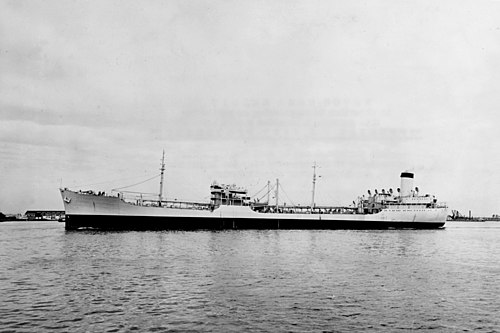
Japanese strike sinks Neosho and Sims
Japanese carrier aircraft from Zuikaku and Shōkaku attacked the misidentified American ships, sinking the destroyer Sims and fatally damaging the oiler Neosho. · Wikipedia: https://en.wikipedia.org/wiki/USS_Neosho_(AO-23)
The U.S. Navy fleet oiler USS Neosho (AO-23) at the time of her commissioning, circa mid-1939. By U.S. Navy - Official U.S. Navy photo NH 63448 from the U.S. Navy Naval History and Heritage Command, Public domain, https://commons.wikimedia.org/w/index.php?curid=1184515
May 7, 1942 CE
Lexington and Yorktown launch strike
Both American carriers launched a massive combined strike of 93 aircraft against the Shōhō carrier group, the first American carrier strike against a Japanese carrier. · Wikipedia: https://en.wikipedia.org/wiki/Japanese_aircraft_carrier_Sh%C5%8Dh%C5%8D
日本海軍航空母艦祥鳳型「祥鳳」横須賀軍港内にて撮影されたもの。 By Unknown author - 呉市海事歴史科学館所蔵品, Public domain, https://commons.wikimedia.org/w/index.php?curid=3638889
May 7, 1942 CE
Inoue orders invasion force to withdraw
With the Shōhō lost and no carrier cover for the invasion convoy, Vice Admiral Inoue ordered the Port Moresby invasion force to reverse course and retreat northward temporarily. · Wikipedia: https://en.wikipedia.org/wiki/Shigeyoshi_Inoue
Japanese Admiral Shigeyoshi Inoue (Inouye), World War II Imperial Japanese Navy commander By Unknown author - Scanned from: Dull, Paul S. (1978) A Battle History of the Imperial Japanese Navy, 1941-1945, Naval Institute Press, pp. p. 119 ISBN 0-87021-097-1, Public domain, https://commons.wikimedia.org/w/index.php?curid=1418370
May 7, 1942 CE
Failed Japanese dusk strike
Twenty-seven Japanese aircraft attempted an evening strike on the American carriers but were intercepted by U.S. fighters, losing nine planes without scoring any hits. · Wikipedia: https://en.wikipedia.org/wiki/Battle_of_the_Coral_Sea
A mushroom cloud rises after a heavy explosion on board the U.S. Navy aircraft carrier USS Lexington (CV-2), 8 May 1942. This is probably the great explosion from the detonation of torpedo warheads stowed in the starboard side of the hangar, aft, that followed an explosion amidships at 1727 hrs. Note USS Yorktown (CV-5) on the horizon in the left center, and destroyer USS Hammann (DD-412) at the extreme left. By Unknown author - U.S. Navy photo 80-G-16651, Public domain, https://commons.wikimedia.org/w/index.php?curid=2900677
May 7, 1942 CE
Japanese scout misidentifies U.S. ships
A Japanese scout plane reported an American carrier and cruiser south of New Guinea, but the targets were actually the oiler Neosho and destroyer Sims. · Wikipedia: https://en.wikipedia.org/wiki/USS_Neosho_(AO-23)
The U.S. Navy fleet oiler USS Neosho (AO-23) at the time of her commissioning, circa mid-1939. By U.S. Navy - Official U.S. Navy photo NH 63448 from the U.S. Navy Naval History and Heritage Command, Public domain, https://commons.wikimedia.org/w/index.php?curid=1184515
May 7, 1942 CE
Famous 'Scratch one flattop' call
Lieutenant Commander Robert Dixon of Lexington's scout bomber squadron radioed back 'Scratch one flattop,' announcing the first Japanese carrier sunk by American forces in the war. · Wikipedia: https://en.wikipedia.org/wiki/Japanese_aircraft_carrier_Sh%C5%8Dh%C5%8D
日本海軍航空母艦祥鳳型「祥鳳」横須賀軍港内にて撮影されたもの。 By Unknown author - 呉市海事歴史科学館所蔵品, Public domain, https://commons.wikimedia.org/w/index.php?curid=3638889
May 7, 1942 CE
U.S. scouts find Shōhō group
American scout aircraft from Yorktown located the Japanese light carrier Shōhō and its escorts near the Louisiade Archipelago, escorting the invasion convoy. · Wikipedia: https://en.wikipedia.org/wiki/Japanese_aircraft_carrier_Sh%C5%8Dh%C5%8D
日本海軍航空母艦祥鳳型「祥鳳」横須賀軍港内にて撮影されたもの。 By Unknown author - 呉市海事歴史科学館所蔵品, Public domain, https://commons.wikimedia.org/w/index.php?curid=3638889
May 8, 1942 CE
Both sides launch dawn searches
At dawn, both the American and Japanese carrier forces launched reconnaissance aircraft to find each other in the vast Coral Sea, each aware the enemy was nearby. · Wikipedia: https://en.wikipedia.org/wiki/Battle_of_the_Coral_Sea
A mushroom cloud rises after a heavy explosion on board the U.S. Navy aircraft carrier USS Lexington (CV-2), 8 May 1942. This is probably the great explosion from the detonation of torpedo warheads stowed in the starboard side of the hangar, aft, that followed an explosion amidships at 1727 hrs. Note USS Yorktown (CV-5) on the horizon in the left center, and destroyer USS Hammann (DD-412) at the extreme left. By Unknown author - U.S. Navy photo 80-G-16651, Public domain, https://commons.wikimedia.org/w/index.php?curid=2900677
May 8, 1942 CE
Lexington fires spread beyond control
Despite heroic damage control efforts, fires aboard Lexington raged out of control, and the ship began listing; Captain Frederick Sherman ordered the crew to prepare to abandon ship. · Wikipedia: https://en.wikipedia.org/wiki/USS_Lexington_(CV-2)
The U.S. Navy aircraft carrier USS Lexington (CV-2) leaving San Diego, California (USA), on 14 October 1941. Planes parked on her flight deck include Brewster F2A-1 fighters (parked forward), Douglas SBD scout-bombers (amidships) and Douglas TBD-1 torpedo planes (aft). Note the false bow wave painted on her hull, forward, and badly chalked condition of the hull's camouflage paint. By Unknown author - U.S. Navy photo 80-G-416362, Public domain, https://commons.wikimedia.org/w/index.php?curid=49974
May 8, 1942 CE
Fletcher withdraws southward
With Lexington lost and Yorktown damaged, Rear Admiral Fletcher withdrew his remaining forces southward out of the Coral Sea, low on fuel and aircraft. · Wikipedia: https://en.wikipedia.org/wiki/Frank_Jack_Fletcher
Admiral Frank Jack Fletcher in September 1942 By U.S. Naval Historical Center Photograph - http://www.history.navy.mil/photos/pers-us/uspers-f/fj-fltr.htm, Public domain, https://commons.wikimedia.org/w/index.php?curid=7369676
May 8, 1942 CE
Takagi reports inability to continue
Japanese Rear Admiral Takeo Takagi reported to Inoue that his carrier air groups were depleted and he could not continue offensive operations, limiting Japan's options. · Wikipedia: https://en.wikipedia.org/wiki/Takeo_Takagi
Japanese admiral Takagi Takeo By Unknown author - http://www.geocities.com/dutcheastindies/takagi.html. Also found in the book: Dull, Paul S. (1978) A Battle History of the Imperial Japanese Navy, 1941-1945, Naval Institute Press ISBN: 0-87021-097-1. , p. 147., Public domain, https://commons.wikimedia.org/w/index.php?curid=2677208
May 8, 1942 CE
Fatal explosion rocks Lexington
A spark from a generator ignited gasoline vapors below decks on Lexington, triggering a massive internal explosion that destroyed the ship's damage control efforts and spread uncontrollable fires. · Wikipedia: https://en.wikipedia.org/wiki/USS_Lexington_(CV-2)
The U.S. Navy aircraft carrier USS Lexington (CV-2) leaving San Diego, California (USA), on 14 October 1941. Planes parked on her flight deck include Brewster F2A-1 fighters (parked forward), Douglas SBD scout-bombers (amidships) and Douglas TBD-1 torpedo planes (aft). Note the false bow wave painted on her hull, forward, and badly chalked condition of the hull's camouflage paint. By Unknown author - U.S. Navy photo 80-G-416362, Public domain, https://commons.wikimedia.org/w/index.php?curid=49974
May 8, 1942 CE
Zuikaku escapes in rain squall
The Japanese carrier Zuikaku evaded American attack by hiding in a rain squall, emerging undamaged and preserving half of Japan's carrier air power in the Coral Sea. · Wikipedia: https://en.wikipedia.org/wiki/Japanese_aircraft_carrier_Zuikaku
Zuikaku escapes in rain squall By Unknown author, Public domain, https://commons.wikimedia.org/w/index.php?curid=823167
May 8, 1942 CE
Lexington appears to recover
Despite heavy damage, USS Lexington's crew managed to extinguish initial fires and the carrier resumed flight operations, giving hope that the ship might survive. · Wikipedia: https://en.wikipedia.org/wiki/USS_Lexington_(CV-2)
The U.S. Navy aircraft carrier USS Lexington (CV-2) leaving San Diego, California (USA), on 14 October 1941. Planes parked on her flight deck include Brewster F2A-1 fighters (parked forward), Douglas SBD scout-bombers (amidships) and Douglas TBD-1 torpedo planes (aft). Note the false bow wave painted on her hull, forward, and badly chalked condition of the hull's camouflage paint. By Unknown author - U.S. Navy photo 80-G-416362, Public domain, https://commons.wikimedia.org/w/index.php?curid=49974
May 8, 1942 CE
Mutual discovery of carrier forces
Within minutes of each other, American and Japanese scout planes each reported the enemy's carrier position, roughly 200 miles apart, setting the stage for the decisive clash. · Wikipedia: https://en.wikipedia.org/wiki/Battle_of_the_Coral_Sea
A mushroom cloud rises after a heavy explosion on board the U.S. Navy aircraft carrier USS Lexington (CV-2), 8 May 1942. This is probably the great explosion from the detonation of torpedo warheads stowed in the starboard side of the hangar, aft, that followed an explosion amidships at 1727 hrs. Note USS Yorktown (CV-5) on the horizon in the left center, and destroyer USS Hammann (DD-412) at the extreme left. By Unknown author - U.S. Navy photo 80-G-16651, Public domain, https://commons.wikimedia.org/w/index.php?curid=2900677
May 8, 1942 CE
Carriers launch simultaneous strikes
Both fleets launched full deckload strikes at nearly the same time; American aircraft headed for Shōkaku and Zuikaku while Japanese planes flew toward Lexington and Yorktown. · Wikipedia: https://en.wikipedia.org/wiki/Battle_of_the_Coral_Sea
A mushroom cloud rises after a heavy explosion on board the U.S. Navy aircraft carrier USS Lexington (CV-2), 8 May 1942. This is probably the great explosion from the detonation of torpedo warheads stowed in the starboard side of the hangar, aft, that followed an explosion amidships at 1727 hrs. Note USS Yorktown (CV-5) on the horizon in the left center, and destroyer USS Hammann (DD-412) at the extreme left. By Unknown author - U.S. Navy photo 80-G-16651, Public domain, https://commons.wikimedia.org/w/index.php?curid=2900677
May 8, 1942 CE
Lexington abandoned and scuttled
Rear Admiral Aubrey Fitch ordered the Lexington abandoned; the destroyer USS Phelps fired five torpedoes to scuttle the stricken carrier, which sank at approximately 19:52. · Wikipedia: https://en.wikipedia.org/wiki/USS_Lexington_(CV-2)
The U.S. Navy aircraft carrier USS Lexington (CV-2) leaving San Diego, California (USA), on 14 October 1941. Planes parked on her flight deck include Brewster F2A-1 fighters (parked forward), Douglas SBD scout-bombers (amidships) and Douglas TBD-1 torpedo planes (aft). Note the false bow wave painted on her hull, forward, and badly chalked condition of the hull's camouflage paint. By Unknown author - U.S. Navy photo 80-G-416362, Public domain, https://commons.wikimedia.org/w/index.php?curid=49974
May 8, 1942 CE
U.S. strike damages Shōkaku
American dive bombers from Yorktown and Lexington scored three bomb hits on the Shōkaku, heavily damaging its flight deck and rendering it unable to launch aircraft. · Wikipedia: https://en.wikipedia.org/wiki/Japanese_aircraft_carrier_Sh%C5%8Dkaku
日本海軍航空母艦 翔鶴型「翔鶴」完成直後の写真。(Japanese Navy Aircraft Carrier Shokaku type "Shokaku" immediately after completion photo) By Unknown author - 広島県呉市海事歴史科学館所蔵品。(Hiroshima Prefecture Yamato Museum collection), Public domain, https://commons.wikimedia.org/w/index.php?curid=3579869
May 8, 1942 CE
Yorktown damaged by Japanese bombs
The USS Yorktown was struck by a single 250-kilogram bomb that penetrated the flight deck, killing 37 crewmen, but the carrier remained operational and could launch aircraft. · Wikipedia: https://en.wikipedia.org/wiki/USS_Yorktown_(CV-5)
The U.S. Navy aircraft carrier USS Yorktown (CV-5) underway, on 21 July 1937. By U.S. Navy photo 19-N-17424 - This tag does not indicate the copyright status of the attached work. A normal copyright tag is still required. See Commons:Licensing., Public domain, https://commons.wikimedia.org/w/index.php?curid=6411792
May 8, 1942 CE
Japanese bombers hit Lexington
Japanese torpedo bombers and dive bombers struck the USS Lexington with two torpedoes and several bombs, causing severe damage and starting fires below decks. · Wikipedia: https://en.wikipedia.org/wiki/USS_Lexington_(CV-2)
The U.S. Navy aircraft carrier USS Lexington (CV-2) leaving San Diego, California (USA), on 14 October 1941. Planes parked on her flight deck include Brewster F2A-1 fighters (parked forward), Douglas SBD scout-bombers (amidships) and Douglas TBD-1 torpedo planes (aft). Note the false bow wave painted on her hull, forward, and badly chalked condition of the hull's camouflage paint. By Unknown author - U.S. Navy photo 80-G-416362, Public domain, https://commons.wikimedia.org/w/index.php?curid=49974
May 9, 1942 CE
Inoue cancels Port Moresby invasion
Vice Admiral Inoue officially cancelled the Port Moresby seaborne invasion, ordering all Japanese naval forces to withdraw, achieving a strategic victory for the Allies. · Wikipedia: https://en.wikipedia.org/wiki/Shigeyoshi_Inoue
Japanese Admiral Shigeyoshi Inoue (Inouye), World War II Imperial Japanese Navy commander By Unknown author - Scanned from: Dull, Paul S. (1978) A Battle History of the Imperial Japanese Navy, 1941-1945, Naval Institute Press, pp. p. 119 ISBN 0-87021-097-1, Public domain, https://commons.wikimedia.org/w/index.php?curid=1418370
May 11, 1942 CE
Neosho scuttled after battle
The badly damaged oiler USS Neosho, struck on May 7, was finally scuttled by an American destroyer after surviving crew were rescued, closing the Battle of the Coral Sea. · Wikipedia: https://en.wikipedia.org/wiki/USS_Neosho_(AO-23)
The U.S. Navy fleet oiler USS Neosho (AO-23) at the time of her commissioning, circa mid-1939. By U.S. Navy - Official U.S. Navy photo NH 63448 from the U.S. Navy Naval History and Heritage Command, Public domain, https://commons.wikimedia.org/w/index.php?curid=1184515