WW2/Battles of WW2/Date-by-Date/Battle of the Atlantic • Curated by Admin Timeline.sg
The longest continuous campaign of the war — the years-long struggle between U-boat wolf packs and Allied convoy escorts, decided as much by codebreakers and technology as by gunfire. (3 September 1939 – 8 May 1945)
Chronological Storyline (31 Milestones)
Sep 3, 1939 CE
U-boat sinks SS Athenia
On the first day of Britain's entry into World War II, U-30 torpedoed the passenger liner SS Athenia northwest of Ireland, killing 112 civilians and signaling the start of the U-boat campaign against Allied shipping. · Wikipedia: https://en.wikipedia.org/wiki/SS_Athenia
Why Germany Lost the Battle of the Atlantic (WW2 Documentary)
Sep 17, 1939 CE
U-29 sinks HMS Courageous
U-29 torpedoed and sank the British aircraft carrier HMS Courageous southwest of Ireland, killing 519 crew, prompting the Admiralty to withdraw fleet carriers from U-boat patrol zones. · Wikipedia: https://en.wikipedia.org/wiki/HMS_Courageous_(50)
HMS COURAGEOUS shortly after completion, in her original configuration as a large cruiser. By Oscar Parkes - This photograph SP 1780 comes from the collections of the Imperial War Museums(collection no. 1900-01), Public domain, https://commons.wikimedia.org/w/index.php?curid=3087439
Oct 14, 1939 CE
U-47 penetrates Scapa Flow
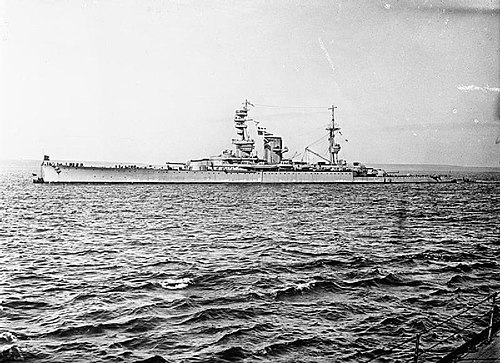
Günther Prien's U-47 infiltrated the Royal Navy's main base at Scapa Flow and sank the battleship HMS Royal Oak, killing 833 men, a stunning propaganda coup for the Kriegsmarine early in the war. · Wikipedia: https://en.wikipedia.org/wiki/HMS_Royal_Oak_(08)
w:en:HMS Royal Oak (08) in 1937. By Royal Navy photographer - http://www.royalnavy.mod.uk/static/pages/211.html, Public domain, https://commons.wikimedia.org/w/index.php?curid=104833
Jun 22, 1940 CE
First Happy Time begins
Following the fall of France, U-boats gained access to French Atlantic ports like Lorient, dramatically shortening their transit to hunting grounds and initiating the period U-boat crews called the 'Happy Time' due to easy targets. · Wikipedia: https://en.wikipedia.org/wiki/First_Happy_Time
A U-boat shells a merchant ship which remained afloat after being torpedoed. By Unknown author - IWMCollections IWM Photo No.: MISC 51237, Public domain, https://commons.wikimedia.org/w/index.php?curid=481313
Jul 1, 1940 CE
U-boats achieve record sinkings
During July 1940, U-boats sank over 280,000 tons of Allied shipping, exploiting weakly escorted convoys and the sudden availability of French bases to devastate British maritime supply lines. · Wikipedia: https://en.wikipedia.org/wiki/First_Happy_Time
A U-boat shells a merchant ship which remained afloat after being torpedoed. By Unknown author - IWMCollections IWM Photo No.: MISC 51237, Public domain, https://commons.wikimedia.org/w/index.php?curid=481313
Sep 2, 1940 CE
Destroyers for Bases Agreement
The United States transferred fifty aging destroyers to Britain in exchange for base leases, providing the Royal Navy with desperately needed convoy escort vessels to counter escalating U-boat losses. · Wikipedia: https://en.wikipedia.org/wiki/Destroyers_for_Bases_Agreement
Flota, którą Anglia otrzymała od USA wpływa do portu angielskieg. By Unknown photographer - https://audiovis.nac.gov.pl/obraz/2972/, Public domain, https://commons.wikimedia.org/w/index.php?curid=79567402
Mar 6, 1941 CE
U-47 lost with Prien
U-47, commanded by Günther Prien who had sunk the Royal Oak, was lost with all 45 crew in the North Atlantic, removing one of the Kriegsmarine's most celebrated U-boat aces from the campaign. · Wikipedia: https://en.wikipedia.org/wiki/German_submarine_U-47_(1938)
May 9, 1941 CE
U-110 captured with Enigma
HMS Bulldog captured U-110 and seized an intact Enigma machine and codebooks, a critical intelligence coup that helped Bletchley Park read German naval communications and track U-boat deployments. · Wikipedia: https://en.wikipedia.org/wiki/German_submarine_U-110_(1940)
U-110 was captured by HM Ships Bulldog, Broadway and Arbretia By Royal Navy official photographer - http://www.history.navy.mil, Public domain, https://commons.wikimedia.org/w/index.php?curid=6247918
Jun 27, 1941 CE
U-203 tracks USS Texas
U-203 shadowed the American battleship USS Texas near Iceland, highlighting the increasingly hostile undeclared naval war between the United States and Germany months before formal US entry into the conflict. · Wikipedia: https://en.wikipedia.org/wiki/German_submarine_U-203
German Type VII submarine U-203, commanded by Rolf Mutzelburg, entering unknown Kriegsmarine base on Atlantic shore. By Haring - https://audiovis.nac.gov.pl/obraz/2671/, Public domain, https://commons.wikimedia.org/w/index.php?curid=79567052
Dec 9, 1941 CE
US enters Battle of Atlantic
Following Pearl Harbor, Germany declared war on the United States, extending the U-boat campaign to the American eastern seaboard and the Caribbean, where initially unprepared US coastal shipping suffered heavy losses. · Wikipedia: https://en.wikipedia.org/wiki/Second_Happy_Time
Allied tanker Dixie Arrow torpedoed in Atlantic Ocean by German submarine. Ship crumbling amidship under heat of fire, settles toward bottom of ocean, 1942. By Unknown authorUnknown author U.S. Navy (photo 80-G-43376) - This tag does not indicate the copyright status of the attached work. A normal copyright tag is still required. See Commons:Licensing., Public domain, https://commons.wikimedia.org/w/index.php?curid=482800
Jan 13, 1942 CE
Operation Drumbeat begins
Karl Dönitz launched Operation Paukenschlag, sending five long-range U-boats to attack poorly defended shipping along the US East Coast, initiating the 'Second Happy Time' with devastating losses for Allied tankers and freighters. · Wikipedia: https://en.wikipedia.org/wiki/Second_Happy_Time
Allied tanker Dixie Arrow torpedoed in Atlantic Ocean by German submarine. Ship crumbling amidship under heat of fire, settles toward bottom of ocean, 1942. By Unknown authorUnknown author U.S. Navy (photo 80-G-43376) - This tag does not indicate the copyright status of the attached work. A normal copyright tag is still required. See Commons:Licensing., Public domain, https://commons.wikimedia.org/w/index.php?curid=482800
Feb 1, 1942 CE
US coastal blackout ordered
After weeks of U-boats using city lights to silhouette and sink ships off the American coast, the US Navy finally enforced coastal blackouts, reducing the effectiveness of German night surface attacks. · Wikipedia: https://en.wikipedia.org/wiki/Second_Happy_Time
Allied tanker Dixie Arrow torpedoed in Atlantic Ocean by German submarine. Ship crumbling amidship under heat of fire, settles toward bottom of ocean, 1942. By Unknown authorUnknown author U.S. Navy (photo 80-G-43376) - This tag does not indicate the copyright status of the attached work. A normal copyright tag is still required. See Commons:Licensing., Public domain, https://commons.wikimedia.org/w/index.php?curid=482800
Mar 31, 1942 CE
Record monthly U-boat sinkings
March 1942 saw U-boats sink 108 ships totaling over 560,000 tons, the worst monthly Allied shipping losses of the entire war, with most victims along the US East Coast and in the Caribbean. · Wikipedia: https://en.wikipedia.org/wiki/Second_Happy_Time
Allied tanker Dixie Arrow torpedoed in Atlantic Ocean by German submarine. Ship crumbling amidship under heat of fire, settles toward bottom of ocean, 1942. By Unknown authorUnknown author U.S. Navy (photo 80-G-43376) - This tag does not indicate the copyright status of the attached work. A normal copyright tag is still required. See Commons:Licensing., Public domain, https://commons.wikimedia.org/w/index.php?curid=482800
May 9, 1942 CE
Coastal convoy system established
The US Navy finally implemented a full coastal convoy system with escorts along the eastern seaboard, drastically reducing sinkings and effectively ending the Second Happy Time for German U-boats. · Wikipedia: https://en.wikipedia.org/wiki/Second_Happy_Time
Allied tanker Dixie Arrow torpedoed in Atlantic Ocean by German submarine. Ship crumbling amidship under heat of fire, settles toward bottom of ocean, 1942. By Unknown authorUnknown author U.S. Navy (photo 80-G-43376) - This tag does not indicate the copyright status of the attached work. A normal copyright tag is still required. See Commons:Licensing., Public domain, https://commons.wikimedia.org/w/index.php?curid=482800
Jul 1, 1942 CE
Dönitz shifts U-boats north
With US coastal defenses strengthened, Dönitz redeployed U-boats back to the North Atlantic convoy routes, focusing wolf pack attacks on the mid-ocean air gap where Allied aircraft could not yet reach. · Wikipedia: https://en.wikipedia.org/wiki/Battle_of_the_Atlantic
Officers on the bridge of a destroyer, escorting a large convoy of ships keep a sharp look out for attacking enemy submarines during the Battle of the Atlantic. October 1941 By Post-Work: User:W.wolny - This photograph A 5667 comes from the collections of the Imperial War Museums., Public domain, https://commons.wikimedia.org/w/index.php?curid=481262
Aug 11, 1942 CE
Convoy SC 94 attacked
Wolf packs inflicted heavy losses on convoy SC 94 in the North Atlantic, sinking eleven ships, demonstrating the deadly effectiveness of coordinated U-boat tactics against convoys in the mid-ocean gap. · Wikipedia: https://en.wikipedia.org/wiki/Convoy_SC_94
A view of German submarine U-210 manoeuvering at full speed on the surface in a desperate and ultimately unsuccessful attempt to evade destruction by HMCS ASSINIBOINE - 6 August 1942 By Salter, G.E. (Part of the Canadian Department of National Defence collection) - http://www.navy.gc.ca/project_pride/photo_archive/photo_archive_description_page_e.asp?ImgNegNum=PA-037443, Public domain, https://commons.wikimedia.org/w/index.php?curid=16269385
Nov 2, 1942 CE
U-boats add fourth rotor
The German Navy introduced the four-rotor Enigma M4 cipher, temporarily blinding Bletchley Park's ability to read U-boat communications and causing a critical intelligence blackout for Allied convoy routing. · Wikipedia: https://en.wikipedia.org/wiki/Cryptanalysis_of_the_Enigma
Enigma Machine at the Imperial War Museum, London. By Karsten Sperling, http://spiff.de/photo - Own work - Derivative of author/uploader's own work - This file was derived from: EnigmaMachine.jpg, Public domain, https://commons.wikimedia.org/w/index.php?curid=109561
Dec 13, 1942 CE
Dönitz becomes naval C-in-C
Admiral Karl Dönitz was appointed Commander-in-Chief of the German Navy, consolidating U-boat command with overall naval strategy while intensifying the wolf pack campaign against North Atlantic convoys. · Wikipedia: https://en.wikipedia.org/wiki/Karl_D%C3%B6nitz
Information added by Wikimedia users. Cropped portrait of German Grand Admiral Karl Dönitz. Image cropped and subjected to the following changes (decreased brightness, increased contrast) by Emiya1980 before reuploaded to Wikimedia Commons. By Unknown - This image was provided to Wikimedia Commons by the German Federal Archive (Deutsches Bundesarchiv) as part of a cooperation project. The German Federal Archive guarantees an authentic representation only using the originals (negative and/or positive), resp. the digitalization of the originals as provided by the Digital Image Archive., CC BY-SA 3.0 de, https://commons.wikimedia.org/w/index.php?curid=149312468
Jan 1, 1943 CE
Allied Atlantic command unified
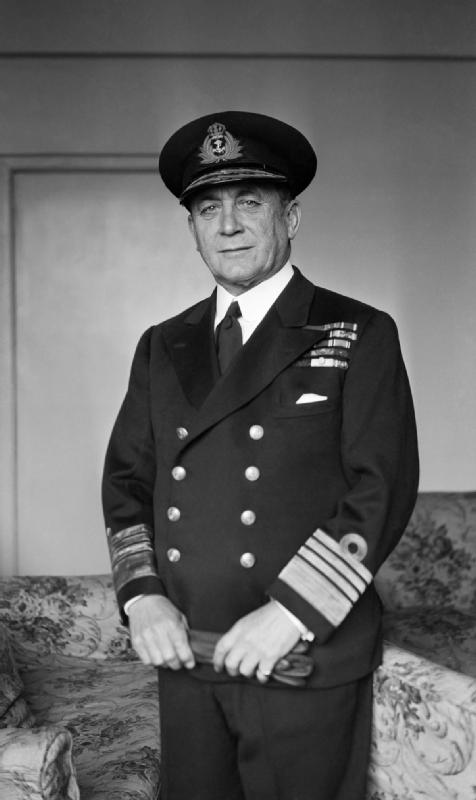
Admiral Sir Max Horton took command of the Western Approaches, and the Allies reorganized antisubmarine warfare under a unified Atlantic command, improving coordination between British, Canadian, and US naval forces. · Wikipedia: https://en.wikipedia.org/wiki/Max_Horton
Royal Navy Admiral Sir Max Horton, Commander in Chief Western Approaches from November 1942 to May 1945. By Smith Wales (Capt), Royal Navy official photographer - This photograph A 20789 comes from the collections of the Imperial War Museums(collection no. 4700-01), Public domain, https://commons.wikimedia.org/w/index.php?curid=8711681
Mar 16, 1943 CE
Wolf packs attack Convoys HX-229/SC-122
Two wolf packs struck convoys HX-229 and SC-122 simultaneously in the North Atlantic, sinking 22 ships for the loss of one U-boat, marking the peak of the U-boat threat to Allied convoy survival. · Wikipedia: https://en.wikipedia.org/wiki/Battle_of_convoys_HX-229_and_SC-122
Apr 1, 1943 CE
Horton's support groups active
Admiral Horton deployed dedicated support groups of escort vessels that could reinforce convoys under attack rather than remaining tied to a single convoy, revolutionizing Allied antisubmarine tactics. · Wikipedia: https://en.wikipedia.org/wiki/Max_Horton
Royal Navy Admiral Sir Max Horton, Commander in Chief Western Approaches from November 1942 to May 1945. By Smith Wales (Capt), Royal Navy official photographer - This photograph A 20789 comes from the collections of the Imperial War Museums(collection no. 4700-01), Public domain, https://commons.wikimedia.org/w/index.php?curid=8711681
May 1, 1943 CE
Allies break M4 Enigma again
Bletchley Park cryptanalysts, led by Alan Turing's team, finally broke the four-rotor M4 Enigma cipher, restoring the flow of Ultra intelligence that allowed Allied convoy routers to evade U-boat patrol lines. · Wikipedia: https://en.wikipedia.org/wiki/Cryptanalysis_of_the_Enigma
Enigma Machine at the Imperial War Museum, London. By Karsten Sperling, http://spiff.de/photo - Own work - Derivative of author/uploader's own work - This file was derived from: EnigmaMachine.jpg, Public domain, https://commons.wikimedia.org/w/index.php?curid=109561
May 6, 1943 CE
ONS 5 turning point battle
Convoy ONS 5, defended by Commander Peter Gretton's escort group, repelled attacks by a wolf pack of over 30 U-boats, sinking six submarines for the loss of 13 ships, proving Allied escorts could defeat wolf packs. · Wikipedia: https://en.wikipedia.org/wiki/Battle_of_ONS_5
May 24, 1943 CE
Dönitz withdraws U-boats
After catastrophic losses of 41 U-boats in May 1943 alone, Dönitz ordered the withdrawal of all U-boats from the North Atlantic convoy routes, acknowledging temporary defeat by Allied antisubmarine forces. · Wikipedia: https://en.wikipedia.org/wiki/Battle_of_the_Atlantic
Officers on the bridge of a destroyer, escorting a large convoy of ships keep a sharp look out for attacking enemy submarines during the Battle of the Atlantic. October 1941 By Post-Work: User:W.wolny - This photograph A 5667 comes from the collections of the Imperial War Museums., Public domain, https://commons.wikimedia.org/w/index.php?curid=481262
Jul 1, 1943 CE
Leigh Light closes air gap
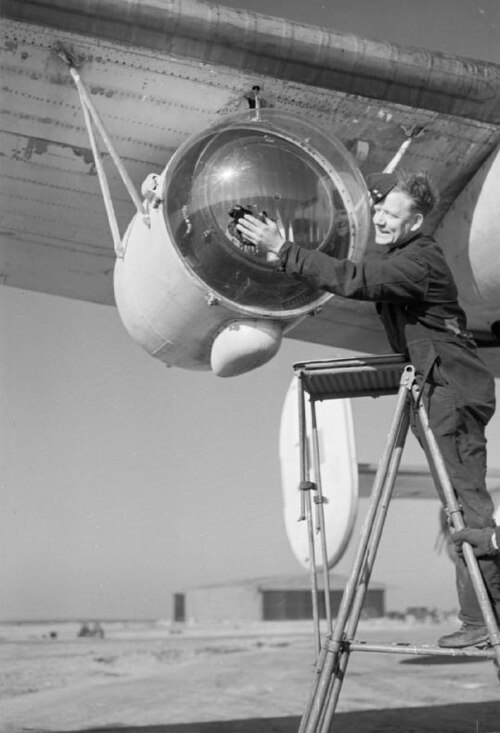
The deployment of Leigh Light-equipped Wellington and Liberator aircraft from Iceland and Newfoundland finally closed the mid-Atlantic air gap, allowing airborne radar searches to detect and attack U-boats day or night. · Wikipedia: https://en.wikipedia.org/wiki/Leigh_Light
Anti-Submarine Weapons: Leigh Light used for spotting U-boats on the surface at night fitted to a Liberator aircraft of Royal Air Force Coastal Command. By Royal Air Force official photographer : Miller (F/O) - This photograph CH 13997 comes from the collections of the Imperial War Museums., Public domain, https://commons.wikimedia.org/w/index.php?curid=481337
Aug 1, 1943 CE
Escort carriers join convoys
Allied escort carrier groups, including USS Core and HMS Biter, began providing continuous air cover for Atlantic convoys, using aircraft to detect, attack, and drive off U-boats far from land-based airfields. · Wikipedia: https://en.wikipedia.org/wiki/Escort_carrier
Sep 1, 1943 CE
Schnorchel fitted to U-boats
German U-boats began fitting the schnorchel breathing device, allowing diesel engines to run while submerged and reducing exposure to Allied radar, though it came too late to reverse the U-boat's declining effectiveness. · Wikipedia: https://en.wikipedia.org/wiki/Submarine_snorkel
USS U-3008 (ex-German submarine U-3008) View of the submarine's conning tower, with her snorkel raised. Taken at Key West Naval Station, Florida Note her insignia painted on the front of the conning tower. By USN - http://www.history.navy.mil. link, Public domain, https://commons.wikimedia.org/w/index.php?curid=6272658
Jan 1, 1944 CE
U-boats shift to inshore waters
With the North Atlantic lost, Dönitz redeployed U-boats to inshore waters around the British Isles, using schnorchel-equipped boats to attack coastal shipping while evading Allied air patrols. · Wikipedia: https://en.wikipedia.org/wiki/Battle_of_the_Atlantic
Officers on the bridge of a destroyer, escorting a large convoy of ships keep a sharp look out for attacking enemy submarines during the Battle of the Atlantic. October 1941 By Post-Work: User:W.wolny - This photograph A 5667 comes from the collections of the Imperial War Museums., Public domain, https://commons.wikimedia.org/w/index.php?curid=481262
Jun 6, 1944 CE
U-boats fail to stop D-Day
Dönitz ordered all available U-boats to attack the Normandy invasion fleet, but Allied escort groups and air patrols sank or drove off nearly all of them, preventing any significant interference with the D-Day landings. · Wikipedia: https://en.wikipedia.org/wiki/Normandy_landings
A LCVP (Landing Craft, Vehicle, Personnel) from the U.S. Coast Guard-manned USS Samuel Chase disembarks troops of Company A, 16th Infantry, 1st Infantry Division (the Big Red One) wading onto the Fox Green section of Omaha Beach (Calvados, Basse-Normandie, France) on the morning of June 6, 1944. American soldiers encountered the newly formed German 352nd Division when landing. During the initial landing two-thirds of Company E became casualties. By Chief Photographer's Mate (CPHoM) Robert F. Sargent - This tag does not indicate the copyright status of the attached work. A normal copyright tag is still required. See Commons:Licensing., Public domain, https://commons.wikimedia.org/w/index.php?curid=17040973
Sep 1, 1944 CE
Type XXI U-boat launched
Germany launched the first of the revolutionary Type XXI U-boats, designed for high submerged speed and extended underwater endurance, but Allied bombing of shipyards and training delays prevented operational deployment in time. · Wikipedia: https://en.wikipedia.org/wiki/Type_XXI_submarine
Museums-U-Boot WILHELM BAUER in Bremerhaven By Sicherlich at German Wikipedia Retouched version of de:Bild:2004-Bremerhaven U-Boot-Museum-Sicherlich.jpg, which has the following description: - Transferred from de.wikipedia to Commons by Boteas using CommonsHelper., CC BY-SA 3.0, https://commons.wikimedia.org/w/index.php?curid=2623112
May 8, 1945 CE
U-boats surrender at sea
On VE Day, Dönitz ordered all U-boats to surface, fly black flags, and surrender to Allied naval forces, ending nearly six years of German submarine warfare that had claimed over 2,600 Allied merchant ships and 175 warships. · Wikipedia: https://en.wikipedia.org/wiki/Battle_of_the_Atlantic
Officers on the bridge of a destroyer, escorting a large convoy of ships keep a sharp look out for attacking enemy submarines during the Battle of the Atlantic. October 1941 By Post-Work: User:W.wolny - This photograph A 5667 comes from the collections of the Imperial War Museums., Public domain, https://commons.wikimedia.org/w/index.php?curid=481262