Ashoka the Great: Kalinga War, Buddhist Edicts & Maurya Empire
Encyclopedia/3. History, Societies & Civilizations/02. South & Southeast Asian Civilizations/03. South & Southeast Asian Biographies • Curated by Admin Timeline.sg
Biographical timeline of Emperor Ashoka of the Maurya Dynasty, who renounced war after Kalinga and spread Dhamma across Asia.
Chronological Storyline (36 Milestones)
304 BCE
Ashoka born to Emperor Bindusara
Ashoka is born to Emperor Bindusara and Queen Dharma (or Subhadrangi) in Pataliputra. He was one of many princes in the Maurya dynasty. #history #india
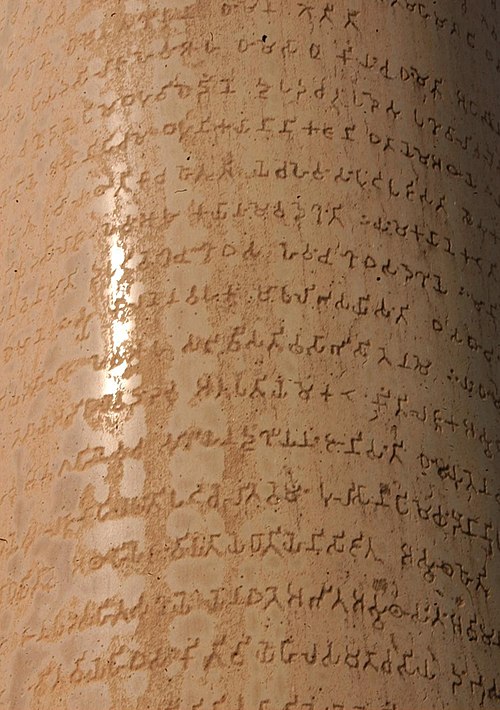
Ashoka born to Emperor Bindusara By Photo Dharma from Sadao, Thailand - Detail of: ., CC BY 2.0, https://commons.wikimedia.org/w/index.php?curid=61783990
290 BCE
Ashoka serves as governor of Ujjain
Prince Ashoka is appointed as the governor of the Avanti region with capital at Ujjain. This role gives him administrative experience. #history #maurya
280 BCE
Ashoka sent to suppress Taxila rebellion
Ashoka is sent to Taxila to quell a rebellion, which he resolves peacefully. This showcases his military and diplomatic skills. #history #india
273 BCE
Bindusara's death and succession struggle
Emperor Bindusara dies and a succession war ensues among his sons. Ashoka emerges victorious after eliminating rival brothers. #history #maurya
268 BCE
Ashoka formally crowned emperor
Ashoka is formally crowned as the third Mauryan emperor, beginning his reign which will last until 232 BCE. #history #coronation
265 BCE
Ashoka annexes Kalinga region
Ashoka begins the conquest of Kalinga, a prosperous kingdom on the eastern coast. The region offers strategic access to trade routes. #history #war
Ashoka annexes Kalinga region By Jagged 85 at English Wikipedia - Transferred from en.wikipedia to Commons., Public domain, https://commons.wikimedia.org/w/index.php?curid=36896746
261 BCE
Eight-year Kalinga War ends in victory
After a brutal campaign, Ashoka conquers Kalinga. The war causes immense suffering, with over 100,000 killed and 150,000 deported. #history #buddhism
261 BCE
Ashoka experiences remorse after Kalinga
Witnessing the carnage of Kalinga, Ashoka is filled with deep remorse and vows to follow non-violence and Dhamma. This marks a turning point in his reign. #buddhism #peace
260 BCE
Ashoka converts to Buddhism
Ashoka formally converts to Buddhism under the guidance of the monk Upagupta (or Moggaliputta Tissa). He becomes a devoted lay follower. #buddhism #conversion
258 BCE
First Buddhist council at Pataliputra
Ashoka convenes the Third Buddhist Council at Pataliputra (preceded by earlier councils under other rulers) to codify the Dhamma and resolve disputes. #buddhism #council
257 BCE
Ashoka begins erecting edicts
Ashoka starts issuing the Major Rock Edicts, inscribed on rocks and pillars across the empire. These edicts propagate Dhamma and his policies. #history #inscriptions
Ashoka begins erecting edicts By Sachin kumar tiwary - This image has been extracted from another file, CC BY-SA 3.0, https://commons.wikimedia.org/w/index.php?curid=70710778
256 BCE
Minor Rock Edicts proclaimed
Ashoka issues the Minor Rock Edicts, which describe his conversion and his personal efforts to spread Dhamma. These are found in scattered locations. #history #edicts
255 BCE
Lion Capital of Ashoka erected at Sarnath
Ashoka erects a pillar with a capital of four lions at Sarnath, site of Buddha's first sermon. This later becomes the national emblem of India. #art #symbolism
Lion Capital of Ashoka erected at Sarnath By Chrisi1964 - Detail of this file:, CC BY-SA 4.0, https://commons.wikimedia.org/w/index.php?curid=52617694
254 BCE
Ashoka sends missionaries to Sri Lanka
Ashoka sends his son Mahinda (or Mahendra) and daughter Sanghamitta to Sri Lanka to spread Buddhism. This leads to the establishment of Buddhism on the island. #buddhism #missions )
253 BCE
Mission to Hellenistic kingdoms
Ashoka sends Buddhist missionaries to the Hellenistic kingdoms of the Mediterranean, including Syria, Egypt, and Macedonia, as mentioned in his edicts. #buddhism #global
252 BCE
Construction of stupas and monasteries
Ashoka orders the construction of thousands of stupas and viharas (monasteries) across the empire, including the Great Stupa at Sanchi. #architecture #buddhism
Construction of stupas and monasteries By Biswarup Ganguly - Own work, CC BY 3.0, https://commons.wikimedia.org/w/index.php?curid=27965645
251 BCE
Ashoka's Dhamma policy formalized
Ashoka codifies Dhamma as a set of ethical principles including non-violence, tolerance, and respect for all life. This becomes the foundation of his governance. #ethics #history
250 BCE
Pillar Edicts erected across empire
Ashoka commissions the Major Pillar Edicts, carved on tall stone pillars. These edicts provide detailed instructions on Dhamma and social welfare. #history #edicts
249 BCE
Ashoka visits Lumbini
Ashoka makes a pilgrimage to Lumbini, the birthplace of Buddha, and erects a pillar there to commemorate the visit. This is confirmed by an inscription. #buddhism #pilgrimage
Ashoka visits Lumbini By Bibek Raj Pandeya - Own work, CC BY-SA 4.0, https://commons.wikimedia.org/w/index.php?curid=62274966
248 BCE
Queens' Edict recorded
Ashoka's edict mentions his second queen Karuvaki and her charitable activities. This shows his inclusive policy. #history #women
247 BCE
Ashoka promotes vegetarianism and animal rights
Ashoka bans animal sacrifices and hunting for sport, and reduces meat consumption in the royal household. His edicts advocate kindness to animals. #ethics #vegetarianism
246 BCE
Establishment of hospitals for humans and animals
Ashoka establishes hospitals for both humans and animals across the empire, a pioneering welfare measure. #welfare #history
245 BCE
Ashoka builds roads and rest houses
Ashoka orders the construction of roads, rest houses, and wells for travelers and pilgrims. These improve trade and communication. #infrastructure #history
244 BCE
Edicts inscribed in multiple scripts
Ashoka ensures edicts are written in Prakrit using Brahmi and Kharosthi scripts, and in Greek and Aramaic in western regions. This facilitates wide dissemination. #language #inscriptions
243 BCE
Ashoka appoints Dhamma Mahamatras
Ashoka creates a new class of officers called Dhamma Mahamatras to spread Dhamma and oversee welfare across the empire. #administration #buddhism
242 BCE
Fourth Buddhist Council (convened by Ashoka?)
Some traditions hold that Ashoka convened the Third Buddhist Council around this time (though dates vary). It helps standardize Buddhist teachings. #buddhism #council
241 BCE
Ashoka's son Kunala is blinded?
According to legend, Ashoka's son Kunala is blinded by a queen's conspiracy. This story appears in later texts but may reflect palace intrigues. #legend #history
240 BCE
Ashoka builds the original Mahabodhi Temple
Ashoka constructs a temple at Bodh Gaya, the site of Buddha's enlightenment. This becomes an important pilgrimage center. #architecture #buddhism
Ashoka builds the original Mahabodhi Temple By Bpilgrim - Own work, CC BY-SA 2.5, https://commons.wikimedia.org/w/index.php?curid=1762492
239 BCE
Ashoka preaches Dhamma to neighboring tribes
Ashoka's edicts mention that he has converted the forest and border tribes to Dhamma through peaceful means. #diplomacy #buddhism
238 BCE
Ashoka's daughter Sanghamitta ordained
Ashoka's daughter Sanghamitta becomes a Buddhist nun and later travels to Sri Lanka to establish the Bhikkhuni order. #buddhism #women
Ashoka's daughter Sanghamitta ordained By MediaJet - Own work, CC BY-SA 3.0, https://commons.wikimedia.org/w/index.php?curid=27313679
237 BCE
Ashoka's edict on religious tolerance
The Major Rock Edicts explicitly state that all sects should be respected and that Ashoka honors all religious traditions. #tolerance #religion
236 BCE
Ashoka builds the Barabar Caves
Ashoka dedicates the Barabar Caves (in modern Bihar) to the Ajivika sect, showing his support for non-Buddhist ascetic traditions. #architecture #tolerance
Ashoka builds the Barabar Caves By Photo Dharma from Penang, Malaysia - Clean up of this file:, CC BY 2.0, https://commons.wikimedia.org/w/index.php?curid=68904033
235 BCE
Ashoka's last edict recorded
The final of the Major Pillar Edicts is inscribed, indicating Ashoka's continued commitment to Dhamma until the end of his life. #history #edicts
234 BCE
Ashoka falls ill and divides empire among sons
As Ashoka's health declines, he partitions the empire among his sons, including Kunala and Tivala, to ensure smooth succession. #history #succession
233 BCE
Ashoka's death and decline of Maurya empire
Emperor Ashoka dies at Pataliputra, aged around 72. His death leads to the fragmentation and eventual decline of the Maurya Empire within decades. #history #legacy
232 BCE
Ashoka cremated with Buddhist rites
Ashoka is cremated with full Buddhist honors. His remains are said to have been distributed and enshrined in stupas. #buddhism #funeral