Encyclopedia/2. Technology & The Built World/1. Computing, AI & Information Technology • Curated by Admin Timeline.sg
A comprehensive timeline of artificial intelligence and neural networks, spanning from ancient philosophical roots and mechanical automata to modern deep learning and transformer architectures.
Chronological Storyline (41 Milestones)
350 BCE
Aristotle's Syllogistic Logic
Aristotle develops syllogistic logic in his Organon, laying foundational principles for formal reasoning and deduction that later influence AI. #AI #history
Aristotle's Syllogistic Logic By Francesco Bini - Own work, CC BY-SA 4.0, https://commons.wikimedia.org/w/index.php?curid=152195543
850 CE
Al-Khwarizmi's Algebra
Persian mathematician Al-Khwarizmi writes The Compendious Book on Calculation by Completion and Balancing, introducing algebraic methods that underpin algorithmic thinking. #AI #history
Al-Khwarizmi's Algebra By Zarateman - Own work, CC0, https://commons.wikimedia.org/w/index.php?curid=162213187
1206 CE
Al-Jazari's Programmable Automata
Ismail al-Jazari designs programmable humanoid automata in his Book of Knowledge of Ingenious Mechanical Devices, early examples of embodied autonomous machines. #AI #history
Al-Jazari's Programmable Automata By Al-Jazari - http://www.muslimheritage.com/topics/default.cfm?ArticleID=466, Public domain, https://commons.wikimedia.org/w/index.php?curid=4173094
1275 CE
Ramon Llull's Ars Magna
Ramon Llull publishes Ars Magna, proposing a mechanical method for generating truth using symbolic reasoning, a precursor to computational logic. #AI #history
Ramon Llull's Ars Magna By Francesc Ribalta - oQFl0byqb1kxzw at Google Cultural Institute maximum zoom level, Public domain, https://commons.wikimedia.org/w/index.php?curid=21955365
1623 CE
Schickard's Calculating Clock
Wilhelm Schickard builds the first known mechanical calculator, capable of basic arithmetic, marking an early step toward automated computation. #AI #history
Schickard's Calculating Clock By Conrad Melperger - eingescannt aus: Roman Janssen; Oliver Auge (Hg.): Herrenberger Persönlichkeiten aus acht Jahrhunderten, Herrenberg 1999, ISBN 3-926809-09-4, S. 190., Public domain, https://commons.wikimedia.org/w/index.php?curid=6805089
1642 CE
Pascal's Pascaline
Blaise Pascal invents the Pascaline, a mechanical calculator that automates addition and subtraction, further advancing computational machinery. #AI #history
Pascal's Pascaline By Rama - Own work, CC BY-SA 3.0 fr, https://commons.wikimedia.org/w/index.php?curid=53246694
1679 CE
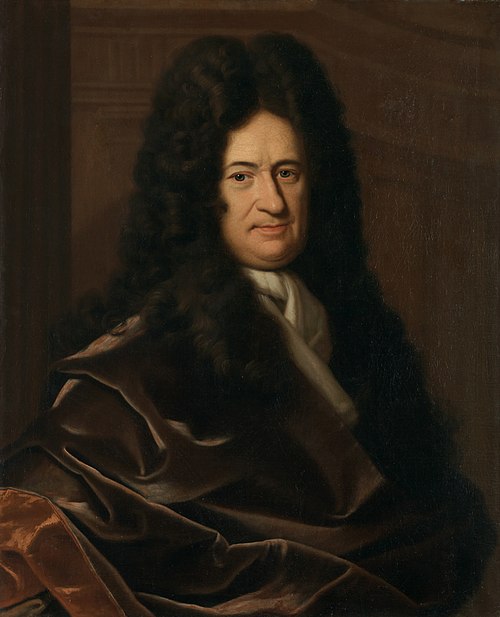
Leibniz's Binary System and Calculus Ratiocinator
Gottfried Wilhelm Leibniz describes the binary number system and envisions a universal reasoning machine (calculus ratiocinator), foreshadowing computer logic. #AI #history
Leibniz's Binary System and Calculus Ratiocinator By Christoph Bernhard Francke - Herzog Anton Ulrich-Museum, online, Public domain, https://commons.wikimedia.org/w/index.php?curid=53159699
1842 CE
Ada Lovelace's First Algorithm
Ada Lovelace writes the first algorithm intended for Charles Babbage's Analytical Engine, recognizing that machines could go beyond mere calculation. #AI #history
Ada Lovelace's First Algorithm By Antoine Claudet - shared by Paul Graham on x.com https://x.com/paulg/status/1927655441913250041, Public domain, https://commons.wikimedia.org/w/index.php?curid=166285599
1854 CE
Boole's An Investigation of the Laws of Thought
George Boole publishes his book on Boolean algebra, creating a formal symbolic system for logical reasoning that becomes foundational for digital computing. #AI #history
Boole's An Investigation of the Laws of Thought By Unknown author - The Illustrated London News, 21 January 1865, Public domain, https://commons.wikimedia.org/w/index.php?curid=39762976
1913 CE
Principia Mathematica by Russell and Whitehead
Bertrand Russell and Alfred North Whitehead publish Principia Mathematica, an ambitious attempt to derive all mathematics from logical axioms. #AI #history
Principia Mathematica by Russell and Whitehead By Nick Dillinger - http://en.wikipedia.org/wiki/File:Pmdsgdbhxdfgb2.jpg, Public domain, https://commons.wikimedia.org/w/index.php?curid=6074919
1936 CE
Turing's On Computable Numbers
Alan Turing introduces the concept of a universal machine (Turing machine) in his seminal paper, defining computation and laying the theoretical foundation for AI. #AI #history
Turing's On Computable Numbers By Rocky Acosta - Own work, CC BY 3.0, https://commons.wikimedia.org/w/index.php?curid=24369879
1943 CE
McCulloch and Pitts Artificial Neuron
Warren McCulloch and Walter Pitts propose a mathematical model of an artificial neuron, igniting the field of neural networks. #AI #neuralnetworks
1945 CE
Bush's As We May Think
Vannevar Bush envisions the Memex, a hypertext device for organizing knowledge, anticipating associative memory and information retrieval. #AI #history
Bush's As We May Think By Time Inc. - Life magazine, Volume 19, Number 11 (page 112), Public domain, https://commons.wikimedia.org/w/index.php?curid=64881877
1950 CE
Turing's Computing Machinery and Intelligence
Alan Turing publishes his paper proposing the Turing Test as a criterion for machine intelligence. #AI #history
1955 CE
Logic Theorist by Newell and Simon
Allen Newell and Herbert Simon create the Logic Theorist, considered the first artificial intelligence program, capable of proving mathematical theorems. #AI #history
Jun 18, 1956 CE
Dartmouth Conference
John McCarthy organizes the Dartmouth Summer Research Project, coining the term 'Artificial Intelligence' and marking the birth of AI as a field. #AI #history
1958 CE
Perceptron by Frank Rosenblatt
Frank Rosenblatt develops the Perceptron, an early neural network capable of learning from data, spurring excitement in AI. #AI #neuralnetworks
1959 CE
Samuel's Checkers Program and Machine Learning
Arthur Samuel writes a checkers program that learns from play, coining the term 'machine learning' and demonstrating game-playing AI. #AI #machinelearning
1964 CE
ELIZA by Joseph Weizenbaum
Joseph Weizenbaum creates ELIZA, a natural language processing program that simulates a psychotherapist, highlighting human-machine interaction. #AI #NLP
ELIZA by Joseph Weizenbaum By Unknown author - File:ELIZA conversation.jpg, Public domain, https://commons.wikimedia.org/w/index.php?curid=99305439
1966 CE
Shakey the Robot
SRI International introduces Shakey, the first robot that could reason about its actions, combining AI and robotics. #AI #robotics
Shakey the Robot By The wub - Own work, CC BY-SA 4.0, https://commons.wikimedia.org/w/index.php?curid=158377025
1969 CE
Perceptrons by Minsky and Papert
Marvin Minsky and Seymour Papert publish Perceptrons, revealing limitations of single-layer networks and leading to the first AI winter. #AI #neuralnetworks )
1973 CE
Lighthill Report
James Lighthill's report criticizes AI research in the UK, prompting significant funding cuts and contributing to the first AI winter. #AI #history
1980 CE
XCON Expert System
The XCON (R1) expert system is deployed at DEC for configuring computer systems, demonstrating commercial viability of rule-based AI. #AI #expert systems
1986 CE
Backpropagation Algorithm Revived
Rumelhart, Hinton, and Williams publish a key paper on backpropagation, enabling multi-layer neural networks to learn and sparking a neural network resurgence. #AI #neuralnetworks
1987 CE
Japanese Fifth Generation Computer Project
Japan launches a large-scale initiative to develop advanced AI and parallel computing, influencing global AI research directions. #AI #history
1993 CE
Rodney Brooks' Subsumption Architecture
Rodney Brooks introduces behavior-based robotics, advocating for situated AI and rejecting symbolic representation. #AI #robotics
Rodney Brooks' Subsumption Architecture By Christopher Michel - Own work, CC BY-SA 4.0, https://commons.wikimedia.org/w/index.php?curid=110183511
1997 CE
Deep Blue Beats Kasparov
IBM's Deep Blue defeats world chess champion Garry Kasparov, marking the first time a computer beats a world champion in a match. #AI #games )
Deep Blue Beats Kasparov By James the photographer - https://www.flickr.com/photos/22453761@N00/592436598/, CC BY 2.0, https://commons.wikimedia.org/w/index.php?curid=3511068
1998 CE
LeNet-5 by Yann LeCun
Yann LeCun introduces LeNet-5, a convolutional neural network for handwritten digit recognition, laying the groundwork for modern deep learning. #AI #deeplearning
LeNet-5 by Yann LeCun By Zhang, Aston and Lipton, Zachary C. and Li, Mu and Smola, Alexander J. - https://github.com/d2l-ai/d2l-en, CC BY-SA 4.0, https://commons.wikimedia.org/w/index.php?curid=152265656
2006 CE
Deep Belief Nets by Hinton et al.
Geoffrey Hinton publishes a fast learning algorithm for deep belief nets, reviving deep learning research. #AI #deeplearning
Deep Belief Nets by Hinton et al. By Qwertyus - Own work, CC0, https://commons.wikimedia.org/w/index.php?curid=30324766
2009 CE
ImageNet Dataset Launch
Fei-Fei Li and colleagues release ImageNet, a large-scale image dataset that becomes a benchmark for visual recognition and fuels deep learning advances. #AI #computervision
2011 CE
IBM Watson Wins Jeopardy!
IBM Watson defeats human champions on the quiz show Jeopardy!, demonstrating advanced natural language processing and question answering. #AI #NLP )
IBM Watson Wins Jeopardy! By Clockready - Own work, CC BY-SA 3.0, https://commons.wikimedia.org/w/index.php?curid=15891787
2012 CE
AlexNet Wins ImageNet Challenge
Alex Krizhevsky, Ilya Sutskever, and Geoffrey Hinton design AlexNet, a deep CNN that drastically improves image classification, sparking the deep learning revolution. #AI #deeplearning
AlexNet Wins ImageNet Challenge By Zhang, Aston and Lipton, Zachary C. and Li, Mu and Smola, Alexander J. - https://github.com/d2l-ai/d2l-en, CC BY-SA 4.0, https://commons.wikimedia.org/w/index.php?curid=152265712
2014 CE
Generative Adversarial Networks (GANs)
Ian Goodfellow proposes GANs, where two neural networks compete, enabling realistic data generation and new creative AI applications. #AI #deeplearning
Generative Adversarial Networks (GANs) By Zhang, Aston and Lipton, Zachary C. and Li, Mu and Smola, Alexander J. - https://github.com/d2l-ai/d2l-en, CC BY-SA 4.0, https://commons.wikimedia.org/w/index.php?curid=152265649
2016 CE
AlphaGo Beats Lee Sedol
DeepMind's AlphaGo defeats world Go champion Lee Sedol, a landmark achievement in AI due to the game's complexity. #AI #games
2017 CE
Attention Is All You Need (Transformer)
Vaswani et al. introduce the Transformer architecture, revolutionizing natural language processing through self-attention mechanisms. #AI #NLP )
Attention Is All You Need (Transformer) By dvgodoy - https://github.com/dvgodoy/dl-visuals/?tab=readme-ov-file, CC BY 4.0, https://commons.wikimedia.org/w/index.php?curid=151216016
2018 CE
BERT and GPT Language Models
Google releases BERT, an influential bidirectional language model, while OpenAI releases GPT, a generative pre-trained transformer, advancing NLP. #AI #NLP )
2019 CE
AlphaFold Predicts Protein Folding
DeepMind's AlphaFold achieves breakthrough in protein structure prediction, demonstrating AI's potential in scientific discovery. #AI #science
AlphaFold Predicts Protein Folding By Kathryn Tunyasuvunakool, Jonas Adler, Zachary Wu, Tim Green, Michal Zielinski, Augustin Žídek, Alex Bridgland, Andrew Cowie, Clemens Meyer, Agata Laydon, Sameer Velanka *, Gerard J Kleywegt *, Alex Bateman *, Richard Evans, Alexander Pritzel, Michael Figurnov, Olaf Ronneberger, Russ Bates, Simon A. A. Kohl, Anna Potapenko, Andrew J Ballard, Bernardino Romera-Paredes, Stanislav Nikolov, Rishub Jain, Ellen Clancy, David Reiman, Stig Petersen, Andrew Senior, Koray Kavukcuoglu, Ewan Birney *, Pushmeet Kohli, John Jumper, Demis Hassabis - https://deepmind.google/blog/enabling-high-accuracy-protein-structure-prediction-at-the-proteome-scale/, CC BY 4.0, https://commons.wikimedia.org/w/index.php?curid=188769148
2020 CE
GPT-3 by OpenAI
OpenAI releases GPT-3, a large language model with 175 billion parameters, showcasing remarkable text generation and reasoning capabilities. #AI #NLP
Nov 30, 2022 CE
ChatGPT Launched
OpenAI launches ChatGPT, a conversational AI based on GPT-3.5/4, gaining massive public attention and ushering in widespread AI adoption. #AI #NLP
ChatGPT Launched By OpenAI - This file was derived from: OpenAI logo 2025.svg, Public domain, https://commons.wikimedia.org/w/index.php?curid=159145630
2023 CE
GPT-4 Multimodal Release
OpenAI releases GPT-4, a multimodal model capable of processing text and images, further advancing AI capabilities. #AI #NLP
2024 CE
AI Regulation and Safety Discussions Peak
Global policymakers and researchers intensify discussions on AI safety, ethics, and regulation following rapid advancements. #AI #ethics