Arthur C. Clarke: 2001 A Space Odyssey & Satellite Concept
Encyclopedia/4. Arts & Literature/1. Literature, Mythology & Folklore/01. Classical & Ancient Literature • Curated by Admin Timeline.sg
Arthur C. Clarke was a British science fiction writer, futurist, and inventor, best known for his novel '2001: A Space Odyssey' and his 1945 proposal for geostationary satellites. This timeline covers his birth, major works, and lasting impact on science and literature.
Chronological Storyline (20 Milestones)
Dec 16, 1917 CE
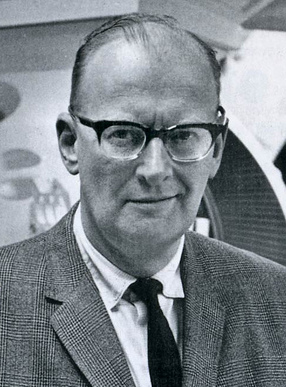
Arthur C. Clarke Born
Arthur Charles Clarke was born in Minehead, Somerset, England. He developed an early interest in science and astronomy, which would shape his future career as a writer and visionary. #ArthurCClarke #biography
Arthur C. Clarke Born By ITU Pictures - https://www.flickr.com/photos/itupictures/16636142906, CC BY 2.0, https://commons.wikimedia.org/w/index.php?curid=127497483
1936 CE
Moves to London
Clarke moved to London and joined the British Interplanetary Society (BIS), where he became an active member and began writing science fiction stories. #scifi #space
Moves to London By Marathon - From geograph.org.uk, CC BY-SA 2.0, https://commons.wikimedia.org/w/index.php?curid=66819715
1941 CE
Joins RAF as Radar Technician
During World War II, Clarke served in the Royal Air Force as a radar technician, working on early warning radar systems. This experience influenced his technical writing. #WWII #technology
Joins RAF as Radar Technician By Royal Air Force - This vector image includes elements that have been taken or adapted from this file:, Public domain, https://commons.wikimedia.org/w/index.php?curid=25737699
Oct 1, 1945 CE
Publishes 'Extra-Terrestrial Relays'
Clarke published a seminal paper in Wireless World proposing the use of geostationary satellites for global communications. This concept became the basis for modern satellite technology. #satellite #invention
1946 CE
First Published Science Fiction Story
Clarke's first professional science fiction story, 'Loophole', was published in Astounding Science Fiction. He began gaining recognition as a writer. #scifi #literature
1947 CE
President of British Interplanetary Society
Clarke served as President of the BIS, further establishing his role as a leading space advocate. #space #leadership
1951 CE
Publishes 'The Sands of Mars'
Clarke's first novel, 'The Sands of Mars', was published. It depicted a realistic colonization of Mars and showcased his scientific accuracy. #scifi #Mars
1953 CE
Publishes 'Childhood's End'
Clarke's novel 'Childhood's End' was published, exploring themes of evolution and alien intervention. It became a classic of science fiction. #scifi #classic
1956 CE
Moves to Sri Lanka
Clarke moved to Ceylon (now Sri Lanka), where he lived for most of his life. He became fascinated with the island's culture and underwater exploration. #SriLanka #travel
1961 CE
Receives Kalinga Prize
Clarke was awarded the Kalinga Prize for the Popularization of Science by UNESCO, recognizing his ability to communicate complex scientific ideas. #science #award
Receives Kalinga Prize By Unknown author - https://www.physics.umd.edu/courses/Phys420/Spring2002/Parra_Spring2002/HTMPages/whoswho.htm, Public domain, https://commons.wikimedia.org/w/index.php?curid=622169
1964 CE
Begins Collaboration with Stanley Kubrick
Clarke began working with filmmaker Stanley Kubrick on the screenplay for '2001: A Space Odyssey', a project that would become a landmark in cinema. #film #collaboration
Apr 2, 1968 CE
Premiere of '2001: A Space Odyssey'
The film '2001: A Space Odyssey' premiered, co-written by Clarke and directed by Kubrick. It revolutionized science fiction cinema with its realistic depiction of space travel. #scifi #film
1968 CE
Publishes '2001: A Space Odyssey' Novel
Clarke published the novel '2001: A Space Odyssey', written concurrently with the film. The book expanded on the film's story and became a bestseller. #scifi #books
1973 CE
Publishes 'Rendezvous with Rama'
Clarke's novel 'Rendezvous with Rama' was published, winning the Hugo and Nebula awards. It depicted a mysterious alien spacecraft entering the solar system. #scifi #award
1979 CE
Publishes 'The Fountains of Paradise'
Clarke's novel 'The Fountains of Paradise' was published, envisioning a space elevator. It won the Hugo and Nebula awards and showcased his futuristic engineering concepts. #scifi #engineering
1982 CE
Publishes '2010: Odyssey Two'
Clarke published the sequel to '2001', continuing the story of the Discovery mission and the monolith. It was later adapted into a film. #scifi #sequel
1986 CE
Receives Grand Master Award
The Science Fiction and Fantasy Writers of America awarded Clarke the Grand Master Award for his lifetime contributions to the genre. #scifi #award
1997 CE
Knighted by Queen Elizabeth II
Arthur C. Clarke was knighted for his services to literature. He became Sir Arthur C. Clarke, though he rarely used the title. #honor #literature
2001 CE
Publishes '3001: The Final Odyssey'
Clarke published the final novel in the Odyssey series, '3001: The Final Odyssey', concluding the epic saga. #scifi #series
Mar 19, 2008 CE
Arthur C. Clarke Dies
Arthur C. Clarke passed away in Colombo, Sri Lanka, at the age of 90. His legacy as a visionary writer and futurist endures. #obituary #legacy