Encyclopedia/2. Technology & The Built World/2. Engineering & Applied Sciences • Curated by Admin Timeline.sg
Ancient irrigation and canal systems represent humanity's earliest large-scale engineering achievements, transforming arid landscapes into fertile agricultural zones. From the qanats of Persia to the terraced fields of the Andes, these innovations underpinned the rise of civilizations across the globe.
Chronological Storyline (44 Milestones)
6000 BCE
Earliest irrigation in Mesopotamia
Farmers in the Fertile Crescent begin diverting water from the Tigris and Euphrates rivers using simple canals. This enables surplus agriculture and the rise of the first cities. #irrigation #history
Earliest irrigation in Mesopotamia By kallerna - Own work, CC BY-SA 4.0, https://commons.wikimedia.org/w/index.php?curid=102351020
5000 BCE
Indus Valley canal systems
The Indus Valley civilization develops advanced drainage and canal networks for agriculture, including the Great Bath of Mohenjo-daro. These systems demonstrate early hydraulic engineering. #engineering #history
Indus Valley canal systems By Avantiputra7 - Own work, CC BY-SA 3.0, https://commons.wikimedia.org/w/index.php?curid=33202416
4000 BCE
Egyptian basin irrigation
Ancient Egyptians utilize the Nile's annual flood through basin irrigation, channeling water to fields via canals. This supports stable food production and the pharaonic state. #agriculture #history
Egyptian basin irrigation By HoraceG - Own work, CC BY-SA 3.0, https://commons.wikimedia.org/w/index.php?curid=25242561
3000 BCE
First dams in Mesopotamia
Sumerians construct the first known dams, such as the Jawa Dam in Jordan, to store and divert water for irrigation. These mark early large-scale water management. #engineering #history
2600 BCE
Indus Valley water management at Dholavira
The city of Dholavira in modern India features sophisticated water conservation systems, including reservoirs and canals carved from rock. This shows advanced urban water planning. #engineering #history
Indus Valley water management at Dholavira By Lalit Gajjer - Own work, CC BY-SA 4.0, https://commons.wikimedia.org/w/index.php?curid=51450186
2500 BCE
Chinese irrigation in the Yangtze River valley
Early Chinese dynasties develop irrigation systems for rice cultivation in the Yangtze River basin, using canals and dikes. This boosts agricultural output and population growth. #agriculture #history
2000 BCE
Qanats invented in Persia
Persian engineers invent the qanat, an underground channel that transports water from aquifers to the surface via gravity. This technology spreads across the Middle East and North Africa. #engineering #innovation
Qanats invented in Persia By Tavasoli mohsen - Own work, CC BY-SA 4.0, https://commons.wikimedia.org/w/index.php?curid=94710435
1800 BCE
Babylonian Code of Hammurabi references irrigation
The Code of Hammurabi includes laws regulating water use and canal maintenance, reflecting the importance of irrigation in Babylonian society. #law #history
Babylonian Code of Hammurabi references irrigation By Mbzt - Own work, CC BY 3.0, https://commons.wikimedia.org/w/index.php?curid=16931676
1500 BCE
Minoan water management on Crete
The Minoan civilization builds advanced terracotta pipes and open channels for water supply and irrigation at Knossos and other palaces. These systems influence later Greek designs. #engineering #history
Minoan water management on Crete By User:Bibi Saint-Pol - Own work (data from http://metamedia.stanford.edu/imagebin/minoan%20crete%20map.JPG, map background from Image:Map greek sanctuaries-fr.svg)., CC BY-SA 3.0, https://commons.wikimedia.org/w/index.php?curid=1557035
1200 BCE
Chinese Dujiangyan irrigation system
The Dujiangyan irrigation system in Sichuan, China, is constructed by Li Bing and his son. It diverts the Min River without a dam, irrigating vast farmland and still operating today. #engineering #innovation
Chinese Dujiangyan irrigation system By 星 - Own work, CC BY-SA 4.0, https://commons.wikimedia.org/w/index.php?curid=2132521
1000 BCE
Noria water wheels in the Middle East
The noria, a water-lifting wheel powered by flowing water, is used in the Middle East to raise water into irrigation channels. This technology spreads to Europe and Asia. #technology #history
Noria water wheels in the Middle East By Heretiq - Own work, CC BY-SA 3.0, https://commons.wikimedia.org/w/index.php?curid=268702
800 BCE
Sabean irrigation in Yemen
The Kingdom of Saba (Sheba) builds the Marib Dam, a large earthen dam with sluices for irrigation. This supports a wealthy civilization in the arid Arabian Peninsula. #engineering #history
Sabean irrigation in Yemen By H. Grobe - Own work, CC BY-SA 3.0, https://commons.wikimedia.org/w/index.php?curid=13283317
700 BCE
Assyrian canal networks at Nineveh
Assyrian king Sennacherib constructs extensive canals and aqueducts to bring water to Nineveh, including the Jerwan Aqueduct. This demonstrates imperial-scale water engineering. #engineering #history
600 BCE
Greek irrigation and the 'shadoof'
The shadoof, a counterweighted lever for lifting water, is widely used in Greek agriculture. Greek engineers also build canals and tunnels for irrigation. #technology #history
Greek irrigation and the 'shadoof' By Noumenon - Own work, CC BY-SA 3.0, https://commons.wikimedia.org/w/index.php?curid=2595009
500 BCE
Achaemenid Persian canals and qanats
The Achaemenid Empire expands qanat technology and builds canals such as the Suez Canal precursor connecting the Nile to the Red Sea. This advances trade and agriculture. #engineering #history
Achaemenid Persian canals and qanats By Cattette - This image has been extracted from another file, CC BY 4.0, https://commons.wikimedia.org/w/index.php?curid=113179532
300 BCE
Mauryan irrigation in India
The Mauryan Empire under Chandragupta Maurya develops state-managed irrigation, including dams and reservoirs. The Sudarshan Lake in Gujarat is a notable example. #engineering #history
Mauryan irrigation in India By Joshua Jonathan - This image has been extracted from another file, CC0, https://commons.wikimedia.org/w/index.php?curid=155238666
250 BCE
Sri Lankan reservoir (tank) irrigation
The Sinhalese kingdom builds large artificial reservoirs (tanks) such as Basawakkulama and Tissa Wewa, forming a complex irrigation system. These tanks still function today. #engineering #history
200 BCE
Chinese Chengkuo Canal
The Chengkuo Canal in the Wei River valley is completed, integrating multiple water bodies for irrigation. This boosts agricultural yields during the Han Dynasty. #engineering #history
Chinese Chengkuo Canal By Weirivermap.png: Kmusser derivative work: Felis domestica (talk) - This file was derived from: Weirivermap.png, CC BY-SA 3.0, https://commons.wikimedia.org/w/index.php?curid=10257367
150 BCE
Nabataean water conservation at Petra
The Nabataean city of Petra features sophisticated water systems including dams, cisterns, and channels carved from rock, enabling survival in the desert. This shows innovative hydraulic engineering. #engineering #history
Nabataean water conservation at Petra By Azurfrog - Own work, CC BY-SA 3.0, https://commons.wikimedia.org/w/index.php?curid=29674565
100 BCE
Roman aqueducts for irrigation and urban supply
Romans build extensive aqueducts, such as the Aqua Appia, to supply cities and farms. While primarily for drinking, these also support irrigation via secondary channels. #engineering #history
Roman aqueducts for irrigation and urban supply By Wdejager - Own work, CC BY-SA 4.0, https://commons.wikimedia.org/w/index.php?curid=48407809
50 CE
Teotihuacan irrigation in Mesoamerica
The city of Teotihuacan develops chinampas (raised fields) and canal systems in the Basin of Mexico. This intensive agriculture supports a large urban population. #agriculture #history
Teotihuacan irrigation in Mesoamerica By Hdlrosa - Own work, CC BY-SA 4.0, https://commons.wikimedia.org/w/index.php?curid=44241629
100 CE
Shibam irrigation in Yemen
The Hadhramaut region develops terraced fields and runoff irrigation using floodwaters from wadis. The city of Shibam becomes a center for these techniques. #engineering #history
Shibam irrigation in Yemen By Bkar6190 - Own work, CC BY-SA 4.0, https://commons.wikimedia.org/w/index.php?curid=110697871
200 CE
Chinese 'well-field' irrigation system
The Han Dynasty standardizes the 'well-field' land system, which includes communal irrigation networks. This system influences Chinese agriculture for centuries. #agriculture #history
Chinese 'well-field' irrigation system By Yug - Own work, Public domain, https://commons.wikimedia.org/w/index.php?curid=4570895
300 CE
Moche irrigation canals in Peru
The Moche civilization in coastal Peru constructs extensive canal networks, including the La Cumbre Canal, diverting river water to arid valleys. This boosts agriculture in a desert region. #engineering #history
500 CE
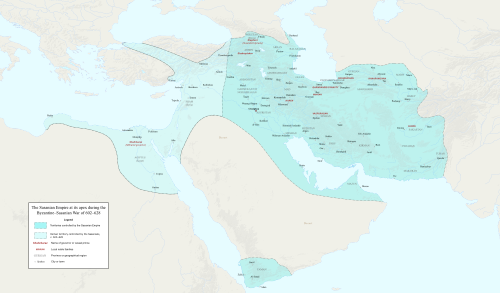
Sasanian qanat expansion
The Sasanian Empire expands qanat networks across Iran and Iraq, with thousands of kilometers of underground channels. This system remains vital for Iranian agriculture. #engineering #history
Sasanian qanat expansion By Original file by Ro4444, edited by me - Based on several sources, including the Middle Persian geographical text Šahrestānīhā ī Ērānšahr, CC BY 4.0, https://commons.wikimedia.org/w/index.php?curid=94837349
600 CE
Angkorian baray reservoirs in Cambodia
The Khmer Empire builds massive barays (reservoirs) such as the Indratataka Baray for irrigation and ritual purposes. These feed a complex canal system supporting Angkor. #engineering #history
Angkorian baray reservoirs in Cambodia By Hobe / Holger Behr - Own work , composed from various mapreferences, Public domain, https://commons.wikimedia.org/w/index.php?curid=1579402
700 CE
Islamic Golden Age irrigation innovations
Islamic engineers improve irrigation with norias, qanats, and distribution networks. The Book of Ingenious Devices describes automated water-lifting machines. #technology #history
Islamic Golden Age irrigation innovations By Unknown author, Public domain, https://commons.wikimedia.org/w/index.php?curid=101284
800 CE
Japanese irrigation and rice paddies
The Heian period sees expansion of paddy field irrigation in Japan, with check dams and canals. This supports a growing population and feudal system. #agriculture #history
Japanese irrigation and rice paddies By User:Ori~ - File:Pana Banaue Rice Terraces.jpg, CC BY-SA 3.0, https://commons.wikimedia.org/w/index.php?curid=76201207
900 CE
Chinampa agriculture in the Valley of Mexico
The Toltecs and later Aztecs perfect chinampas (artificial islands) with intricate canal systems. This highly productive method supports Tenochtitlan's population. #agriculture #engineering
Chinampa agriculture in the Valley of Mexico By The original uploader was Kristinoller at English Wikipedia. - Transferred from en.wikipedia to Commons., CC BY-SA 3.0, https://commons.wikimedia.org/w/index.php?curid=3091163
1000 CE
Anasazi irrigation in the American Southwest
The Ancestral Puebloans (Anasazi) build canals and check dams in arid canyons like Chaco Canyon to divert runoff for maize cultivation. #engineering #history
Anasazi irrigation in the American Southwest By Bubba73 - Own work, CC BY-SA 3.0, https://commons.wikimedia.org/w/index.php?curid=106526835
1100 CE
Sri Lankan 'Kuluna' irrigation system
The Sri Lankan kingdom under Parakramabahu I constructs massive tanks and canals, including the Parakrama Samudra reservoir. This system irrigates vast paddy fields. #engineering #history
Sri Lankan 'Kuluna' irrigation system By No machine-readable author provided. Jolle~commonswiki assumed (based on copyright claims). - No machine-readable source provided. Own work assumed (based on copyright claims)., CC BY-SA 3.0, https://commons.wikimedia.org/w/index.php?curid=1003101
1200 CE
Songhai irrigation along the Niger River
The Songhai Empire employs flood-recession agriculture and canal systems along the Niger River. This supports urban centers like Gao and Timbuktu. #agriculture #history
Songhai irrigation along the Niger River By HetmanTheResearcher - Own work, CC BY-SA 4.0, https://commons.wikimedia.org/w/index.php?curid=143758809
1300 CE
Inca terracing and canal systems
The Inca Empire constructs elaborate terraces and stone-lined canals in the Andes, such as at Moray and Pisac, enabling agriculture on steep slopes. #engineering #history
Inca terracing and canal systems By de:Benutzer:Torox - de.wikipedia.org, CC BY-SA 3.0, https://commons.wikimedia.org/w/index.php?curid=394600
1400 CE
Ming Dynasty Grand Canal renovation
The Ming Dynasty expands the Grand Canal of China, connecting the Yellow and Yangtze Rivers. While primarily for transport, it also facilitates irrigation along its route. #engineering #history )
Ming Dynasty Grand Canal renovation By EditQ - Own work, CC BY-SA 4.0, https://commons.wikimedia.org/w/index.php?curid=136061119
1500 CE
Spanish acequias in the Americas
Spanish colonists introduce the acequia system in present-day US Southwest and Mexico, building gravity-fed irrigation canals. This blends European and Native American techniques. #engineering #history
Spanish acequias in the Americas By Dicklyon - Own work, CC BY-SA 4.0, https://commons.wikimedia.org/w/index.php?curid=106169484
1600 CE
Mughal irrigation in India
The Mughal Empire builds extensive canal systems in Punjab and Kashmir, including the Shahi Nahar canal. These gardens and farms use Persian-style waterwheels. #engineering #history
Mughal irrigation in India By Justus Perthes, Gotha./Charles Joppen - Joppen, Charles [SJ.] (1907) A Historical Atlas of India for the use of High-Schools, Colleges, and Private Students, London, New York, Bombay, and Calcutta: Longman Green and Co. Pp. 16, 26 maps, GFDL, https://commons.wikimedia.org/w/index.php?curid=14183402
1700 CE
Improved drainage in European fens
Dutch and English engineers develop windmill-powered drainage systems to reclaim wetlands for agriculture, influencing irrigation techniques. #engineering #history
Improved drainage in European fens By Takeaway - Own work, CC BY-SA 3.0, https://commons.wikimedia.org/w/index.php?curid=20528009
1800 CE
Modern canal systems in India
British colonial authorities build the Ganges Canal and other modern irrigation works, reviving and expanding ancient systems under the Indian Irrigation Commission. #engineering #history
Modern canal systems in India By R. Bartholomew and Sons, Edinburgh - Imperial Gazetteer of India Atlas, PD-US, https://en.wikipedia.org/w/index.php?curid=25083294
1850 CE
Centrifugal pump adoption
The invention of the centrifugal pump revolutionizes irrigation, allowing efficient lifting of water from deep wells and rivers. This enables large-scale farming. #technology #innovation
Centrifugal pump adoption By Bernard S. Janse - Own work, CC BY 2.5, https://commons.wikimedia.org/w/index.php?curid=1569602
1900 CE
Sprinkler irrigation invented
The first modern sprinkler irrigation system is patented, allowing uniform water distribution. This technique becomes widely used in agriculture globally. #technology #agriculture
1930 CE
Tennessee Valley Authority and irrigation
The TVA builds dams and reservoirs in the US, providing irrigation, flood control, and hydroelectricity. This model influences global water management. #engineering #history
Tennessee Valley Authority and irrigation By U.S. Government - Converted from EPS version available here. Direct ZIP URL is here, it is 4.6MB. The specific file used was "(Pos) 295 Logos 5_98/295 pos 1 1-2 TVA Logo.eps". The color is supposed to be Pantone 295 CVC., Public domain, https://commons.wikimedia.org/w/index.php?curid=3377433
1960 CE
Green Revolution and irrigation expansion
The Green Revolution introduces high-yield crops requiring intensive irrigation. Tube wells and canal networks expand rapidly in Asia, boosting food production but causing water depletion. #agriculture #history
Green Revolution and irrigation expansion By Hannah Ritchie - https://ourworldindata.org/yields-vs-land-use-how-has-the-world-produced-enough-food-for-a-growing-population, CC BY 4.0, https://commons.wikimedia.org/w/index.php?curid=188970790
1970 CE
Drip irrigation refined in Israel
Israeli engineer Simcha Blass perfects drip irrigation, delivering water directly to plant roots. This technology conserves water and is adopted worldwide. #technology #innovation
Drip irrigation refined in Israel By Borisshin - Own work, CC BY-SA 4.0, https://commons.wikimedia.org/w/index.php?curid=47378702
2000 CE
Smart irrigation and precision agriculture
Advances in sensors, GPS, and automation lead to smart irrigation systems that optimize water use. These tools address water scarcity and climate change challenges. #technology #environment